Zentsū-ji
Kūkai's birthplace and the head temple of his school
Understand sacred places, explore living traditions, and learn how to engage respectfully with Pilgrim Map.
Access has not been verified. Check current local guidance before planning a visit.
Zentsūji, Kagawa Prefecture, Japan
Read the sources
Image of Zentsū-ji (善通寺). Image source · CC-BY-2.5
Station 75 of 88
Shikoku 88 Temple PilgrimageVisit essentials
A quick read before you go
- Duration
- 60–90 minutes for the full complex including the kaidan-meguri.
- Access
- Central Zentsūji City, Kagawa.
Overview
Zentsū-ji, stop seventy-five on the Shikoku 88, is perhaps the route's spiritual center. Kūkai (Kōbō Daishi) founded it in 807 after returning from six years of study in Chang'an, on Saeki family land donated by his father, whose posthumous name “Zentsū” became the temple's. Kūkai was born here in 774. Zentsū-ji is now the sōhonzan of its Shingon school and, with Tōji in Kyōto and Kongōbu-ji on Mt Kōya, one of Japan's three great Kūkai sites.
The forty-five-thousand-square-metre precinct has two axes. The eastern To-in (Garan), modeled on Qinglong (Seiryū-ji) Temple where Kūkai studied under Master Huiguo, holds a five-storey pagoda, camphor trees said to date from Kūkai's lifetime, and a main hall for Yakushi Nyorai. The western Sai-in (Tanjoin) occupies the Saeki family residence. Between them, the Mieidō holds Kūkai's image and hosts memorial services on each month's twenty-first.
Beneath the Mieidō, pilgrims walk the short kaidan-meguri in absolute darkness with one hand on the wall. Many report sharpened breath and balance, then quiet attention, and Japanese henro often call the experience “rebirth.” Sixty to ninety minutes covers the complex, though many stay longer.
Why this place is sacred
Zentsū-ji combines three intensities that rarely meet at this density. First, the family origin: the Sai-in stands on the actual residence where Kūkai was born, not a memorial marker but the ground itself. Second, the lineage transmission: the To-in was patterned on Qinglong, the Chang'an temple where Kūkai received the esoteric initiations, importing the architectural memory of his teacher Huiguo into Shikoku.
Third, the unbroken monastic life: 1,200 years of daily practice, fire ceremonies, sutra chanting, and the training of clergy have layered prayer onto these grounds without interruption. The kaidan-meguri intensifies this further by removing sight, leaving the pilgrim with breath, the wall under the hand, and the awareness of walking past Kūkai's life-image in the dark. The site is unusual on the Shikoku route in feeling more like a centre than a station.
Founded by Kūkai in 807 as the family temple on his ancestral land, named after his father Saeki no Atai Tagimi. The To-in was constructed to import the architectural pattern of his teacher's temple in Chang'an; the Sai-in marked his birthplace.
Zentsū-ji became the head temple of the Zentsuji-ha branch of Shingon Buddhism. The complex has been rebuilt multiple times after fires, but the dual-axis structure — Garan and Tanjoin — has been preserved across rebuilds. It remains a fully active monastic and training centre today.
Experience and orientation
Pilgrims arrive most often by walking from Temple 74 Kōyama-ji or by short train ride to JR Zentsuji Station, a five-minute walk from the temple gate. The precinct opens broadly inside; the To-in spreads in front, with the five-storey pagoda visible above the trees. The main hall enshrines Yakushi Nyorai, where pilgrims complete the standard liturgy.
The giant camphor trees on the precinct edge are said to be old enough to have stood here in Kūkai's lifetime; their trunks are roped off and treated with the mild reverence Japanese visitors extend to ancient trees.
Moving toward the Sai-in, pilgrims pass the Mieidō. Beneath it, accessible through a side entrance, runs the kaidan-meguri — a corridor in total darkness curving roughly two hundred metres beneath the floor. Visitors leave bags, pay a small fee, remove shoes, and step in alone or in small groups. One hand stays on the painted wall; the other moves slowly forward. There is no light at all.
The path takes ten to fifteen minutes; pilgrims often emerge slightly disoriented and quieter than they went in. Some join the regular morning service afterward; others sit in the precinct under the pagoda. The full visit, including the kaidan, runs sixty to ninety minutes for most henro; deeper visits stretch through a half-day if the morning monastic services are joined.
Enter the To-in (eastern garan), complete liturgy at the main hall and pagoda area. Cross to the Mieidō for the kaidan-meguri (separate small fee). Continue to the Sai-in (western Tanjoin) for the birthplace precinct.
Context and lineage
Kūkai was born on this ground in 774 to the Saeki family. He left for Chang'an in 804 and returned in 806 with the full lineage transmission of esoteric Buddhism from Master Huiguo at Qinglong Temple. In 807, on land donated by his father, he founded Zentsū-ji, naming it for his father Saeki no Atai Tagimi (posthumously 'Zentsū').
He modelled the To-in on Qinglong and built the Sai-in on the family residence — the dual-axis structure that has been preserved across 1,200 years of rebuilds.
Shingon Buddhism, head temple (sōhonzan) of the Zentsuji-ha school. One of three great Kūkai sites: Zentsū-ji (birthplace), Tōji (Kyōto), Kongōbu-ji (Mt Kōya).
Kūkai (Kōbō Daishi)
Founder; born here
Master Huiguo (Keika)
Kūkai's teacher in Chang'an
Saeki no Atai Tagimi
Kūkai's father; donor of the land
Yakushi Nyorai (Medicine Buddha)
Honzon (principal image)
Traditions and practice
At the main hall (Yakushi-dō): ring the bell, light a candle and three incense sticks, deposit osamefuda in the box, chant the Heart Sutra and Yakushi mantra. Repeat at the Mieidō for Kūkai. Receive nōkyō at the stamp office. The kaidan-meguri is entered separately beneath the Mieidō for a small fee.
Daily morning service open to lay participants; goma fire rituals on a published schedule; Shingon mantra recitation; memorial services on the 21st of each month. Active reception of Shikoku henro and group pilgrims.
Allow at least 90 minutes. Walk the kaidan-meguri in silence; emerge slowly. If on extended pilgrimage, consider booking the shukubō (temple lodging) to join the dawn service.
Shingon Buddhism (Zentsuji-ha head temple)
ActiveBirthplace of Kūkai (774) and head temple of the Zentsuji school of Shingon. Together with Tōji in Kyōto and Kongōbu-ji on Mt Kōya, it forms the trinity of Kūkai's three great spiritual sites.
Daily monastic services, fire ceremonies (goma), sutra chanting, the kaidan-meguri pilgrimage in total darkness beneath the Mieidō, training of Shingon clergy.
Perspectives and open questions
Zentsū-ji rests on documentary records and archaeological continuity that few Shikoku temples can match; readings of the site differ mainly in how they extend its meaning beyond the verified facts.
Scholarly perspective
Historians accept Zentsū-ji as Kūkai's birthplace with high confidence based on Saeki family-property records and continuous documentary tradition. The 807 founding date is canonical. The original buildings have not survived; the precinct has been rebuilt multiple times after fires, but the layout has been preserved.
Living and traditional perspectives
Shingon tradition holds that Kūkai entered eternal samadhi (nyūjō) on Mt Kōya in 835 but is spiritually present at all three of his great sites — Zentsū-ji, Tōji, and Kongōbu-ji. Pilgrims at Zentsū-ji are understood to be in his presence at the place of his birth.
Alternative interpretations
Some interpretations identify Zentsū-ji as one node of a Shingon mandala mapped onto the Japanese landscape. The kaidan-meguri is sometimes described as a symbolic descent into the womb of Mahāvairocana and a ritual rebirth into esoteric awareness.
Open questions
The exact buildings of Kūkai's first ninth-century complex are not preserved; the precinct has been rebuilt multiple times after fires, and the 1,200-year continuity is documentary rather than architectural.
Plan your visit
Access and arrival
Central Zentsūji City, Kagawa. Five-minute walk from JR Zentsuji Station on the Dosan Line; large car parks on site.
Zentsū-ji shukubō (temple lodging) by reservation; multiple pilgrim minshuku and hotels in Zentsūji City.
Respectful visit
Modest dress. Remove hats inside the halls. Pilgrim hakui welcomed throughout the precinct.
Permitted across the precinct. Strictly prohibited inside the kaidan-meguri passage and during active hall services.
Osamefuda at both the main hall (Yakushi-dō) and the Mieidō. Coins, incense, candles available on site.
Total silence and no photography inside the underground kaidan. Do not touch ritual objects. Stay outside roped sections around the ancient camphor trees.
Total silence and no photography are required inside the kaidan. Visitors prone to claustrophobia or anxiety in absolute darkness may wish to walk close behind another pilgrim.
Current practical details
Address
3-chōme-3-1 Zentsūjichō, Zentsuji, Kagawa 765-0003, Japan
Phone
Hours
Hours, fees, and access can change — verify on the official source before you travel. Practical details last checked Jun 2026.
Location
Map loads as you approach this section.
Pilgrim reflections
A portrait of encounter, not a score
Pilgrims describe what they felt, how present they could become, and whether the place would shape a journey. There are no stars and no ranking of traditions.
No reviewed reflections yet
The first pilgrims can help describe the character of being here.
Share a reflection
Available after an account-backed “Been there.” Every reflection is reviewed before publication.
Watch deeper
Films, episodes, and recorded talks for visitors who want more context before or after a visit. Speculative and alternative-history entries are labelled as perspectives, not as sources for established claims.
Nearby sacred places
Explore other sacred places in the region. Proximity does not establish access or travel time; check each place’s guidance.
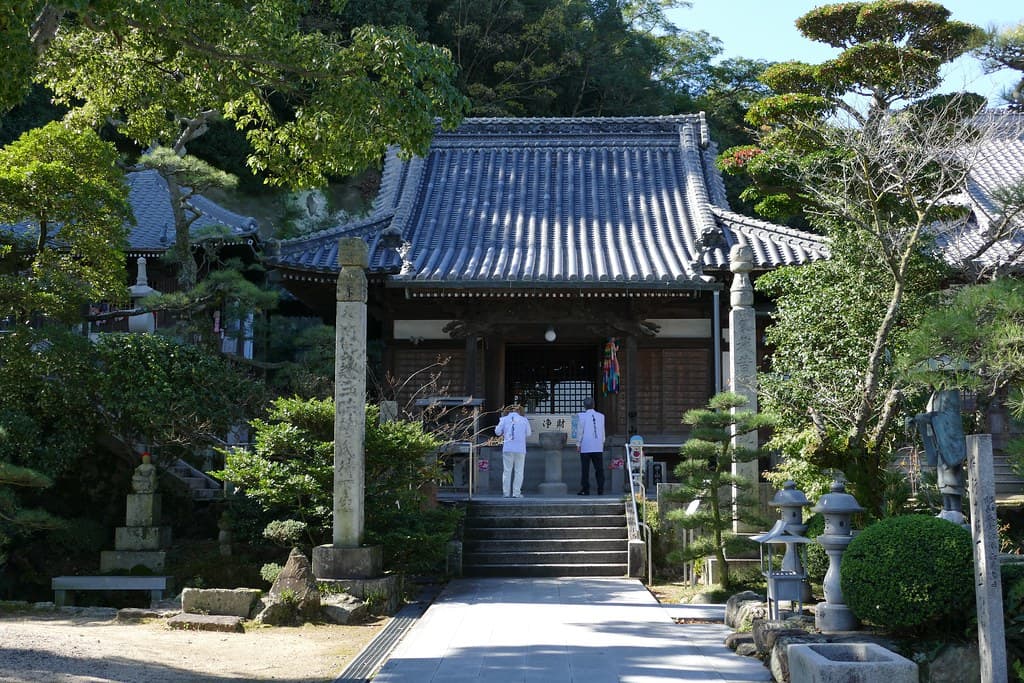


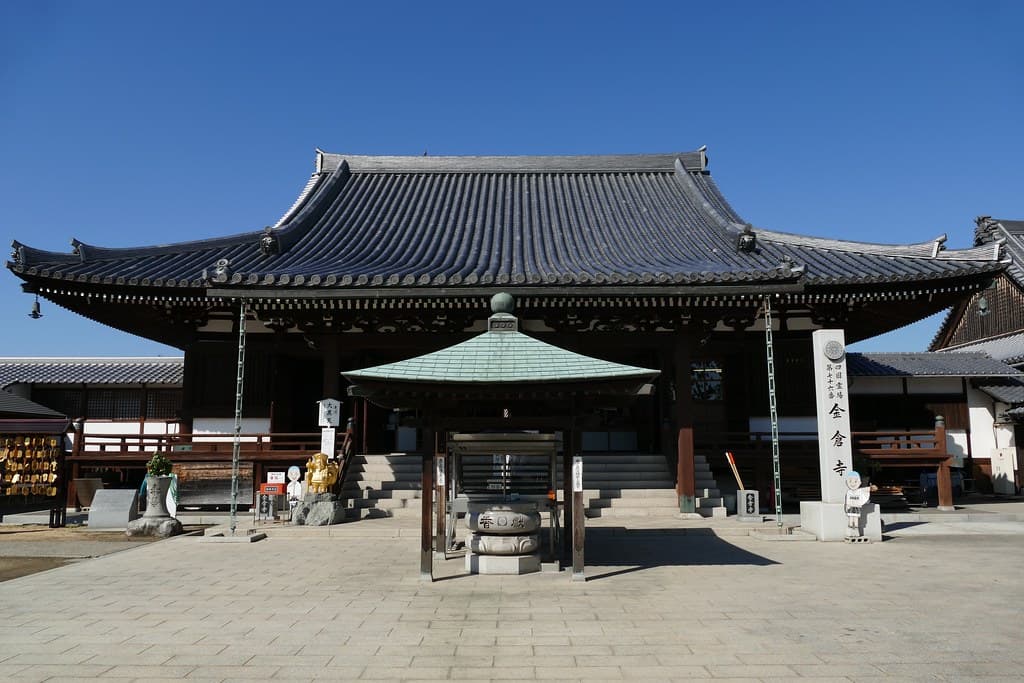
References
Sources consulted for this page. Source categories describe the publication, not a guarantee that every claim is verified. Traditional accounts and outside interpretations may differ.
- 01Sohonzan Zentsuji Temple — Mitoyo Tourism and Exchange AuthorityofficialOfficial regional tourism.
- 02Temple 75, Zentsūji — Tourism ShikokuofficialGovernment tourism portal.
- 03Zentsuji Temple Kagawa — Japan Tourism Agency / MLITofficialGovernment source on temple history and layout.
- 04Zentsuji – Zentsuji, Kagawa Prefecture — Henro.orgguidePilgrim community reference.
- 05Customs and Etiquette of the Shikoku Pilgrimage — Henro.orgguideEtiquette and visiting hours.
- 06Zentsū-ji — Wikipedia contributorsencyclopediaEncyclopaedic overview, citations included.
- 07Kūkai — Wikipedia / Encyclopaedia BritannicaacademicBiographical context.
Pilgrim glossary
- Mandala
- A symbolic diagram of the cosmos used in meditation and ritual.
- Sutra
- A canonical Buddhist scripture, often chanted as part of practice.
- Mantra
- A sound, word, or phrase repeated as part of meditation or ritual.
- Shingon
- An esoteric Japanese Buddhist school emphasizing ritual, mantra, and mandala practice.
Share a photo
Help visitors recognize Zentsū-ji. Every submission is reviewed before publication.