Yakuri-ji
Where five swords descended on a mountain, and a hidden Shōten still hears prayers
Understand sacred places, explore living traditions, and learn how to engage respectfully with Pilgrim Map.
Access has not been verified. Check current local guidance before planning a visit.
Takamatsu, Kagawa Prefecture, Japan
Read the sources
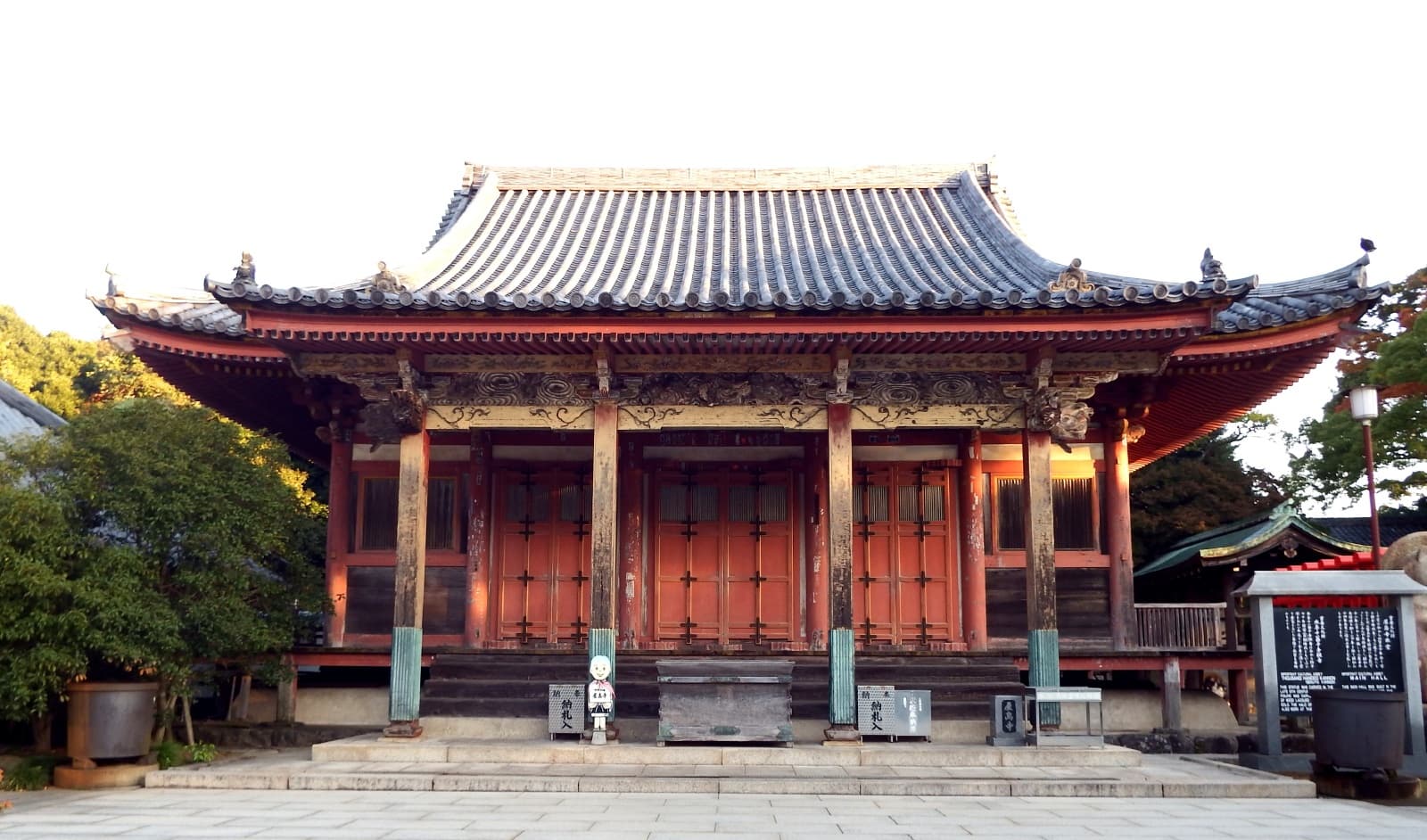
Image of Yakuri-ji (八栗寺). Image source · CC-BY-SA-3.0
Station 85 of 88
Shikoku 88 Temple PilgrimageVisit essentials
A quick read before you go
- Duration
- Sixty to ninety minutes including cable-car ride, temple visit, and Shōten devotion.
- Access
- Kotoden Shido Line to Yakuri Station, ~10-minute walk to the Yakuri Cable lower station, then a…
Overview
Mt. Goken, the Five-Swords Mountain, shapes Yakuri-ji's silhouette and founding tradition. In 829 Kūkai practised Gumonjihō here—the Akāśagarbha Bodhisattva mantra of one million recitations, foundational to Shingon esoteric memory. Temple tradition says five swords descended and Zaō Gongen, protector of yamabushi practice, revealed the mountain's Buddhist destiny; Kūkai buried the swords and carved Dainichi Nyorai. Before sailing to Tang China, he is said to have planted eight roasted chestnuts to foretell success.
Their sprouting on his return gave Yakuri, 'Eight Chestnuts', its name.
The 1706 Hōei earthquake collapsed the eastern peak, leaving Mt. Goken's present five-spire form. Late-sixteenth-century invasions of Shikoku destroyed the temple; it was rebuilt in the 1590s and supported by the Takamatsu Matsudaira through the Edo period.
A four-minute cable-car ride from Yakuri Station climbs through evergreen forest to the Shō Kannon hall beneath the spires. Beside it, the nationally renowned Shōten hall invokes Shōten—Kankiten or Vinayaka—for obstacle-removal, prosperity, and matchmaking. Its hibutsu image remains secret and unseen; pilgrims and lay visitors come for goma fire rituals and sealed offerings. For henro nearing the route's end, the Gumonjihō association brings memory, mantra, and intention into late-pilgrimage reflection.
Why this place is sacred
What gives Yakuri-ji its sense of concentration is the combination of mountain form, esoteric practice, and the secrecy of Shōten. The five sword-like peaks dominate the eastern Takamatsu skyline; from the temple precinct they rise directly above the Main Hall. The cable car deposits visitors at a small upper station; the temple unfolds in a series of rocky terraces. The Shōten hall, with its distinctive radish-and-money-bag iconography on the building exterior, draws a steady flow of devotees.
The hibutsu image inside is not seen, and that secrecy itself is part of the atmosphere.
An esoteric Shingon mountain practice site established by Kūkai in 829 around his Gumonjihō practice and the founding visions of the five swords and Zaō Gongen.
The temple was destroyed in the late sixteenth century and rebuilt in the 1590s. The eastern peak of the mountain collapsed in the 1706 Hōei earthquake, giving Mt. Goken its present five-spire form. The Shōten devotion grew over the Edo and modern periods into one of the most important in Japan.
Experience and orientation
Most pilgrims travel by Kotoden Shido Line to Yakuri Station, walk ten minutes to the Yakuri Cable lower station, and take the four-minute cable car up the slope. The car runs every fifteen minutes between 7:30 and 17:15. Drivers can park lower down and walk up. The henro foot path from Yashima-ji is a steep 6.5 km descent and re-ascent.
The upper cable station opens onto a stone-paved approach. The temple unfolds across rocky terraces with Mt. Goken's five spires directly above. Standard henro practice is followed at the Main Hall and Daishi-dō: a bow at the gate, hands and mouth purified at the chōzuya, candle and three sticks of incense lit, an osamefuda nameslip dropped, the Heart Sutra recited, and the Shō Kannon mantra (On arorikya sowaka) sounded. The Kōbō Daishi mantra closes the rite at the Daishi-dō.
Beside the Main Hall stands the Shōten hall. The exterior carries radish-and-money-bag motifs associated with Kankiten devotion. Visitors request Shōten prayers via the temple office; goma fire rituals are conducted regularly. The image itself is hibutsu and remains unseen. From the precinct, paths lead to viewpoints over the Sanuki plain. The cliff faces of the bare rock spires are not climbed.
The cable car arrives at a small upper station. The Main Hall and Daishi-dō are reached by a short stone-paved approach. The Shōten hall stands beside the Main Hall. The five rocky spires of Mt. Goken rise directly above the precinct.
Context and lineage
Founded in 829 by Kūkai. Temple legend holds that during his Gumonjihō practice on Mt. Gozen, five swords descended from heaven and Zaō Gongen appeared to reveal that the mountain would become a sacred Buddhist place. Kūkai buried the swords and carved an image of Dainichi Nyorai.
The temple was originally named Yakunidera, the 'Eight Lands Temple', for the eight provinces visible from the summit; before travelling to Tang China, Kūkai planted eight roasted chestnuts to foretell his voyage's success — when they sprouted, the temple was renamed Yakuri, the 'Eight Chestnuts'. The eastern peak of the mountain collapsed in the 1706 Hōei earthquake, leaving the present five-spire form.
The temple was destroyed during the late-sixteenth-century invasions of Shikoku and rebuilt in the 1590s, with continued Edo-period support from the Takamatsu Matsudaira.
Shingon Buddhism (Daikaku-ji branch lineage). Esoteric devotion to Shōten / Kankiten as a major sub-tradition. Local mountain folk-religious memory connected to Mt. Goken.
Kūkai (Kōbō Daishi)
Founder and esoteric practitioner
Zaō Gongen
Mountain deity revealed in founding vision
Shōten (Kankiten / Vinayaka)
Esoteric deity of obstacle-removal
Traditions and practice
Pilgrims follow the standard henro rite. After bowing at the gate and purifying at the chōzuya, a candle is lit and three sticks of incense placed at the Main Hall. An osamefuda nameslip is deposited, the Heart Sutra recited, and the Shō Kannon mantra (On arorikya sowaka) sounded. The same rite is repeated at the Daishi-dō, ending with the Kōbō Daishi mantra. The nōkyō calligraphy stamp is collected at the temple office.
Daily Shingon services continue. Shōten goma fire rituals are conducted regularly. The temple is popular for hatsumōde New Year visits and for matchmaking prayers. Lay visitors commonly request Shōten prayers via the temple office; the image itself is hibutsu and not displayed.
Allow time for both the henro rite at the Main Hall and a separate visit to the Shōten hall. The Shōten devotion is its own tradition with its own register; it is not a substitute for the Kannon rite, but a complement. For pilgrims approaching the end of the route, sit for a few minutes near the rocky terraces and let the Gumonjihō association — the practice of mantra, the keeping of intention — settle.
Shingon Buddhism
ActiveFounded by Kūkai in 829 during his Gumonjihō practice on Mt. Gozen. Remains Shingon today.
Daily Shingon services; pilgrim chanting; Shōten ritual prayers.
Shōten / Kankiten devotion (Shōten-san of Yakuri)
ActiveYakuri-ji is famous nationally for its Shōten — an esoteric deity of obstacle-removal and prosperity, especially for business and matchmaking. Pilgrims and lay devotees come specifically for Shōten prayers.
Shōten goma fire ritual; votive ema for business and marriage; sealed offerings.
Local mountain folk religion (Mt. Goken)
ActiveMt. Goken is venerated as a Buddhist sacred mountain. Zaō Gongen, protective mountain deity of yamabushi tradition, appeared to Kūkai in the founding legend.
Mountain-prayer hikes; some yamabushi-style ritual observances.
Perspectives and open questions
Yakuri-ji is read as a paradigm of Shingon mountain asceticism, layered with Edo-period domain support and a distinctive Shōten devotion of national reputation.
Scholarly perspective
Yakuri-ji is read as a Kūkai-foundation mountain temple paradigmatic of Shingon's mountain-asceticism roots: site of Gumonjihō, encounter with Zaō Gongen, and the merging of esoteric Buddhist and yamabushi mountain practice.
Living and traditional perspectives
Local Sanuki tradition treats Mt. Goken's distinctive five-spire silhouette as a natural sword-mandala, a visible sign of the buried five swords.
Alternative interpretations
In esoteric reading, the five swords map onto the five wisdoms of the Vajradhātu mandala — Mahāvairocana surrounded by Akṣobhya, Ratnasambhava, Amitābha, and Amoghasiddhi. The chestnut planting prefigures the dharma's geographic propagation. The Shōten devotion connects Yakuri-ji to a wider East Asian esoteric stream of obstacle-removing deities, the Vinayaka and Gaṇeśa traditions Buddhicized through Tang and Heian transmission.
Open questions
The historicity of the five-sword descent and the Zaō Gongen encounter is religious legend. The Shōten image is hibutsu; its date and provenance are not publicly disclosed.
Plan your visit
Access and arrival
Kotoden Shido Line to Yakuri Station, ~10-minute walk to the Yakuri Cable lower station, then a 4-minute cable-car ride to the temple. The cable car operates 7:30–17:15, every 15 minutes. By car, roughly 25 minutes from JR Takamatsu Station. The pilgrim foot path from Yashima-ji is a steep 6.5 km descent and re-ascent.
Plentiful in central Takamatsu and along the Mure coast. There is no shukubō at Yakuri-ji.
Respectful visit
Modest dress. Pilgrim attire is common.
Permitted in general grounds. No photography of the Shōten image. No flash inside halls.
Incense, candles, coins, osamefuda. Nōkyō fee ¥500/book. Shōten goma fee varies.
Stay on marked paths near the cliff faces. Do not attempt to climb Mt. Goken's bare rock spires. Do not photograph the hibutsu image.
Stay on marked paths near the cliff faces; do not attempt to climb the bare rock spires of Mt. Goken. The Shōten image is hibutsu and not photographed.
Current practical details
Address
3416 Murechō Mure, Takamatsu, Kagawa 761-0121, Japan
Phone
Hours
Hours, fees, and access can change — verify on the official source before you travel. Practical details last checked Jun 2026.
Location
Map loads as you approach this section.
Pilgrim reflections
A portrait of encounter, not a score
Pilgrims describe what they felt, how present they could become, and whether the place would shape a journey. There are no stars and no ranking of traditions.
No reviewed reflections yet
The first pilgrims can help describe the character of being here.
Share a reflection
Available after an account-backed “Been there.” Every reflection is reviewed before publication.
Watch deeper
Films, episodes, and recorded talks for visitors who want more context before or after a visit. Speculative and alternative-history entries are labelled as perspectives, not as sources for established claims.
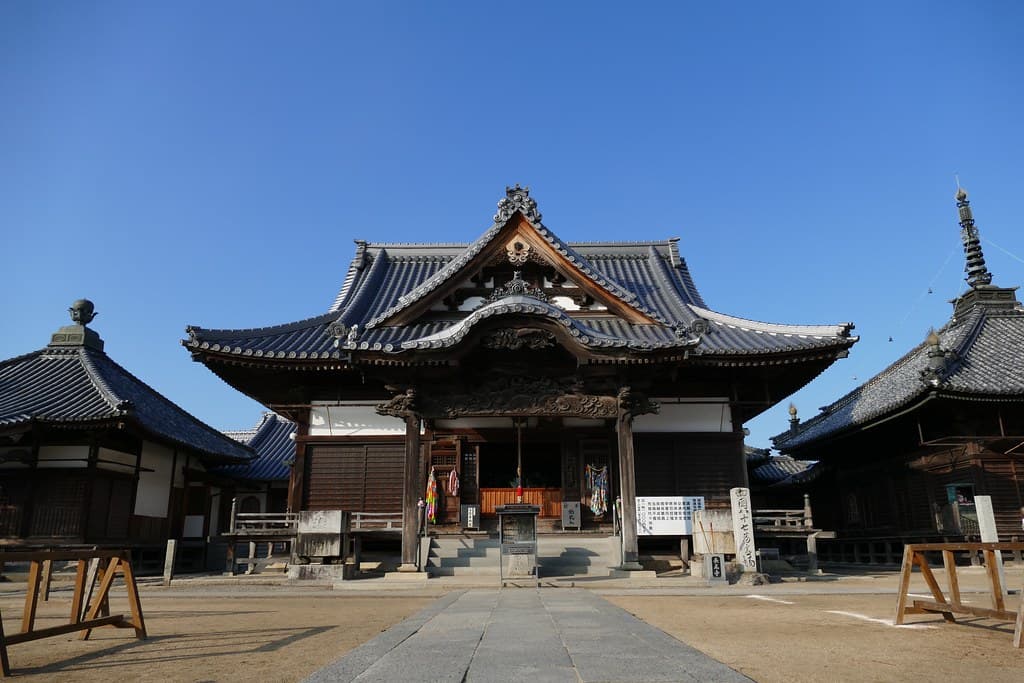
Nearby sacred places
Explore other sacred places in the region. Proximity does not establish access or travel time; check each place’s guidance.


References
Sources consulted for this page. Source categories describe the publication, not a guarantee that every claim is verified. Traditional accounts and outside interpretations may differ.
- 01Yakuri-ji — WikipediaencyclopediaConcise overview; includes Hōei earthquake 1706 collapse
- 02The 85th Temple Yakuriji Temple — Sanuki History & Culture GuideguideLocal cultural guide; covers Kūkai's Gumonjihō practice and chestnut legend
- 03Yakuri Cable — Shikoku Cable Co. (via Shikoku Tourism)officialCable-car operator info; hours 7:30–17:15, every 15 min
- 04Shikoku 88 Temple Pilgrimage 85th Sacred Spot, Yakuriji Temple — Experience TakamatsuguideTakamatsu City tourism source
- 05Customs and Etiquette of the Shikoku Pilgrimage — Henro.orgguidePilgrim ritual
- 06Temple 85, Yakuri-ji — Japan AdventurerguideTravel-blog overview
Pilgrim glossary
- Kannon
- The bodhisattva of compassion, central to many East Asian pilgrimage routes.
- Bodhisattva
- An enlightened being who postpones full nirvana to help others toward awakening.
- Mandala
- A symbolic diagram of the cosmos used in meditation and ritual.
- Sutra
- A canonical Buddhist scripture, often chanted as part of practice.
- Mantra
- A sound, word, or phrase repeated as part of meditation or ritual.
- Dharma
- The teachings of the Buddha; also the universal law underlying them.
- Shingon
- An esoteric Japanese Buddhist school emphasizing ritual, mantra, and mandala practice.
Share a photo
Help visitors recognize Yakuri-ji. Every submission is reviewed before publication.