Tennō-ji
A vermilion torii where an exiled emperor lay in state
Understand sacred places, explore living traditions, and learn how to engage respectfully with Pilgrim Map.
Access has not been verified. Check current local guidance before planning a visit.
Sakaide, Kagawa Prefecture, Japan
Read the sources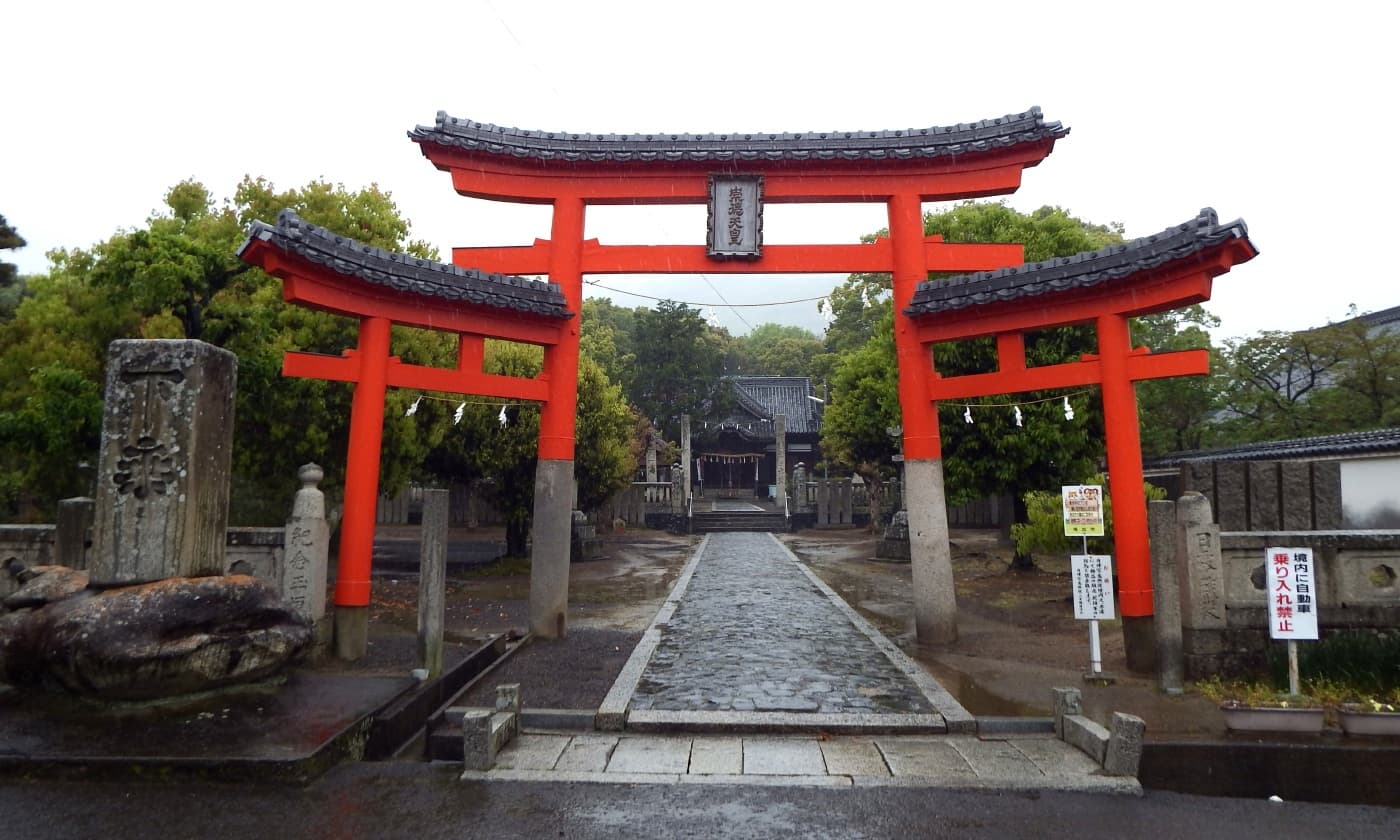
Image of Tennō-ji (天皇寺). Image source · CC-BY-SA-4.0
Station 79 of 88
Shikoku 88 Temple PilgrimageVisit essentials
A quick read before you go
- Duration
- 20–30 minutes including Shiramine-gū.
- Access
- Sakaide City, Kagawa.
Overview
Tennō-ji is the seventy-ninth Shikoku temple and one of the most distinctive sites on the route. The name itself — 'Emperor Temple' — refers to Emperor Sutoku, who was banished to Sanuki Province after the Hōgen Disturbance of 1156 and died in exile in 1164. According to long-held tradition, his body lay in state at this site before its burial at Shiramine.
After Sutoku's death, the imperial court refused for years to honour him, and a series of subsequent calamities — including the Genpei War — were widely blamed on his vengeful spirit. He came to be regarded as one of the three great onryō of Japan, alongside Sugawara no Michizane and Taira no Masakado. A hall built where his body had lain became the institutional centre of his pacification, eventually formalised under Emperor Nijō's decree as Tennō-ji.
The temple's most visible feature is the absence of a typical Buddhist mountain-gate. In its place stands a striking three-pillared vermilion Miwa torii, the kind of torii associated with Shintō rather than Buddhist sites. Within the same compound, behind the temple buildings, stands Shiramine-gū — an active Shintō shrine for Sutoku, where pilgrims bow, clap, and offer in Shintō style.
The integrated arrangement is unusual on the Shikoku route, which is otherwise predominantly Shingon Buddhist; here Tendai-period Shingon liturgy and goryō (vengeful-spirit) Shintō pacification are held in a single precinct without merging.
The temple's principal image (honzon) is Jūichimen Kannon (Eleven-Headed Kannon Bodhisattva), and the standard Shikoku 88 Henro liturgical pattern is observed at the main hall and Daishi-dō. Pilgrims typically pause additionally at Shiramine-gū to acknowledge Sutoku, often with two bows, two claps, and one bow in the Shintō convention. The visit takes twenty to thirty minutes.
Henro often note the heavier atmosphere here than at neighbouring temples, a quality consistent with the site's centuries-long function as a focus of imperial pacification.
Why this place is sacred
Tennō-ji's atmosphere comes from its function rather than its scale. The site is small, the precinct unassuming, and yet it carries one of the heavier ritual loads on the Shikoku route. Sutoku's exile, his death in disgrace, the years of imperial silence, the calamities blamed on his anger, and the slow institutional pacification that followed are all condensed here.
The vermilion Miwa torii signals the Shintō dimension before pilgrims even enter; the integrated Shiramine-gū within the compound makes the pacification active rather than commemorative. Local tradition holds that Sutoku's anger has been managed but not fully dispelled, so the rituals at the temple and shrine continue rather than mark a closed chapter.
Pilgrims sensitive to such currents sometimes report a heavier atmosphere here; whether or not one shares that reading, the convergence of imperial banishment, posthumous deification, Buddhist liturgy, and Shintō shrine in one small precinct is hard to dismiss.
Pre-existing Shingon temple of unrecorded earlier founding, traditionally attributed to the Kūkai period. Renamed Tennō-ji after 1164 by imperial decree of Emperor Nijō to host pacification rites for the spirit of Sutoku, who had died in Sanuki exile.
The integrated Shiramine-gū shrine grew up alongside the temple as the institutional centre of Sutoku pacification. The dual Buddhist/Shintō arrangement has been preserved across centuries; the temple operates today as an active Shingon site within the Shikoku 88 route, with Shiramine-gū kept active alongside it.
Experience and orientation
Tennō-ji is reached on foot from JR Yasoba or Sakaide Stations on the Yosan Line, or by car within a quiet residential neighbourhood of Sakaide City. The first surprise is the gate. Where pilgrims expect the standard Buddhist sanmon, they find instead the three-pillared vermilion Miwa torii — the kind that signals a Shintō rather than a Buddhist site. Walking through it feels like a category mistake until the temple proper appears beyond.
The precinct is compact. The main hall and Daishi-dō receive the standard Shikoku Henro liturgy: bell, incense, candle, osamefuda, Heart Sutra, the eleven-headed Kannon mantra. Many pilgrims chant a little more quietly here than at other temples, conscious of the goryō associations. Behind the temple buildings, accessible without a separate entrance, stands Shiramine-gū. The shrine is small and active. Pilgrims pause there in turn, drop a coin, and bow twice, clap twice, bow once in the Shintō convention.
The brief switch in protocol — Buddhist liturgy at the temple, Shintō at the shrine — is part of why the site feels distinct. The full visit, including Shiramine-gū, takes twenty to thirty minutes. Pilgrims interested in the Sutoku layer often continue uphill to Shiramine-ji (Temple 81), where Sutoku's actual mausoleum is preserved.
Enter through the vermilion Miwa torii. Complete liturgy at the main hall and Daishi-dō. Move behind the temple to Shiramine-gū and acknowledge Sutoku in Shintō style — two bows, two claps, one bow.
Context and lineage
Emperor Sutoku reigned 1123–1142 before being deposed in factional struggles. After the Hōgen Disturbance of 1156 he was banished to Sanuki Province, where he lived in exile and died in 1164. The imperial court refused for years to honour him. Subsequent calamities — including the Genpei War and various plagues — were blamed on his vengeful spirit. The hall built where his body had lain in state became the focus of pacification rites, formalised under Emperor Nijō's decree as Tennō-ji.
Shiramine-gū grew up alongside as the integrated Shintō shrine for the imperial spirit.
Shingon Buddhism (Kōshō-in lineage) integrated with Shintō goryō (vengeful-spirit pacification) tradition through the embedded Shiramine-gū shrine. Working temple of the Shikoku 88-temple pilgrimage.
Emperor Sutoku
Imperial spirit pacified at the site
Emperor Nijō
Decreed the establishment of Tennō-ji
Jūichimen Kannon (Eleven-Headed Kannon)
Honzon (principal image)
Traditions and practice
At the temple: bell, candle, three incense sticks, osamefuda, coin, Heart Sutra, and the Eleven-Headed Kannon mantra at the main hall; repeat at the Daishi-dō. At Shiramine-gū: two bows, two claps, one bow with a small coin offering, acknowledging Sutoku.
Daily reception of pilgrims; nōkyō stamp service; periodic services for imperial pacification. The integrated Shrine and temple liturgy continues without merger.
Plan twenty to thirty minutes for the full visit including Shiramine-gū. Move quietly between Buddhist and Shintō protocols; the site's force lies in the unmerged adjacency rather than any unified rite.
Shingon Buddhism
ActiveTennō-ji is an old Shingon temple of the Kōshō-in lineage. Its principal image is Jūichimen Kannon (Eleven-Headed Kannon Bodhisattva), and it is part of the standard Shikoku 88 Henro liturgical pattern.
Heart Sutra chanting, osamefuda, Eleven-Headed Kannon mantra, nokyocho stamp.
Goryō (vengeful-spirit pacification) cult / Shintō
ActiveThe temple's name itself ('Emperor Temple') and the integrated Shiramine-gū shrine reflect centuries of pacification rites for Emperor Sutoku, whose unjust treatment was widely held responsible for civil disasters in late Heian Japan.
Shintō purification, offerings at Shiramine-gū, two-bow-two-clap-one-bow protocol.
Perspectives and open questions
Tennō-ji's significance is inseparable from the historical fact of Sutoku's exile and posthumous deification; readings of the site differ mostly in how seriously they take the goryō dimension as ongoing rather than commemorative.
Scholarly perspective
Sutoku's exile and death in Sanuki are well documented. The goryō cult that grew around him is one of the major case studies in Japanese vengeful-spirit traditions, alongside the cults of Sugawara no Michizane (Tenjin) and Taira no Masakado.
Living and traditional perspectives
Local devotion holds that pacification has been only partial — Sutoku's anger has been managed but not fully dispelled — and the rituals at the temple and shrine are ongoing rather than commemorative. The integrated arrangement reflects an active rather than concluded relationship.
Alternative interpretations
Some practitioners regard Sutoku as one of the three great onryō of Japan, alongside Sugawara no Michizane and Taira no Masakado. Pilgrims sensitive to such currents sometimes report a heavier atmosphere at Tennō-ji than at neighbouring temples.
Open questions
Whether the underlying Shingon temple substantially predates Sutoku's death (and was simply renamed) or was founded specifically to host the imperial spirit cannot be settled from the available record.
Plan your visit
Access and arrival
Sakaide City, Kagawa. Small temple in a residential neighbourhood. Nearest stations Yasoba and Sakaide on JR Yosan Line; modest car parking on site.
Pilgrim minshuku and small hotels in Sakaide and Utazu.
Respectful visit
Modest dress. Pilgrim hakui welcomed.
Permitted in the precinct. The Miwa torii is a popular photo subject. Avoid photographing private prayer at Shiramine-gū.
Osamefuda at the Buddhist halls. Small monetary offering and the two-bow-two-clap-one-bow protocol at Shiramine-gū.
Be especially quiet and respectful given the goryō (vengeful spirit) associations. Do not joke or speak slightingly of Sutoku.
The site holds the spirit of Sutoku. Avoid casual or jocular behaviour, particularly around the Shiramine-gū torii. Photography of the gate is welcomed; photography of private prayer at the shrine is not.
Current practical details
Address
Japan, 〒762-0021 Kagawa, Sakaide, Nishinoshōchō, 天皇1713ー2
Phone
Hours
Hours, fees, and access can change — verify on the official source before you travel. Practical details last checked Jun 2026.
Location
Map loads as you approach this section.
Pilgrim reflections
A portrait of encounter, not a score
Pilgrims describe what they felt, how present they could become, and whether the place would shape a journey. There are no stars and no ranking of traditions.
No reviewed reflections yet
The first pilgrims can help describe the character of being here.
Share a reflection
Available after an account-backed “Been there.” Every reflection is reviewed before publication.
Watch deeper
Films, episodes, and recorded talks for visitors who want more context before or after a visit. Speculative and alternative-history entries are labelled as perspectives, not as sources for established claims.
Nearby sacred places
Explore other sacred places in the region. Proximity does not establish access or travel time; check each place’s guidance.



References
Sources consulted for this page. Source categories describe the publication, not a guarantee that every claim is verified. Traditional accounts and outside interpretations may differ.
- 01Tennoji – Sakaide, Kagawa Prefecture — Henro.orgguidePilgrim community reference.
- 02The 79th Temple Tennoji Temple — Sanuki History & Culture GuideguideDetailed history of the Sutoku connection.
- 03Kinkazan Koushoin Tennoji – Shikoku 88 Temple Pilgrimage — Shikoku 88 Temple ReijokaiofficialOfficial temple-association entry.
- 04Shikoku sacred ground No.79 Tenno-ji Kosho-in Temple — Sakaide City TourismofficialMunicipal tourism source.
- 05Customs and Etiquette of the Shikoku Pilgrimage — Henro.orgguideEtiquette and visiting hours.
- 06Temple 79, Tennō-ji — Japan AdventurerguideVisitor narrative.
Pilgrim glossary
- Honzon
- The principal Buddhist deity enshrined as a temple's central object of worship.
- Kannon
- The bodhisattva of compassion, central to many East Asian pilgrimage routes.
- Bodhisattva
- An enlightened being who postpones full nirvana to help others toward awakening.
- Sutra
- A canonical Buddhist scripture, often chanted as part of practice.
- Mantra
- A sound, word, or phrase repeated as part of meditation or ritual.
- Torii
- The traditional Japanese gate marking the entrance to a Shinto sacred area.
- Shingon
- An esoteric Japanese Buddhist school emphasizing ritual, mantra, and mandala practice.
- Tendai
- A Japanese Buddhist school based on the Lotus Sutra, foundational to many later traditions.
Share a photo
Help visitors recognize Tennō-ji. Every submission is reviewed before publication.