Gōdo-ji
A 'Divine Gate' temple where pilgrims grasp a cord linking hand and Kannon
Understand sacred places, explore living traditions, and learn how to engage respectfully with Pilgrim Map.
Access has not been verified. Check current local guidance before planning a visit.
Chichibu, Saitama Prefecture, Japan
Read the sources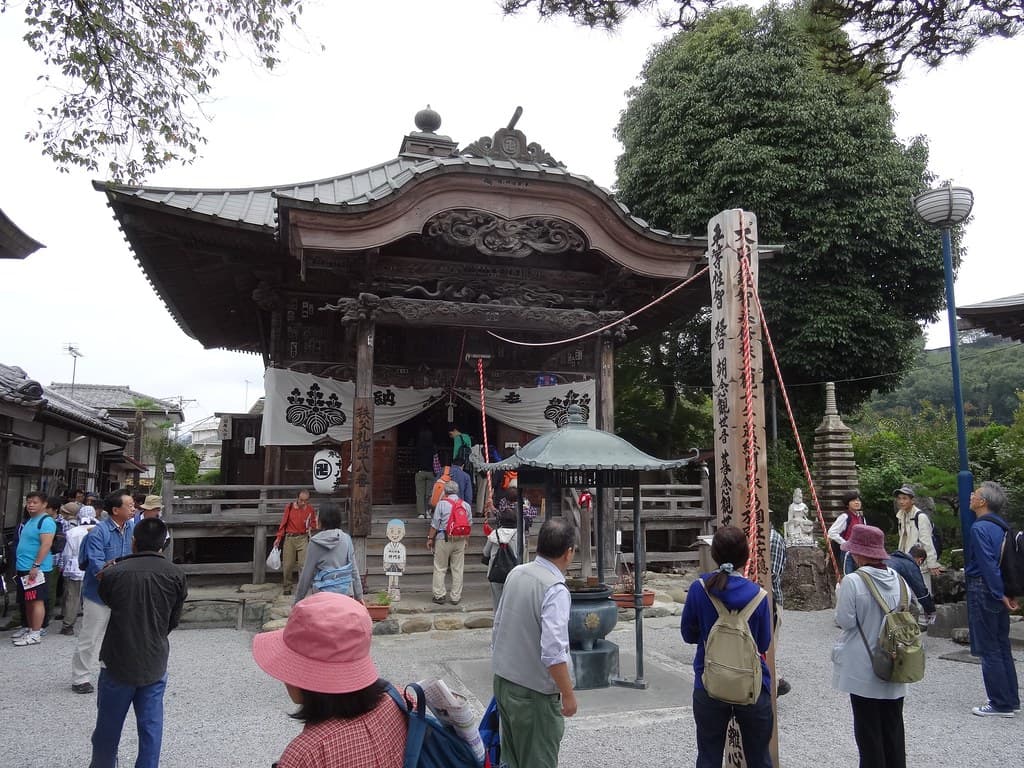
Image of Gōdo-ji (神門寺). Image source
Station 18 of 34
Chichibu 34 Kannon PilgrimageVisit essentials
A quick read before you go
- Duration
- 20–30 minutes for a pilgrim visit, longer if walking the rear corridor mindfully.
- Access
- About 7–10 minutes' walk south-east of Seibu-Chichibu Station, in Shimomiyaji-machi.
Overview
Gōdo-ji's name, 神門 (“Divine Gate”), preserves the sakaki trees once said to have intertwined here as a natural Shintō gate. Although the characters are normally read shinmon, pilgrimage usage reads them Gōdo, a linguistic marker of the site's layered passage from kami shrine to medieval Buddhist temple, Edo-period Shugendō Chōshō-in, and post-Meiji Sōtō Zen temple.
Its Shō Kannon is equally distinctive, holding a lotus in each hand rather than the usual one; folk interpretation reads the pair as compassion extended simultaneously to living and dead. In the rear-corridor oshakkin practice, pilgrims grasp a hanging cord linked by line to the honzon's mudra, physically enacting connection with the bodhisattva.
Why this place is sacred
Sacredness here is sedimentary. The sakaki-tree origin story sets a Shintō foundation; the temple's name preserves that memory in stone. Medieval Buddhist conversion turned the site into a Kannon hall. Edo-period Shugendō practice as Chōshō-in layered mountain-asceticism onto the precinct. Post-Meiji reorganization converted it again, into a Sōtō Zen parish. Each transition is institutionally complete but devotionally incomplete: the names, the stories, and the iconography preserve the older layers in plain sight.
The two-lotus Shō Kannon is iconographically distinctive. Standard Shō Kannon holds a single lotus; the doubled flowers at Gōdo-ji are a small variation that asks for interpretation. Folk readings see the gesture as compassion offered to both the living and the dead at once.
The oshakkin — a hanging cord that physically links the pilgrim's hand to the honzon — is a tactile devotion rare on the Chichibu route. Most fudasho stations rely on visual and auditory devotion (looking at images, reciting sutras, ringing bells). Gōdo-ji adds touch. Pilgrims who have walked the rear corridor and grasped the cord often describe the experience as the most physically immediate moment of their Chichibu pilgrimage.
The original site functioned as a kami shrine at the sakaki-tree gate. Buddhist conversion at an unknown medieval date turned it into a Kannon hall. Through the Edo period it operated as the Shugendō institution Chōshō-in, serving local mountain-ascetic practice. Post-Meiji reorganization established the current Sōtō Zen Gōdo-ji.
The 1868 shinbutsu-bunri ordinance and the 1872 prohibition of Shugendō practice forced the conversion of Chōshō-in into a Sōtō Zen institution. The Kannon-dō was reconstructed in the Tenpō era (1830–1844) by master carpenter Fujita Wakasa, predating the Meiji conversion. The two-lotus Shō Kannon honzon, the oshakkin cord-link practice, and the layered religious memory have continued in active devotional use through all institutional transitions.
Experience and orientation
Approached from downtown Chichibu, Gōdo-ji is a small urban-fringe pause centered on the Tenpō-era Kannon-dō. Its layered history remains legible in the temple name, the two-lotus honzon, and the rear-corridor kaisō. The corridor leads to a small chamber where a cord descends from the inner sanctum, linked by line to the honzon's hand. Briefly grasping it makes indirect contact with the image physically immediate.
The unusual doubled lotus often slows viewing; the folk reading of compassion extended to living and dead gives the gesture an intercessory cast.
Approach via Seibu-Chichibu Station, seven to ten minutes' walk southeast in Shimomiyaji-machi. Begin at the Kannon-dō for incense and Heart Sutra recitation before the two-lotus Shō Kannon. Walk the rear corridor (kaisō) slowly to reach the oshakkin cord; grasp it briefly, with attention to what the gesture means. Read the temple's name on the entrance — 'Divine Gate' — and recall the sakaki origin story before leaving.
Context and lineage
On this site, a stand of sakaki trees (sacred to Shintō) grew so tall and intertwined that they formed a natural gate. After the trees withered, the community sought divine guidance and an oracle directed that a Buddhist temple be built and a Kannon image enshrined. The name 神門 ('Divine Gate') preserves the memory of the original tree-torii. Buddhist conversion took place at an unknown medieval date. Through the Edo period the temple operated as the Shugendō institution Chōshō-in (長生院).
After the Meiji Restoration's separation of Buddhism and Shintō (1868) and the prohibition of Shugendō practice (1872), it was reconstituted as a Sōtō Zen temple. The Kannon-dō was reconstructed in the Tenpō era (1830–1844) by master carpenter Fujita Wakasa. The temple's sacred seal was designed by Chichibu artist Mori Genkōsai (森玄黄斎) — calligraphy and woodblock carving.
The institutional lineage runs kami shrine (sakaki gate) → medieval Buddhist temple → Edo-period Shugendō Chōshō-in → post-Meiji Sōtō Zen Gōdo-ji. The two-lotus Shō Kannon honzon, the oshakkin cord practice, and the temple's name 神門 (Divine Gate) preserve the older layers within the current Sōtō affiliation.
Shō Kannon (two-lotus form)
deity
The temple's honzon, holding a lotus flower in each hand rather than the usual one — iconographically rare on the Chichibu route.
Fujita Wakasa
master carpenter
Master carpenter who reconstructed the Kannon-dō during the Tenpō era (1830–1844).
Mori Genkōsai
artist
Chichibu artist who designed the temple's sacred seal, including its calligraphy and woodblock carving.
Chōshō-in (predecessor institution)
Edo-period Shugendō institution
The site's identity through the Edo period, before the Meiji-era reforms forced conversion to Sōtō Zen.
Traditions and practice
Sōtō Zen liturgy structures the temple's daily practice. Sutra recitation before the two-lotus Shō Kannon, goeika hymn-singing, and the distinctive oshakkin practice — walking the rear corridor and grasping the cord linked to the honzon — are the foundational devotional acts.
Pilgrims light incense, make a coin offering, recite the Heart Sutra at the main hall, walk the rear corridor and grasp the oshakkin cord briefly, and present the stamp-book at the goshuin desk.
Read the temple's name aloud — Gōdo-ji, 神門寺, 'Divine Gate Temple' — and recall the sakaki origin story before approaching the Kannon-dō. The doubled lotus in the honzon's hands rewards slow looking; if folk readings of compassion-for-living-and-dead resonate with you, address that intention. Walk the rear corridor with attention; grasp the oshakkin cord with awareness of what the gesture enacts. The 2026 umadoshi sōkaichō opens the honzon for the first time in twelve years.
Sōtō Zen Buddhism
ActiveOne of the post-Meiji Zen conversions on the Chichibu route. Gōdo-ji previously functioned as the Shugendō institution Chōshō-in; after the 1872 prohibition of Shugendō practice and the broader shinbutsu-bunri reforms, it was reconstituted as a Sōtō Zen temple.
Combinatory kami-Buddha worship (historical)
HistoricalThe temple's name 神門 ('divine gate') derives from a stand of intertwining sakaki (sacred Shintō trees) at the site that formed a natural torii-gate. After the trees withered, an oracle directed that the site become a Buddhist temple — encoding the kami-to-Buddha transition into the very name.
Shugendō (historical, as Chōshō-in)
HistoricalThrough the Edo period, the site operated as the Shugendō institution Chōshō-in. The 1872 prohibition of Shugendō practice forced its conversion to Sōtō Zen.
Kannon pilgrimage tradition
ActiveEighteenth station of the Chichibu 34 Kannon Reijō. The honzon — a Shō Kannon holding lotus flowers in both hands — is iconographically rare on the route.
Perspectives and open questions
Gōdo-ji rewards readings as case study in layered religious reuse (kami → Buddha → Shugendō → Zen), as iconographic curiosity (the two-lotus Shō Kannon), and as tactile devotion (the oshakkin cord that physically links pilgrim and honzon).
Scholarly perspective
Gōdo-ji's history (kami-shrine → Buddhist temple → Edo Shugendō → Meiji Sōtō Zen) is a model case of how the 1868 separation laws and 1872 Shugendō prohibition reshaped Japanese local religion into 'pure-school' Zen institutions. The temple's name and material culture preserve evidence of each prior layer.
Living and traditional perspectives
Local devotion frames the sakaki-gate origin story as evidence of the kami's own willingness to give way to Buddhist truth — a domestic version of the medieval honji-suijaku doctrine that Buddhist deities and kami are different aspects of the same reality.
Alternative interpretations
The two-lotus iconography of the Shō Kannon is sometimes interpreted in folk readings as a sign that this Kannon offers compassion to both the living and the dead simultaneously. The oshakkin cord is read as a literal embodiment of the bodhisattva's promise of inseparable connection — the cord ties pilgrim to honzon by line, enacting in physical form what the vow promises in spiritual form.
Open questions
The original date and circumstances of the sakaki-tree shrine, and the precise iconographic lineage of the two-lotus Shō Kannon image, remain obscure. The biographical record of master carpenter Fujita Wakasa is sparse beyond the temple's own attribution.
Plan your visit
Access and arrival
About 7–10 minutes' walk south-east of Seibu-Chichibu Station, in Shimomiyaji-machi. Free parking available.
Central Chichibu offers ryokan, business hotels, and pilgrim-friendly minshuku within walking distance of Seibu-Chichibu Station and the central-cluster temples.
Respectful visit
Casual respectful.
Generally permitted in the precinct; ask before photographing inside the Kannon-dō or the rear corridor.
Coins (¥5, ¥25, ¥45 considered auspicious). Incense where provided. Goshuin fee typically ¥300.
Approach the oshakkin cord with reverence; do not pull or twist it. The hibutsu honzon is normally closed except in the Year of the Horse.
Approach the oshakkin cord with reverence; do not pull or twist it. Ask before photographing inside the Kannon-dō or the corridor. Move quietly; this is a working Sōtō parish.
Current practical details
Address
5-15 Shimomiyajimachi, Chichibu, Saitama 368-0021, Japan
Phone
Hours, fees, and access can change — verify on the official source before you travel. Practical details last checked Jun 2026.
Location
Map loads as you approach this section.
Pilgrim reflections
A portrait of encounter, not a score
Pilgrims describe what they felt, how present they could become, and whether the place would shape a journey. There are no stars and no ranking of traditions.
No reviewed reflections yet
The first pilgrims can help describe the character of being here.
Share a reflection
Available after an account-backed “Been there.” Every reflection is reviewed before publication.
Nearby sacred places
Explore other sacred places in the region. Proximity does not establish access or travel time; check each place’s guidance.


References
Sources consulted for this page. Source categories describe the publication, not a guarantee that every claim is verified. Traditional accounts and outside interpretations may differ.
- 01Chichibu 34 Kannon Sanctuary — Wikipedia contributorsofficialLists #18 Gōdo-ji enshrining Shō Kannon.
- 02札所18番 白道山 神門寺 — Chichibu City governmentofficialMunicipal record.
- 03札所18番 白道山 神門寺 — Chichibu Fudasho Renraku KyōgikaiofficialOfficial pilgrimage federation page.
- 04The Chichibu 34 Fudasho Kannon Pilgrimage — An Introduction — Pierce Salguero / USC ScalaracademicConfirms broader pattern: shugendō temples (like Chōshō-in) were reorganized into Zen institutions after the 1868 Meiji separation laws.
- 05神門寺。秩父市下宮地町にある曹洞宗寺院 — Tesshow.jpguideSōtō Zen affiliation, sakaki-tree origin legend, Edo-era Chōshō-in shugendō past, Meiji conversion to Sōtō Zen.
- 06秩父札所 第十八番 白道山 神門寺 — Chichibu Ohenro (pilgrimage portal)guideDocuments Tenpō-era reconstruction by master carpenter Fujita Wakasa, the artist Mori Genkōsai's seal, and the rear corridor with a hand-rail link to the honzon (oshakkin).
Pilgrim glossary
- Honzon
- The principal Buddhist deity enshrined as a temple's central object of worship.
- Kannon
- The bodhisattva of compassion, central to many East Asian pilgrimage routes.
- Bodhisattva
- An enlightened being who postpones full nirvana to help others toward awakening.
- Sutra
- A canonical Buddhist scripture, often chanted as part of practice.
- Mudra
- A symbolic hand gesture used in Buddhist iconography and practice.
- Torii
- The traditional Japanese gate marking the entrance to a Shinto sacred area.
- Zen
- A Japanese Buddhist school emphasizing seated meditation and direct insight.
Share a photo
Help visitors recognize Gōdo-ji. Every submission is reviewed before publication.