Kiyomizu-dera
Saigoku temple 25: a working Senju Kannon hall in the Kansai pilgrimage round
Understand sacred places, explore living traditions, and learn how to engage respectfully with Pilgrim Map.
Access has not been verified. Check current local guidance before planning a visit.
Katō, Hyogo Prefecture, Japan

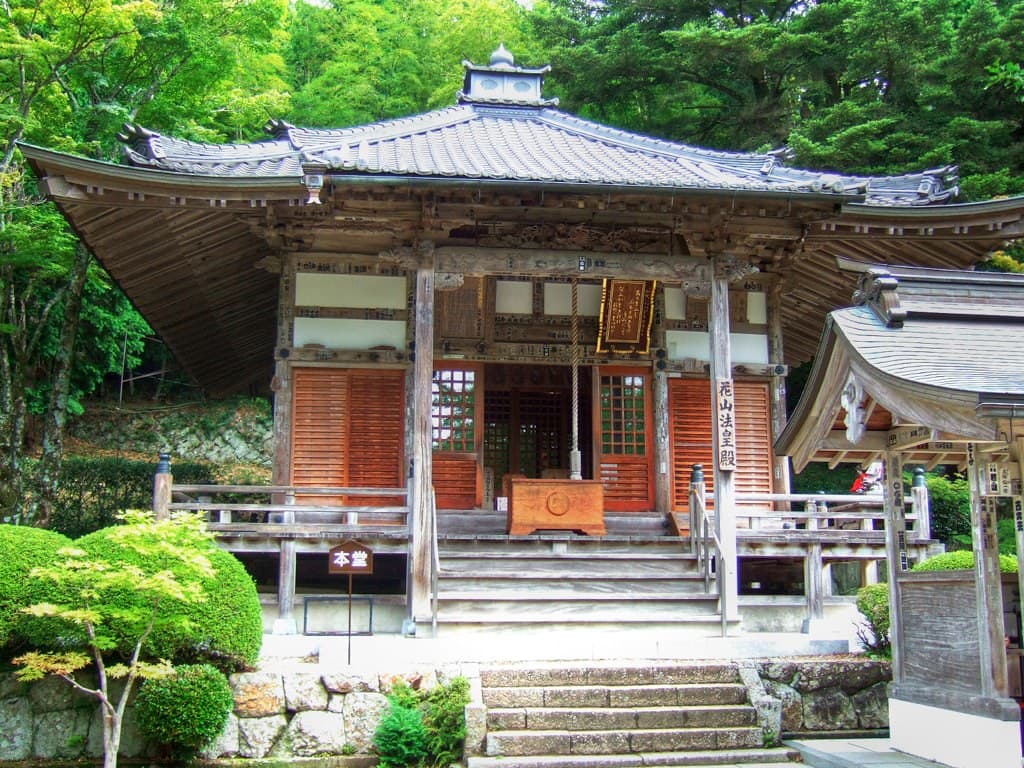
Image of Kiyomizu-dera (清水寺). Image source · CC-BY-SA-3.0
Station 25 of 33
Saigoku Kannon PilgrimageVisit essentials
A quick read before you go
- Duration
- 1.5–2 hours on site; allow a full half-day round trip from Osaka/Kobe due to limited bus…
- Access
- JR Aino Station (Fukuchiyama Line) → Shinki bus to 'Kiyomizu-dera' stop (~40–45 min, only 2…
Overview
Banshū Kiyomizu-dera is temple 25 of the thirty-three-station Saigoku Kannon Pilgrimage, a route that has organized Kansai Kannon devotion for more than a thousand years. The Tendai temple occupies the remote, forested summit of Mt. Mikusa at about 550 m, where pilgrims historically climbed a long mountain trail through mist and cedars.
Tradition says the Indian monk Hōdō Sennin (Hōdō Shōnin), arriving in Japan on a purple cloud, founded the temple in 627 CE. Finding the peak dry, he prayed to heavenly devas, and a clear spring appeared. The pure water, kiyomizu, gave the temple its name. Ennin (Jikaku Daishi) converted it to Tendai in 847 after returning from Tang China; it remains a Tendai temple.
Why this place is sacred
At about 550 m on remote, forested Mt. Mikusa, the long historic pilgrim trail, ancient spring, and Tendai chant among mist and cedars separate the summit from urban Hyogo. The pure water, kiyomizu, is understood as Kannon's compassion made life-giving.
Tradition says the Indian ascetic Hōdō Sennin arrived in Japan on a purple cloud, found the peak dry, and prayed to heavenly devas until a clear spring appeared. He then carved and enshrined Senju Kannon there. The spring's revelation both names the temple and locates the bodhisattva's response to thirst.
Experience and orientation
Pilgrims describe the long bus ride and forest hike as a meditative threshold; the silence of the summit complex contrasts with the famous Kyoto Kiyomizu-dera; the sacred spring and main hall (Daikō-dō) feel intimate rather than touristic.
Context and lineage
Traditionally founded 627 CE by the Indian monk Hōdō Sennin (Hōdō Shōnin); converted to Tendai sect in 847 by Ennin Hōdō Sennin (founder, legendary); Ennin (Tendai conversion); Empress Suiko era patronage Tradition holds that Hōdō Sennin, an Indian ascetic who arrived in Japan on a purple cloud, climbed the mountain and found it dry.
Traditions and practice
Standard Saigoku pilgrim practice — Hannya Shingyō recitation, kannon-shū chanting, candle and incense offerings, nōkyō (stamp) collection
Tendai Buddhism (天台宗)
ActiveConverted to Tendai in 847 by Ennin (Jikaku Daishi) following his return from Tang China; remains a Tendai temple today.
Sutra chanting; Goeika pilgrim songs; Nōkyō stamping for Saigoku pilgrims; Offerings before Senju Kannon
Perspectives and open questions
The 627 founding by Hōdō Sennin is legendary; archaeological and textual evidence supports continuous activity from at least the early Heian period after Ennin's 847 reorganization as a Tendai temple. Local tradition emphasizes the miraculous spring and the founder's Indian origin as proof of the site's transcontinental Buddhist transmission.
Scholarly perspective
The 627 founding by Hōdō Sennin is legendary; archaeological and textual evidence supports continuous activity from at least the early Heian period after Ennin's 847 reorganization as a Tendai temple. The current Daikō-dō was reconstructed in the Showa era after fires.
Living and traditional perspectives
Local tradition emphasizes the miraculous spring and the founder's Indian origin as proof of the site's transcontinental Buddhist transmission. The honzon as Senju Kannon is understood as the compassionate response to the people's thirst.
Alternative interpretations
Tendai esoteric (taimitsu) currents understand Senju Kannon as a fully realized expression of Avalokiteshvara's universal compassion; the spring is read as a symbol of the bodhisattva's unceasing flow of skillful means.
Plan your visit
Access and arrival
JR Aino Station (Fukuchiyama Line) → Shinki bus to 'Kiyomizu-dera' stop (~40–45 min, only 2 buses each way per day historically); car access via mountain toll road; walking pilgrims hike from Aino along marked trail with rental sticks
Respectful visit
Generally permitted on grounds; avoid flash and photographing inside main hall altar area
Coin offerings, incense, candles; pilgrim stamp fee at nōkyōsho
Honzon is hibutsu and not normally visible; quiet voice during services; do not step on threshold beams
Current practical details
Address
1194 Hiraki, Kato, Hyogo 673-1402, Japan
Phone
Hours
Hours, fees, and access can change — verify on the official source before you travel. Practical details last checked Jun 2026.
Location
Map loads as you approach this section.
Pilgrim reflections
A portrait of encounter, not a score
Pilgrims describe what they felt, how present they could become, and whether the place would shape a journey. There are no stars and no ranking of traditions.
No reviewed reflections yet
The first pilgrims can help describe the character of being here.
Share a reflection
Available after an account-backed “Been there.” Every reflection is reviewed before publication.
Nearby sacred places
Explore other sacred places in the region. Proximity does not establish access or travel time; check each place’s guidance.



Pilgrim glossary
- Honzon
- The principal Buddhist deity enshrined as a temple's central object of worship.
- Kannon
- The bodhisattva of compassion, central to many East Asian pilgrimage routes.
- Bodhisattva
- An enlightened being who postpones full nirvana to help others toward awakening.
- Tendai
- A Japanese Buddhist school based on the Lotus Sutra, foundational to many later traditions.
Share a photo
Help visitors recognize Kiyomizu-dera. Every submission is reviewed before publication.