Taisan-ji
An eleven-faced Kannon hidden behind a National Treasure hall
Understand sacred places, explore living traditions, and learn how to engage respectfully with Pilgrim Map.
Access has not been verified. Check current local guidance before planning a visit.
Matsuyama, Ehime Prefecture, Japan
Read the sources
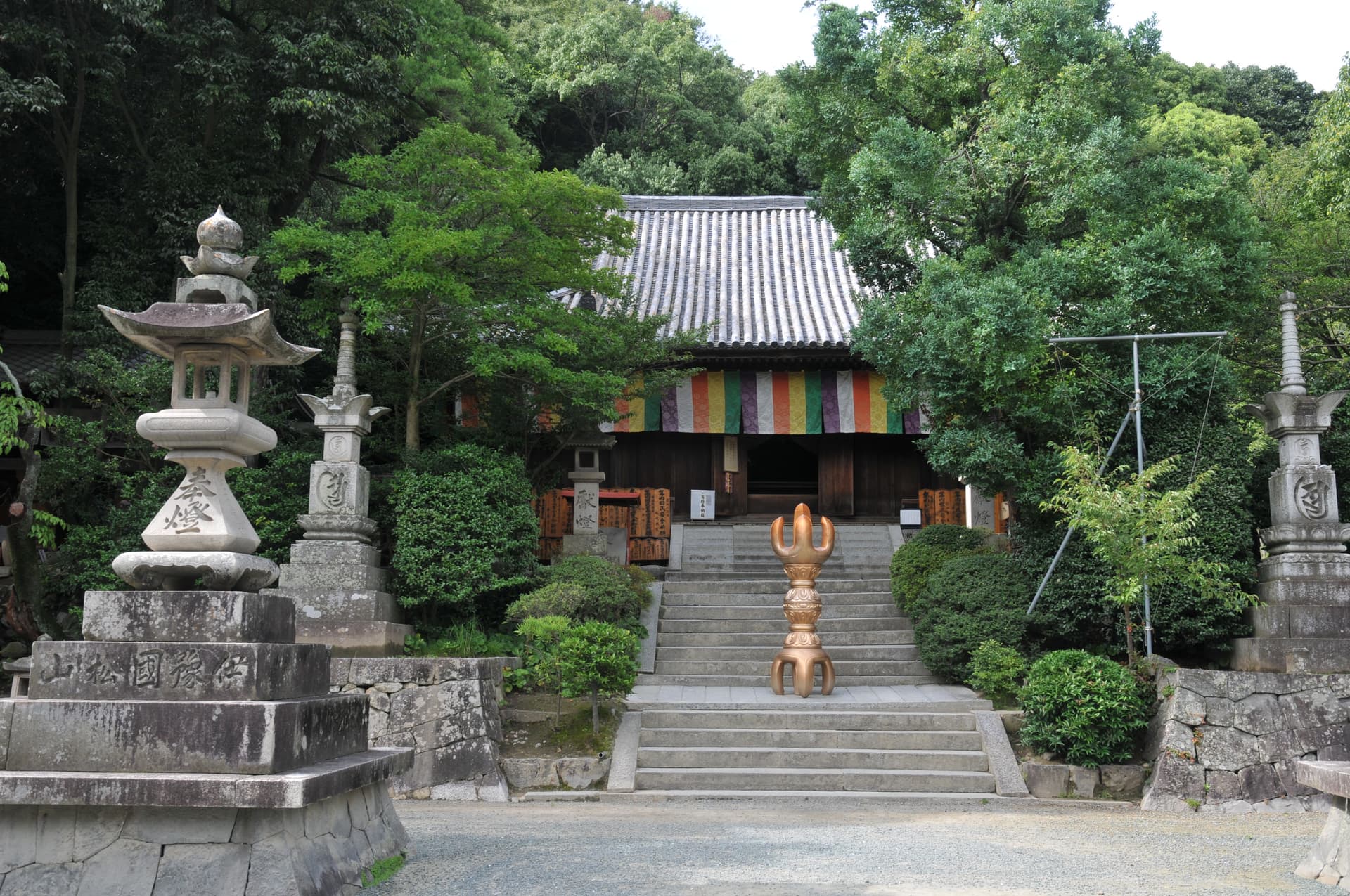
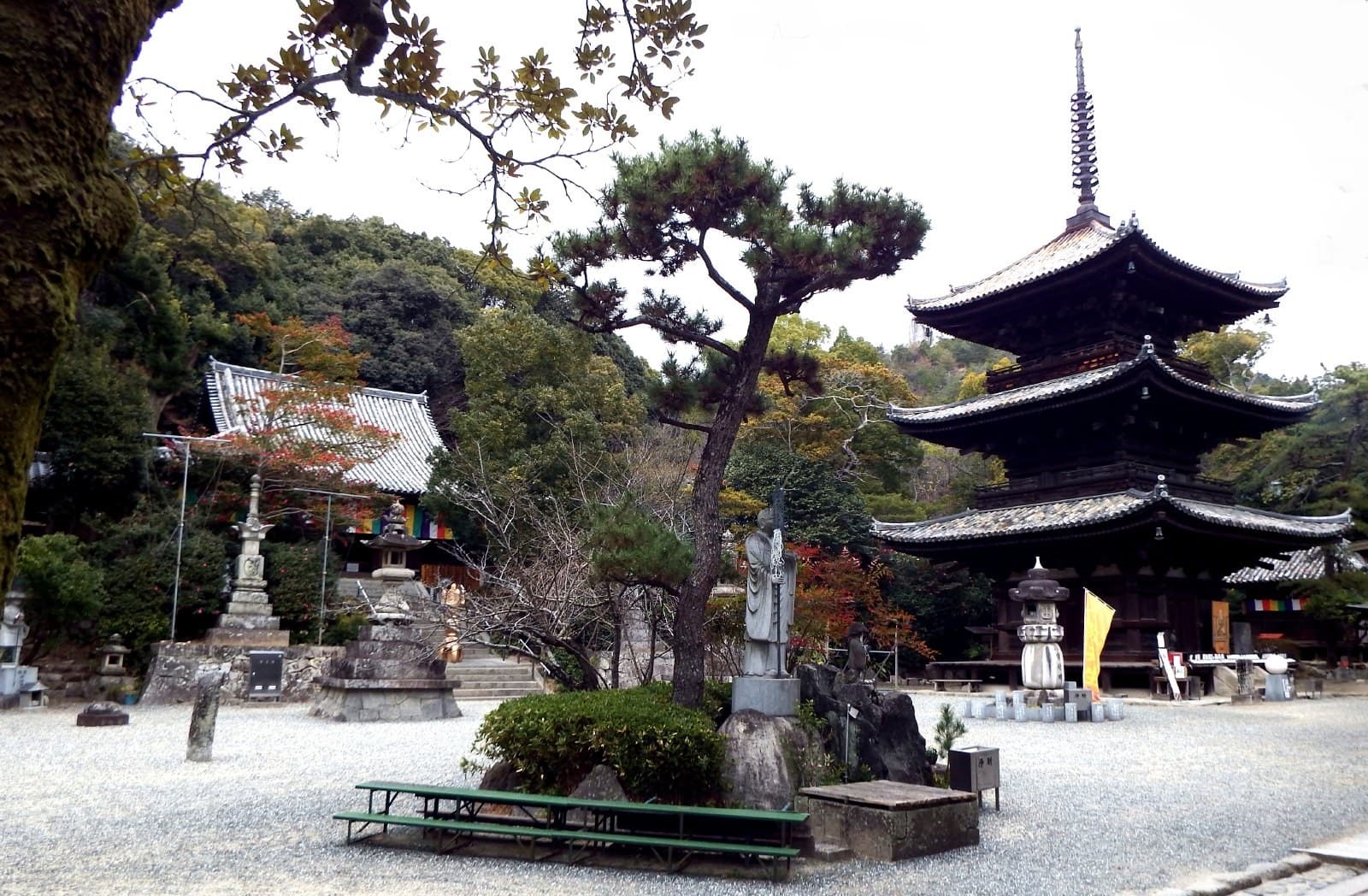
Image of Taisan-ji (太山寺). Image source · CC-BY-SA-3.0
Station 52 of 88
Shikoku 88 Temple PilgrimageVisit essentials
A quick read before you go
- Duration
- 45–60 minutes for a complete visit including the long forest approach, both halls, the bell…
- Access
- Located at 33.8851° N, 132.7150° E northwest of Matsuyama.
Overview
A long cypress-and-bamboo approach lifts Taisan-ji away from greater Matsuyama's noise into an unusually quiet precinct containing two National Treasures and one of the route's largest wooden Main Halls. The 1305 Hondō is a major late-Kamakura structure in western Japan. Behind its inner curtain, the National Treasure Jūichimen Kannon—Eleven-Faced Kannon—is normally concealed as a hibutsu and shown only during periodic kaihi ceremonies. Its eleven faces express the bodhisattva's capacity to perceive and answer suffering in every direction.
The coastal foundation legend tells how Mashio, a wealthy merchant sailing from Bungo (modern Ōita) toward Naniwa in the late sixth century, prayed to Kannon during a violent storm and, after being guided ashore at Takanawa Peninsula, built this gratitude shrine. The bell tower's vivid paintings of sinners boiled, frozen, and devoured set visible karmic consequence against the concealed Kannon's refuge.
Why this place is sacred
Taisan-ji's thinness is concentrated and architectural. The 1305 Main Hall, a National Treasure, has stood here for over seven hundred years; its scale and craftsmanship belong to a moment when Kamakura-period Buddhist architecture in western Japan was at its peak. Few comparable structures survive elsewhere on Shikoku.
The hibutsu tradition — concealing rather than displaying the principal image — gives the precinct a particular charged emptiness. The eleven-faced Kannon behind the inner curtain is a National Treasure that most visitors will never see. Its concealment is theological: visibility is not required for power. Pilgrims often note an unusual sense of presence inside the Hondō, with the absent image somehow more felt than displayed images at other temples.
The bell tower's hell paintings invert this: extreme visibility of suffering paired with the concealed compassion above. The pilgrim who looks at both moves through a deliberate East Asian Buddhist contrast — the visible consequences of karma against the hidden mercy of Kannon — within minutes of each other, in the same precinct.
The long approach through forest preserves silence. The trees have been there a long time. The path's steady climb separates the temple from the city below.
A merchant's gratitude shrine for rescue from shipwreck, built to Jūichimen Kannon in the late sixth century, expanded to a major centre under imperial patronage in the eighth century.
Flourished from the time of Emperor Shōmu (8th century) onward. Reorganized under Shingon influence in the early ninth century, associated with Kūkai. The current Main Hall was reconstructed in 1305, a structure later designated a National Treasure. The Niōmon is an Important Cultural Property; the principal image of Eleven-Faced Kannon is also a National Treasure, kept as hibutsu. Functions today as Temple 52 of the Shikoku 88-temple pilgrimage.
Experience and orientation
Most pilgrims arrive at Taisan-ji by car, taxi, or local bus, entering the precinct from a parking area near the Niōmon. The first impression is of distance: the path through the forest from the Niōmon to the Main Hall is longer than at most Shikoku temples, climbing gently between cypress and bamboo. The trees overhead muffle sound. The path slows the visitor without instruction.
At the top, the Main Hall stands. Its scale — one of the largest wooden structures in Ehime — does not register immediately; the eye adjusts. The 1305 architecture is more austere than ornate, with the heavy proportions characteristic of late-Kamakura provincial Buddhism. Pilgrims approach the offering box, light a candle and three incense sticks, recite the Heart Sutra, and present an osamefuda.
The principal image is concealed behind the inner curtain; the offering is made into the presence of the unseen.
The Daishi-dō stands a short walk away. The bell tower, often visited next, is the surprise of the precinct. Inside, painted onto the upper walls, are vivid scenes of Buddhist hells: sinners suspended over flames, frozen into ice, devoured by demons. The paintings are old, weathered, and visually direct. Many visitors react with a complex unease that is exactly the painters' intent.
The stamp office sits between the halls. The walk back down through the forest is the same descending path, often slower than the climb. From Taisan-ji, the henro continues approximately 3 kilometres to Enmyō-ji (Temple 53).
Located northwest of central Matsuyama at 33.8851° N, 132.7150° E. From Matsuyama Station or Iyotetsu hubs, take a local bus toward Takanawa or Mitsuhama; alight at Taisan-ji-mae and walk a short distance. By taxi from Matsuyama Station, allow 30–40 minutes. The Niōmon (Important Cultural Property) faces the entrance; pass through and follow the long forest approach uphill to the National Treasure Main Hall. The Daishi-dō and bell tower (with hell paintings) are short walks from the central courtyard.
Allow 45–60 minutes.
Context and lineage
By legend, a wealthy merchant named Mashio of Bungo (modern Ōita prefecture in Kyushu) was sailing toward Naniwa in the late sixth century when his ship was caught in a violent storm. Praying to Kannon, he saw a bright light leading him ashore at Takanawa Peninsula on the Iyo coast. Saved, he built a small temple to Jūichimen Kannon in gratitude on this hillside.
The site flourished from the time of Emperor Shōmu (reigned 724–749), drawing imperial patronage and growing into a major centre. In the early ninth century, Kūkai is associated with the temple's reorganization under Shingon. The current Main Hall was reconstructed in 1305 — a structure now designated a National Treasure of Japan.
The bell tower's hell paintings, the Niōmon (an Important Cultural Property), and the hibutsu Eleven-Faced Kannon (also a National Treasure) all contribute to the precinct's unusually rich heritage status.
Shingon Buddhism. The temple's pre-Shingon history connects it to the Nara imperial network and the broader cult of Kannon along Japan's Inland Sea coastlines.
Mashio of Bungo
Legendary founder
Emperor Shōmu
8th-century imperial patron
Kūkai (Kōbō Daishi)
Shingon refounder
Traditions and practice
Pilgrim sequence: bow at the Niōmon, follow the long forested approach to the Main Hall, purify hands and mouth, offer one candle and three incense sticks at the Hondō, recite the Heart Sutra and the Shingon mantra, present an osamefuda, repeat at the Daishi-dō, receive the stamp at the nōkyōjo. Pilgrims with specific concerns about travel danger or protection often direct prayers explicitly to Kannon at the Hondō.
On rare kaihi (curtain-opening) days, the hibutsu Eleven-Faced Kannon is revealed for direct viewing.
The same sequence is followed by today's pilgrims. Many international visitors include the bell tower's hell paintings as part of their visit, sometimes pausing longer there than at the halls. Consciousness of the hibutsu tradition — that the principal image is normally concealed — shapes how pilgrims engage the Hondō.
Walk the long approach slowly enough to register the change in atmosphere; the trees are part of the temple. At the Hondō, bring your offering knowing the principal image is hidden behind the inner curtain — the hibutsu tradition holds that concealment charges presence rather than diminishing it. Visit the bell tower's hell paintings; they are old, vivid, and meant to provoke. Sit a moment afterward.
The contrast between the visible consequences of karma and the concealed compassion of Kannon is the precinct's deliberate teaching.
Shingon Buddhism
ActiveTemple 52 of the Shikoku pilgrimage. Houses one of the largest hibutsu (secret Buddha) Eleven-Faced Kannon images in Shingon, designated a National Treasure, within a National Treasure Main Hall.
Pilgrim liturgy at Hondō and Daishi-dō; periodic kaihi (curtain-opening) revelations of the hibutsu Kannon.
Perspectives and open questions
Taisan-ji is read as a major medieval architectural site, as a rescue-shrine on the Inland Sea coastline, and as a precinct teaching Buddhist soteriological tension between consequence and refuge.
Scholarly perspective
Architectural historians regard the 1305 Main Hall as one of the most significant late-Kamakura Buddhist structures in western Japan. The 'secret Buddha' tradition is well-attested in Japanese Buddhism, understood as a means of protecting awe and concealing power. The Mashio rescue legend follows a recognizable pattern of Inland Sea coastal Kannon-shrine origins. The temple's National Treasure designations (Main Hall and principal image) place it among the most heritage-rich sites on the route.
Living and traditional perspectives
Pilgrims regard Taisan-ji as a place of refuge from danger — the Kannon who saved Mashio remains a saviour for travellers. The eleven faces of Kannon are understood as the bodhisattva's capacity to perceive and respond to suffering arriving from any direction.
Alternative interpretations
Some Shingon teachings interpret the eleven faces of Kannon as corresponding to stages of practice. In this reading, the hidden image becomes a meditative object even when unseen — pilgrims approach the closed curtain as a koan rather than an obstruction. The bell tower's hell paintings can be read alongside as a conceptual frame: visible consequence below, concealed mercy above, the pilgrim's path moving between them.
Open questions
Whether the hibutsu image dates to the temple's original founding or to a later replacement is debated; its concealed nature limits scholarly access. The historicity of the Mashio legend cannot be verified.
Plan your visit
Access and arrival
Located at 33.8851° N, 132.7150° E northwest of Matsuyama. From Matsuyama Station, take a local bus toward Takanawa or Mitsuhama and alight at Taisan-ji-mae, then a short walk. By taxi, allow 30–40 minutes. The temple is somewhat off main roads; rented car or taxi is recommended for short visits.
No shukubō at Taisan-ji. Pilgrims typically stay in Matsuyama (central or Dōgo Onsen) before continuing north toward Imabari. Walking pilgrims may arrange minshuku stays in nearby villages.
Respectful visit
Modest, comfortable clothing covering shoulders and knees. Traditional henro dress (white hakui, sedge hat, stole, kongōzue) welcomed. Sturdy footwear is helpful for the long forest approach.
Permitted in the outdoor precinct including the Niōmon, exterior of the Main Hall, and the forest approach. Flash and tripod use discouraged near the halls. Do not photograph the principal image; on rare kaihi days, photography of the revealed image is generally not allowed unless explicitly stated.
One candle and three incense sticks at each of the Hondō and Daishi-dō. Small coin offering at each box customary. Do not light from another's flame. Place an osamefuda in each hall's box.
No eating, smoking, or loud talking on grounds. Respect cordoned areas around the National Treasure structures. Do not touch the wooden walls or pillars of the Main Hall. Stay on paths through the forest approach.
Do not light your candle from another pilgrim's flame. Do not photograph the principal image even on kaihi days unless explicitly permitted. Flash and tripod use are discouraged near halls. Respect cordoned areas around the National Treasure architecture; do not lean against the wooden walls or pillars.
Current practical details
Address
1730 Taisanjichō, Matsuyama, Ehime 799-2662, Japan
Phone
Hours
Hours, fees, and access can change — verify on the official source before you travel. Practical details last checked Jun 2026.
Location
Map loads as you approach this section.
Pilgrim reflections
A portrait of encounter, not a score
Pilgrims describe what they felt, how present they could become, and whether the place would shape a journey. There are no stars and no ranking of traditions.
No reviewed reflections yet
The first pilgrims can help describe the character of being here.
Share a reflection
Available after an account-backed “Been there.” Every reflection is reviewed before publication.
Watch deeper
Films, episodes, and recorded talks for visitors who want more context before or after a visit. Speculative and alternative-history entries are labelled as perspectives, not as sources for established claims.
Nearby sacred places
Explore other sacred places in the region. Proximity does not establish access or travel time; check each place’s guidance.


References
Sources consulted for this page. Source categories describe the publication, not a guarantee that every claim is verified. Traditional accounts and outside interpretations may differ.
- 01Taisanji – Henro.org — Henro.orgguidePilgrim guide; cultural property details.
- 02Taisan-ji Temple No.52 — Tourism Matsuyama — Tourism MatsuyamaofficialArchitectural designations.
- 03Customs and Etiquette of the Shikoku Pilgrimage — Henro.orgguideEtiquette and hours.
- 04Taisan-ji (Matsuyama) — Wikipedia contributorsencyclopediaFoundation legend, National Treasure status of Main Hall.
- 05Taisan-ji — Japan Travel — Japan TravelguideBell tower hell paintings, atmosphere.
Pilgrim glossary
- Kannon
- The bodhisattva of compassion, central to many East Asian pilgrimage routes.
- Bodhisattva
- An enlightened being who postpones full nirvana to help others toward awakening.
- Sutra
- A canonical Buddhist scripture, often chanted as part of practice.
- Mantra
- A sound, word, or phrase repeated as part of meditation or ritual.
- Shingon
- An esoteric Japanese Buddhist school emphasizing ritual, mantra, and mandala practice.
- Koan
- A paradoxical question used in Zen training to break conceptual thinking.
Share a photo
Help visitors recognize Taisan-ji. Every submission is reviewed before publication.