Sairin-ji
The Sekisho of Iyo — a temple where the precinct dips below the surrounding ground
Understand sacred places, explore living traditions, and learn how to engage respectfully with Pilgrim Map.
Access has not been verified. Check current local guidance before planning a visit.
Matsuyama, Ehime Prefecture, Japan
Read the sources
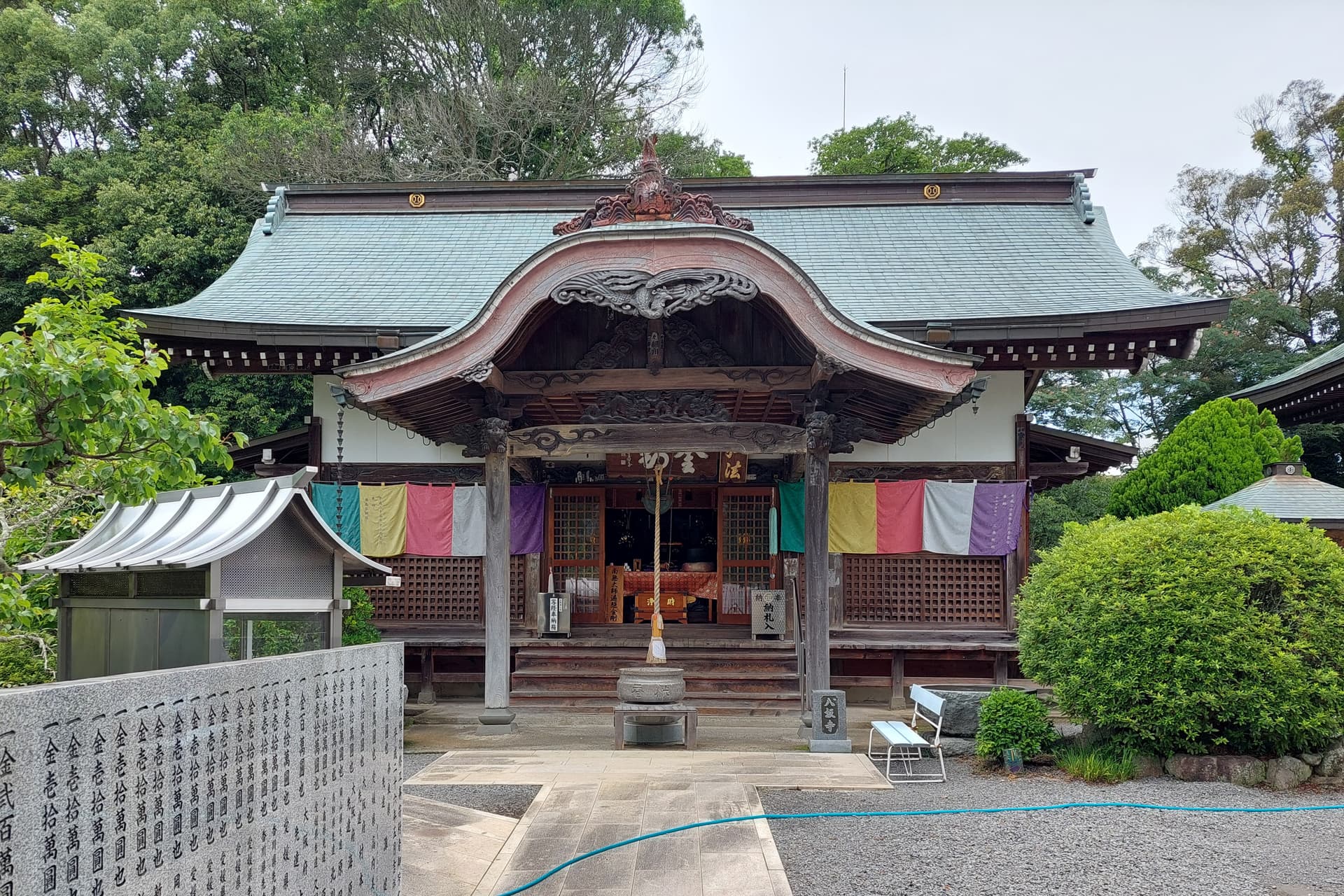
Image of Sairin-ji (西林寺). Image source · CC-BY-SA-4.0
Station 48 of 88
Shikoku 88 Temple PilgrimageVisit essentials
A quick read before you go
- Duration
- 30-45 minutes for the bridge crossing, formal ritual, spring, and sightline.
- Access
- Northern outskirts of Matsuyama City.
Overview
Each of Shikoku's four old provinces — Awa, Tosa, Iyo, and Sanuki — has one barrier temple where pilgrims face an inner test. Sairin-ji is the Sekisho of Iyo. The designation is internal to the pilgrimage tradition rather than to any historical checkpoint, but it gives the temple a moral function the rest of the Matsuyama cluster does not share.
Pilgrims who arrive at Sairin-ji are asked, by the structure of the visit, to examine the integrity of their journey before continuing. The four-sekisho structure may have been formalized only in the early modern period as the 88-temple circuit was systematized, but its weight in pilgrim practice is significant.
The physical setting carries the moral framing. The precinct lies slightly below ambient ground level — an actual dip in the land that pilgrims step down into when entering. Local folk belief holds that ill-intentioned visitors fall spiritually into endless hell from this physical descent. Sincere pilgrims pass through without trouble. The dip is uncommon among Shikoku temples and gives the visit a kinesthetic quality the imagination alone could not supply.
The approach reinforces the threshold. An elegant arched bridge crosses the Uchi River to the Niōmon. Pilgrims often pause on the bridge for self-reflection before crossing — the bridge functions as the literal threshold of the sekisho. On the precinct, a spring called Aitoku no Mizu still flows; legend holds that Kūkai struck the ground with his pilgrim's staff to produce it. From the grounds Mt.
Ishizuchi, the highest peak in western Japan and a long-revered Shugendō mountain, is visible on clear days. The sequence of liminal markers — the river, the bridge, the gate, the dip into the precinct, the spring, the distant Ishizuchi sightline — aligns into a checkpoint structure that makes the abstract sekisho identity concrete.
Founded in 741 by Gyōki and relocated to its current location by Kūkai around 807, Sairin-ji holds Jūichimen Kannon as honzon — the eleven-headed Kannon whose gaze examines the pilgrim from all directions at this threshold.
Why this place is sacred
The thinness at Sairin-ji is structural rather than atmospheric. The temple is not visually dramatic. There is no soaring cliff, no cedar grove, no rare architecture. What gives the precinct its thinness is the alignment of physical features into a checkpoint structure. The arched bridge over the Uchi River marks the first threshold. The Niōmon is the second.
The dip below ambient ground level is the third — a kinesthetic descent into the precinct that pilgrim folk tradition reads as a moral test. The Aitoku no Mizu spring is the fourth, marking purification. The sightline to Mt. Ishizuchi is the fifth, anchoring the whole sequence to the highest peak of the region's Shugendō tradition.
Walking through the sequence with attention takes only a few minutes. Most pilgrims complete the seven-step ritual at the Hondō and Daishi-dō without a strong sensory event. But pilgrims who treat the sekisho identity literally — pausing on the bridge, descending into the precinct with awareness of the dip, drinking from the spring, looking out toward Ishizuchi — find that the thresholds add up.
The Iyo leg is the longest of the four-province circuit (Temples 40-65), and Sairin-ji sits roughly in its middle. The barrier-temple designation gives pilgrims a place to register midstream what the leg has been so far. The Jūichimen Kannon's eleven faces, looking in all directions, match the examining gaze the temple represents.
Founded according to temple tradition in 741 CE by Gyōki, the wandering priest-engineer. The original purpose was a Buddhist temple foundation in the Matsuyama area; the current Sekisho-of-Iyo identity emerged later, with the early modern systematization of the 88-temple circuit and its four-province checkpoint structure.
Relocated to the current location by Kūkai around 807 CE (dates vary across sources), at which time Kūkai is said to have struck the ground with his staff to produce the Aitoku no Mizu spring still flowing on the precinct. Incorporated into the Shikoku pilgrimage circuit. The Sekisho-of-Iyo designation was formalized as the four-province checkpoint structure stabilized in the early modern period.
The temple has functioned continuously as one of the eight Matsuyama-area Shikoku 88 temples, with its checkpoint identity giving it a distinctive role in the Iyo-leg pilgrim experience.
Experience and orientation
The walk in from Temple 47 Yasaka-ji takes about an hour on foot — three to four kilometers north through the gently sloping rural fabric of northern Matsuyama. The Uchi River runs near the precinct, and the elegant arched bridge over the river marks the first threshold of Sairin-ji. Pilgrims who treat the sekisho identity seriously pause here for a moment of self-examination before crossing.
Walking pilgrims often note the visible step down into the precinct — the temple grounds sit perceptibly below the surrounding ground level.
The Niōmon stands beyond the bridge, with its guardian statues. Pilgrims bow at the gate, wash at the chōzuya, and proceed to the Hondō and Daishi-dō.
The Aitoku no Mizu spring still flows on the precinct. Drinking a small cup is a common pilgrim ritual, treated as a small purification appropriate to the checkpoint identity. The water is cool year-round. On clear days the sightline to Mt. Ishizuchi opens beyond the precinct — the highest peak in western Japan, long revered as a Shugendō mountain, visible to the east on cloudless winter mornings especially. The graveyard near the temple is observed quietly.
The goshuin stamp is taken at the nōkyō-jō. Continuing pilgrims walk to Temple 49 Jōdo-ji about three kilometers further north, the next stop in the Matsuyama cluster.
Approach over the elegant arched bridge crossing the Uchi River. The Niōmon is on the far side of the bridge. The precinct sits slightly below the surrounding ground level — pilgrims step down into the temple grounds. The Hondō and Daishi-dō form the main devotional axis. The Aitoku no Mizu spring is on the precinct; drinking a small cup is a common pilgrim ritual. The nōkyō-jō for the goshuin stamp is near the Hondō.
The walk to Temple 49 Jōdo-ji takes about an hour on foot to the north.
Context and lineage
Temple tradition records the founding in 741 CE by Gyōki, the wandering priest-engineer. The temple was relocated to its current location by Kūkai around 807 CE; dates vary across sources. Local legend credits Kūkai with striking the ground with his pilgrim's staff to produce the Aitoku no Mizu spring still flowing on the precinct. The Sekisho-of-Iyo identity — the spiritual checkpoint of the Iyo-province leg of the four-province pilgrimage — emerged with the early modern systematization of the 88-temple circuit.
Shingon Buddhism. The temple is part of the Shikoku 88-temple circuit attributed to Kūkai, and one of eight Matsuyama-area pilgrimage temples. The Sekisho-of-Iyo designation places Sairin-ji within the four-province checkpoint structure of the Shikoku 88 — analogous barrier-temples exist in Awa, Tosa, and Sanuki. The four-sekisho structure may have been formalized only in the early modern period, but its standing in pilgrim practice is consistent across sources.
Gyōki
Founder per temple tradition in 741 CE
Kūkai (Kōbō Daishi)
Relocator to current location around 807; producer of the Aitoku no Mizu spring per local legend
Jūichimen Kannon (as honzon)
Principal image; eleven-headed Kannon whose gaze examines from all directions
Traditions and practice
The seven-step pilgrim ritual at each main hall: bow at the threshold, light a candle, place three sticks of incense, deposit a fudasho-fuda in the slip box, place a saisen coin, chant the Heart Sutra and the Jūichimen Kannon mantra at the Hondō (Onmaka-kyaronikya-sowaka) and the mantra of Kōbō Daishi at the Daishi-dō (Namu-Daishi-Henjō-Kongō), bow on departure. Pause at the arched bridge before crossing for a moment of self-examination appropriate to the sekisho identity.
Drink from the Aitoku no Mizu spring on the precinct as a small purification.
Daily Shingon liturgy is performed by resident priests. Pilgrim sekisho commemoration continues, though not as a formal ceremony. New Year and Kannon-festival observances draw additional devotional traffic. The Aitoku no Mizu spring is maintained as a public devotional resource on the precinct.
Treat the bridge crossing as a deliberate moment. The sekisho identity becomes an opportunity for honest self-examination only if pilgrims pause; otherwise the temple reads as a standard Matsuyama-cluster stop. After the formal ritual, drink a small cup from the Aitoku no Mizu spring. On clear days look out toward Mt. Ishizuchi. Pilgrims walking the full circuit can use Sairin-ji as a midstream reckoning point for the long Iyo-province leg.
Shingon Buddhism
ActiveTemple 48 of the Shikoku 88-temple pilgrimage; one of the eight Matsuyama-area pilgrimage temples. Founded by Gyōki, relocated and consecrated by Kūkai.
Heart Sutra; Jūichimen Kannon mantra (Onmaka-kyaronikya-sowaka); candle and incense offerings; fudasho-fuda deposit; daily Shingon liturgy.
Sekisho (spiritual-barrier) tradition
ActiveSairin-ji is the Sekisho of Iyo — the spiritual checkpoint of the Iyo (Ehime) leg of the four-domain pilgrimage. Each of Shikoku's four old provinces (Awa, Tosa, Iyo, Sanuki) has one such barrier temple where pilgrims face an inner test.
Self-examination at the gate and on the bridge; the precinct lies slightly below surrounding ground level — folk belief holds that ill-intentioned visitors fall into endless hell from this dip in the land. Drinking from the Aitoku no Mizu spring as a small purification.
Perspectives and open questions
Sairin-ji is read variously as a four-province checkpoint temple, a literal below-grade moral threshold, and a Jūichimen Kannon all-direction examination point.
Scholarly perspective
Sairin-ji's sekisho designation is recognized in pilgrimage scholarship as part of the four-province moral-checkpoint structure built into the Shikoku 88 system. Analogous barrier-temples exist in Awa, Tosa, and Sanuki, giving the circuit a four-quadrant moral architecture. The four-sekisho structure may have been formalized only in the early modern period as the 88-temple circuit was systematized; the precise mechanism by which Sairin-ji acquired the Sekisho-of-Iyo designation is not historically documented.
Living and traditional perspectives
Local Matsuyama tradition emphasizes the literal below-grade dip as a physical sign of moral testing. Folk warnings persist about insincere visitors falling spiritually into endless hell from this descent. Sincere pilgrims pass through without trouble. The Aitoku no Mizu spring is treated as a small purification appropriate to the checkpoint role.
Alternative interpretations
Shingon mikkyō reading: Jūichimen Kannon's eleven-headed gaze examines the pilgrim from all directions at this threshold; passing through is a micro-initiation within the larger circuit. The Mt. Ishizuchi sightline anchors the moral examination to the highest peak of the region's Shugendō tradition. The Aitoku no Mizu spring, struck from the ground by Kūkai's staff, marks the dharma-water that purifies the pilgrim entering the second half of the Iyo leg.
Open questions
The exact mechanism by which Sairin-ji acquired the Sekisho-of-Iyo designation is not historically documented. The four-sekisho structure may have been formalized only in the early modern period as the 88-temple circuit was systematized. Sources vary on the date of relocation under Kūkai, with some giving 807 and others a slightly later restoration.
Plan your visit
Access and arrival
Northern outskirts of Matsuyama City. About 3-4 km north of Temple 47 Yasaka-ji. Bus access from central Matsuyama. On-site car park. Walking pilgrims continue from Temple 47 in about an hour.
Pilgrim minshuku and small inns throughout Matsuyama; Dōgo Onsen offers traditional ryokan. The Matsuyama cluster (Temples 46-53) is densely walkable and many pilgrims base themselves in central Matsuyama or Dōgo for several nights.
Respectful visit
Pilgrim hakui welcomed; modest dress acceptable. The Matsuyama cluster is at low elevation and walkable; mountain-grade gear is not necessary.
Permitted on grounds, the arched bridge, and the gate. Avoid the honzon and any private prayer. The Aitoku no Mizu spring can be photographed; ask before photographing pilgrims drinking from it.
Three incense sticks and one candle at each of the Hondō and Daishi-dō; a fudasho-fuda; a saisen coin in each offering box.
Do not bathe in or pollute the Aitoku no Mizu spring. Do not climb on the bridge railings. Photography of the honzon is not permitted. Voices low in the halls.
Do not bathe in or pollute the Aitoku no Mizu spring — the water is for drinking from a small cup only. Do not climb on the bridge railings. Photography of the honzon is not permitted. Voices low in the halls.
Current practical details
Address
1007 Takaimachi, Matsuyama, Ehime 791-1111, Japan
Phone
Hours
Hours, fees, and access can change — verify on the official source before you travel. Practical details last checked Jun 2026.
Location
Map loads as you approach this section.
Pilgrim reflections
A portrait of encounter, not a score
Pilgrims describe what they felt, how present they could become, and whether the place would shape a journey. There are no stars and no ranking of traditions.
No reviewed reflections yet
The first pilgrims can help describe the character of being here.
Share a reflection
Available after an account-backed “Been there.” Every reflection is reviewed before publication.
Watch deeper
Films, episodes, and recorded talks for visitors who want more context before or after a visit. Speculative and alternative-history entries are labelled as perspectives, not as sources for established claims.
Nearby sacred places
Explore other sacred places in the region. Proximity does not establish access or travel time; check each place’s guidance.


References
Sources consulted for this page. Source categories describe the publication, not a guarantee that every claim is verified. Traditional accounts and outside interpretations may differ.
- 01Sairinji – Matsuyama, Ehime Prefecture, Shikoku — Henro.orgguideStandard reference
- 02Seiryuzan Anyoin Sairinji – Shikoku 88 Temple Pilgrimage — Shikoku 88 Temple Pilgrimage OfficialofficialOfficial temple network site
- 03Sairin-ji Temple - Tourism Matsuyama — Tourism Matsuyama (Official)officialOfficial Matsuyama city tourism
- 04Sairin-ji (Matsuyama) — WikipediaencyclopediaEncyclopedia summary
- 05Sairinji Temple 48 Shikoku Ohenro Pilgrimage — Ojisanjake (Jake Davies)blogFirst-person account
Pilgrim glossary
- Honzon
- The principal Buddhist deity enshrined as a temple's central object of worship.
- Kannon
- The bodhisattva of compassion, central to many East Asian pilgrimage routes.
- Sutra
- A canonical Buddhist scripture, often chanted as part of practice.
- Mantra
- A sound, word, or phrase repeated as part of meditation or ritual.
- Dharma
- The teachings of the Buddha; also the universal law underlying them.
- Shingon
- An esoteric Japanese Buddhist school emphasizing ritual, mantra, and mandala practice.
- Pure Land
- A Buddhist tradition focused on rebirth in Amida Buddha's western paradise through devotional practice.
Share a photo
Help visitors recognize Sairin-ji. Every submission is reviewed before publication.