Tatsue-ji
The chief barrier temple — where pilgrims meet themselves
Understand sacred places, explore living traditions, and learn how to engage respectfully with Pilgrim Map.
Access has not been verified. Check current local guidance before planning a visit.
Komatsushima, Tokushima Prefecture, Japan
Read the sources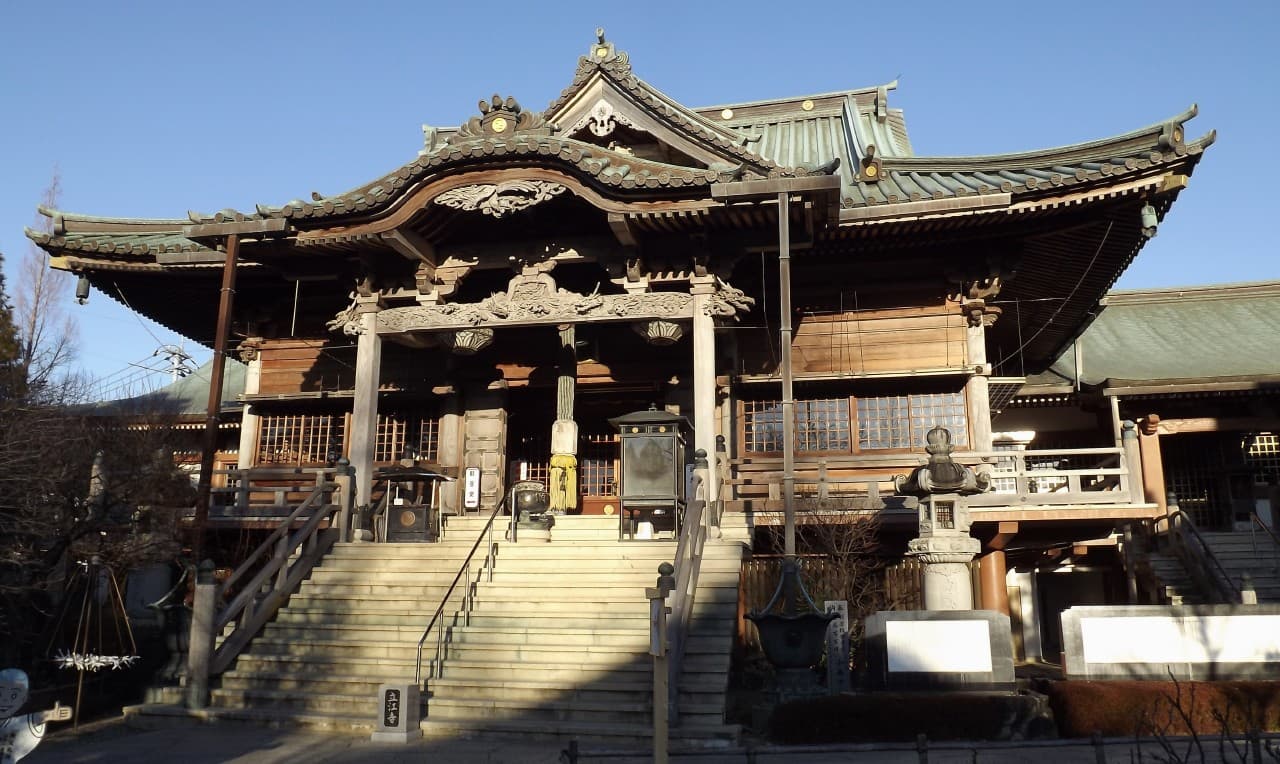
Image of Tatsue-ji (立江寺). Image source · CC-BY-SA-3.0
Station 19 of 88
Shikoku 88 Temple PilgrimageVisit essentials
A quick read before you go
- Duration
- 30-60 minutes for a day visit.
- Access
- Address: 13 Tatsue-honchō, Komatsushima, Tokushima 773-0017.
Overview
Tatsue-ji is the 19th temple of the Shikoku 88 and the Sōsekisho, chief barrier station of the entire pilgrimage. In its deliberately unimposing Komatsushima setting, folk tradition holds that pilgrims with unresolved sin or insincere intent cannot pass. Its principal icon is Enmei Jizō, the Life-Extending Jizō: a 5.5-sun (about 17 cm) gold image traditionally carved by Gyōki under Empress Kōmyō's Tenpyō-era (729–749) decree for safe royal childbirth, later enclosed within a larger wooden Jizō carved by Kūkai.
The kurokami-no-do, or Black Hair Hall, preserves hair attributed to the Edo-period Okyō legend as a moral relic. Pilgrims often describe the temple as emotionally pivotal, using the hall for self-examination or to leave a regret before continuing. Overnight guests can join the early-morning service. After Onzan-ji and Hanaorizaka's historical women's-ban hill, the flat precinct becomes what some pilgrims call Awa's first lesson: the moment the henro turns moral, not merely physical.
Why this place is sacred
Few sites on the Shikoku 88 ask the pilgrim to stop and account for themselves as directly as Tatsue-ji. The reijōkai's framing of the temple as Sōsekisho — chief among the pilgrimage's barrier stations — carries a specific logic: the temple is a checkpoint where the heart's transparency is read. The Jizō tradition layered onto this barrier function is not coincidental. Jizō descends into hell to save beings; the same figure stands at the threshold of pilgrimage.
Compassion and judgement converge in one icon. The Okyō legend gives this convergence a folk-tribunal form. The bell rope tearing scalp from skull is a vivid medieval image, but its function is older than the legend: it dramatises a question the pilgrim already carries. The kurokami-no-do, where the hair is enshrined, asks the pilgrim to look without looking away. Many do not; they stand outside and read the placard. Some go in.
What the temple offers is not reassurance but mirror. Pilgrims report a pivotal feeling here — the moment the henro becomes a moral journey rather than a movement-based one.
Founded by imperial decree of Empress Kōmyō in the Tenpyō era (729-749), the temple began as a prayer for safe royal childbirth. Gyōki carved a small gold Enmei Jizō (about 17 cm) as the principal icon. The Jizō tradition's protection of vulnerable life — children, the unborn, the dying — was the temple's first orientation.
Kūkai later expanded the temple, carving a larger wooden Jizō that enclosed Gyōki's original miniature within it. By the Edo period, Tatsue-ji was codified as the Sōsekisho of the 88-temple pilgrimage — the chief among its barrier stations. The Okyō legend, layered onto the older Jizō cult during the Edo period, generated the kurokami-no-do reliquary. Today the temple is an active Kōyasan Shingon site offering daily services, shukubo lodging, and full henro nōkyō facilities.
Experience and orientation
Walking pilgrims arrive at Tatsue-ji from Onzan-ji over the Hanaorizaka pass and a stretch of Komatsushima farmland. The temple's setting is unassuming — a town temple rather than a mountain one, the precinct opening directly off the local road. Past the gate, the Hondō is straight ahead, the Daishidō to one side, and the kurokami-no-do off to the side as well, smaller and quieter than the main halls.
Pilgrims complete the formal worship first — bow, hand-purification, offerings at the Hondō to Enmei Jizō, offerings at the Daishidō to Kōbō Daishi, the Heart Sutra, the Kōbō Daishi mantra. Then many walk to the kurokami-no-do. The hall holds a placard explaining the Okyō legend, and the preserved hair behind glass. People stand at varying distances. Some chant the Heart Sutra here too, treating the space as memorial. Some leave quickly.
The shukubo offers temple lodging for those who wish to stay; check-in around 17:00, an early-morning service in the Hondō before departure, a vegetarian meal taken in silence. For overnight guests, the temple becomes more than a checkpoint — it becomes a threshold experience.
Bow at the gate. Purify hands and mouth at the stone basin. Offer at the Hondō first to Enmei Jizō, then at the Daishidō to Kōbō Daishi. Drop your osamefuda, light incense, chant or read the Heart Sutra and the Kōbō Daishi mantra. Visit the kurokami-no-do quietly, treating it as memorial space rather than curiosity. Receive your nōkyōchō stamp at the temple office. If staying at the shukubo, check in by 17:00 and join the early-morning service before departure.
Context and lineage
Tradition holds that Tatsue-ji was founded by imperial decree of Empress Kōmyō in the Tenpyō era (729-749), with Gyōki carving a 5.5-sun (about 17 cm) gold Enmei Jizō image as the principal icon — originally a prayer for the empress's safe childbirth. Kūkai later carved a larger wooden Jizō and enclosed the original miniature within. Centuries later, the temple was designated the Sōsekisho of the 88-temple pilgrimage in the Edo-period codification of the route.
The Okyō legend belongs to that Edo layer: a woman fleeing with her lover after killing her former master disguised herself as a henro. When she pulled the bell rope at the Hondō, her hair stood on end and tangled in the rope, tearing scalp from skull. She repented, became a nun, and her hair was enshrined in the kurokami-no-do.
Kōyasan Shingon. Tatsue-ji is the 19th of the Shikoku 88 in standard order, in Komatsushima. As Sōsekisho — the chief barrier temple — it holds a special status across the entire 88-temple network. Some sources also name four sekisho temples (one per province) with Tatsue-ji as the Awa-province sekisho specifically; the Sōsekisho framing is the most authoritative within the reijōkai.
Empress Kōmyō
Imperial founder
Gyōki
Carved the original gold Enmei Jizō (5.5-sun)
Kūkai (Kōbō Daishi)
Expanded the temple, carved the larger Jizō
Okyō
Edo-period figure of the bell rope legend
Traditions and practice
Daily morning service around 6:00, including chanting and goma fire ritual when scheduled. Jizō-bon services in summer. Child-protection prayers, including mizuko-kuyō discreetly available for those who request them. Memorial services for fees set by the temple office.
Pilgrim worship at the Hondō and Daishidō. Visit to the kurokami-no-do within the precinct. Reception of nōkyōchō stamp. Shukubo guests join the early-morning service in the Hondō and take a silent vegetarian meal. Many pilgrims also write a dedicated osamefuda for safe childbirth, child welfare, or in memory of a child.
If you can, book the shukubo and stay overnight — the morning service in the Hondō is one of the most direct introductions to Shingon liturgy you will encounter on the henro. If staying only briefly, complete the formal worship at both halls before approaching the kurokami-no-do, and treat the hall as memorial rather than curiosity. If you carry a particular regret, this is a recognised place to leave it.
Shingon Buddhism (Kōyasan branch)
ActiveTatsue-ji is the Sōsekisho — chief barrier temple — of the Shikoku Pilgrimage. Within Shingon's broader symbolic system, it tests the heart's transparency at the threshold of the journey.
Twin-hall pilgrim worship; Jizō prayers for safe childbirth (anzan) and child welfare; memorial services; ajikan-style meditation occasionally hosted for shukubo guests. The kurokami-no-do is treated as memorial reliquary.
Perspectives and open questions
Tatsue-ji's identity rests on layers — imperial Jizō foundation, Edo-period Sōsekisho codification, and the Okyō morality tale on top. Different readings emphasise different layers.
Scholarly perspective
Folklorists treat the Okyō legend as an Edo-period morality tale layered onto an older Heian-era Jizō cult. Both layers reflect the temple's identity as a barrier (sekisho) where ethical reckoning intersects with Jizō's protection of those who cannot protect themselves. The medieval ritualisation of the route is what gave the temple its Sōsekisho status, not any older intrinsic claim.
Living and traditional perspectives
Local devotion to Enmei Jizō for safe childbirth and child welfare predates the broader sekisho framing. Women in the surrounding villages have long visited Tatsue-ji as a maternity shrine rather than as a moral barrier. For many local devotees, the kurokami-no-do is secondary; the Hondō's Jizō is the heart of the temple.
Alternative interpretations
Within Shingon symbolism, Jizō at the Sōsekisho represents the bodhisattva-as-judge and as compassionate gatekeeper. The same figure who descends into hell to save beings here also stands at the threshold of pilgrimage. The temple thus enacts the dual role of judgement and salvation in a single icon.
Open questions
The provenance of the hair in the kurokami-no-do has never been forensically tested; whether it dates to the Edo period or is a later reliquary substitution is unknown. The original gold Jizō miniature, said to be enclosed within the larger statue, has not been documented externally.
Plan your visit
Access and arrival
Address: 13 Tatsue-honchō, Komatsushima, Tokushima 773-0017. About a 5-10 minute walk from JR Tatsue Station on the Mugi Line. Parking on site. Bus access from Tokushima City. Phone: 0885-37-1019 (verify). Standard nōkyō hours 07:00-17:00.
The temple's own shukubo is the most direct lodging option (advance reservation required). Komatsushima town has limited business hotels. Tokushima City offers a fuller range of options within easy reach by JR Mugi Line.
Respectful visit
Modest dress; pilgrim attire welcomed. Remove shoes when entering halls or shukubo rooms.
Outdoor photography permitted. The kurokami-no-do interior is sensitive — follow posted guidance; avoid flash; treat the space as memorial.
Coin, three sticks of incense, one candle, an osamefuda dropped in the wooden box at each hall. Many pilgrims also write a dedicated osamefuda for safe childbirth, child welfare, or memorial purposes.
Quiet inside the shukubo after 21:00. No smoking on grounds. No commercial filming without permission. Treat the kurokami-no-do as memorial space.
The kurokami-no-do is a moral teaching reliquary, not a sideshow. Avoid flippant photography and do not joke about the Okyō legend within the precinct. The temple's emotional weight is genuine; do not perform feeling you do not have, but do not refuse the question it asks.
Current practical details
Address
Wakamatsu-13 Tatsuechō, Komatsushima, Tokushima 773-0017, Japan
Phone
Hours
Hours, fees, and access can change — verify on the official source before you travel. Practical details last checked Jun 2026.
Location
Map loads as you approach this section.
Pilgrim reflections
A portrait of encounter, not a score
Pilgrims describe what they felt, how present they could become, and whether the place would shape a journey. There are no stars and no ranking of traditions.
No reviewed reflections yet
The first pilgrims can help describe the character of being here.
Share a reflection
Available after an account-backed “Been there.” Every reflection is reviewed before publication.
Watch deeper
Films, episodes, and recorded talks for visitors who want more context before or after a visit. Speculative and alternative-history entries are labelled as perspectives, not as sources for established claims.
Nearby sacred places
Explore other sacred places in the region. Proximity does not establish access or travel time; check each place’s guidance.


References
Sources consulted for this page. Source categories describe the publication, not a guarantee that every claim is verified. Traditional accounts and outside interpretations may differ.
- 01Kyouchisan Maniin Tatsueji – Shikoku 88 Temple Pilgrimage — Shikoku 88 ReijokaiofficialOfficial temple association page.
- 02Tatsueji – Komatsushima, Tokushima Prefecture, Shikoku — Henro.orgguideDetailed Okyō legend and 'kurokami-no-do' (black hair hall).
- 03Tatsue-ji (Komatsushima) — Wikipedia contributorsencyclopediaSect, principal deity, sekisho status.
- 04Temple 19, Tatsueji|What to See & Do — Tourism ShikokuguideGovernment tourism portal description.
- 05Temple number 19 of the Shikoku Pilgrimage, Tatsue-ji — Shikoku Pilgrimage NewsguideFoundation by imperial decree, Gyōki carving.
- 06Shukubo Tatsue-ji Temple — Inside Japan Tours / MINNA NO HENROguideTemple lodging info.
Pilgrim glossary
- Shukubo
- A temple lodging where pilgrims and visitors can stay overnight, often with vegetarian meals and morning service.
- Bodhisattva
- An enlightened being who postpones full nirvana to help others toward awakening.
- Sutra
- A canonical Buddhist scripture, often chanted as part of practice.
- Mantra
- A sound, word, or phrase repeated as part of meditation or ritual.
- Shingon
- An esoteric Japanese Buddhist school emphasizing ritual, mantra, and mandala practice.
Share a photo
Help visitors recognize Tatsue-ji. Every submission is reviewed before publication.