Suwa-taisha
Japan's oldest nature worship where mountains and ancient trees remain the objects of veneration
Understand sacred places, explore living traditions, and learn how to engage respectfully with Pilgrim Map.
Access has not been verified. Check current local guidance before planning a visit.
Suwa, Nagano Prefecture, Japan
Read the sources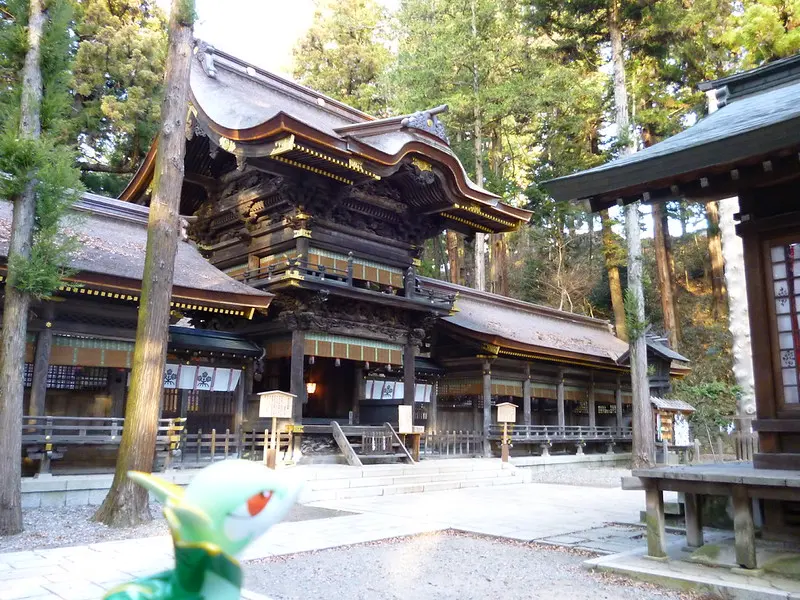
Visit essentials
A quick read before you go
- Duration
- Half day minimum to visit all four shrines by car.
- Etiquette
- Standard Shinto etiquette applies.
Overview
At Suwa-taisha, the sacred objects are not housed in buildings—they are the landscape itself. Mount Moriya rises as the shintai of Honmiya shrine. Ancient trees serve as the divine presence at the Lower Shrine compounds. This is Shinto before architecture, worship directed at the natural world as the dwelling place of kami. The four shrines of Suwa-taisha surround Lake Suwa in central Nagano: the Upper Shrine with Maemiya and Honmiya, the Lower Shrine with Harumiya and Akimiya.
Together they form a sacred geography that has drawn worshippers since prehistoric times, long before the deity Takeminakata arrived in the mythological narratives of the Yamato court. Documentation appears in the Nihon Shoki by the late 7th century, but the traditions here are far older. What gives Suwa-taisha its particular intensity is the Onbashira Festival.
Every six years, in the years of the Tiger and Monkey, sixteen massive fir trees—each over 17 meters long, 150 years old or more—are cut from sacred mountains, dragged by hand through the community, and erected at the four corners of each shrine. The ki-otoshi, where riders descend steep slopes astride these logs, has claimed lives throughout history. Yet participation remains a profound honor.
This festival has continued without interruption for over 1,200 years, creating an unbroken thread connecting contemporary practitioners to their ancestors across more than two hundred generations. As the head shrine of over 10,000 affiliated Suwa shrines nationwide, this complex stands at the center of one of Japan's most extensive sacred networks.
Why this place is sacred
What makes Suwa-taisha thin is its preservation of the most archaic form of Japanese spirituality. Before Shinto meant shrine buildings and ritual objects, it meant encountering kami in the natural world. At Honmiya, pilgrims do not worship an artifact—they worship Mount Moriya itself, rising to the southwest. At Akimiya, the sacred presence resides in an ancient yew tree. At Harumiya, a venerable cedar. The buildings exist to mark these natural presences, not to contain them.
This pattern predates the systematization of Shinto, predates the mythology that placed Takeminakata at Suwa, predates the shrine architecture that would eventually standardize worship across Japan. Here, the older way persists. The thinness deepens through the Onbashira Festival. Every six years, the community enacts a ritual of renewal that connects them to over 1,200 years of continuous practice. Sixteen sacred pillars are cut, dragged from mountains, and erected at the shrines' corners.
The work is dangerous—the ki-otoshi log-riding down steep mountain slopes has caused deaths. Yet communities compete for the honor of participation. Fathers ride the logs their grandfathers rode. The festival is not merely observed but lived, embodied, carried forward in muscle and bone. This physical participation across generations creates a compression of time similar to what pilgrims experience at the oldest continuously inhabited sacred sites. The four-shrine structure around Lake Suwa creates a mandala in landscape.
To complete pilgrimage to all four is to trace a sacred geography, to experience a mountain, trees, and water as the interconnected dwelling places of spiritual power. The Suwa priestly family, who served as hereditary priests for centuries, were understood not merely as intermediaries but as living vessels of the kami—human bodies containing divine presence. Such claims are rare even in Shinto, suggesting the exceptional nature of what practitioners have encountered here.
Mountain and nature worship predating organized Shinto. Later synthesized with mythology of Takeminakata, the kami who fled to Suwa after defeat in the struggle for Izumo. Became major cult of wind, water, hunting, and warfare, attracting samurai devotion.
Prehistoric mountain worship at Mount Moriya. Integration of Takeminakata mythology (recorded in Kojiki, 8th century). Documentation in Nihon Shoki (late 7th century). Recorded in Engishiki (early 10th century). Major military shrine during medieval period, patronized by Hojo and Takeda clans. Onbashira Festival documented continuously for 1,200+ years. Designated ichinomiya (primary shrine) of former Shinano Province. Head shrine of 10,000+ affiliated Suwa shrines nationwide.
Experience and orientation
The experience of Suwa-taisha unfolds across four shrines, each with its own character, each revealing a different face of the sacred. Begin at Honmiya of the Upper Shrine, the most prominent of the four. The approach leads through towering cryptomeria to buildings nestled against the forested slopes of Mount Moriya. The mountain itself is the shintai here—the sacred object of worship. There is no inner sanctuary containing a divine image because the divine presence is the mountain rising behind you.
At each corner of the shrine compound stand the massive onbashira pillars, their bark still visible, their height and circumference testimony to the 150-year-old trees from which they were cut. These pillars mark the shrine's sacred boundaries and demonstrate the community's ongoing relationship with the mountain forests. The wood weathers over six years until the next festival replaces them. Maemiya, a short distance from Honmiya, contains the Jinji-sha, considered the oldest structure in the complex.
Its quiet atmosphere contrasts with Honmiya's prominence, offering space for contemplation. Cross Lake Suwa to reach the Lower Shrine compounds. At Harumiya, a magnificent sacred cedar serves as the shintai. At Akimiya, an ancient yew holds that role. These trees are not symbols of the divine—they are understood as the divine presence itself, living beings that house kami. Worshippers approach them with the reverence others might reserve for the most precious artifacts.
The act of visiting all four shrines, collecting goshuin from each, creates a pilgrimage circuit around the lake. The journey takes half a day to a full day by car or bicycle, longer on foot. Each shrine offers a different encounter: mountain, cedar, yew, the massive pillars marking sacred space. Together they form a coherent sacred landscape with the lake at its center. Those who witness the Onbashira Festival experience something else entirely.
In the yamadashi phase during April, the sixteen sacred logs are cut and dragged from the mountains. In the satobiki phase during May, they are pulled through town streets to their final positions. The ki-otoshi—where men ride the logs down steep mountain slopes—is among Japan's most dangerous religious practices. Injuries occur at every festival; deaths are not unknown. Yet the waiting lists for participation extend across years.
To ride the log is to connect with ancestors who rode before, to carry forward a tradition that has renewed itself without interruption across more than 200 generations.
Suwa-taisha comprises four shrines around Lake Suwa in Nagano Prefecture. Upper Shrine Honmiya is 15 minutes by taxi from JR Chino Station. Upper Shrine Maemiya is nearby. Lower Shrine Harumiya and Akimiya are accessible from JR Shimosuwa Station. Consider renting a car or bicycle to visit all four. The shrines are open year-round; festival timing determines whether you witness the Onbashira (every 6 years, Tiger and Monkey years—next in 2028).
Context and lineage
The worship at Suwa predates written history. When the compilers of the Kojiki and Nihon Shoki recorded Japanese mythology in the 8th century, they found at Suwa an ancient and powerful cult already in place. Their solution was synthesis: Takeminakata, son of the great deity Okuninushi, was said to have fled to Suwa after defeat by Takemikazuchi in the struggle over who would rule the terrestrial realm.
Arriving at the lake, he swore never to leave, and his presence transformed (or merged with) whatever worship traditions already existed. Alternative legends preserved locally tell different stories. One describes the kami as an Indian king who defeated a Persian dragon. Another speaks of a warrior named Koga Saburo who descended into the underworld and emerged transformed into a serpent.
These layered narratives suggest the synthesis of multiple traditions at Suwa—indigenous mountain worship, the mythology of the Yamato court, local legends of transformation and power. What emerged was a cult of extraordinary influence. Takeminakata (also called Suwa Daimyojin) became associated with wind, water, hunting, and warfare. The Suwa priestly clan served as hereditary priests, understood as living vessels of the kami rather than mere intermediaries.
When the samurai class rose to power in medieval Japan, Suwa-taisha became one of the 'three great military shrines of the East.' The Hojo clan, the Takeda clan, and other warrior lineages sought the deity's protection before battle. This martial association shaped the shrine's historical development, bringing patronage and prestige. Yet the Onbashira Festival preserved something older than samurai culture.
The practice of cutting sacred trees, dragging them from mountains, and erecting them at shrine corners represents renewal ceremonies of immense antiquity. Documentation traces the festival back over 1,200 years, but its origins likely extend much further. The festival continues today unchanged in its essential form—sixteen logs, four shrines, the dangerous descent, the community united in physical labor.
Prehistoric mountain worship. Integration with Yamato court mythology (8th century). Documentation in Nihon Shoki and Engishiki (7th-10th centuries). Medieval military shrine patronized by samurai clans. Ichinomiya of Shinano Province. Head shrine of 10,000+ affiliated Suwa shrines. Onbashira Festival continuously practiced for 1,200+ years.
Takeminakata-no-kami
Primary deity
The Suwa Priestly Clan
Hereditary priests and living vessels
The Takeda Clan
Medieval patrons
Traditions and practice
The Onbashira Festival is the defining practice of Suwa-taisha. Held in years of the Tiger and Monkey according to the Chinese zodiac, it involves cutting sixteen massive fir trees from sacred mountains and transporting them to the four shrines. The yamadashi phase in April sees the logs dragged from the mountains; the ki-otoshi descent down steep slopes is among Japan's most dangerous religious practices.
The satobiki phase in May pulls the logs through town to their final positions at the shrine corners. The entire community participates—pulling ropes, chanting, carrying forward a tradition their ancestors carried. Historically, Suwa-taisha served as a military shrine where samurai prayed for victory before battle. The deity's associations with wind and hunting connected to martial arts and archery. Agricultural communities sought the kami's blessing for favorable weather and abundant harvests.
All traditional practices continue at Suwa-taisha. The Onbashira Festival proceeds every six years with full community participation; the next festival is in 2028 (Year of the Monkey). Waiting lists for participation in the ki-otoshi extend years in advance. Daily worship continues at all four shrines. Visitors can pray at each shrine, collect goshuin stamps as pilgrimage documentation, and purchase omamori protective charms. Seasonal festivals mark the agricultural and liturgical calendar.
The shrine remains central to regional identity, and participation in the Onbashira is considered a defining experience of Suwa citizenship.
Visit all four shrines to complete the pilgrimage circuit around Lake Suwa. At Honmiya, observe how the mountain itself serves as the object of worship—notice how the shrine buildings orient toward Mount Moriya rather than housing an inner sanctuary. Examine the onbashira pillars at each shrine's corners, noting their weathering if you visit in years between festivals.
At the Lower Shrine, approach the sacred trees at Harumiya and Akimiya with awareness that these living beings are understood as the kami's dwelling place. Collect goshuin from each shrine as documentation of your pilgrimage. If you visit during the Onbashira Festival (April-May, every 6 years), witness the yamadashi mountain departure or satobiki village pulling phases—but be prepared for enormous crowds and limited viewing areas for the most dramatic moments.
Shinto
ActiveSuwa-taisha represents Shinto's oldest stratum: nature worship where mountains and trees serve as shintai (sacred objects of worship) rather than man-made artifacts. The shrine complex predates shrine architecture itself, preserving the form of worship that existed before buildings were constructed to house kami. The Onbashira Festival, continuously practiced for over 1,200 years, renews the sacred relationship between community and kami through the physical labor of transporting massive sacred pillars. As the head shrine of more than 10,000 affiliated Suwa shrines nationwide, the complex sits at the center of one of Japan's most extensive religious networks. The deity Takeminakata (Suwa Daimyojin) is associated with wind, water, hunting, and warfare—a combination that made Suwa-taisha particularly important to samurai clans in medieval Japan.
Pilgrimage to all four shrines around Lake Suwa. Prayer at each shrine following standard Shinto forms: purification at temizuya, offerings, the two-two-one pattern of bows and claps. Collection of goshuin stamps documenting the pilgrimage. Participation in the Onbashira Festival (every six years) through rope-pulling, log-riding, or support roles. Seasonal festivals throughout the year. Prayers for victory, protection, safe travel, favorable weather, and abundant harvests.
Perspectives and open questions
Suwa-taisha invites encounter with Japan's oldest spiritual stratum—worship of mountains and trees as divine dwelling places—preserved through over a millennium of continuous practice and the extraordinary drama of the Onbashira Festival.
Scholarly perspective
Religious historians recognize Suwa-taisha as preserving the most archaic form of Japanese worship: nature veneration predating shrine architecture, mythology, and institutional Shinto. The natural shintai—mountain and trees—represent a stratum of practice older than the standardized shrine systems that would develop later. The Takeminakata mythology appears to have been layered over pre-existing traditions when the Yamato court integrated Suwa into its religious framework. The Onbashira Festival preserves tree-worship and renewal ceremonies of uncertain but clearly ancient origin.
The shrine's importance to medieval warrior culture documented in historical records shaped its development but did not fundamentally alter its character as a nature-worship site. The four-shrine structure around Lake Suwa represents sophisticated sacred geography.
Living and traditional perspectives
Within Shinto understanding, Suwa-taisha is the residence of Takeminakata-no-kami (Suwa Daimyojin), a powerful deity of wind, water, hunting, and warfare. The natural shintai are not symbols but actual dwelling places—the kami inhabits Mount Moriya, inhabits the ancient trees. The Onbashira Festival renews the kami's power and the community's relationship with that power. The Suwa priestly clan served as living vessels of the deity, a relationship of exceptional intimacy even within Shinto.
As the head shrine of over 10,000 affiliated shrines, Suwa-taisha sits at the center of a vast network of veneration.
Alternative interpretations
Suwa-taisha attracts visitors interested in power spots and earth energies. The four-shrine structure around the lake, the mountain shintai, and the dramatic festival create a site frequently discussed in spiritual tourism contexts. Some interpret the location through ley line frameworks or as an example of ancient geomantic wisdom.
Open questions
The pre-Takeminakata worship traditions at Suwa are not fully documented. What specific practices occurred before the Yamato court's mythology was integrated? How old is the Onbashira Festival, beyond its 1,200+ years of documentation? What was the original relationship between the Upper and Lower Shrine traditions? The esoteric practices of medieval Suwa—hinted at in historical sources—remain incompletely understood.
The multiple origin stories for Takeminakata (Kojiki narrative vs. local legends of Indian kings and transformed serpents) suggest layers of tradition that have not been fully untangled.
Plan your visit
Access and arrival
Suwa area offers ryokan (traditional inns) and hotels, many with access to natural hot springs (onsen). The region is famous for its hot spring baths. Accommodation books far in advance for Onbashira Festival years.
Respectful visit
No specific dress code, though modest, respectful clothing is appropriate. Comfortable walking shoes are essential if visiting multiple shrines.
Photography is permitted in shrine grounds. Avoid photographing individuals at prayer without permission. During the Onbashira Festival, photography is welcome but positions may be restricted for safety.
Place monetary offerings quietly in the offering box (saisen-bako) before prayer. Omamori (protective amulets) and ema (votive tablets) are available for purchase at each shrine.
Some inner areas may be restricted to priests. Standard Shinto practices apply: do not touch sacred objects, maintain quiet respect during worship, follow any posted guidance.
The Onbashira Festival is dangerous; spectators should maintain safe distances during the ki-otoshi log descent. The festival draws hundreds of thousands of visitors, creating significant crowding. At the temizuya, use the provided ladle to wash the left hand, then the right, and rinse the mouth; at the shrine, bow twice, clap twice, offer a prayer, then bow once. Some areas within the shrine compounds may be restricted to priests.
Current practical details
Address
Japan, 〒392-0015 Nagano, Suwa, Nakasu, 宮山1
Phone
Hours
Hours, fees, and access can change — verify on the official source before you travel. Practical details last checked Jun 2026.
Location
Map loads as you approach this section.
Pilgrim reflections
A portrait of encounter, not a score
Pilgrims describe what they felt, how present they could become, and whether the place would shape a journey. There are no stars and no ranking of traditions.
No reviewed reflections yet
The first pilgrims can help describe the character of being here.
Share a reflection
Available after an account-backed “Been there.” Every reflection is reviewed before publication.
Nearby sacred places
Explore other sacred places in the region. Proximity does not establish access or travel time; check each place’s guidance.


References
Sources consulted for this page. Source categories describe the publication, not a guarantee that every claim is verified. Traditional accounts and outside interpretations may differ.
- 01信濃國一之宮 諏訪大社 - Official Website — Suwa TaishaofficialOfficial shrine website
- 02御柱祭 ONBASHIRA in SUWA — Onbashira Festival CommitteeofficialOfficial festival information
- 03Suwa Taisha Shrine - JNTO — Japan National Tourism OrganizationSource contextNational tourism authority
- 04Nagano Prefecture's Suwa Taisha - Nippon.com — Nippon.comnewsCultural journalism
- 05Suwa-taisha - Wikipedia — Wikipedia contributorsencyclopediaComprehensive overview
Pilgrim glossary
- Mandala
- A symbolic diagram of the cosmos used in meditation and ritual.
Share a photo
Help visitors recognize Suwa-taisha. Every submission is reviewed before publication.