Sumiyoshi-taisha
Head shrine of sea deities where architecture predates Buddhist influence
Understand sacred places, explore living traditions, and learn how to engage respectfully with Pilgrim Map.
Access has not been verified. Check current local guidance before planning a visit.
Osaka, Osaka Prefecture, Japan
Read the sources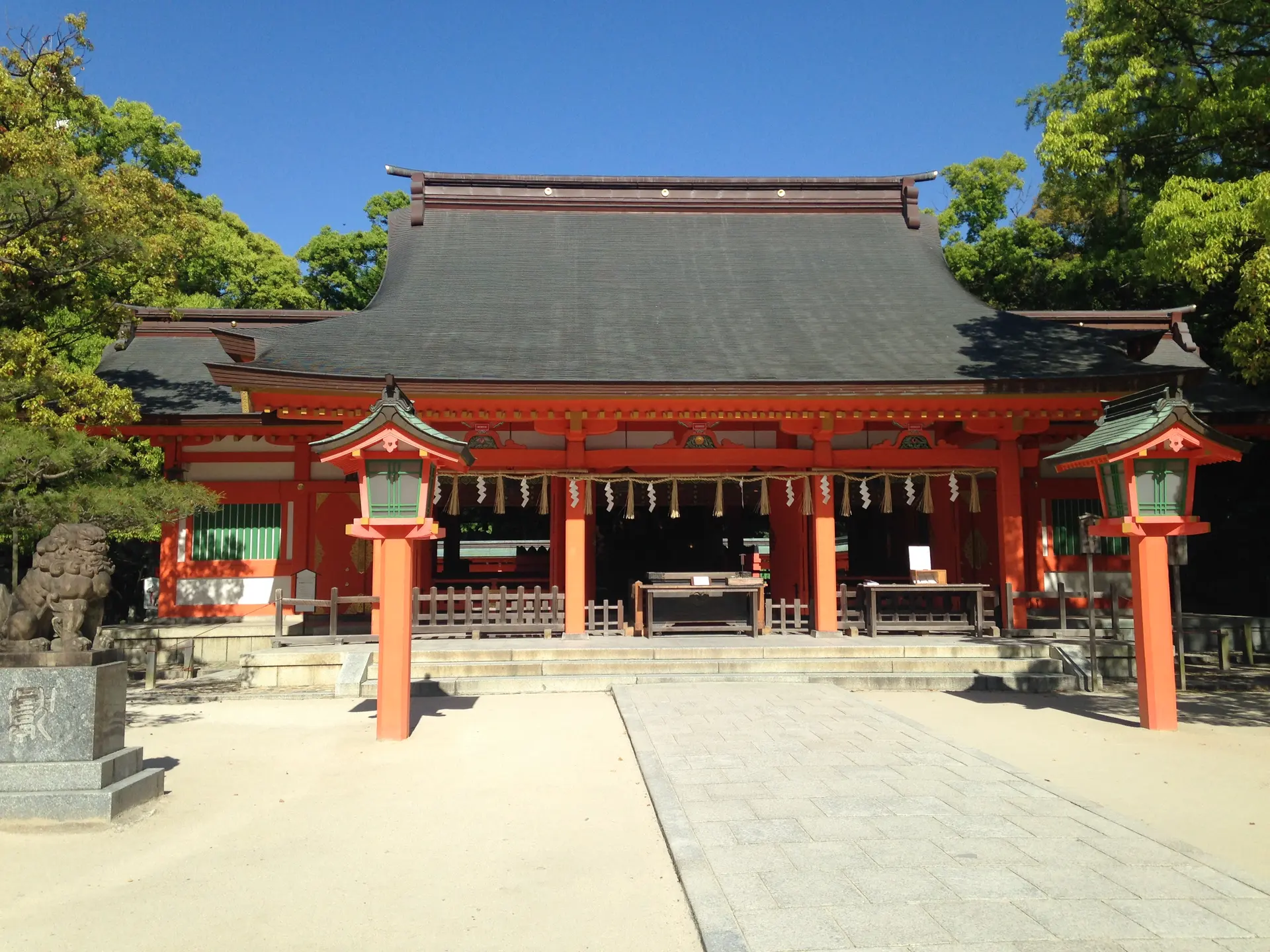
Image of Sumiyoshi-taisha. Image source · CC-BY-SA-4.0
Visit essentials
A quick read before you go
- Duration
- 1-2 hours for thorough exploration of main grounds.
- Access
- 3-minute walk east from Sumiyoshi Taisha Station (Nankai Main Line) or 5-minute walk west from…
Overview
Long before Buddhism reached Japan, the Sumiyoshi gods protected those who traveled by sea. According to the Kojiki, these three deities emerged when Izanagi, the primordial creator, purified himself in the ocean after his traumatic journey to the underworld to retrieve his dead wife. The pollution of death washed away; in its place arose divine protectors of the waters.
Sumiyoshi-taisha, founded by Empress Jingū in 211 CE according to tradition, enshrines these sea gods along with the empress herself, who credited them with her safe return from a naval campaign. What makes the architecture remarkable is what it lacks: Buddhist influence. The Sumiyoshi-zukuri style, seen in the four main halls, preserves indigenous Japanese sacred building traditions from before continental contact.
The straight roofs with forked finials, the buildings arranged in distinctive L-shape, the absence of the curved lines that Buddhism brought from China—all speak to an older Japan. The Taiko Bridge, with its steep 48-degree arch, creates the transition into this sacred world. Crossing it is physical experience: the angle requires attention, making the passage from ordinary to sacred space deliberate. Over 2 million visitors cross this bridge during New Year alone, making Sumiyoshi-taisha one of Japan's most visited shrines.
Goshogozen, a spot within the grounds, is considered one of Japan's most powerful spiritual locations, believed to bestow physical strength, wisdom, financial prosperity, good fortune, and longevity.
Why this place is sacred
Sumiyoshi-taisha's thinness derives from multiple sources. Architecturally, it preserves indigenous Japanese sacred building traditions from before Buddhist influence—a window into pre-continental Japanese spirituality rare among shrines that have been rebuilt and modified over centuries. The four main halls, designated National Treasures, demonstrate Sumiyoshi-zukuri: straight roofs, forked finials, distinctive arrangement. This is what Japanese sacred architecture looked like before the curved lines, the vermilion paint, the elaborate ornamentation that came with Buddhism.
Mythologically, the shrine connects to primordial events: Izanagi's purification after his journey to the underworld, when the pollution of death was washed away and divine protectors emerged from the waters. The Sumiyoshi Sanjin have protected sea travelers since before Japanese history began to be recorded. Geographically, the shrine originally stood meters from Osaka Bay, directly connected to the sea realm of its enshrined deities. Land reclamation has pushed the coastline 7 kilometers away, but the shrine's identity remains maritime.
The Taiko Bridge—possibly inspired by the rainbow bridge connecting earth to heaven—symbolizes transition between realms. Its extreme 48-degree angle requires attention, making the crossing between mundane and sacred deliberate rather than casual. Goshogozen, a spot within the grounds, is considered one of Japan's most powerful spiritual locations. The five blessings it is said to bestow—physical strength, wisdom, financial prosperity, good fortune, and longevity—attract those seeking comprehensive spiritual support.
The shrine was founded by Empress Jingū in 211 CE to honor the Sumiyoshi Sanjin who protected her during her naval campaign. It serves as the head shrine of maritime protective deities.
Like Ise Grand Shrine, Sumiyoshi-taisha was traditionally rebuilt in ritualistic renewal, though the last complete renewal occurred in 1810. The current buildings preserve the ancient Sumiyoshi-zukuri style. Land reclamation has moved the coastline away, but the shrine's maritime identity persists.
Experience and orientation
The experience of Sumiyoshi-taisha begins with the Taiko Bridge. The arch's 48-degree incline requires attention—you cannot cross casually. This physical engagement marks the transition from ordinary Osaka to sacred precinct. For those with mobility concerns, alternative routes exist, but those able to cross the bridge should: the experience of ascent and descent creates the shift of consciousness that sacred architecture intends. Beyond the bridge, the four main halls reveal what Japanese sacred architecture looked like before Buddhism arrived.
The straight roofs with forked finials, the vermillion pillars, the distinctive L-shape arrangement—this is indigenous Japanese tradition preserved across 2,100 years of history. For visitors familiar with the curved lines of Buddhist-influenced shrines, the difference is immediately apparent. The shrine grounds spread extensively. Beyond the main halls, subsidiary shrines and sacred spots await discovery. Goshogozen, said to be one of Japan's most powerful spiritual locations, deserves attention for those seeking comprehensive blessing.
The Sumiyoshi Matsuri in late July through early August transforms the shrine. One of the three great Lake Biwa festivals (though now associated with Osaka), the celebration culminates with mikoshi crossing the Taiko Bridge and boats processing on the nearby Yamatogawa River. The Otaue Shinji rice-planting ceremony in June preserves agricultural rituals with dancers, musicians, and Shinto rites. Hatsumode (New Year pilgrimage) draws over 2 million visitors in the first three days of January—one of Japan's largest New Year gatherings.
Cross the Taiko Bridge first for full experience of transition into sacred space. Visit each of the four main halls, noticing the pre-Buddhist architectural style. Seek out Goshogozen for comprehensive blessing. If visiting during Sumiyoshi Matsuri (late July-early August), plan for crowds but expect extraordinary spectacle.
Context and lineage
According to the Kojiki and Nihon Shoki, the Sumiyoshi Sanjin—three sea deities—emerged when the primordial god Izanagi purified himself in the ocean after his journey to the underworld. The pollution of his wife Izanami's death washed away, and divine protectors arose from the waters. Centuries later, Empress Jingū led a naval campaign to the Korean peninsula. She credited her success and safe return to the protection of these sea gods. In gratitude, she established Sumiyoshi-taisha in 211 CE.
The empress herself is now enshrined as the fourth deity, making four main halls for three gods plus one empress. The folktale Issun-bōshi (The One-Inch Boy) tells of a childless couple whose prayers at Sumiyoshi-taisha were answered with a miraculous child—testimony to the shrine's reputation for answering prayers.
Sumiyoshi-taisha leads approximately 2,300 affiliated Sumiyoshi shrines throughout Japan—one of the largest shrine networks in the country.
Sumiyoshi Sanjin
The three sea deities—Sokotsutsu no o no Mikoto, Nakatsutsu no o no Mikoto, and Uwatsutsu no o no Mikoto—who emerged from Izanagi's purification
Empress Jingū
The empress who founded the shrine in gratitude for divine protection during her naval campaign; enshrined as the fourth deity
Traditions and practice
The Sumiyoshi Matsuri has over 1,800 years of history. The festival concludes Osaka's summer, featuring mikoshi crossing the Taiko Bridge and proceeding to boats on the Yamatogawa River. The Otaue Shinji rice-planting ceremony (June 14) preserves agricultural rituals with dancers, musicians, and Shinto rites. Like Ise Grand Shrine, the shrine buildings were traditionally dismantled and rebuilt in ritualistic renewal.
Daily worship continues at all four main halls. Hatsumode (New Year pilgrimage) brings over 2 million visitors in January 1-3. The Hattatsu Mairi prosperity pilgrimage provides structured business blessing ritual. Seasonal ceremonies mark the ritual calendar: Toka Shinji (January 4), White Horse Rite (January 7), Moon Viewing Festival (September-October).
Cross the Taiko Bridge for full experience of transition. Worship at each of the four main halls. Seek Goshogozen for comprehensive blessing. The Hattatsu Mairi prosperity pilgrimage offers structured practice for those seeking business success.
Shinto
ActiveSumiyoshi-taisha is one of Japan's most ancient and significant Shinto shrines, leading approximately 2,300 affiliated shrines. It enshrines the Sumiyoshi Sanjin (three sea deities) plus Empress Jingū. The Sumiyoshi-zukuri architectural style is one of the oldest indigenous forms of shrine architecture.
Daily worship at the four National Treasure main halls. Hatsumode brings over 2 million visitors. The Sumiyoshi Matsuri (July 30-August 1) continues over 1,800 years of tradition. The Hattatsu Mairi prosperity pilgrimage offers structured blessing ritual.
Perspectives and open questions
Sumiyoshi-taisha can be experienced as architectural preservation of pre-Buddhist Japan, as maritime spiritual protection, or as one of Japan's most significant active pilgrimage sites.
Scholarly perspective
Historians recognize Sumiyoshi-taisha as one of Japan's most ancient shrines with origins predating Buddhism, though the traditional 211 CE founding date is legendary rather than archaeologically confirmed. The Sumiyoshi-zukuri architecture is verified as one of the oldest indigenous shrine styles, free of continental Buddhist influence. The four main halls are designated National Treasures. The shrine's connection to maritime culture reflects Japan's historical relationship with the sea.
Living and traditional perspectives
Within Shinto tradition, the Sumiyoshi Sanjin are living deities who continue to protect those who travel by sea. Empress Jingū's spirit joined them and continues to bestow blessings. The Taiko Bridge is not merely symbolic but actually serves to purify those crossing into sacred space. Goshogozen genuinely bestows five types of spiritual power. The shrine's maritime protection remains active for fishermen, sailors, and all who work with the sea.
Alternative interpretations
Some visitors approach Goshogozen as one of Japan's premier power spots. The possible connection of the Sumiyoshi Sanjin to the three stars of Orion's belt—used in navigation—adds astronomical and cosmological interpretation.
Open questions
The precise dating of the shrine's origins is uncertain. The original appearance of the shrine buildings before any modification is subject to scholarly debate. The exact nature of maritime rituals in the shrine's earliest period is not fully documented.
Plan your visit
Access and arrival
3-minute walk east from Sumiyoshi Taisha Station (Nankai Main Line) or 5-minute walk west from Sumiyoshi-Higashi Station (Nankai Koya Line). About 30 minutes from central Osaka.
Day trip from central Osaka hotels is straightforward. The shrine's proximity to Namba makes any Osaka accommodation convenient.
Respectful visit
Modest dress appropriate for shrine visits.
Generally permitted in public areas.
Monetary offerings at the main halls. Omamori available for various blessings, including maritime safety.
Free entry. Standard Shinto etiquette. Taiko Bridge can be challenging for those with mobility limitations.
Hatsumode crowds in early January are substantial—plan for slow movement if visiting then. The Taiko Bridge's 48-degree angle can be challenging for those with mobility limitations; alternative routes exist.
Current practical details
Address
2-chōme-9-89 Sumiyoshi, Sumiyoshi Ward, Osaka, 558-0045, Japan
Phone
Hours
Hours, fees, and access can change — verify on the official source before you travel. Practical details last checked Jun 2026.
Location
Map loads as you approach this section.
Pilgrim reflections
A portrait of encounter, not a score
Pilgrims describe what they felt, how present they could become, and whether the place would shape a journey. There are no stars and no ranking of traditions.
No reviewed reflections yet
The first pilgrims can help describe the character of being here.
Share a reflection
Available after an account-backed “Been there.” Every reflection is reviewed before publication.
Nearby sacred places
Explore other sacred places in the region. Proximity does not establish access or travel time; check each place’s guidance.


References
Sources consulted for this page. Source categories describe the publication, not a guarantee that every claim is verified. Traditional accounts and outside interpretations may differ.
- 01Sumiyoshi Taisha Official Website — Sumiyoshi TaishaofficialOfficial shrine website
- 02Japan Tourism Agency - Sumiyoshi Taisha — Japan Tourism AgencyofficialOfficial government documentation
- 03Sumiyoshi-taisha - Wikipedia — Wikipedia contributorsencyclopediaComprehensive overview
- 04Sumiyoshi Taisha - Japan Guide — Japan GuideguidePractical visitor information
Pilgrim glossary
- Torii
- The traditional Japanese gate marking the entrance to a Shinto sacred area.
- Mikoshi
- A portable Shinto shrine carried during festivals to bring a deity into the community.
Share a photo
Help visitors recognize Sumiyoshi-taisha. Every submission is reviewed before publication.