Shrine of Our Lady of Good Help
The only Church-approved Marian apparition site in the United States
Understand sacred places, explore living traditions, and learn how to engage respectfully with Pilgrim Map.
Access has not been verified. Check current local guidance before planning a visit.
Champion, Wisconsin, United States
Read the sources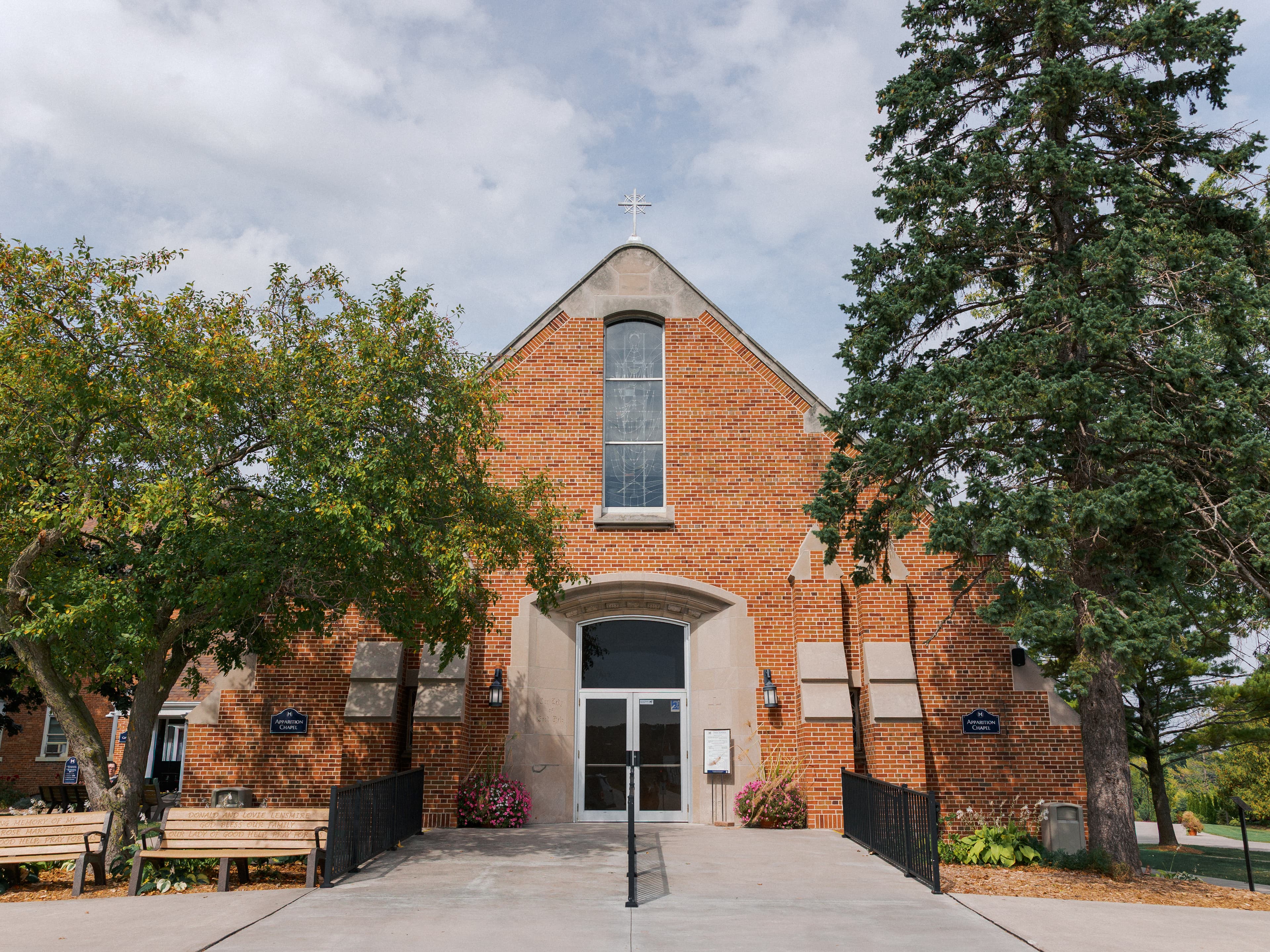
Image of Shrine of Our Lady of Good Help. Image source · CC-BY-4.0
Visit essentials
A quick read before you go
- Duration
- Half a day for chapel, crypt, apparition site, outdoor stations, and gift shop.
- Access
- About 15 miles northeast of Green Bay, Wisconsin (4047 Chapel Drive, New Franken/Champion).
Overview
The National Shrine of Our Lady of Champion sits among farmland and forest about fifteen miles northeast of Green Bay, Wisconsin, on the site where Belgian immigrant Adele Brise reported three apparitions of a lady 'clothed in dazzling white, with a yellow sash around her waist' in October 1859. The lady identified herself as 'the Queen of Heaven, who prays for the conversion of sinners' and asked Adele to teach the children of this 'wild country' the catechism.
Adele dedicated her life to that mission, walking up to fifty miles between Belgian-Walloon homesteads. On the night of 8 October 1871 — twelve years after the apparitions — settlers carrying a statue of Mary processed around the chapel as the Peshtigo Fire, the deadliest wildfire in United States history, swept the region; the five-acre site was spared while everything around it burned. Bishop David L.
Ricken of Green Bay declared the apparitions worthy of belief on 8 December 2010, the only such approval ever granted in the United States. The USCCB designated the site a national shrine in 2016, and in April 2023 it was renamed the National Shrine of Our Lady of Champion to distinguish it from Belgian shrines also dedicated to Our Lady of Good Help.
Why this place is sacred
What gives this site its weight is not architecture but the unusual specificity of its claims. The apparition site itself is small — the chapel crypt marks where two trees, a maple and a hemlock, framed the lady's appearance to Adele Brise. The 1871 Peshtigo Fire, in which the chapel's five acres were spared while the surrounding region burned, is one of the most empirically documented anomalies in American Catholic devotional history; the grounds carry that memory.
The shrine's location — among Belgian-Walloon dairy farms in the Wisconsin Northwoods, off any major highway — keeps it remote. Pilgrims who arrive outside feast days often describe a 'hidden' shrine that rewards patience: deep quiet, long Wisconsin light, and the continuity of devotion running back to the 1860s immigrant community.
The original chapel was built in 1859 by Adele Brise's father, Lambert, on the apparition site between the maple and hemlock trees. Adele founded a community of Belgian-immigrant teaching sisters and a schoolhouse that became the seed of a wider Catholic mission across the Wisconsin frontier.
From the 1859 family chapel, the site grew through a larger wooden church (1861), the current Romanesque-Gothic shrine (1942), and eventually the apparition oratory and crypt that preserves the original tree positions. The Diocese of Green Bay assumed administration in the twentieth century. Episcopal approval in 2010, national shrine status in 2016, and the 2023 renaming have all increased visitation while the surrounding landscape has stayed agricultural.
Healing traditions
Pilgrim testimony and answered-prayer tradition
Our Lady of Champion publishes pilgrims' accounts of healings and other answers to prayer attributed to Mary and Adele Brice. Its Graces Received page expressly distinguishes these testimonies from miracles formally investigated and declared by the Church. The accounts show why people come with illness and uncertainty, while keeping the status of those reports clear.
Ways to participate
Bring an intention to the apparition chapel, join a public rosary or Mass, or walk the grounds in quiet prayer. If you later wish to share an experience, the shrine provides a way to submit your own testimony. No particular feeling, vision, or physical change is necessary to participate in the pilgrimage.
These accounts describe religious traditions and reported experiences. They do not promise a cure or replace medical care.
Experience and orientation
Arriving at the shrine, most pilgrims begin in the upper Romanesque-Gothic church, then descend to the apparition oratory and the crypt where the original tree positions are preserved beneath the chapel floor. The space is small and quiet, with room for personal prayer or candle-lighting. Outside, the grounds include outdoor stations, a Marian rosary walk, and the gift shop.
On feast days — particularly the Assumption (15 August) and the apparition anniversary linked to the Peshtigo Fire (8–9 October) — the grounds fill with pilgrims, statues are processed, and the all-night adoration of 8 October draws Catholics from across the Midwest. Outside feast days, the site is often nearly empty; Wisconsin winters in particular bring deep silence and snow cover across the outdoor stations.
The upper church, apparition oratory, crypt, gift shop, and outdoor stations are all within easy walking distance on the five-acre property. Free parking is available; the site is car-access only — there is no public transit.
Context and lineage
Adele Brise (1831–1896), born in Belgium and emigrated with her family in 1855, was carrying wheat to the gristmill in early October 1859 when she first saw a lady standing between a maple and a hemlock tree. Frightened, she said nothing until the figure appeared again the following Sunday on her walk to Mass.
On the third apparition — the canonical narrative places this on or about 9 October 1859 — she asked, as her confessor had instructed, 'In God's name, who are you and what do you wish of me?' The lady answered: 'I am the Queen of Heaven, who prays for the conversion of sinners, and I wish you to do the same. You received Holy Communion this morning, and that is well. But you must do more.
Make a general confession and offer Communion for the conversion of sinners… Go and fear nothing. I will help you.' Adele was instructed to teach the children of this 'wild country' the catechism, how to make the sign of the cross, and how to receive the sacraments. She spent the rest of her life walking the Belgian-Walloon settlements, sometimes covering fifty miles in a single missionary circuit.
Twelve years later, on the night of 8 October 1871, the Peshtigo Fire — the deadliest wildfire in United States history, killing more than 1,200 people — swept the region. Settlers carrying a statue of Mary processed around the chapel in prayer; the five-acre site was spared while everything around it burned.
Roman Catholic Marian devotion in the Latin Rite tradition, anchored in the 1850s–1860s Belgian-Walloon immigrant settlement of northeastern Wisconsin and now administered by the Diocese of Green Bay.
Adele Brise (1831–1896)
Belgian-Walloon immigrant visionary; received the three apparitions in October 1859 and dedicated her life to teaching frontier Catholic communities. Her sainthood cause was opened by the USCCB.
Lambert Brise
Adele's father, who built the original 1859 chapel on the apparition site.
Bishop David L. Ricken of Green Bay
Issued the decree of 8 December 2010 declaring the apparitions worthy of belief — the only such approval in the United States.
USCCB (2016)
Designated the site a national shrine on 15 August 2016.
Bishop David L. Ricken (2023)
Authorized the renaming to National Shrine of Our Lady of Champion on 20 April 2023.
Traditions and practice
The Feast of the Assumption (15 August) is the principal annual gathering, with a historic 11 AM Mass, rosary procession with the statue of Mary, confessions, and Brown Scapular enrollment. The anniversary of the Peshtigo Fire (8–9 October) is observed with all-night adoration and hourly rosary processions. The annual Walk to Mary in early May covers about 21 miles from the Cathedral of St.
Francis Xavier in Green Bay to the shrine — a pilgrimage that has grown steadily since its inception.
The Diocese of Green Bay administers daily Mass (11:30 AM, additional Masses on Wednesday evenings and weekend mornings), daily rosary at 10:45 AM, adoration from 12:45 to 3 PM, and the Divine Mercy chaplet at 3 PM. The sacrament of reconciliation is available daily. A pilgrimage coordinator on staff assists groups planning visits.
Many pilgrims plan a visit around morning Mass and the rosary, descending afterward to the apparition oratory and crypt for personal prayer. For a longer visit, the outdoor Way of Lights and rosary walk are best experienced in mild weather (May through October). The 8 October all-night adoration is one of the shrine's most distinctive observances.
Roman Catholicism
ActiveThe only Marian apparition in the United States formally approved by the Catholic Church. Bishop David L. Ricken of Green Bay declared the apparitions 'worthy of belief' on 8 December 2010. Designated a national shrine by the USCCB on 15 August 2016; renamed the National Shrine of Our Lady of Champion on 20 April 2023.
Daily Mass, daily rosary at 10:45 AM, adoration from 12:45 to 3 PM, Divine Mercy chaplet at 3 PM, all-night adoration on 8 October, Brown Scapular enrollment on the Feast of the Assumption, and the annual Walk to Mary pilgrimage in early May.
Perspectives and open questions
The National Shrine of Our Lady of Champion is held in different ways by different communities — as the only Vatican-recognized Marian apparition site in the United States, as a memorial of the Belgian-Walloon immigrant settlement of northeastern Wisconsin, and as a site of empirically attested survival during the 1871 Peshtigo Fire.
Scholarly perspective
Scholars of American Catholicism treat the shrine as both a religious site and an immigrant-community memorial, anchored in the 1850s–60s Belgian-Walloon settlement of northeastern Wisconsin. The 1871 Peshtigo Fire survival of the chapel grounds is documented historical fact; the theological interpretation of that survival is a matter of Catholic devotion. Bishop Ricken's 2010 decree is a rare instance of a U.S. bishop formally approving a reported Marian apparition.
Living and traditional perspectives
Within Catholic devotion, the shrine centers on Mary as 'Queen of Heaven, who prays for the conversion of sinners' — the title by which the lady identified herself to Adele Brise — and on Adele's response of lay catechetical mission across the frontier. The sainthood cause for Adele Brise, opened by the USCCB, is being actively pursued.
Alternative interpretations
Some popular accounts emphasize prophecy and end-times motifs in association with the Peshtigo Fire survival; these are not part of the Church's approved interpretation. Bishop Ricken's 2010 decree addresses the credibility of the apparitions and the spiritual fruits of devotion, not any specific eschatological reading.
Open questions
Bishop Ricken's 2010 decree allows but does not compel Catholic belief in the apparitions. The Peshtigo Fire chapel survival is empirically attested; its causation is interpreted theologically. The shrine's status as the only formally approved Marian apparition site in the United States remains, as of writing, unique.
Plan your visit
Access and arrival
About 15 miles northeast of Green Bay, Wisconsin (4047 Chapel Drive, New Franken/Champion). A car is required — there is no public transit. Free parking is available on site. The closest airport is Austin Straubel International (GRB) in Green Bay.
No on-site lodging. Hotels and B&Bs available in Green Bay and the surrounding area; advance booking recommended for the Assumption feast and Walk to Mary weekend.
Respectful visit
Modest dress (covered shoulders and knees) for liturgies. Layered clothing for variable Wisconsin weather; comfortable walking shoes for the outdoor stations.
Permitted on the grounds and at the apparition site outside liturgies. Discreet inside the chapel and crypt; not during Mass or adoration.
Candles available in the apparition oratory. Donations accepted for shrine maintenance and pilgrim services.
Silence in the apparition crypt at all times. No flash photography during liturgies or in the crypt. No food or drink inside the chapel.
Wisconsin winters are severe; outdoor stations may be snow-bound from December through March. Major feast days draw large crowds; pilgrim groups of any size are encouraged to coordinate in advance with the shrine's pilgrimage office.
Location
Map loads as you approach this section.
Pilgrim reflections
A portrait of encounter, not a score
Pilgrims describe what they felt, how present they could become, and whether the place would shape a journey. There are no stars and no ranking of traditions.
No reviewed reflections yet
The first pilgrims can help describe the character of being here.
Share a reflection
Available after an account-backed “Been there.” Every reflection is reviewed before publication.
Nearby sacred places
Explore other sacred places in the region. Proximity does not establish access or travel time; check each place’s guidance.

References
Sources consulted for this page. Source categories describe the publication, not a guarantee that every claim is verified. Traditional accounts and outside interpretations may differ.
- 01National Shrine of Our Lady of Champion — Wikipedia — Wikipedia contributorsencyclopediaCore history: apparitions of 9 October 1859, the three visits to Adele Brise, school and chapel founding, 1871 Peshtigo fire, 2010 approval, 2016 national shrine status, 2023 renaming.
- 02Our Story — The National Shrine of Our Lady of Champion — National Shrine of Our Lady of ChampionofficialOfficial narrative of Adele Brise, the apparitions, the Peshtigo Fire survival, and the shrine's history.
- 03What to Expect — National Shrine of Our Lady of Champion — National Shrine of Our Lady of ChampionofficialVisiting hours 7am-7pm, Mass schedule, daily rosary 10:45am, adoration 12:45-3pm, Divine Mercy at 3pm.
- 04Adele Brise, seer of the only approved Marian apparition in the U.S. — Catholic News AgencynewsUSCCB vote on Brise's sainthood cause; key biographical details and message of the apparitions.
- 05Worthy of Belief — Bishop Ricken's Decree — EWTN / Diocese of Green BayofficialFull text of Bishop David L. Ricken's 8 December 2010 decree declaring the apparitions worthy of belief.
- 06Our Lady of Good Help — World Religions and Spirituality Project — Virginia Commonwealth UniversityacademicScholarly treatment of the shrine, Belgian immigrant community, and apparition history.
- 07Shrine of Our Lady of Champion: New name for only U.S. officially approved Marian apparition site — The Dialognews20 April 2023 renaming from 'Our Lady of Good Help' to 'Our Lady of Champion' to distinguish from Belgian shrines.
- 08The story of Adele Brise, the seer of the only approved Marian apparition in the U.S. — Catholic TelegraphnewsBelgian-Walloon immigrant background, lay teaching mission, biography.
- 09Graces received — National Shrine of Our Lady of ChampionofficialSupports the attributed account or visitor practice in the healing section; not evidence of clinical efficacy.
Share a photo
Help visitors recognize Shrine of Our Lady of Good Help. Every submission is reviewed before publication.