Otford
Ruins of a six-century archbishops' palace beside the Pilgrims' Way
Understand sacred places, explore living traditions, and learn how to engage respectfully with Pilgrim Map.
Access has not been verified. Check current local guidance before planning a visit.
Otford, England, United Kingdom
Read the sources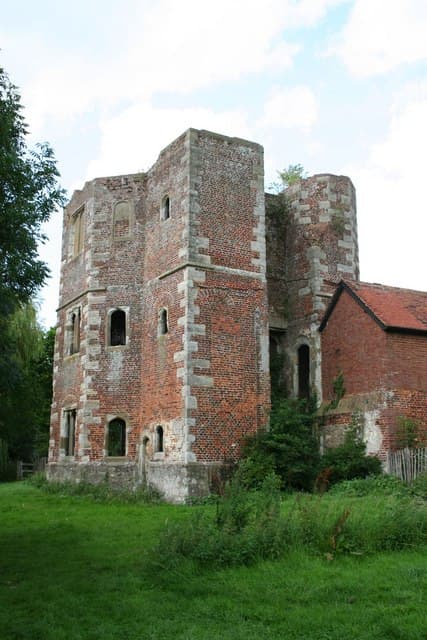
Image of Otford. Image source
Visit essentials
A quick read before you go
- Duration
- 30-60 minutes for the ruin site itself; longer if combined with a stretch of the Pilgrims' Way…
- Access
- Otford village is reachable by Thameslink rail (Otford station) or by car via the A225; the…
Overview
King Offa of Mercia granted Otford manor to Christ Church Canterbury in 791. Archbishops of Canterbury—traditionally counted at fifty-two—occupied and expanded it for roughly six hundred years, culminating in William Warham's Tudor courtyard palace, built from 1514 to 1523 on a scale contemporaries compared with Hampton Court.
The palace stood on the Pilgrims' Way, later associated with medieval travel from Winchester toward Becket's shrine. Otford was both an archiepiscopal seat and a waypoint overlooking the pilgrims' road. Thomas Becket is said to have favored the manor; local legend, not verified history, credits him with striking the ground to create the spring now called Becket's Well.
Cranmer's forced surrender of Kent properties to Henry VIII in 1537–38 ended the palace's archiepiscopal life. Decay reduced a building once rivaling royal residences to today's North-West Tower and gatehouse cottages, now under active conservation and archaeological study.
Why this place is sacred
Otford's thinness works in two directions at once. On one hand, the palace's institutional history is unusually well evidenced: Offa's 791 grant, the succession of archbishops, Winchelsey's early-fourteenth-century chapel building (and his death here in 1313), and Warham's Tudor rebuilding are all documented across academic and official sources, and a 1974 rescue excavation plus 2023-2025 geophysical survey have added masonry evidence - foundations, a north-west tower, courtyard outlines - to the documentary record.
On the other hand, the specifically pilgrim-facing and Becket-facing layer of Otford's story is much thinner. No archaeological work confirms the well legend; it survives only as local tradition, first recorded well after Becket's 1170 death, part of the broader hagiographic folklore that accumulated around his cult once canonization in 1173 intensified devotion.
The palace itself was never a shrine - no relic, no object of pilgrimage veneration was ever housed there - so its role in the Pilgrims' Way story is that of a grand waypoint and a source of secondary legend, not a destination in its own right. Even the interior layout of Warham's Tudor palace remains only partially resolved despite decades of excavation, so the site continues to be actively, rather than completely, understood.
An archiepiscopal manor and later a full palace, serving as a residence, administrative seat, and place of hospitality for the Archbishops of Canterbury and their guests over roughly six centuries.
From a modest moated manor house granted in 791, the site grew through successive archbishops' building campaigns - notably Winchelsey's early-fourteenth-century chapel - into William Warham's grand Tudor courtyard palace of 1514-1523. Surrendered to Henry VIII in 1537-38, it passed out of ecclesiastical hands, fell into disrepair and partial demolition, and survives today as a fragmentary ruin under the care of the Archbishop's Palace Conservation Trust, which has held a 99-year lease from Sevenoaks District Council since 2019.
Experience and orientation
What remains standing at Otford is disproportionate to what it once was, and that disproportion is much of the experience. The North-West Tower and a run of gatehouse cottages rise out of an otherwise ordinary Kentish village, and visitors commonly report the jolt of recalibrating scale - trying to picture a courtyard palace once compared to Hampton Court from these isolated fragments.
The Archbishop's Palace Conservation Trust runs open days and guided tours that help bridge that gap, walking visitors through what geophysical survey has revealed about the vanished courtyard and towers. The adjoining Pilgrims' Way public footpath can be walked freely at any time, connecting the ruin to the wider North Downs corridor pilgrims and modern long-distance walkers alike have used.
Becket's Well is a different matter entirely: it sits within a working trout farm on private land, and there is no public right of access to see it directly. Visitors drawn by the well's legend should expect to encounter it only through Historic England's listing description and local heritage accounts, not through a visit - a point worth setting expectations on before making the trip specifically for the well.
Approach via Otford village (reachable by Thameslink rail or the A225); the ruin site and St Bartholomew's Church are a short walk from the village centre, directly adjacent to the Pilgrims' Way footpath. Becket's Well is not part of any public route and should not be sought out as a walkable stop.
Context and lineage
King Offa of Mercia granted the manor at Otford to Christ Church Canterbury in 791, establishing nearly six centuries of continuous archiepiscopal ownership. Early development is less precisely dated - sources place the first substantial structure anywhere from 791 to around 821 - but by the early fourteenth century Archbishop Robert Winchelsey had built a chapel on the site and died there in 1313.
The palace's defining transformation came under Archbishop William Warham, who between 1514 and 1523 rebuilt Otford as an ambitious courtyard palace, prompted in part by rivalry with Wolsey's Hampton Court; the Dutch scholar Erasmus, visiting in 1523, left an account of its scale. Cranmer's forced surrender of Kent's archiepiscopal properties to Henry VIII in 1537-38 ended this six-hundred-year tenure; the palace subsequently declined into the ruin visible today.
Otford belongs to the institutional lineage of the Archbishops of Canterbury rather than to a monastic order; its religious life was administrative and residential, distinct from the parish worship continuing next door at St Bartholomew's Church, which has its own separate historical association with St Dunstan.
Traditions and practice
As an archbishop's residence rather than a shrine, Otford's traditional 'practices' were administrative and hospitality-based - receiving dignitaries and travelers on the road to Canterbury - rather than devotional ritual in the pilgrimage sense. Winchelsey's chapel would have hosted the archbishop's own household worship.
The Archbishop's Palace Conservation Trust organizes volunteer-led open days, guided tours, and ongoing community archaeology, including the geophysical survey seasons run between 2023 and 2025. St Bartholomew's Church continues ordinary Anglican parish worship immediately adjacent to the ruin.
Walk the Pilgrims' Way footpath past the ruin site slowly enough to take in the scale mismatch between the surviving North-West Tower and the vanished courtyard it once anchored, then step into St Bartholomew's Church to see the site's continuing, unbroken religious life before continuing east toward Kemsing.
Christianity (Church of England / medieval Catholic) - archiepiscopal residence
HistoricalFor nearly six hundred years Otford was a residence of the Archbishops of Canterbury, granted by King Offa in 791, standing directly on the Pilgrims' Way corridor pilgrims followed toward Becket's shrine.
Archiepiscopal administration, chapel worship within the household, and hospitality to travelers and dignitaries on the Canterbury road.
Becket veneration and local folk legend
HistoricalLocal tradition holds Becket favoured Otford as a residence and produced Becket's Well by striking the ground with his crozier; these are unverified legends that emerged within the broader cult following his 1170 murder and 1173 canonization.
Oral transmission of the well and nightingale legends; the well's continued existence as a heritage-listed, if inaccessible, physical feature.
Heritage conservation and community archaeology
ActiveThe Archbishop's Palace Conservation Trust, holding a 99-year lease since 2019, actively conserves the ruin and leads ongoing geophysical survey work (2023-2025), representing a living scholarly and stewardship tradition distinct from the site's original devotional function.
Volunteer-led open days, guided tours, and community archaeology survey seasons.
Perspectives and open questions
Otford asks readers to hold two different registers of evidence at once: a well-documented institutional history of archbishops and architecture, and a much softer, undocumented layer of Becket legend.
Scholarly perspective
Historians and archaeologists agree Otford was a major, architecturally ambitious archiepiscopal palace that by the early sixteenth century rivaled royal residences in scale, and that its decline followed directly from Cranmer's forced surrender of Kent properties to Henry VIII in 1537-38. This institutional history is treated as solid, evidenced by documentary sources, a 1974 rescue excavation, and 2023-2025 geophysical survey.
Living and traditional perspectives
Local and heritage-body tradition holds that Thomas Becket favoured Otford as a residence during his archbishopric from 1162 to 1170, and that his personal association with the site gave rise to the well and nightingale legends. The Archbishop's Palace Conservation Trust presents these as part of Otford's story while distinguishing them from its harder archaeological findings.
Alternative interpretations
Folkloric and enthusiast sources treat the Becket's Well legend - that Becket struck the ground with his crozier to produce a spring, and separately banished the local nightingales for disturbing his prayers - as though it were settled history. Heritage bodies, including Historic England's own listing, are more careful, treating these as legend rather than verified events; no source found offers corroborating evidence, only the tradition itself and its documented water-supply function to the palace and moat.
Open questions
The precise internal layout and full extent of Warham's Tudor palace remain only partially resolved despite decades of excavation and recent geophysical survey. The founding date of the earliest structure on the site is imprecisely fixed between 791 and around 821. And the Becket's Well legend itself has no archaeological confirmation - it is, and may remain, a documented tradition rather than a verifiable event.
Plan your visit
Access and arrival
Otford village is reachable by Thameslink rail (Otford station) or by car via the A225; the palace ruins are a short walk from the village centre and directly adjacent to the Pilgrims' Way long-distance footpath.
Becket's Well is a separate matter: it lies within a working trout farm on private land and has no public access - it cannot be visited, viewed up close, or reached via any public footpath, and visitors should not treat it as a stop on a walking itinerary.
Respectful visit
Generally permitted at the public ruin site (North-West Tower, gatehouse cottages); no restrictions are documented.
Becket's Well is on private land - a working trout farm - and is not open to public visitors under any circumstances; respect the property boundary and any signage, and do not attempt to access the well directly. This restriction is explicit and should not be treated as a minor inconvenience: there is no public right of way to the well itself, distinct from the Pilgrims' Way footpath that passes near the main palace ruin.
Do not attempt to seek out Becket's Well itself; it lies on private land within an operating trout farm with no public access, and approaching it would mean trespassing on working agricultural property.
Location
Map loads as you approach this section.
Pilgrim reflections
A portrait of encounter, not a score
Pilgrims describe what they felt, how present they could become, and whether the place would shape a journey. There are no stars and no ranking of traditions.
No reviewed reflections yet
The first pilgrims can help describe the character of being here.
Share a reflection
Available after an account-backed “Been there.” Every reflection is reviewed before publication.
Nearby sacred places
Explore other sacred places in the region. Proximity does not establish access or travel time; check each place’s guidance.



References
Sources consulted for this page. Source categories describe the publication, not a guarantee that every claim is verified. Traditional accounts and outside interpretations may differ.
- 01Otford Palace - Wikipedia — Wikipedia contributorsacademicGeneral history, ownership by Archbishops of Canterbury, Tudor expansion, surrender to Henry VIII in 1537
- 02Background - Archbishop's Palace Conservation Trust — Archbishop's Palace Conservation TrustofficialOfficial conservation body managing the site since 2019 under 99-year lease from Sevenoaks District Council
- 03Palace History - a detailed timeline - Archbishop's Palace Conservation Trust — Archbishop's Palace Conservation TrustofficialDetailed chronological timeline from 791 grant through Warham's Tudor rebuilding to surrender to the Crown
- 04Archaeologists reveal traces of Henry VIII's Otford Palace — HeritageDailyacademic2023 geophysical survey results revealing masonry foundations, north-west tower, courtyard layout
- 05The lost Buildings of Otford Palace — Kent Archaeological SocietyacademicPeer-reviewed regional archaeological journal covering the 1974 rescue excavation and structural history
- 06St Bartholomew Church, Otford - Kent History & Archaeology — Kent Archaeological SocietyacademicHistory of the parish church, founded on a site associated with St Dunstan, later a chapel of Shoreham
- 07St Thomas a Becket's Well, Otford — Historic EnglandofficialOfficial listing entry for Becket's Well, its historic water-supply function to the palace and moat
- 08St. Thomas Becket - Archbishop's Palace Conservation Trust — Archbishop's Palace Conservation TrustofficialBecket regarded Otford as a favoured residence during his archbishopric (1162-1170); source for nightingale and well legends
- 09The Palace & Becket's Well - The Heritage Village of Otford — Otford Heritage VillageSource contextLocal heritage group account of Becket's Well legend and archaeological finds (earliest medieval finds 14th century, stone structure by 1440-1)
- 10Otford Palace: Rivalry, Glory, & Ruin — The Tudor Travel GuideSource contextDetail on Warham's rebuilding, Erasmus's 1523 account, comparison to Hampton Court
- 11St Thomas a Becket's Well Holy Well or Sacred Spring — The Megalithic PortalSource contextFolkloric/enthusiast site cataloguing the well legend; used only for legend framing, not factual claims
Share a photo
Help visitors recognize Otford. Every submission is reviewed before publication.