Reigate
A vanished wayside chapel where Becket-bound pilgrims once rested
Understand sacred places, explore living traditions, and learn how to engage respectfully with Pilgrim Map.
Access has not been verified. Check current local guidance before planning a visit.
Reigate, England, United Kingdom
Read the sources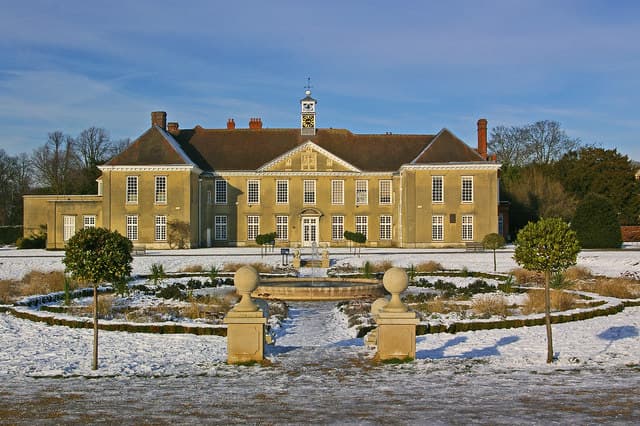
Image of Reigate. Image source
Visit essentials
A quick read before you go
- Duration
- 15-30 minutes for the Old Town Hall and Red Cross Inn alone; a half-day if combined with St Mary…
- Access
- Reigate High Street is open, pedestrian public townscape with no entry requirements.
Overview
Reigate offers a documented absence rather than a ruin: a rest-stop recorded as serving pilgrims travelling from Winchester toward Thomas Becket's shrine in Canterbury, on a site now occupied by an eighteenth-century town hall. The Chapel of St Thomas of Canterbury, raised sometime in the thirteenth century and paired with a lodging hospice, sat beside—not directly upon—the ridge trackway later named the Pilgrims' Way. It caught travelers detouring into town for rest, food, and a roof.
Victoria County History, the earliest synthesised account available, states that the chapel stood where the Town Hall now stands and that the hospice was 'probably' the building later called the Red Cross Inn at the west end of High Street. That qualifier matters: no excavation confirms the connection, and the Inn's fabric appears seventeenth- rather than thirteenth-century.
An Augustinian priory founded before 1240 and St Mary Magdalene parish church, with fabric from around 1200, place the vanished chapel within a town serious about the pilgrim economy even without its own shrine or relic to draw travelers directly.
Why this place is sacred
Nothing built specifically for pilgrims remains standing in Reigate. The chapel of St Thomas of Canterbury was cleared from the townscape when the site was redeveloped for the current Old Town Hall in 1728; whether the chapel had already fallen out of use by then, perhaps at or soon after the Dissolution of the 1530s, is not established in the sources located.
The pilgrim hospice fares little better as physical evidence: the building now known as the Red Cross Inn is linked to it only by local tradition and by the Victoria County History's careful 'probably,' and the Inn's present fabric is recorded as seventeenth-century, decades or centuries after the hospice would have served its original purpose.
What this leaves is a site whose sacredness was never rooted in landscape, relic, or miracle - Reigate held no shrine of its own - but in function: a town along the corridor to Canterbury that built dedicated infrastructure, a chapel and a hospice, to receive people whose destination lay elsewhere. That function is now legible only through documents, principally Victoria County History's account of the Reigate parish, rather than through anything that can be touched or entered today.
To provide devotional space and physical lodging for travelers moving along the North Downs corridor toward Thomas Becket's shrine at Canterbury - a functional waypoint rather than a pilgrimage destination in its own right.
The chapel's site was absorbed into civic use, becoming the location of Reigate's Town Hall (rebuilt in 1728, now the Old Town Hall). The hospice's building lineage is uncertain past local tradition; if the Red Cross Inn does occupy the same plot, it has continued in a related hospitality function - as a public house - for at least the last three and a half centuries, whatever the truth of its deeper continuity.
Experience and orientation
Visiting Reigate for this history means reading a street rather than entering a building. Standing before the Old Town Hall on High Street, there is no visible trace of the chapel that historians place on this exact spot - only a Georgian civic facade going about ordinary business.
A short walk to the west end of the High Street brings you to the Red Cross Inn, still trading as a pub, where the layered claim of hospice ancestry sits alongside its own more secure seventeenth-century history.
Neither stop offers ruins, interpretive panels, or a marked pilgrim trail through the town itself; the Pilgrims' Way / North Downs Way proper runs along the ridge at Reigate Hill just to the north, and it is there, among chalk grassland and long views, that walkers following the old route as a contemplative practice tend to locate the more sensory, landscape-driven part of the experience.
Reigate's contribution is quieter: the recognition, walking an ordinary high street, that this pavement once served people whose feet were bound for Canterbury.
Start at the Old Town Hall on High Street (site of the former chapel), walk west to the Red Cross Inn, then continue to St Mary Magdalene Church; from any of these points, Reigate Hill and the North Downs Way ridge path lie a short distance to the north.
Context and lineage
No individual founder is named in the sources located for the Chapel of St Thomas of Canterbury or its hospice; both are dated only broadly to the thirteenth century. They arose within the wider surge of Becket devotion that followed his 1170 murder in Canterbury Cathedral and 1173 canonization, when towns along routes toward his shrine built chapels and hospitality infrastructure to serve the resulting pilgrim traffic.
Reigate's chapel was dedicated directly to the martyred archbishop, tying the town explicitly into this devotional network even though the building itself stood beside rather than on the ridge trackway that pilgrims are popularly imagined to have walked.
The chapel belonged to the wider medieval cult of Thomas Becket rather than to any specific monastic order; Reigate Priory nearby was an Augustinian house. Anglican parish worship at St Mary Magdalene continues an unbroken thread from the medieval church on the same site, but this is a separate institutional lineage from the vanished pilgrim chapel.
Traditions and practice
Medieval practice at the chapel is not documented in ritual detail; presumed use would have followed standard parish devotional custom - prayer directed to St Thomas at the chapel altar - alongside the hospice's practical role of feeding and housing travelers overnight.
None at the former chapel/hospice site, which has no surviving religious function. St Mary Magdalene Church a short walk away continues ordinary Church of England parish worship within the Diocese of Southwark.
Walk the High Street stretch between the Old Town Hall and the Red Cross Inn slowly, noting how thoroughly civic and commercial use has absorbed the pilgrim-era site; then continue north to Reigate Hill to walk a stretch of the North Downs Way / Pilgrims' Way itself, where the chalk ridge and long views over the Weald offer the more embodied dimension of the route that the town centre itself no longer can.
Medieval pilgrimage to the shrine of Thomas Becket, Canterbury
HistoricalReigate's chapel and hospice, dedicated to St Thomas of Canterbury, tied the town into the devotional network serving pilgrims travelling the Winchester-Canterbury corridor, despite standing beside rather than on the ridge trackway.
Rest, hospitality, and presumed prayer at the chapel altar for travelers bound for Canterbury.
Augustinian monastic life at Reigate Priory
HistoricalFounded before 1240 by William de Warenne and his wife Isabel, the priory functioned early on as a hospital as well as a religious house, reflecting the town's broader medieval religious infrastructure alongside the pilgrim chapel.
Augustinian canonical offices, hospitality, and early care of the sick.
Anglican parish worship at St Mary Magdalene Church
ActiveContinuing the town's oldest religious institution, with fabric from around 1200 and a likely pre-Conquest predecessor, the church remains the seat of ongoing worship and historically held the Cranston Library, one of England's earliest public lending libraries.
Regular Church of England worship within the Diocese of Southwark.
Perspectives and open questions
Reigate's pilgrim history sits at an interesting angle to the popular idea of the Pilgrims' Way: it is a town that served the route without being directly on it, and its evidence is documentary rather than physical.
Scholarly perspective
Historians, following Victoria County History and later local historians, generally treat the label 'Pilgrims' Way' itself as a nineteenth-century antiquarian name given to a much older North Downs trackway of prehistoric or Roman origin; actual medieval traffic toward Canterbury likely used several routes rather than one fixed path. Within that framework, Reigate's chapel and hospice are accepted as a genuine, if modestly documented, instance of a town building dedicated pilgrim infrastructure beside the ridge route rather than upon it.
Living and traditional perspectives
Local tradition, preserved mainly through the Victoria County History and later civic memory, holds that the Red Cross Inn continues, in name and site if not in fabric, the function of the medieval pilgrim hospice - though this is offered with an explicit 'probably' rather than certainty.
Alternative interpretations
At least one local account offers a competing origin story for the Red Cross Inn's name, tying it to a hospital for knights returning from the Holy Land rather than to Canterbury-bound pilgrims; this is uncorroborated by the Victoria County History and should be read as a folk-etymological alternative rather than an established fact. A further local detail - that pilgrims removed their shoes at the inn site - circulates in travel writing but is not independently confirmed.
Open questions
The exact foundation date of the chapel, its architectural form, and whether the present Red Cross Inn genuinely occupies the medieval hospice's footprint or only inherited its site and reputation are all unresolved without further archaeological or documentary work; no excavation report for either building has been located.
Plan your visit
Access and arrival
Reigate High Street is open, pedestrian public townscape with no entry requirements. The town is served by Reigate railway station and lies on the A25, close to the M25.
Respectful visit
None specified; ordinary dress is appropriate for the High Street, the Old Town Hall exterior, and the Red Cross Inn. Visitors attending a service at St Mary Magdalene Church might follow the modest, respectful dress customary at any English parish church.
Photography of the Old Town Hall and Red Cross Inn exteriors, as public buildings, is unrestricted. Inside St Mary Magdalene, standard church etiquette applies - ask before photographing during services.
None specific to the pilgrim history. The Red Cross Inn is a functioning, privately run pub and should be treated as such - a paying customer's courtesy applies, not an open heritage site's.
Location
Map loads as you approach this section.
Pilgrim reflections
A portrait of encounter, not a score
Pilgrims describe what they felt, how present they could become, and whether the place would shape a journey. There are no stars and no ranking of traditions.
No reviewed reflections yet
The first pilgrims can help describe the character of being here.
Share a reflection
Available after an account-backed “Been there.” Every reflection is reviewed before publication.
Nearby sacred places
Explore other sacred places in the region. Proximity does not establish access or travel time; check each place’s guidance.


References
Sources consulted for this page. Source categories describe the publication, not a guarantee that every claim is verified. Traditional accounts and outside interpretations may differ.
- 01Parishes: Reigate, in A History of the County of Surrey: Volume 3 — Victoria County History / British History OnlineacademicPrimary synthesised academic source; states the 13th-century chapel of St Thomas of Canterbury stood where the Town Hall now stands on High Street, and that the Red Cross Inn at the west end of High Street was 'probably' the pilgrims' hospice. Also covers Reigate Priory foundation and dissolution.
- 02Reigate Priory - Wikipedia — Wikipedia contributorsacademicConfirms Augustinian priory founded before 1240 by William de Warenne, 5th Earl of Surrey, and wife Isabel; dissolved 1536/1539; converted to residence for William Howard, 1st Baron Howard of Effingham; now a school.
- 03Old Town Hall, Reigate - Wikipedia — Wikipedia contributorsacademicConfirms the 13th-century chapel and hospice of St Thomas of Canterbury occupied the site before the current Town Hall (built 1728), and describes the chapel as a rest-point for pilgrims travelling Winchester-Canterbury rather than being directly on the Pilgrims' Way.
- 04Reigate - Wikipedia — Wikipedia contributorsacademicGeneral town history; confirms Reigate Priory founded before 1240, St Mary Magdalene church origins c.1200, Reigate Castle Norman motte-and-bailey.
- 05Pilgrims' Way - Wikipedia — Wikipedia contributorsacademicDescribes the antiquarian 19th-century naming of the North Downs trackway as the 'Pilgrims' Way' to Becket's shrine at Canterbury, and its route via Reigate, Merstham, Chaldon, Godstone, Limpsfield and Westerham.
- 06Church of St Mary Magdalene, Non Civil Parish - List Entry 1188125 — Historic EnglandofficialGrade II* listing confirming medieval fabric from c.1200, 16th-century Cranston Library addition (1513/1701), and 19th-century restorations by Henry Woodyer and George Gilbert Scott jun.
- 07Reigate Castle - Wikipedia — Wikipedia contributorsacademicConfirms Norman motte-and-bailey castle built by William de Warenne, later held by FitzAlan Earls of Arundel and the Howard family; demolished 1648 after Civil War garrison use; Baron's Cave survives beneath the site.
- 08Reigate - Red Cross Inn — Julian White (Walking. Gossip. Travel.)Source contextLocal history/travel blog repeating the pilgrims'-hospice tradition and the 'pilgrims removed their shoes here' folk detail; use with epistemic caution - not independently corroborated by academic sources.
- 09Red Cross Inn - East and Mid Surrey CAMRA — CAMRA (Campaign for Real Ale), East & Mid Surrey BranchSource contextLocal pub-history note; dates the present inn building itself to the 17th century (owner William Castleman recorded 1652), which complicates but does not disprove continuity with an earlier medieval hospice on the same plot.
Share a photo
Help visitors recognize Reigate. Every submission is reviewed before publication.