St Bartholomew's Church, Otford
A thousand-year waypoint on the Pilgrim's Way, where medieval pilgrims paused and walkers still do
Understand sacred places, explore living traditions, and learn how to engage respectfully with Pilgrim Map.
Access has not been verified. Check current local guidance before planning a visit.
Otford, England, United Kingdom
Read the sources
Visit essentials
A quick read before you go
- Duration
- Allow 30–60 minutes for the church interior and churchyard.
- Access
- St Bartholomew's Church is on The Green, Otford, Sevenoaks, Kent, TN14 5PD.
Overview
St Bartholomew's has stood for a thousand years on Otford's green, where the North Downs open into the Darent Valley and the River Darent crosses an ancient ridge-top track followed toward Canterbury since at least medieval times, and possibly much longer.
Its north nave wall retains 11th-century Norman masonry, and its tower rose in 1185. The 1510–1527 Easter Sepulchre, carved with Tudor roses and Catherine of Aragon's pomegranate emblem, is considered the finest among Darent Valley churches. These remain within a working parish where services have been held weekly for over a millennium.
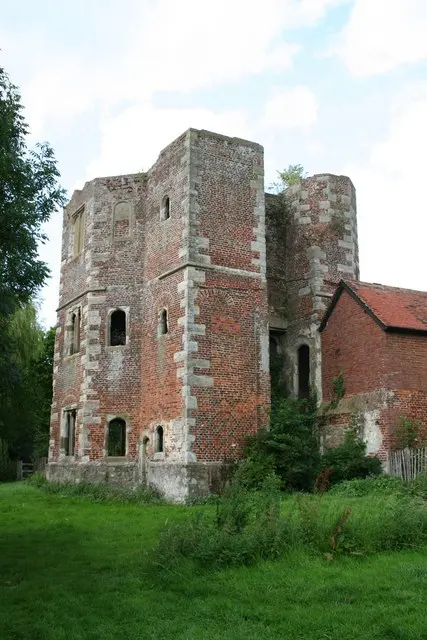
Otford is a Pilgrim's Way threshold: the Winchester route joins the London-Southwark road walked by Chaucer's pilgrims before the final stretch to Canterbury. The village also holds Archbishop's Palace ruins, where Thomas Becket is said to have stayed repeatedly before exile and murder. North Downs walkers enter the same church, for the same reason and destination, as medieval pilgrims.
Why this place is sacred
The quality of a thin place often has something to do with layering — the sense that many different kinds of time are present simultaneously. St Bartholomew's has that quality. The Norman masonry of the north nave wall dates from the generation after the Conquest. The tower was built when Becket had been dead barely fifteen years and his shrine was already drawing thousands annually.
The Easter Sepulchre was carved when Henry VIII was still married to Catherine of Aragon, whose emblem it bears — a fact that gave it fresh poignancy within a generation, when that queen was set aside and the English church broke from Rome.
Beneath all of this is the possibility — unverifiable but persistent — that the site has been sacred for far longer. Local tradition attributes the first church here to St Dunstan, Archbishop of Canterbury from 959 to 988, one of the great reformers of English monasticism.
The Pilgrim's Way itself is believed by many researchers to follow a prehistoric trackway predating Christianity by at least a millennium: a ridge-top route used for seasonal movement, trade, and perhaps ritual long before any pilgrimage to Canterbury was possible.
Otford sits at the base of the North Downs where the Darent Valley cuts through the ridge — precisely the kind of convergence point, where water, route, and topography meet, that tends to accumulate sacred meaning across cultures and centuries. For walkers arriving from the Surrey hills, descending into the valley at Otford, the church on the green is the first significant built landmark: the place where the route from London joins and the final approach to Canterbury begins.
Parish church founded probably in the mid-10th century, serving the village of Otford and the surrounding Darent Valley community. The early foundation is traditionally attributed to St Dunstan, and the dedication to Saint Bartholomew is linked to the arrival of an apostolic relic around 1020.
From probable Saxon timber chapel to Norman stone building (11th century), then enlargement and the addition of the tower (1185), through medieval elaboration including the Easter Sepulchre (1510–1527), to Victorian restoration by the Gothic Revival architect G E Street in 1863. The Reformation ended Catholic pilgrimage practice but the church continued as an Anglican parish. Today it functions as an active parish church while also receiving pilgrims and walkers on the North Downs Way.
Experience and orientation
The approach to Otford matters. If you have walked from the west — from Kemsing or from the Surrey hills — you will have followed the ridge above the Darent Valley before descending through the gap where the river cuts through the chalk. The village opens below you, and the church tower is visible from a distance. By the time you reach the green, you are already oriented: this is a stopping point, a settlement built at a convergence.
The churchyard is entered through a lych gate. The path to the porch crosses ground that has been used for burial since medieval times; the graves of generations of parishioners are visible on both sides. The porch itself retains original medieval stonework, and the sense of crossing a threshold is literal.
Inside, the eye adjusts from daylight to the quieter light of a medieval interior. The north nave wall — the oldest surviving fabric — has a different quality from the Victorian stonework around it: heavier, more uneven, with the slight irregularity of 11th-century construction. The tower arch to the west is Romanesque in character. Then, to the north chancel, the Easter Sepulchre: a recessed stone structure carved with Tudor roses and pomegranates, dated between 1510 and 1527.
It was made to receive the crucifix and reserved sacrament between Good Friday and Easter morning — a practice discontinued at the Reformation but whose physical form survives intact.
The church is open daily and the silence of a weekday morning is complete. If you have been walking, the stillness is particularly felt. The medieval pilgrims who stopped here were in motion toward a destination; so, probably, are you.
The church sits on The Green in the centre of Otford village, immediately accessible from the Pilgrim's Way / North Downs Way route. From the railway station, it is a five-minute walk. The Archbishop's Palace ruins are visible a short distance away on the same green. The church is open daily; the porch and interior are accessible without prior arrangement.
Context and lineage
The church's foundation is traditionally attributed to St Dunstan, Archbishop of Canterbury from 959 to 988 — one of the most influential figures in 10th-century English Christianity.
No primary documentary evidence for this attribution survives, but the tradition is consistent with Dunstan's known activity in the Darent Valley area, and the church's dedication to Saint Bartholomew is itself linked to an early medieval act of patronage: around 1020, Queen Emma — wife of King Canute — returned from a pilgrimage to Rome bearing the arm of Saint Bartholomew as a relic, which is said to have been enshrined in the church and provided its apostolic dedication.
The earliest surviving masonry dates from the Norman period (11th century), suggesting that whatever Saxon structure preceded it was replaced or substantially rebuilt following the Conquest. The tower was raised in 1185, approximately fifteen years after Becket's martyrdom in 1170, at a time when the pilgrimage to his shrine at Canterbury was rapidly becoming one of the great pilgrimage routes of northern Europe. Otford, at the convergence of the Winchester and London routes, was already an important waypoint.
The Easter Sepulchre in the north chancel, carved between 1510 and 1527 with Tudor roses and the pomegranate emblem of Catherine of Aragon, represents the late flowering of pre-Reformation Catholic devotion at this site. It was made barely a generation before the Reformation ended the practice it was designed for. The Victorian restoration of 1863, carried out by the Gothic Revival architect George Edmund Street, preserved and consolidated the medieval fabric.
Anglican / Church of England, Diocese of Rochester. The church has been continuously in Christian use from the probable 10th-century foundation through the Roman Catholic medieval period, the Reformation, and into the present Anglican parish. The electoral roll currently numbers approximately 100 members.
St Dunstan
Traditional founder
Queen Emma
Dedicatory relic patron
Thomas Becket
Associated figure
George Edmund Street
Victorian restorer
Hilaire Belloc
Interpreter of the route
Traditions and practice
Before the Reformation, St Bartholomew's participated in the liturgical cycle of medieval Catholic practice, with the Easter Sepulchre at its centre. The sepulchre — carved with Tudor roses and the pomegranate of Catherine of Aragon — was used each Holy Week: the crucifix was placed within it on Good Friday, and the reserved sacrament laid there, to be 'discovered' empty on Easter morning in a ritual re-enactment of the resurrection.
Pilgrims travelling the road to Canterbury would have entered the church to pray and receive blessing, and the Feast of Saint Bartholomew (August 24) was observed with solemn Mass. The relic of the apostle's arm, reportedly enshrined here by Queen Emma around 1020, would have been a focus of veneration, though no record of what became of it at the Reformation survives.
St Bartholomew's holds weekly services throughout the year. Sunday services include Holy Communion at 8am and a 10am service that rotates between All Together Worship, Holy Communion, and Morning Worship on different weeks; Evensong is held on the first and third Sundays of each month at 6:30pm. The church is open every day for private prayer. Candles may be lit. Seasonal services include candlelit Christmas services making use of the historic brass candelabra.
The church office operates Monday, Wednesday, and Friday mornings between 9am and 12 noon.
Pilgrims walking the North Downs Way are invited to enter and sit for as long as the walk demands. The Easter Sepulchre rewards slow attention: the carved pomegranate of Catherine of Aragon, now separated by five centuries from the court politics that made it a poignant symbol, has acquired a different kind of weight.
If you are walking on or near August 24 — the Feast of Saint Bartholomew — the patron's day service connects the ancient dedication to the living parish. The churchyard contains medieval and post-medieval graves; walking its perimeter before entering the building gives a sense of the site's depth in time.
Anglican / Church of England
ActiveThe primary and continuously active Christian community at this site. St Bartholomew's is the ancient parish church of Otford and serves as a focal point of village spiritual and community life. Its position on the Pilgrim's Way lends it additional resonance as a waypoint on England's most significant pilgrimage route.
Roman Catholic (historical)
HistoricalBefore the English Reformation, this was a Catholic parish church receiving pilgrims on one of Europe's great pilgrimage routes. The Easter Sepulchre — carved with Tudor roses and the pomegranate of Catherine of Aragon, 1510–1527 — is a surviving artefact of late-medieval Catholic devotional practice. The pilgrimage to Becket's shrine was one of the defining Catholic devotions of medieval England.
Perspectives and open questions
St Bartholomew's sits at a point where multiple interpretive traditions converge: the architectural-historical, which traces its Norman masonry and Victorian restoration; the Anglican devotional, which holds it as a site of unbroken Christian witness; and a third, less easily categorised reading of the Pilgrim's Way as something older than any particular religion. Each of these perspectives draws on something real about the site.
Scholarly perspective
Architectural historians and heritage specialists regard St Bartholomew's as a church of exceptional interest, reflected in its Grade I listed status. The earliest surviving fabric — the north nave wall — is dated to the 11th century, consistent with a Norman-period rebuilding of an earlier structure. The tower of 1185 is a document of the post-Becket pilgrimage boom: built at a moment when this route was becoming one of the busiest pilgrimage roads in northern Europe.
The Easter Sepulchre (1510–1527) is considered the finest example among the Darent Valley churches and is of particular interest for its Tudor heraldic iconography. The 1863 restoration by G E Street is understood as significant Gothic Revival work: Street was among the most rigorous and scholarly of Victorian church architects, and his interventions at Otford preserved rather than replaced the medieval character of the building.
Scholarly consensus places the church's foundation probably in the 10th century, while acknowledging that the specific attribution to St Dunstan rests on local tradition rather than surviving documentary evidence.
Living and traditional perspectives
Within the Anglican and broader Christian tradition, St Bartholomew's is understood as a site of continuous prayer for over a thousand years. The dedication to Bartholomew — one of the twelve Apostles, identified in some traditions with Nathanael, venerated as the apostle to Armenia and as a martyr — gives the church a connection to the earliest stratum of Christian witness.
The link to St Dunstan connects it to one of England's great reforming archbishops, who restructured monastic life and parish Christianity in the 10th century. The Becket association ties it to England's most significant medieval martyrdom and to a pilgrimage tradition that shaped the religious and cultural life of the country for three centuries. For the current congregation, these historical threads are not separate from present worship but woven into it.
Alternative interpretations
Hilaire Belloc's 'The Old Road' (1904), while not the only account of the Pilgrim's Way, was the most influential in establishing the idea that the route follows a prehistoric trackway of pre-Christian significance: a Neolithic or Bronze Age ridge path that the medieval pilgrimage overlaid rather than invented.
Otford's position at the base of the North Downs, where the Darent cuts through the chalk and routes converge, fits naturally into this framework — as a node where paths meet, where water emerges, where travellers gathered before a significant topographic transition. Some researchers in the archaeoastronomical and earth-energy traditions have interpreted such convergence points as sites of deliberate ancient landscape design.
This cannot be verified, and the evidence for a pre-Christian sacred function at Otford specifically is absent; but the sense that the place has been meaningful for longer than any surviving record can document is difficult to dismiss entirely.
Open questions
The precise identity and fate of the relic of Saint Bartholomew's arm reportedly brought by Queen Emma around 1020 is untraced in surviving records. Whether any pre-Christian sacred significance attached to the site before the Saxon church foundation cannot be determined. The full extent of surviving medieval wall paintings or glass within the church, if any, has not been extensively published.
The relationship between the pre-Conquest church and the nearby church at Shoreham — whether Otford was originally a dependent chapel or a co-equal foundation — reflects a broader uncertainty about the early parochial geography of the Darent Valley.
Plan your visit
Access and arrival
St Bartholomew's Church is on The Green, Otford, Sevenoaks, Kent, TN14 5PD. Otford railway station (Southeastern, Sevenoaks line from London Bridge / Charing Cross) is a five-minute walk from the church. The church sits directly on the Pilgrim's Way / North Downs Way walking route. Car parking is available in the village. The church is open daily with no admission charge. Mobile signal in the village is generally reliable; Otford station provides easy access in the event of emergency.
Otford village has limited accommodation; Sevenoaks (3 miles south) offers a wider range of options. The village has a pub and a cafe suitable for walkers breaking the route.
Respectful visit
Modest and respectful dress appropriate for a place of worship. There is no formal dress code, but the church is an active sacred space rather than a museum.
Generally permitted inside the church. Be attentive to whether a service or private prayer is in progress; in those circumstances, photography should pause.
Candle-lighting is available. Donations toward the upkeep of this historic Grade I listed building are welcome and contribute to ongoing conservation.
Quiet and reverence are expected, especially when others are present in private prayer or during services. The churchyard contains memorials that should be treated with respect.
The church is an active place of worship; check the parish website for service times before visiting if you wish to have quiet time in the interior. Avoid arriving during services if private contemplation is your purpose, or wait until the service concludes.
Location
Map loads as you approach this section.
Pilgrim reflections
A portrait of encounter, not a score
Pilgrims describe what they felt, how present they could become, and whether the place would shape a journey. There are no stars and no ranking of traditions.
No reviewed reflections yet
The first pilgrims can help describe the character of being here.
Share a reflection
Available after an account-backed “Been there.” Every reflection is reviewed before publication.
Nearby sacred places
Explore other sacred places in the region. Proximity does not establish access or travel time; check each place’s guidance.


References
Sources consulted for this page. Source categories describe the publication, not a guarantee that every claim is verified. Traditional accounts and outside interpretations may differ.
- 01Church of St Bartholomew, Otford — Historic England Listed Building Entry 1273170 — Historic EnglandofficialOfficial Grade I listed building record; confirms architectural phases, restoration by G E Street 1863, Easter Sepulchre dating, and overall significance
- 02Otford Village Church — The Heritage Village of Otford — Otford Heritage VillageofficialLocal heritage body; provides detailed account of architectural features, Easter Sepulchre, dedication origin, Polhill family monuments, and tower date of 1185
- 03St Bartholomew's Otford — Parish Website — St Bartholomew's Church OtfordofficialOfficial parish website; confirms active worship status, services schedule, Diocese of Rochester affiliation, and that the church is open daily for private prayer
- 04The Pilgrims' Way — Winchester to Canterbury — North Downs Pilgrims Way — British Pilgrimage TrustofficialAuthoritative body for UK pilgrimage routes; confirms Otford's position on the Pilgrim's Way and the route's connection to the shrine of Thomas Becket at Canterbury
- 05Otford — Wikipedia — Wikipedia contributorsacademicCovers the Pilgrim's Way through Otford, Archbishop connections, Archbishop's Palace history, and the broader medieval religious significance of the village
- 06Pilgrims' Way — Wikipedia — Wikipedia contributorsacademicConfirms Otford's position on the Winchester-to-Canterbury route; describes the ancient trackway origin and medieval pilgrimage context
- 07St Bartholomew's Church — Visit Otford — Visit OtfordSource contextVisitor information site for Otford; provides overview of church history, dedication origin, and notable features for visitors
- 08St Bartholomew's Church, Otford, Kent — Kent Churches — Kent ChurchesSource contextRegional church information site; provides architectural summary and confirms Grade I listed status
Share a photo
Help visitors recognize St Bartholomew's Church, Otford. Every submission is reviewed before publication.