Matriz Church of Ponte de Lima
Rebuilt because the old church was too small to hold the town that prayed in it
Understand sacred places, explore living traditions, and learn how to engage respectfully with Pilgrim Map.
Access has not been verified. Check current local guidance before planning a visit.
Ponte de Lima, Viana do Castelo, Portugal
Read the sources
Visit essentials
A quick read before you go
- Access
- Located in Ponte de Lima's historic center at Rua da Matriz, reachable on foot from Praça da…
- Etiquette
- Standard modest dress and quiet conduct are expected, as at any active Catholic parish church,…
Overview
Ponte de Lima calls this its matriz, or mother church, with practical reason. In 1444, town representatives told the Cortes of Évora that the old Romanesque church was too small to hold them. King João I and regent D. Pedro provided royal funding, while townspeople contributed labor to raise the present church from 1425 onward.
The building layers that continuing investment: a Romanesque doorway with stacked archivolts; a Gothic-leaning chapel for the Immaculate Conception; a Renaissance chapel for a beatified local priest; later-16th-century Mannerist remodeling of the nave; and a neo-Gothic rose window added in 1932. Few single buildings in the Minho let a visitor read six centuries of Portuguese architectural taste in one walk down the nave.
A local priest called it the 'house of the Limiano soul.' Every phase was funded and physically built by the community the church still serves. It anchors the town's religious calendar and stands on the Camino Português, where passing pilgrims join a congregation present on this ground in one form or another since the 12th century.
Why this place is sacred
Nothing in the available sources points to an apparition, a relic, or a striking natural feature behind this church's importance. Its weight comes instead from continuity and civic ownership: a Romanesque parish outgrew its building, the town petitioned the crown, and the crown funded a larger church that the townspeople then built with their own hands from 1425 onward. That detail — moradores as builders, not just donors — matters.
The matriz was not simply a royal gift to Ponte de Lima; it was jointly authored by the people who would worship in it.
Each subsequent phase reinforced that ownership. The 16th-century Mannerist remodeling of the nave, the Gothic and Renaissance chapels added by local patrons, and even the 1932 rose window represent a community repeatedly choosing to reinvest in the same building rather than start elsewhere. A local priest's description of the church as the 'house of the Limiano soul' reflects this pattern: the building's sacredness is inseparable from its role as the town's own long-running project.
Experience and orientation
Because the church remains an active parish rather than a museum, the most rewarding visits tend to happen around the edges of the Mass schedule — early enough to have the nave to yourself, but not so early the doors are locked. Walking the exterior first, noting the Romanesque doorway's carved archivolts, gives useful context before stepping inside to see how many later centuries were layered onto that original entrance.
Context and lineage
According to testimony given at the 1444 Cortes of Évora, representatives of Ponte de Lima told the crown that their existing Romanesque church was 'so small that we couldn't fit inside' — a direct, recorded complaint rather than a legend. King João I and regent D. Pedro responded by authorizing and funding a larger replacement, but it was the moradores, the townspeople themselves, who physically built it starting in 1425.
Construction and decoration continued for generations: a major Mannerist reworking of the nave took place from 1567 into around 1590, and a neo-Gothic rose window was added in 1932, the most recent major addition to the building's long architectural record.
The church has functioned as Ponte de Lima's matriz continuously since the 15th-century rebuild, absorbing further Gothic, Manueline, Mannerist, and Baroque-era additions along the way. Its 1932 rose window shows the community still investing in the building well into the 20th century, and its May 2013 classification as a Monument of Public Interest formalized, in heritage-protection terms, what the parish had already treated as its spiritual center for centuries.
João I of Portugal
royal patron
King who, together with regent D. Pedro, authorized and funded the 1425 reconstruction after Ponte de Lima's representatives told the 1444 Cortes of Évora that the old church could not hold its congregation.
Pedro, Duke of Coimbra
royal patron
Regent who co-funded the church's 15th-century reconstruction alongside King João I.
The moradores of Ponte de Lima
builders
The town's own residents, who physically built the church from 1425 onward with royal funding — a communal construction effort documented directly in the town's own petition to the crown.
Traditions and practice
The church has served as the town's matriz since the 15th century, hosting the sacramental and communal religious life of the parish. Sources do not detail specific medieval liturgical practices beyond this ongoing parish role.
Weekly Mass continues per the parish schedule. The church's most prominent annual observance is the Solemn Mass, sermon, and religious procession held for Nossa Senhora das Dores (Our Lady of Sorrows) during the Feiras Novas, held the second weekend of September since 1826 and classified as Intangible Cultural Heritage in November 2023.
Ponte de Lima is also an established overnight stage on the Camino Português; pilgrims passing through the town may visit the church as its principal historic monument, though no source confirms an official pilgrim stamp or liturgy specific to this building rather than the town generally.
Visitors seeking a quieter encounter might time a visit for a weekday morning, when the church functions as an ordinary parish space rather than a festival center. Those walking the Camino Português can treat a stop here as one of the oldest continuously used buildings on this stretch of the route, without needing any formal pilgrim rite to make the visit meaningful.
Roman Catholicism (parish worship)
ActiveThe church is the matriz (mother/head parish church) of Ponte de Lima, serving as the primary site of Catholic sacramental and communal religious life for the town since at least the 15th century, described by a local priest as the 'house of the Limiano soul.'
Regular Mass celebration, sacraments, and veneration of Nossa Senhora das Dores and other devotional images housed in the church's chapels and altarpieces.
Feiras Novas / Nossa Senhora das Dores devotion
ActiveThe church anchors the religious core of the Feiras Novas, one of Portugal's oldest continuous town festivals, celebrated since 1826, which combines a Solemn Mass, sermon, and devotional procession honoring Our Lady of Sorrows with the town's largest annual civic celebration.
Solemn Mass and sermon in honor of Nossa Senhora das Dores; a religious procession with allegorical figures, confraternities, and local associations, held the second weekend of September.
Camino de Santiago / Caminho Português pilgrimage
ActivePonte de Lima, one of the oldest chartered towns in Portugal, is a well-established overnight stage on the Camino Português to Santiago de Compostela; the Igreja Matriz, as the town's principal church, is a natural point of pilgrim interest while passing through, though sources do not confirm an official pilgrim stamp or liturgy specific to this church.
Pilgrims passing through Ponte de Lima on the Camino Português typically rest, resupply, and may visit the town's historic churches, including the Igreja Matriz, before continuing north toward Rubiães and the Spanish border.
Perspectives and open questions
Heritage historians and the parish community read this church through different but complementary lenses — one cataloguing its architectural phases, the other living inside the continuity those phases represent.
Scholarly perspective
Heritage historians, reflected in the church's classification as a Monument of Public Interest in May 2013, treat the building as a significant example of a North Portuguese Romanesque-rooted parish church substantially reworked across Gothic, Manueline, and Mannerist campaigns between the 15th and 16th centuries, with later Baroque-era interior additions and a 1932 revivalist rose window.
The exact identity of the master builder or architect behind the 1425 reconstruction is not documented in available sources beyond the royal patronage of João I and D. Pedro, and the precise scope of the original 12th-13th century Romanesque structure is not fully reconstructed in sources consulted.
Open questions
The exact identity of the 1425 reconstruction's master builder or architect is not documented beyond royal patronage; the precise scope of the original Romanesque structure remains unclear. Whether pilgrims on the Camino Português historically received any stamp or blessing specific to this church, as opposed to Ponte de Lima generally, is not confirmed by any source consulted.
Plan your visit
Access and arrival
Located in Ponte de Lima's historic center at Rua da Matriz, reachable on foot from Praça da República via Rua da Alegria and the riverside Avenida dos Plátanos, crossing the medieval bridge — roughly a 10 to 15 minute walk from the town center.
Respectful visit
No site-specific dress code is documented; general norms for visiting active Catholic churches in Portugal recommend covered shoulders and knees.
Not explicitly restricted in sources; the implied norm for an active parish church is no flash and no photography during services.
Visitors should maintain quiet, respectful conduct, especially during Mass or other services, per general visitor guidance.
Location
Map loads as you approach this section.
Pilgrim reflections
A portrait of encounter, not a score
Pilgrims describe what they felt, how present they could become, and whether the place would shape a journey. There are no stars and no ranking of traditions.
No reviewed reflections yet
The first pilgrims can help describe the character of being here.
Share a reflection
Available after an account-backed “Been there.” Every reflection is reviewed before publication.
Nearby sacred places
Explore other sacred places in the region. Proximity does not establish access or travel time; check each place’s guidance.

Capela das Almas
Viana do Castelo, Viana do Castelo, Portugal
21.6 km away
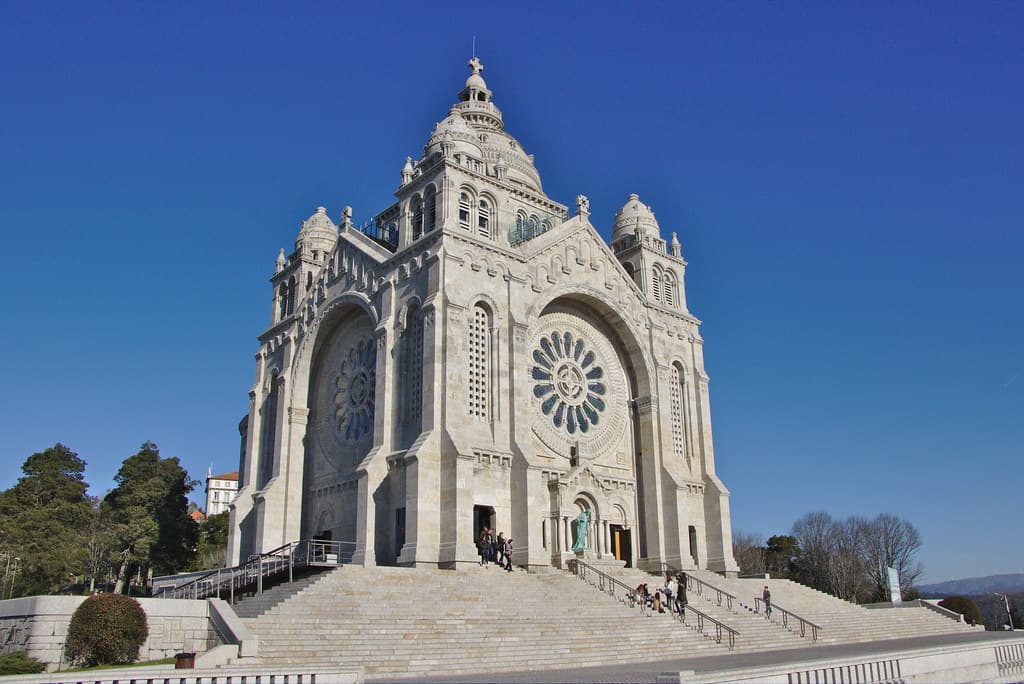
Sanctuary of Santa Luzia
Viana do Castelo, Viana do Castelo, Portugal
22.1 km away
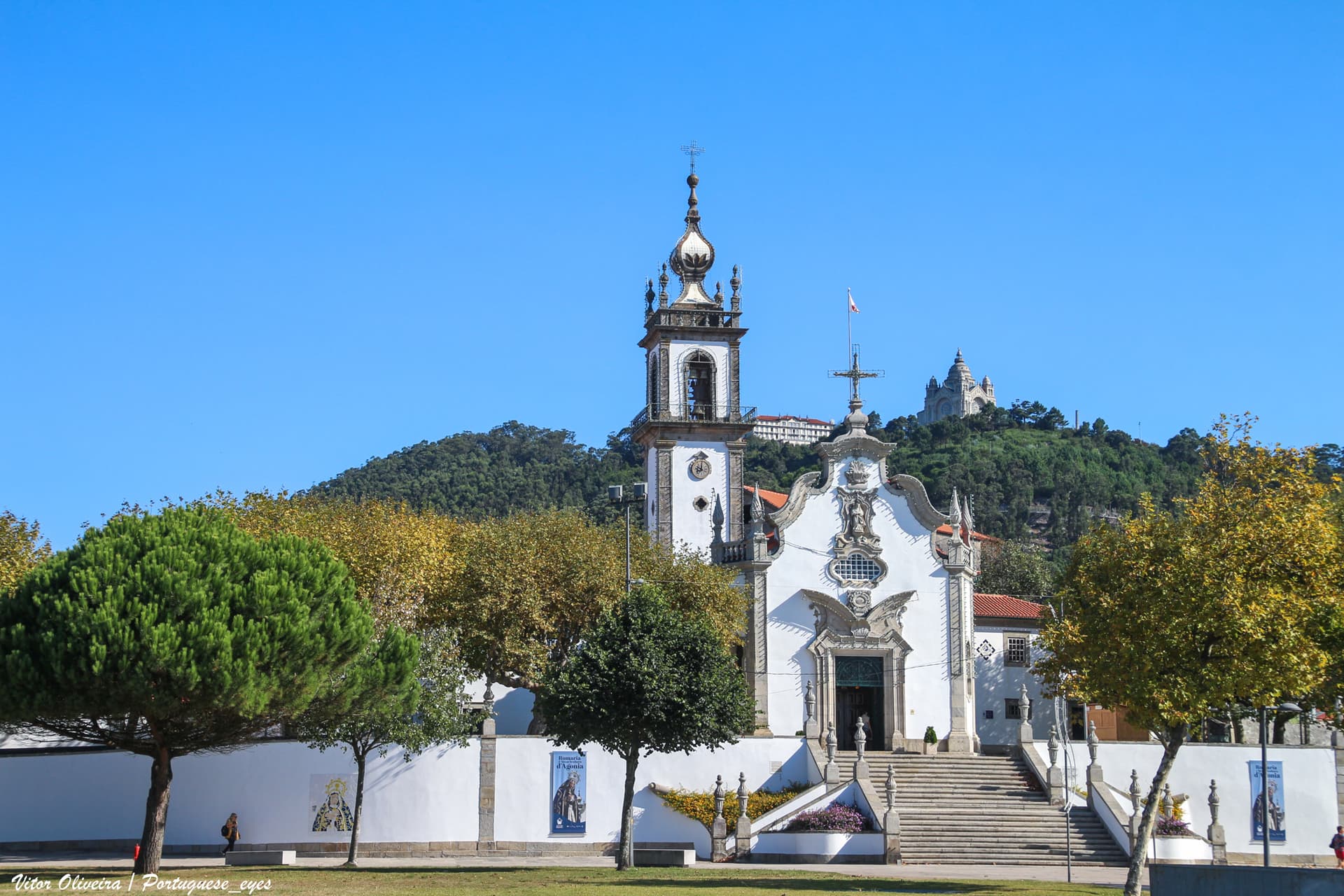
Church of Nossa Senhora da Agonia
Viana do Castelo, Viana do Castelo, Portugal
23.3 km away

Igreja Matriz de Caminha
Caminha, Viana do Castelo, Portugal
24.4 km away
References
Sources consulted for this page. Source categories describe the publication, not a guarantee that every claim is verified. Traditional accounts and outside interpretations may differ.
- 01Igreja Paroquial de Ponte de Lima / Igreja de Santa Maria dos Anjos (SIPA) — Direção-Geral do Patrimonio Cultural / SIPA (Portuguese government heritage inventory)officialOfficial Portuguese state heritage inventory record for the site (page could not be directly fetched during this research session due to a connection error, but is cross-referenced by multiple secondary sources for classification and architectural phasing detail).
- 02Feiras Novas - Visite Ponte de Lima — Ponte de Lima Municipal Tourism OfficeofficialOfficial municipal tourism source; confirms Feiras Novas festival held second weekend of September since 1826, in honor of Nossa Senhora das Dores (Our Lady of Sorrows), with a Solemn Mass, sermon, and religious procession as a core component alongside secular festivities. Classified Intangible Cultural Heritage in November 2023.
- 03Igreja Matriz de Ponte de Lima – Wikipédia, a enciclopédia livre — Wikipedia contributorsSource contextPrimary consolidated source for construction history (12th-13th c. Romanesque origin, 1425-1446 rebuild funded by João I and regent Pedro, 1567-1590 Mannerist tripartite nave remodel, 1932 neo-Gothic rose window, May 2013 Monument of Public Interest classification, coordinates 41°46'04"N 8°35'03"W).
- 04Igreja Matriz / Parish Church Historical Marker — The Historical Marker Database (HMdb.org)Source contextOn-site interpretive marker text; confirms 1425 construction start under João I's approval, c.1446 completion, notes Capela de Nossa Senhora da Conceição (Gothic) and Capela do Beato Francisco Pacheco (Renaissance, formerly Capela do Santíssimo), two 18th-century altars (Nossa Senhora das Dores, Nossa Senhora da Piedade), and identifies the church's azulejo panel as stop no. 10 on the local 'Route of the Tiles' walking tour.
- 05Ponte de Lima: Igreja matriz é a «casa da alma limiana», afirma padre José Fernando Caldas — Agência Ecclesia (Portuguese Catholic Church news agency)officialOfficial Catholic Church (diocesan-affiliated) press source describing the church's contemporary role as the spiritual/parish heart ('house of the Limiano soul') of the town; used for current active-worship framing.
- 06Portuguese Way - Wikipedia — Wikipedia contributorsSource contextConfirms Ponte de Lima as an established stage/stop on the Caminho Português (inland/Central Route) to Santiago de Compostela, using the town's medieval bridge for the river crossing; does not name the Igreja Matriz specifically as a pilgrim checkpoint.
- 073. From Barcelos to Ponte de Lima | Camino de Santiago — santiago-compostela.netSource contextRoute-stage guide confirming Ponte de Lima as a standard overnight stage endpoint on the Camino Portugués Central Route, 34.5km from Barcelos.
- 08Igreja Matriz de Ponte de Lima - Ponte de Lima | All About Portugal — All About PortugalSource contextEnglish-language visitor description noting Romanesque pointed-arch doorway, Manueline-style Capela de Nossa Senhora da Conceição with two Baroque altarpieces, and coffered wooden ceiling.
Share a photo
Help visitors recognize Matriz Church of Ponte de Lima. Every submission is reviewed before publication.