Capela das Almas
Viana do Castelo's oldest church, still standing where the town began
Understand sacred places, explore living traditions, and learn how to engage respectfully with Pilgrim Map.
Access has not been verified. Check current local guidance before planning a visit.
Viana do Castelo, Viana do Castelo, Portugal
Read the sources
Image of Capela das Almas. Image source
Visit essentials
A quick read before you go
- Duration
- 5 to 15 minutes to view the exterior and churchyard; allow additional time if a guided…
- Access
- On Rua do Gontim, opening onto Praça Frei Gonçalo Velho, in the historic center of Viana do…
Overview
Capela das Almas stands on Rua do Gontim in the historic center of Viana do Castelo, a building whose plain 18th-century Baroque face conceals a much older story. It began as the town's first parish church, or matriz — the seat from which Viana do Castelo's Christian life was organized before the current cathedral was built in 1483.
Archaeological work carried out inside the chapel in 2006-2008 found Romanesque stonework and, beneath that, the foundations of an even earlier structure, pushing the site's origins toward the 9th century, though that earlier date remains provisional. For more than five hundred years, from the reign of King Afonso III until the close of the 19th century, its churchyard served as Viana do Castelo's cemetery — the source of the name Almas, souls.
Today it is a quiet parish chapel with a small in-situ archaeological display, and, per a first-hand pilgrim account, a landmark that walkers on the Camino de Santiago's Coastal Route pass along Rua do Gontim as they cross the town.
Why this place is sacred
What makes Capela das Almas feel dense with time rather than merely old is the way its layers sit on top of each other without erasing one another. Excavations in 2006-2008 found Romanesque masonry, and beneath that, older foundations still — evidence read by municipal archaeologists as pointing to a 9th-century origin, though this earlier date is not corroborated across independent sources and is best held as provisional rather than settled fact.
Above that buried history sits the building most visitors actually see: a diminished, unpretentious Baroque chapel rebuilt in 1719 by canon Domingos de Campos Sares, its rococo and neoclassical woodwork a much later addition to a much older site. The churchyard adds a second kind of weight.
From the reign of King Afonso III until the late 19th century, it functioned as Viana do Castelo's cemetery — the 'pote das almas,' the souls' pot — which is where the chapel's name comes from. A place can accumulate significance either through a single dramatic event or through centuries of ordinary, repeated use: burial after burial, mass after mass, on the same small plot of ground. This chapel's thinness, if it has any, comes from the second kind.
Founded as Viana do Castelo's first parish church (matriz), serving the town's earliest formal Christian community and, from the reign of Afonso III, its burial ground.
Lost its matriz status in 1483 when the current Sé (cathedral) was completed; continued as a parish chapel and cemetery site into the late 19th century; substantially rebuilt in Baroque style in 1719; excavated and given a small in-situ museum display in 2006-2008; now also functions as an incidental landmark on the modern Camino de Santiago Coastal Route.
Experience and orientation
On Rua do Gontim, the chapel arrives without ceremony: a low, plain façade among ordinary townhouses, with only the bell tower's double arches hinting at its age. There is no grand approach or plaza. Its modest scale suits the working parish church built for Viana do Castelo's earliest residents.
Even from outside, visitors can enter the churchyard that served as the town's cemetery and sense the centuries held by the small building. A scheduled municipal guided visit opens the museum core in the chancel and sacristy, where finds from the 2006-2008 excavation show Romanesque and older foundations beneath the Baroque interior. One first-hand Camino pilgrim account places the chapel about a quarter kilometer along Rua do Gontim, encountered before the town's other landmarks.
Located on Rua do Gontim, opening onto Praça Frei Gonçalo Velho, in the historic center of Viana do Castelo; reached on foot from anywhere in town, and directly alongside the pilgrim path through the historic center for those walking the Camino Português Coastal Route.
Context and lineage
The chapel's Romanesque fabric is well documented to the 13th century, and it functioned as Viana do Castelo's first parish church until the current cathedral (Sé) was completed in 1483, at which point it lost its matriz status.
Archaeological excavation carried out during restoration work in 2006-2008 uncovered vestiges of that Romanesque structure and, beneath it, the foundations of an even older building — evidence the municipal heritage authority reads as suggesting an origin as early as the 9th century, though this earlier dating has not been independently corroborated across multiple sources and should be treated as provisional. The building was substantially rebuilt in its present Baroque form in 1719 under canon Domingos de Campos Sares.
Its churchyard, from the reign of King Afonso III until the close of the 19th century, served as the town's cemetery, giving the chapel its name — Capela das Almas, chapel of the souls.
Part of the Roman Catholic parish structure of Viana do Castelo, historically the seat of the town's earliest confraternities — the Confraria das Almas (mid-15th century) and the Confraria da Guia (1632) — and today associated with the Nossa Senhora da Guia e Almas parish.
Domingos de Campos Sares
Canon who directed the chapel's Baroque restoration and rebuilding in 1719, giving the structure the form it retains today
King Afonso III of Portugal
His reign marks the traditional starting point given for the churchyard's use as Viana do Castelo's cemetery
Municipal archaeology office, Câmara Municipal de Viana do Castelo
Conducted the 2006-2008 excavation inside the chapel and now oversees the in-situ museum core and guided-visit access
Traditions and practice
The Confraria das Almas, dating to the mid-15th century, organized prayer and rites for the souls of the deceased buried in the adjoining churchyard. The Confraria da Guia, founded in 1632, centered devotion on Nossa Senhora da Guia (Our Lady of Guidance). Both confraternities accumulated ecclesiastical privileges and indulgences from the 17th century onward.
The chapel continues within the parish structure associated with Nossa Senhora da Guia e Almas; specific current mass schedules were not confirmed in research and should be checked directly with the parish. Municipal archaeology staff maintain the small museum core and lead scheduled guided visits.
Pause at the churchyard threshold before entering, given its centuries as a burial ground, rather than treating it as simply another stop to photograph. If arranging the guided interior visit, take the time to read the archaeological display in the chancel against the Baroque woodwork around it — the two are separated by roughly a thousand years on the same footprint.
Roman Catholicism
ActiveOriginally the first parish church (matriz) of Viana do Castelo, later rebuilt in Baroque style in 1719; historic seat of the Confraria das Almas and Confraria da Guia, and today part of the Nossa Senhora da Guia e Almas parish.
Confraternal devotion to the souls of the dead and to Our Lady of Guidance; historical parish burial rites.
Camino de Santiago pilgrimage (Caminho Português, Coastal Route)
ActiveA landmark passed by modern pilgrims walking the in-town stretch of the Coastal Route through Viana do Castelo, per a first-hand pilgrim account describing it along Rua do Gontim.
Passing landmark used for wayfinding through the historic center; no distinct pilgrim liturgy or ritual stop documented.
Perspectives and open questions
Capela das Almas is read differently depending on the lens: municipal heritage authorities see a documented matriz and archaeological site; a pilgrim walking through town sees a landmark on the way to somewhere else; and the historical record itself leaves real gaps about the chapel's earliest centuries.
Scholarly perspective
Municipal heritage documentation and the 2006-2008 excavation establish a well-supported 13th-century Romanesque phase and a thoroughly documented 1719 Baroque rebuild. The claim that foundations reach back to the 9th century is treated by the municipal archaeology office as a reasonable inference from the excavation, but it is not corroborated by multiple independent academic sources in the research consulted here, and is best treated as provisional rather than settled.
Living and traditional perspectives
Within the local parish and confraternal tradition, the chapel is remembered as Viana do Castelo's first mother church and as sacred ground because of the generations buried in its churchyard — a continuity of use, from Afonso III's reign to the late 19th century, that gives the site its name and its felt weight independent of any single doctrinal claim.
Alternative interpretations
No distinct esoteric or alternative spiritual interpretation of the chapel was found in research consulted; its significance in available sources is civic-historical and devotional rather than mystical.
Open questions
Two things remain genuinely open. First, the exact date the chapel lost matriz status is given inconsistently across sources — commonly 1483, tied to the cathedral's completion, though one source suggests c.1433 — and the discrepancy is unresolved.
Second, and more directly relevant to how this chapel is being framed here: only one first-hand source found in research, a personal pilgrim diary, explicitly places Capela das Almas on the walked path of the Camino Português Coastal Route, naming Rua do Gontim and describing the chapel as encountered mid-walk. Official Camino guidebooks and route descriptions consulted describe the Viana do Castelo stage in general terms and do not call out this specific chapel.
The single-source status of that pilgrim account, while specific and street-level accurate, is a real limit on how confidently the on-route claim can be treated as established rather than well-attested-but-thin.
Plan your visit
Access and arrival
On Rua do Gontim, opening onto Praça Frei Gonçalo Velho, in the historic center of Viana do Castelo — fully walkable from anywhere in town and directly on the pilgrim path through the historic center for those walking the Camino Português Coastal Route. The site offers an accessible route to the entrance and accessible internal circulation. Mobile phone signal is reliable throughout, as the chapel sits in the middle of an urban center rather than a remote location.
Interior visits require booking through the municipal archaeology office at +351 258 809 337.
Standard town-center lodging in Viana do Castelo is widely available within walking distance, including options oriented toward Camino pilgrims given the town's position on the Coastal Route; no chapel-specific accommodation exists.
Respectful visit
Modest dress is expected when entering an active Catholic church (shoulders and knees covered), though no chapel-specific dress code beyond general norms was found in research consulted.
No explicit restriction on exterior or churchyard photography was found; general courtesy applies, and photography during guided interior visits should follow the guide's direction.
No specific offering custom is documented for this chapel beyond ordinary parish donation practices.
Interior and museum-core visits require advance scheduling through the municipal archaeology office (+351 258 809 337); the exterior and churchyard are freely accessible without appointment.
Interior and museum-core access requires a scheduled guided visit through the municipal archaeology office; unaccompanied entry to see the excavation display does not appear to be available.
Location
Map loads as you approach this section.
Pilgrim reflections
A portrait of encounter, not a score
Pilgrims describe what they felt, how present they could become, and whether the place would shape a journey. There are no stars and no ranking of traditions.
No reviewed reflections yet
The first pilgrims can help describe the character of being here.
Share a reflection
Available after an account-backed “Been there.” Every reflection is reviewed before publication.
Nearby sacred places
Explore other sacred places in the region. Proximity does not establish access or travel time; check each place’s guidance.
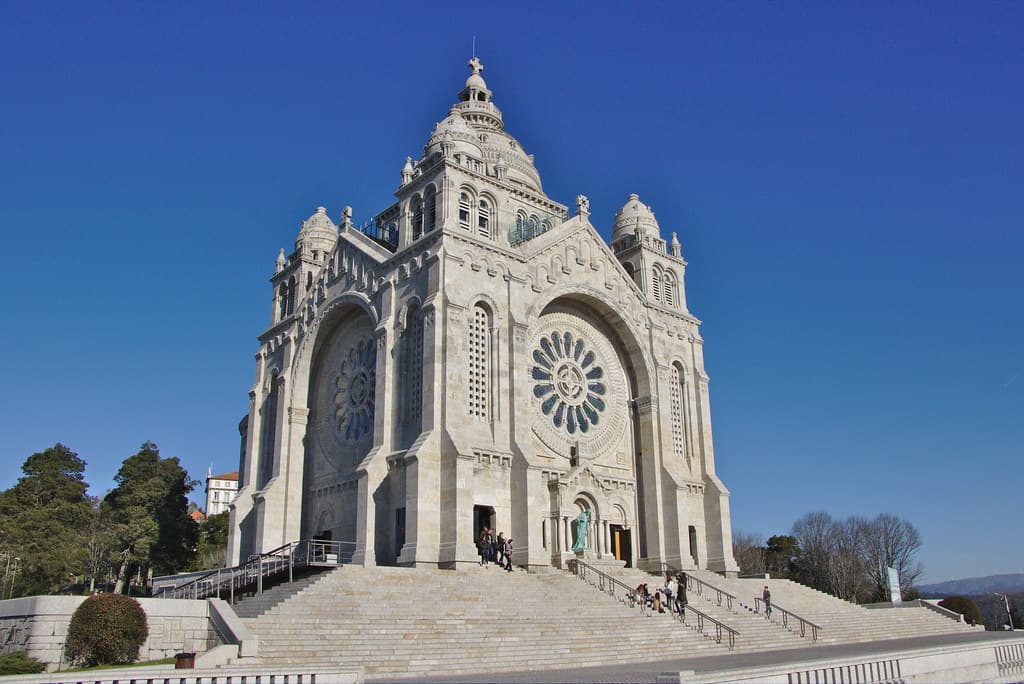
Sanctuary of Santa Luzia
Viana do Castelo, Viana do Castelo, Portugal
1.1 km away
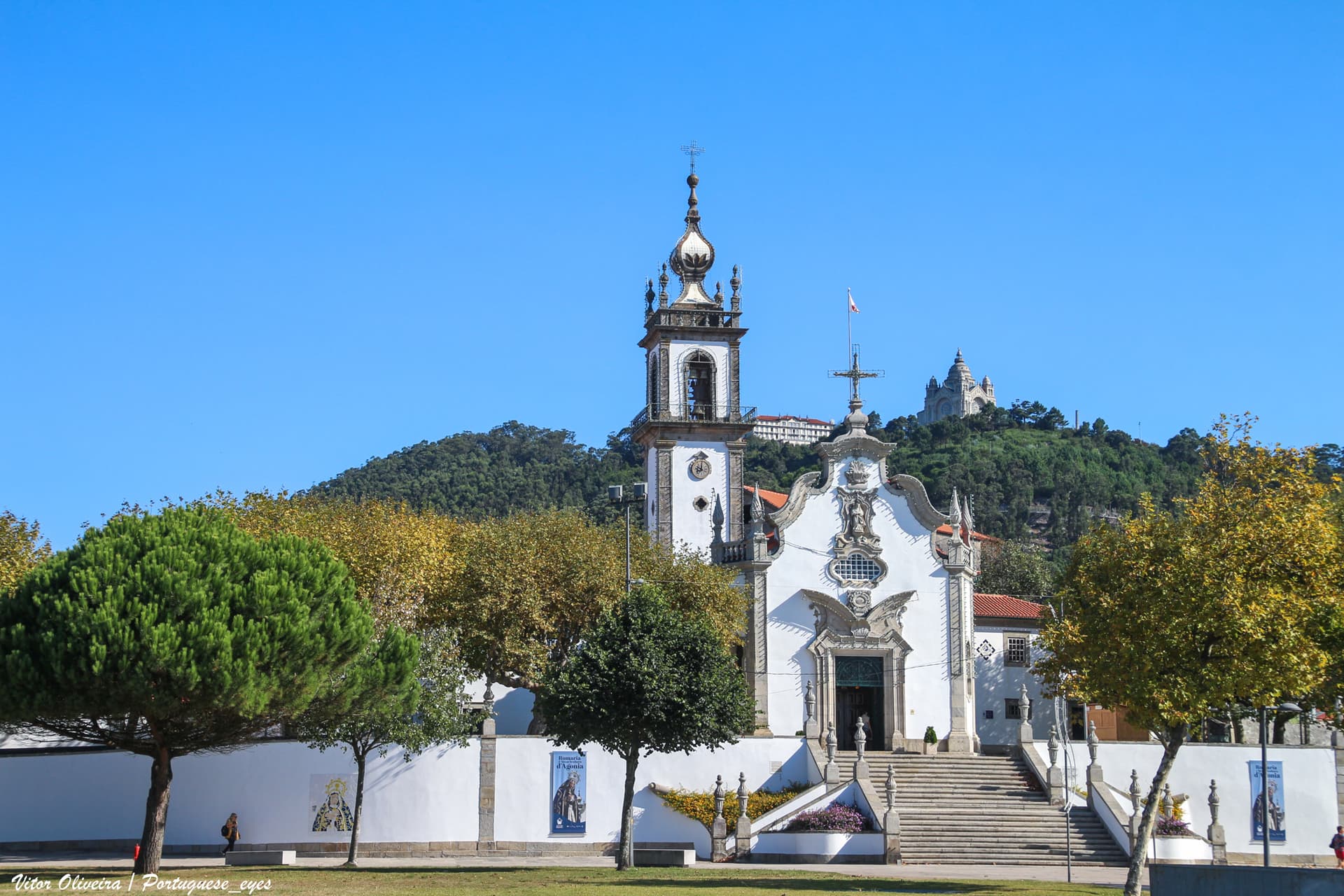
Church of Nossa Senhora da Agonia
Viana do Castelo, Viana do Castelo, Portugal
1.8 km away

Igreja Matriz de Caminha
Caminha, Viana do Castelo, Portugal
20.5 km away

Matriz Church of Ponte de Lima
Ponte de Lima, Viana do Castelo, Portugal
21.6 km away
References
Sources consulted for this page. Source categories describe the publication, not a guarantee that every claim is verified. Traditional accounts and outside interpretations may differ.
- 01Capela das Almas (Viana do Castelo) — Wikipédia — Wikipedia contributorsacademicConfirms 13th-century Romanesque origin, status as first parish church until c.1433, 1719 restoration by canon Domingos de Campos Sares, confraternities, and the cemetery/name origin. No mention of Camino de Santiago.
- 02Igreja das Almas — Câmara Municipal de Viana do Castelo — Câmara Municipal de Viana do CasteloofficialOfficial municipal heritage description: first parish church, lost matriz status in 1483 with construction of the Sé, cemetery use until 19th century, 2006-2008 excavations revealing Romanesque and possibly 9th-century foundations, Baroque (seiscentista) character, visiting hours and address.
- 03Núcleo Museológico da Igreja das Almas — Câmara Municipal de Viana do Castelo — Câmara Municipal de Viana do CasteloofficialDescribes the small museum core in the chancel/sacristy displaying archaeological finds from the 2008 excavation; free admission; guided visits by appointment via the municipal archaeology office.
- 04Capela das Almas — Turismo de PortugalofficialNational tourism board page: confirms 'Matriz Velha' name, cemetery/burial origin of the 'Chapel of Souls' name, 1719 Baroque rebuild under Domingos de Campos Soares while thirteenth-century elements (arcosolium, high altar cross) survive, address, contact, and opening hours. No Camino de Santiago reference.
- 05Day Eighteen on the Coastal Route of the Camino Portugués — Pilgrimage Traveler (personal pilgrim diary)Source contextFirst-hand pilgrim account: describes walking on Rua do Gontim for roughly a quarter kilometer 'until you come to the lovely chapel, the Capela das Almas' while navigating through Viana do Castelo on the Coastal Route, following a blue Camino waymark near a roundabout. This is the strongest and only source found that directly places the chapel on the walked pilgrim path (not merely in the same town) — it corroborates the prior MEDIUM-confidence hypothesis but is a single personal blog account rather than an official Camino guidebook or academic source.
- 06Igreja de S. Salvador das Almas, a primeira igreja matriz de Viana do Castelo — Olhar Viana do Castelo (local history blog)Source contextLocal history blog corroborating the church's role as Viana do Castelo's original matriz and its alternate name S. Salvador das Almas.
- 07Adro da Capela das Almas, em Viana do Castelo, funcionou como cemitério até finais do século XIX — Alto Minho (regional tourism/culture site)Source contextCorroborates the churchyard's use as Viana do Castelo's cemetery from the reign of D. Afonso III until the late 19th century, the origin of the 'Almas' (Souls) name.
- 08Camino Portugues: Coastal Route 2026 Pilgrim Guide — Walk the Camino PortuguésSource contextGeneral Coastal Route stage guide covering Esposende to Viana do Castelo; does not name Capela das Almas or Rua do Gontim specifically, illustrating that most published guides describe this stage at a town level rather than street level — used here as a negative/limiting source, not a corroborating one.
Share a photo
Help visitors recognize Capela das Almas. Every submission is reviewed before publication.