Convent of Saint Francis, Santarém
The largest Gothic hall church in Portugal, built for poverty and ended by fire
Understand sacred places, explore living traditions, and learn how to engage respectfully with Pilgrim Map.
Access has not been verified. Check current local guidance before planning a visit.
Santarém, Santarém, Portugal
Read the sources
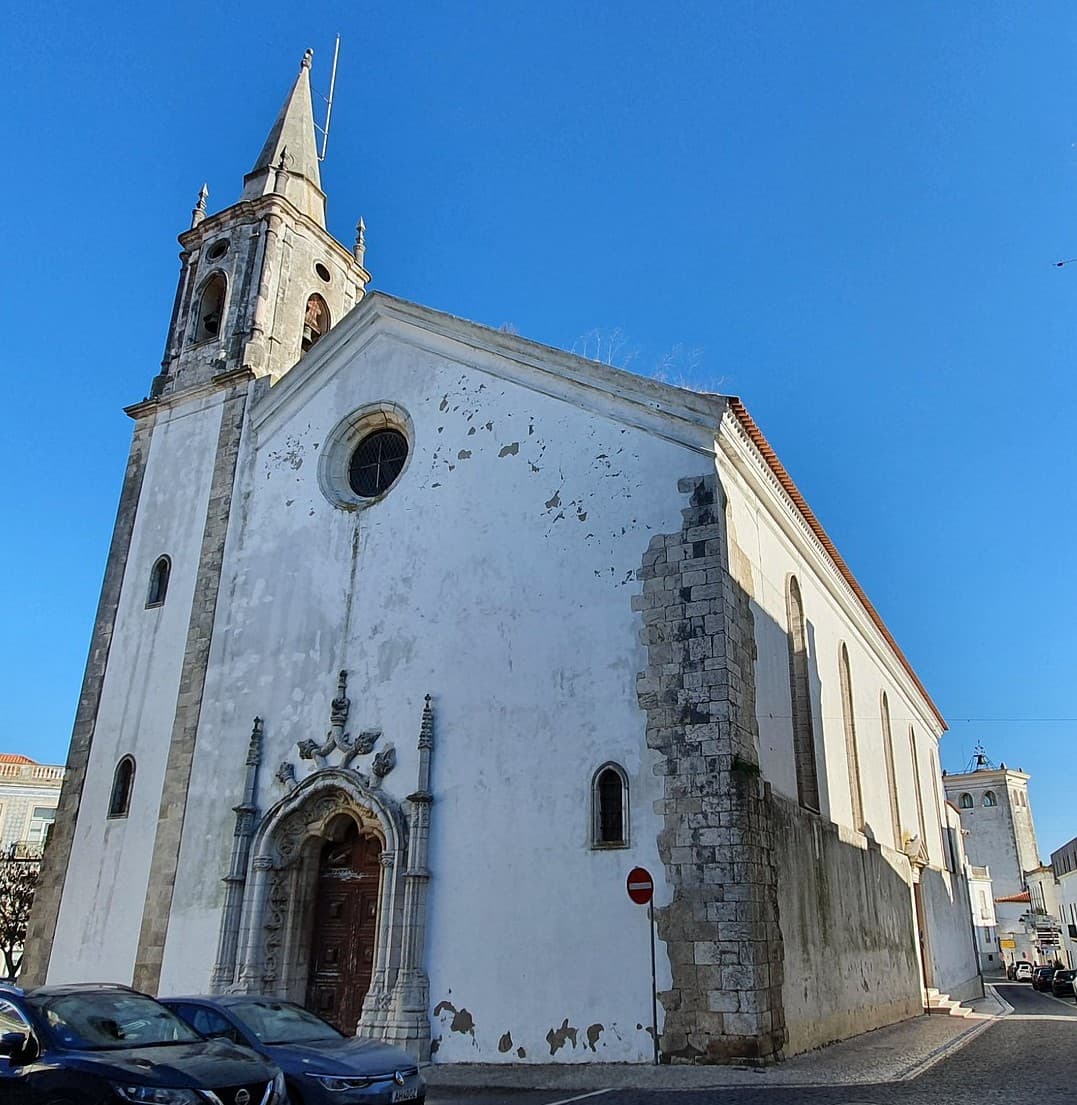
Image of Convent of Saint Francis, Santarém. Image source
Visit essentials
A quick read before you go
- Duration
- 45–90 minutes to explore the church, cloister, and chapels.
- Access
- Located at Rua 31 de Janeiro, 2000-014 Santarém, in the historic town center, reachable on foot…
Overview
Franciscans reached Santarém in 1240, and within two years King D. Sancho II granted land for a convent expressing mendicant restraint as devotion. Its spacious three-naved hall and unusually developed five-chapel chancel, mostly complete by the later thirteenth century, became, in heritage authorities' assessment, Portugal's most significant Gothic work before Batalha Monastery a century later.
In the fourteenth century, King D. Fernando I added a choir and large cloister for burial beside his mother, D. Constança Manuel, breaking with the Cistercian royal pantheon at Alcobaça maintained since the twelfth century. Mendicant community and dynastic memory briefly shared the complex. Portugal dissolved its religious orders in 1834; fire brought further ruin in 1940. Reopened in 2009, the restored ruin remains partly roofless, its royal tombs moved to Lisbon but its Gothic structure legible.
Why this place is sacred
Two distinct kinds of weight accumulated on this site, and neither fully explains the other. The first is architectural and devotional: the Franciscans built here according to the mendicant typology spreading through thirteenth-century Europe, valuing structural austerity over decorative excess. Heritage authorities describe the resulting church — a five-bay hall with wooden ceiling and an unusually developed stepped chancel — as the most beautiful expression of Gothic art in Portugal before Batalha.
Its power lies less in ornament than in proportion and restraint.
The second kind of weight is dynastic. In the fourteenth century, King D. Fernando I chose this convent, rather than the grand Cistercian abbey at Alcobaça where Portugal's royal dead had traditionally been laid, as his own burial site. Historians read this as a political statement as much as a devotional one — a king distancing the crown from an older monastic alliance and attaching his memory instead to the newer, more austere Franciscan ideal.
He was interred here in 1383 alongside his mother, D. Constança Manuel.
What remains today is neither the mendicant community nor the royal pantheon, but the physical trace of both: a nave too large to have been built for humility alone, and a cloister and choir too specific in their commissioning to be read as anything but a king's calculated act of memory. The roofless, fire-scarred sections that resulted from the 1834 dissolution and the 1940 fire add a third layer that neither the Franciscans nor D.
Fernando intended — a visible record of how completely both projects were, for a time, erased.
The convent was built to house a Franciscan community and to embody, in stone, the order's ideal of structural restraint — a corrective, in its way, to the more ornamented monastic architecture that preceded it. Its scale was not aimed at grandeur for its own sake but at accommodating a functioning conventual community: dormitories, refectory, cloister, and a church large enough for both the friars' own liturgy and public worship.
The building's purpose shifted decisively in the fourteenth century, when D. Fernando I's patronage layered a royal funerary function onto the original mendicant one. Further building continued into the fifteenth century under Duke Duarte de Menezes, who sponsored cloister work and, after his death in 1464, the Mannerist Chapel of Souls; the Renaissance Chapel of Saint Anne was added in a separate campaign. The 1834 dissolution of Portugal's religious orders ended nearly six centuries of Franciscan occupation.
A 1940 fire caused further, severe damage. The convent then stood largely as ruin until a restoration effort culminated in its 2009 reopening as a public heritage and cultural site — a status confirmed by a 2012 ceremony marking the installation of a restored rose window.
Experience and orientation
The nave receives most first reactions: a hall large enough to surprise visitors who arrive expecting a modest parish church, its five stepped chancel chapels visible from nearly any point inside. From there, the building's history becomes legible in its damage as much as its intact stonework — sections open to the sky where fire took the roof, capitals and heraldic carving surviving in fragments rather than whole.
The cloister, built for D. Fernando I in the fourteenth century and expanded in the fifteenth under Duarte de Menezes, holds a quieter register: paired and tripled pointed arches, heavy buttresses, and coats of arms carved into capitals that have outlasted the community that commissioned them.
Visitors describe the roofless portions as evocative less of tragedy than of duration — the sense of a place that has been built, used, abandoned, burned, and restored, and that carries all four states visibly at once.
Two later additions reward a slower pass through the complex: the Renaissance Chapel of Saint Anne, added in its own separate campaign, and the Mannerist Chapel of Souls, commissioned after Duke Duarte de Menezes's death in 1464 as part of his commemorative legacy. Neither competes with the scale of the main nave, but both mark moments when later patrons chose to add their own layer to a building already centuries into its life.
Finding them requires the kind of unhurried attention the ruin as a whole seems to ask for — the same attention that turns the 2012 restoration of the rose window from a maintenance detail into a small, visible sign that the building's story has not stopped.
There is no single prescribed path through the convent, and no active liturgy to orient a visit around. Those who report the most from their time here tend to move slowly between the nave's scale and the cloister's more intimate, damaged detail, rather than treating the building as a single object to be photographed from one vantage point.
Reading the site as a sequence — mendicant hall, royal cloister, fire scar, restoration — tends to produce more than a quick walkthrough would.
Context and lineage
According to tradition, Franciscan friars settled in Santarém in 1240, shortly after the order's arrival in Portugal, and were granted royal patronage under King D. Sancho II two years later to build a convent that would come to rival the kingdom's great monastic foundations. The resulting church, largely finished by the later thirteenth century, followed the mendicant Gothic typology then spreading through Europe — a design valuing scale and structural discipline over ornament. In the fourteenth century, King D.
Fernando I substantially expanded the convent, commissioning a choir and a large cloister explicitly so that he could be interred there, a choice historians read as a deliberate move away from the established Cistercian royal pantheon at Alcobaça. He died in 1383 and was buried here alongside his mother, D. Constança Manuel; his tomb was later relocated to Lisbon's Carmo Archaeological Museum, though sources disagree on whether that move occurred in 1875 or only after the 1940 fire.
Franciscan friars occupied the convent for nearly six centuries, from the 1240s until the 1834 dissolution of Portugal's religious orders ended resident monastic life nationwide. No community has occupied the site since.
Following the 1940 fire, the ruined complex passed into municipal and heritage-authority stewardship, culminating in a restoration and 2009 reopening as a public cultural venue — the closest thing the site now has to a continuing custodial tradition, formalized further by a 2012 ceremony marking the restoration of the rose window.
D. Sancho II
historical
King of Portugal who founded the convent in 1242 for the newly arrived Franciscan community, granting royal patronage to a mendicant order still establishing itself in the kingdom.
D. Fernando I
historical
King of Portugal who substantially enriched the convent in the fourteenth century, commissioning its choir and cloister so he could be buried here — a choice read by historians as a political move away from the Cistercian royal pantheon at Alcobaça. Died 1383; interred here until his tomb was later moved to Lisbon.
D. Constança Manuel
historical
Mother of D. Fernando I, interred in the convent alongside her son as part of the fourteenth-century royal funerary program he commissioned.
Duke Duarte de Menezes
historical
Fifteenth-century patron who sponsored further cloister work; the Mannerist Chapel of Souls was commissioned after his death in 1464 as part of his commemorative legacy.
Traditions and practice
Historically, the convent supported Franciscan conventual liturgy and, from the fourteenth century, royal funerary and commemorative rites for D. Fernando I and the nobility interred alongside him. These practices ended with the 1834 dissolution and have not been reconstituted.
The site hosts occasional civic and cultural events — a rosace installation ceremony in June 2012 marked a notable restoration milestone — alongside exhibitions and concerts programmed by the municipality. No regular liturgical services are documented.
Walk the nave first, at the pace its scale asks for rather than the pace a two-room church would. Notice where the roof still holds and where it doesn't; the fire damage is not incidental to the building's story but part of what it now communicates.
In the cloister, look for the surviving heraldic carving on the capitals — fragments of a specific royal commission, not generic decoration — before moving to the more damaged sections and letting the exposed stone and open sky register as their own kind of information.
Roman Catholicism (Franciscan)
HistoricalFranciscan friars arrived in Santarém in 1240, and King Sancho II founded their convent in 1242, following the austere mendicant building typology spreading through thirteenth-century Europe. The church, largely finished by the second half of the thirteenth century, is described by heritage authorities as the most significant expression of Gothic architecture in Portugal before the Batalha Monastery. The Franciscan community occupied the site for nearly six centuries until the 1834 dissolution of religious orders.
Historically: Franciscan conventual life, liturgy, and burial rites for royal and noble patrons. Currently: none — the site has no resident religious community.
Portuguese Royal Pantheon Tradition
HistoricalIn the fourteenth century, King D. Fernando I substantially enriched the convent, commissioning a choir and a large cloister explicitly so he could be buried there, alongside his mother D. Constança Manuel, deliberately choosing the Franciscans over the established royal pantheon at Alcobaça Monastery. He died in 1383 and was interred here until his tomb was later moved to Lisbon.
Royal funerary rites, tomb commissioning, and commemorative masses — all historical; none of this continues today.
Perspectives and open questions
The convent's history is read differently depending on whether the lens is architectural, dynastic, or devotional — and the site is large enough, and damaged enough, to hold all three without forcing a single narrative.
Scholarly perspective
Art historians regard the Convento de São Francisco as a pinnacle of mendicant Gothic architecture in Portugal, notable for its scale, structural austerity, and an unusual five-chapel stepped chancel without direct parallel elsewhere in Portuguese Gothic. D. Fernando I's choice of this site for his royal burial is read by historians as a political statement, distancing the crown from the established Cistercian royal pantheon at Alcobaça.
That reading treats the building's two major phases — the thirteenth-century mendicant hall and the fourteenth-century royal additions — as a single continuous argument about what kind of religious authority a Portuguese king wanted his memory attached to, rather than as two unrelated building campaigns sharing a site by coincidence.
Living and traditional perspectives
The site's traditional custodianship was Franciscan Catholic religious authority for nearly six centuries; that authority has since been succeeded entirely by municipal heritage stewardship, with no resident religious community remaining.
Open questions
The exact original decorative program of the most badly damaged sections — following the 1834 dissolution and the 1940 fire — is not fully documented; some medieval tomb inscriptions and heraldic details survive only in partial or damaged form. Sources also disagree on when D. Fernando I's tomb was moved to Lisbon's Carmo Archaeological Museum, with one account citing 1875 and another attributing the transfer to damage from the 1940 fire.
Plan your visit
Access and arrival
Located at Rua 31 de Janeiro, 2000-014 Santarém, in the historic town center, reachable on foot from the town's main square. No entrance fee is generally charged, though donations for preservation are welcomed. Santarém sits on the Central Camino Portugués, which coincides with the Tagus Way toward Fátima until Santarém, making the convent an easy stop for pilgrims already passing through.
Respectful visit
No specific dress code is documented; comfortable walking shoes are recommended given cobbled streets and uneven, ruined surfaces within the complex.
Not explicitly restricted in the sources reviewed; standard heritage-site photography norms are assumed to apply.
Not applicable — no active devotional practice is documented at the site.
No formal access restrictions are documented beyond standard opening hours; visitors should exercise caution on uneven cobbled and ruined surfaces, and bring water and sun protection in summer given the shadeless, roofless sections of the complex.
The site includes roofless, exposed sections with uneven cobbled and ruined surfaces; comfortable walking shoes are advisable, along with water and sun protection in summer, since parts of the ruin offer no shade. There is no indication of restricted areas, but visitors should treat surviving carved stonework — heraldic capitals, tomb fragments — with the same care due any five-to-seven-century-old material, regardless of the site's now-secular management.
Location
Map loads as you approach this section.
Pilgrim reflections
A portrait of encounter, not a score
Pilgrims describe what they felt, how present they could become, and whether the place would shape a journey. There are no stars and no ranking of traditions.
No reviewed reflections yet
The first pilgrims can help describe the character of being here.
Share a reflection
Available after an account-backed “Been there.” Every reflection is reviewed before publication.
Nearby sacred places
Explore other sacred places in the region. Proximity does not establish access or travel time; check each place’s guidance.


References
Sources consulted for this page. Source categories describe the publication, not a guarantee that every claim is verified. Traditional accounts and outside interpretations may differ.
- 01Igreja e Claustro do Convento de São Francisco — Direção-Geral do Património Cultural / culturaportugal.gov.ptofficialOfficial Portuguese cultural heritage listing describing the Gothic architecture and history
- 02Convento e Igreja de São Francisco (SIPA) — Sistema de Informação para o Património Arquitectónico (DGPC)officialOfficial architectural heritage inventory record
- 03Convento de S. Francisco — Município de SantarémofficialMunicipal tourism page with visiting hours, contact, and restoration/reopening history
- 04"Memórias sepulcrais" do Convento de S. Francisco de Santarém — Dialnet / academic repositoryacademicAcademic article on the sepulchral memorials and tombs of the convent
- 05Convento de São Francisco (Santarém) — Wikipédia — Wikipedia contributorsSource contextDetailed history including founding, royal patronage, burials, fire, and 2009 reopening; cross-checked against official sources
- 06Convento de São Francisco - Santarém — Turismo de Portugal (visitportugal.com)Source contextOfficial national tourism board description
- 07Convento S. Francisco — Visite SantarémSource contextRegional tourism board visitor information
- 08Convento de São Francisco em Santarém: o que ver? — idealista/newsSource contextPortuguese travel/lifestyle press feature on Gothic architecture and visiting tips
- 09Santarém | Camino Portugues — Wise PilgrimSource contextCamino Portugués pilgrim guide covering Santarém as a waypoint
Share a photo
Help visitors recognize Convent of Saint Francis, Santarém. Every submission is reviewed before publication.