Kotohira shrine, Kotohira, Japan
Guardian of the seas, reached by 1,368 steps of devotion
Understand sacred places, explore living traditions, and learn how to engage respectfully with Pilgrim Map.
Access has not been verified. Check current local guidance before planning a visit.
Kotohira, Kagawa Prefecture, Japan
Read the sources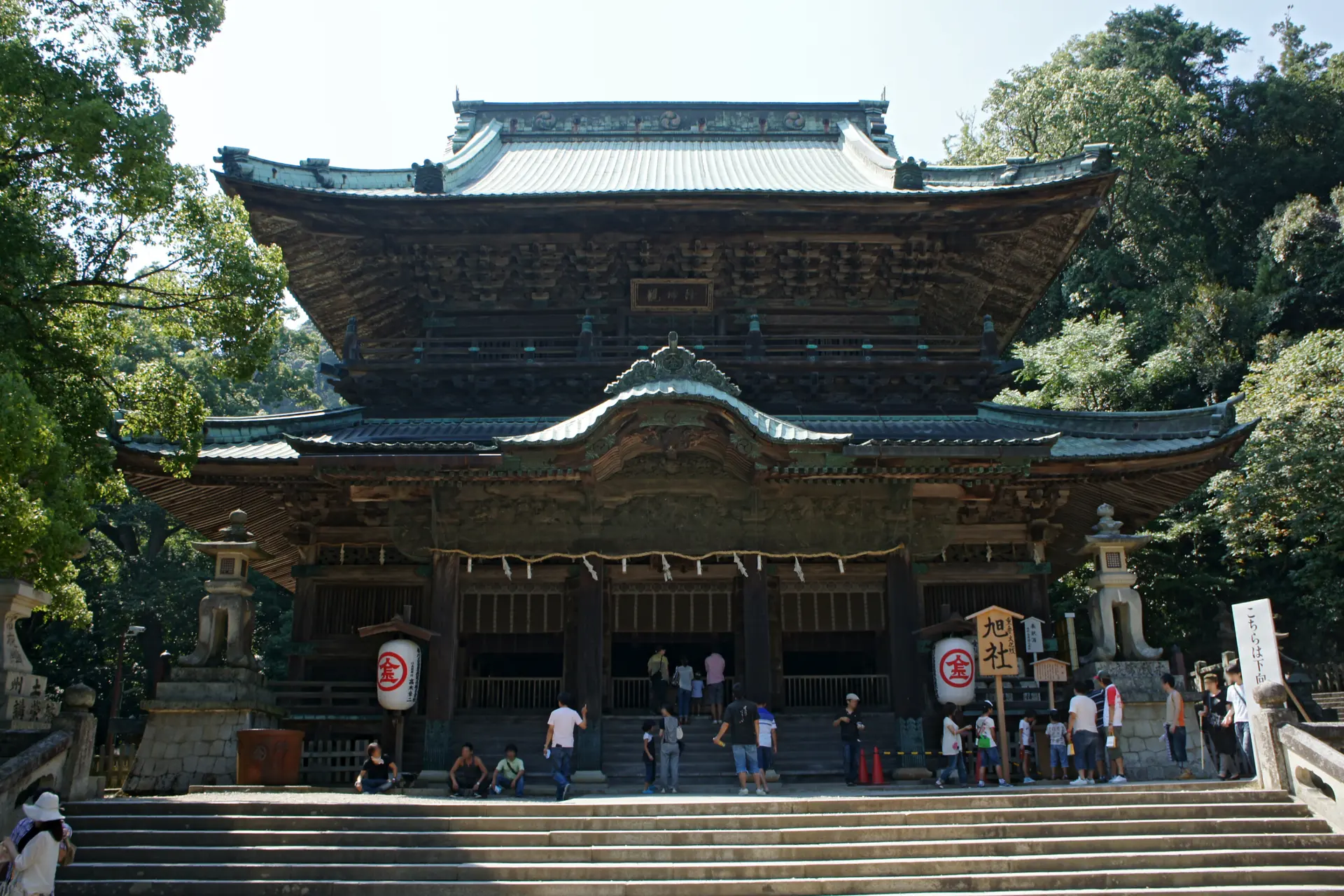
Visit essentials
A quick read before you go
- Duration
- Two to three hours allows for climbing to both shrines with appropriate rest and time for…
- Etiquette
- Standard Shinto shrine etiquette applies, with awareness that the physical climb itself carries…
Overview
During the Edo period, Kotohira Shrine was Japan's second most visited sanctuary after Ise Jingu. Hundreds of thousands came annually, climbing to seek the blessing of Omononushi, who watches over travelers on dangerous waters.
The climb is devotion: 785 steps reach the main shrine, then another 583 rise to the inner shrine at 421 meters elevation. Shops selling traditional Kompira candies and souvenirs give the approach a festive atmosphere without diminishing its sacred character; each step leaves ordinary life farther below.
The Ema Hall holds one of Japan's most remarkable votive collections: ships' plates removed before scrapping, submarine models from crew members, photographs of fishing fleets, and even space-rocket imagery from people extending “sea travel” into new realms. Centuries of maritime offerings testify to dependence on divine protection before the sea's vast indifference.
Why this place is sacred
The concept of thin places finds unusual expression at Kotohira, where the boundary in question is not simply between heaven and earth but between safety and danger, between those who returned and those who did not. Every offering in the Ema Hall represents a prayer answered or a hope unfulfilled, a life preserved or surrendered to the sea.
The physicality of the approach matters. The 1,368 steps to the inner shrine cannot be completed casually; the body knows it has undertaken something before the mind constructs theological meaning. This embodied pilgrimage—present since at least the Edo period when Kotohira was Japan's second most popular sanctuary—creates a transition that mere walking cannot achieve.
The mountain itself, Mount Zozu, was considered sacred before formal Shinto organization, and the combination of mountain worship with maritime protection faith produced something unique. From this elevated vantage, the sea that threatens sailors becomes visible as part of a larger landscape—dangerous but contained within something greater.
The tradition of Kompira dogs adds an unexpectedly touching dimension. In the Edo period, those unable to make the pilgrimage themselves would send their dogs wearing special tags, trusting strangers along the route to help the animal reach the shrine. This practice speaks to the depth of faith people invested in this site—the belief that even a dog's presence could carry a prayer to the sea god.
The shrine developed during the Heian period as worship of Omononushi coalesced at Mount Zozu. The combination of sacred mountain and maritime protection deity created a natural pilgrimage destination for the seafaring communities of Shikoku and the Inland Sea.
Kotohira reached its apex during the Edo period as Japan's second most visited shrine. The journey to 'Kompira-san' became a cultural institution, inspiring art, literature, and the distinctive Kompira dog tradition. The Meiji period transformed the site from a Buddhist-Shinto syncretic complex to a purely Shinto shrine (renamed from Konpira Daigongen to Kotohira-gu in 1889). Today the shrine serves approximately 600 affiliated Kotohira shrines nationwide as their head temple.
Why pilgrims come
Maritime protection and livelihood blessings
Kotohira devotion connects the shrine with the sea, abundant harvests, fishing and prosperous business. These associations explain the concerns people bring to it.
How devotees visit
Worshippers ascend the long approach to pray at the shrine. For people whose livelihood depends on travel, harvest or the sea, the climb brings those concerns into a continuing tradition of petition.
These are religious traditions and devotional practices, not promises of an outcome. Follow the community’s current guidance.
Experience and orientation
The approach to Kotohira Shrine begins with an apparent contradiction: the festive atmosphere of the shopping street leading to the steps. Vendors sell Kompira candies and local sweets, creating an almost carnival atmosphere. Yet this festivity is itself traditional—pilgrimage in Japan has long embraced pleasure alongside piety.
The steps begin, and the calculation starts. 785 to the main shrine. Those who continue will climb to 1,368. The first hundred steps pass quickly; the next hundred begin to register. By the time the main shrine comes into view, the body has participated in something the mind recognizes as devotion.
The main shrine complex spreads across the mountain slope, offering views across the landscape of Shikoku. The architecture reflects centuries of patronage and maintenance, though the current main hall dates to 1878. But it is the Ema Hall that commands attention.
Here, the full weight of Kotohira's maritime significance becomes visible. Ship plates removed from decommissioned vessels. Models of submarines and warships. Photographs of fishing fleets and merchant ships. This accumulation of offerings—spanning from traditional wooden vessels to nuclear submarines—creates an overwhelming testimony to the continuity of maritime faith. Sailors have always faced the sea's indifference; they have always sought protection.
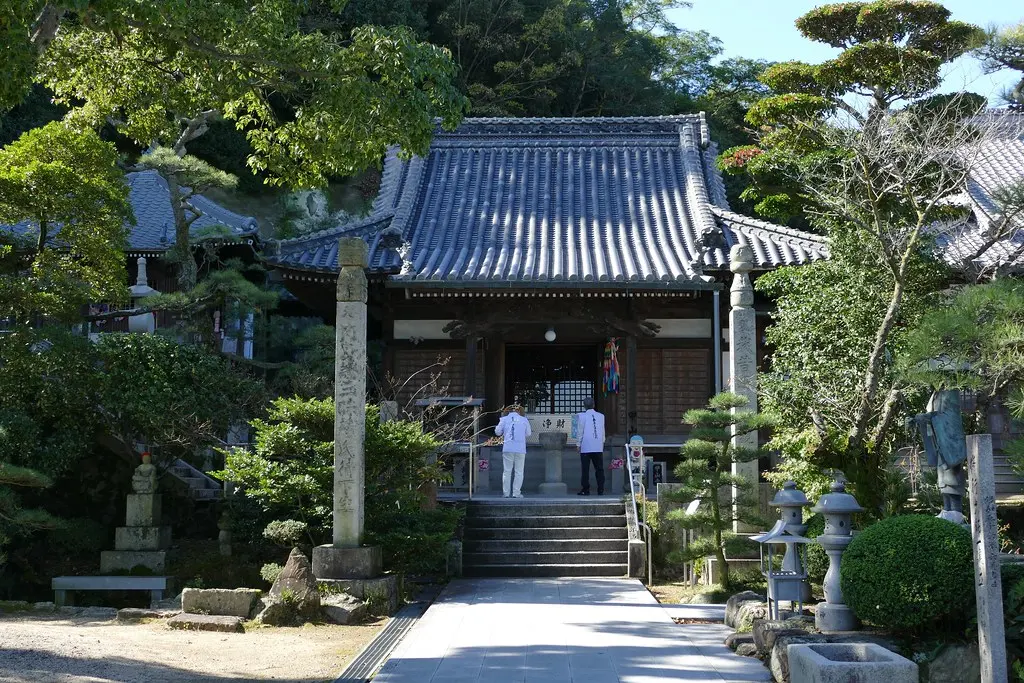
Those who continue to the inner shrine climb 583 additional steps into quieter territory. The crowds thin. The air shifts. The inner shrine at 421 meters offers a more intimate encounter with the divine, though the demanding climb ensures that this intimacy is earned.
Most visitors enter from Kotohira town, following the shopping street to the base of the steps. The main shrine at 785 steps takes most people 30-45 minutes to reach at a comfortable pace. The inner shrine requires another 20-30 minutes. Palanquin service is available for those unable to climb. Allow 2-3 hours for a complete visit including time at both shrines.
Context and lineage
The exact founding date remains uncertain, but worship of Omononushi at Mount Zozu began coalescing during the Heian period (794-1185). The deity's association with maritime protection made the mountain shrine a natural destination for the fishing and trading communities of the Inland Sea. By the Edo period, pilgrimage to Kompira-san had become one of Japan's great cultural institutions, second only to Ise Jingu in popularity.
Kotohira Shrine serves as head shrine for approximately 600 Kotohira shrines throughout Japan. This network extends the maritime protection faith from Shikoku across the entire country, maintaining connection between local communities and the main sanctuary on Mount Zozu.
Omononushi
Principal deity; guardian of sailors and all who travel by sea
Emperor Sutoku
Historical figure jointly enshrined; tragic emperor exiled to Sanuki
Traditions and practice
Pilgrims climb the steps, worship at the main and inner shrines, and receive protective amulets (omamori) for safe travel. Maritime communities traditionally dedicated ship models, plates, and photographs as offerings. The Kompira dog tradition—sending pets to complete the pilgrimage in one's stead—represents a uniquely touching expression of faith, though it is no longer actively practiced.
The shrine continues to receive maritime offerings, now including modern vessels and even space-related imagery. Fishing crews, merchant sailors, and naval personnel maintain the tradition of seeking Kotohira's protection. The annual festival calendar includes ceremonies specifically for maritime safety.
Approach the climb as practice rather than exercise. The steps are themselves the devotion. At the main shrine, spend time in the Ema Hall absorbing the accumulated maritime faith of centuries. If physical condition permits, continue to the inner shrine for a quieter, more intimate encounter. Consider what 'safe passage' means in your own life—the shrine's protection extends metaphorically beyond literal sea travel.
Shinto
ActiveKotohira Shrine is one of Japan's most significant Shinto sanctuaries, serving as head shrine for approximately 600 affiliated Kotohira shrines nationwide. Its specialization in maritime protection gives it distinctive character within broader Shinto practice.
The shrine offers all standard Shinto services with particular emphasis on prayers for travel safety. Maritime communities maintain traditions of votive offerings including ship models and photographs. Annual festivals include ceremonies specifically for maritime protection.
Perspectives and open questions
Kotohira Shrine invites interpretation as Japan's paramount maritime sanctuary, as a case study in pilgrimage culture, and as testimony to the enduring human need for protection when facing nature's dangers.
Scholarly perspective
Historians recognize Kotohira as one of Japan's most important pilgrimage destinations, with particular significance for understanding Edo period religious culture. The shrine's transformation from syncretic Buddhist-Shinto complex to pure Shinto institution during the Meiji period reflects broader patterns of religious reorganization. The maritime votive offerings provide valuable evidence of Japanese maritime history and the relationship between religious practice and economic life.
Living and traditional perspectives
In Shinto understanding, Omononushi provides genuine divine protection to those who travel by sea. The accumulated offerings in the Ema Hall represent prayers answered, protection granted, safe returns accomplished. The deity remains active and accessible to sincere worshippers.
Alternative interpretations
Some interpret the intensive climbing experience as creating altered states of consciousness that enhance receptivity to spiritual experience.
Open questions
The exact origins and founding of the shrine remain uncertain. The full development of the Kompira dog tradition and its eventual decline are incompletely documented.
Plan your visit
Access and arrival
Kotohira town offers various ryokan and hotels. Staying locally allows for early morning visits and full appreciation of the shrine.
Respectful visit
Comfortable clothing suitable for climbing stairs—this is not a casual stroll. Proper footwear is essential. Layers are advisable as temperatures can differ significantly between the base and upper reaches of the mountain.
Generally permitted throughout the complex. Exercise discretion during active worship.
Small coins at offering boxes. The shrine offers various omamori (protective amulets) particularly focused on travel safety.
{"Bow at torii gates","Follow standard Shinto worship protocol at shrines","Maintain respectful demeanor despite the festive shopping street"}
The 1,368 steps to the inner shrine require reasonable fitness. There is no shame in stopping at the main shrine (785 steps) or using the palanquin service. Start early on hot days; the steps can be exhausting in summer heat.
Current practical details
Address
892-1, Kotohira, Nakatado District, Kagawa 766-8501, Japan
Phone
Hours
Hours, fees, and access can change — verify on the official source before you travel. Practical details last checked Jun 2026.
Location
Map loads as you approach this section.
Pilgrim reflections
A portrait of encounter, not a score
Pilgrims describe what they felt, how present they could become, and whether the place would shape a journey. There are no stars and no ranking of traditions.
No reviewed reflections yet
The first pilgrims can help describe the character of being here.
Share a reflection
Available after an account-backed “Been there.” Every reflection is reviewed before publication.
Nearby sacred places
Explore other sacred places in the region. Proximity does not establish access or travel time; check each place’s guidance.



References
Sources consulted for this page. Source categories describe the publication, not a guarantee that every claim is verified. Traditional accounts and outside interpretations may differ.
- 01Kompirasan Shrine - Kotohira Travel — Japan GuideguideReliable travel guide
- 02Kotohiragu Shrine - JNTO — Japan National Tourism OrganizationofficialOfficial tourism information
- 03Kotohira-gu Shrine - Tourism SHIKOKU — Tourism ShikokuofficialRegional tourism authority
- 04Kotohira-gū - Wikipedia — Wikipedia contributorsencyclopediaComprehensive overview
Pilgrim glossary
- Torii
- The traditional Japanese gate marking the entrance to a Shinto sacred area.
Share a photo
Help visitors recognize Kotohira shrine, Kotohira, Japan. Every submission is reviewed before publication.