Zenrakuji
A temple broken and re-formed across a century
Understand sacred places, explore living traditions, and learn how to engage respectfully with Pilgrim Map.
Access has not been verified. Check current local guidance before planning a visit.
Kōchi, Kochi Prefecture, Japan
Read the sources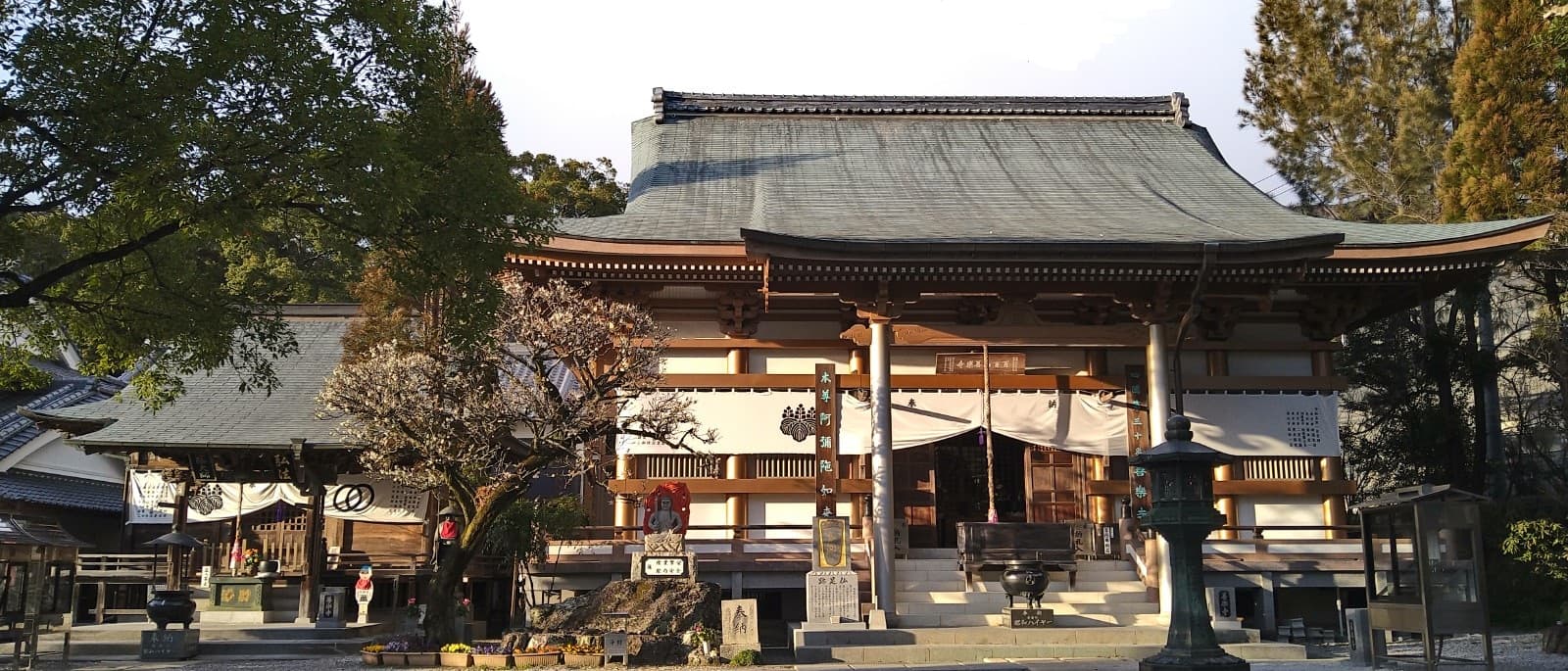
Image of Zenrakuji (善楽寺). Image source · CC0
Station 30 of 88
Shikoku 88 Temple PilgrimageVisit essentials
A quick read before you go
- Duration
- Thirty minutes for Zenrakuji alone; allow sixty to ninety minutes if also visiting Anrakuji (1…
- Access
- From central Kōchi City: approximately 7 kilometres east via Route 32; bus to Tosa-ichinomiya…
Overview
Dōdōzan Tōmyōin Zenrakuji is Shingon Temple 30 of the eighty-eight-temple Shikoku 88 Pilgrimage; Anrakuji, about one kilometre away, is its okunoin. Temple tradition places Kūkai's foundation in the early-ninth-century Daidō era; the full Kūkai and Amida tradition, forced 1868 separation, relocations, and 1994 settlement remain in the origin account. The current buildings are mainly twentieth-century reconstructions.
Zenrakuji's Amida Nyorai honzon is unusual on a circuit dominated by Dainichi, Yakushi, the various Kannons, and the various Bosatsus; Amida is understood here within the Shingon Five-Buddha mandala, not as a Pure Land focus. Standard practice at the Main Hall and Daishi-dō combines the Heart Sutra, Amida mantra, and Daishi gohōgō. Many henro also visit Anrakuji and adjacent Tosa Shrine, maintaining personal connections across institutions divided by modern policy.
After destruction, dispersal, contest, and re-formation across more than a century, the temple is now recognisably whole and can invite reflection on Dharma through institutional disruption.
Why this place is sacred
Zenrakuji's modest twentieth-century precinct carries a disrupted syncretic history. Its rebuilt main hall stands on underlying ground that once held temple and shrine together in a shared sacred geography, often with priests serving both. Tradition places Kūkai's early-ninth-century temple beside Tosa Ichinomiya, within shinbutsu-shūgō from the Nara period until forced separation in 1868. The honzon moved to Tosa Kokubun-ji and in 1893 to Anrakuji; later pilgrims found one temple in official records and another holding the honzon.
The present Zenrakuji used a relocated Tokyo temple in the 1930s. The 1994 settlement made Zenrakuji official Temple 30 and Anrakuji its okunoin. Tosa Shrine remains one of Shikoku's most prominent Shintō sites. Pilgrims can visit all three without collapsing their distinct institutions. Amida remains interpreted through the Shingon Five-Buddha mandala as the Buddha of immeasurable life and light.
A kami-Buddha syncretic precinct founded by Kūkai in the early ninth century beside Tosa Ichinomiya, with an Amida Nyorai honzon serving the Buddhist function of the joint shrine-temple complex.
The 1868 shinbutsu-bunri edicts forcibly separated the kami and Buddhist functions. The Amida honzon was moved to Tosa Kokubun-ji, then in 1893 to Anrakuji, which claimed Temple 30 status. In the 1930s a Tokyo temple was relocated next to Anrakuji as the new Zenrakuji. The Anrakuji-Zenrakuji T30 dispute persisted from 1893 to 1994, when a formal agreement recognised Zenrakuji as the official Temple 30 with Anrakuji as okunoin.
Experience and orientation
Zenrakuji is about seven kilometres east of central Kōchi on Route 32, near Tosa-ichinomiya bus stop; walking henro arrive from Tosa Kokubun-ji. The quiet, modest precinct stands beside the larger, older Tosa Shrine. At the Main Hall, offer a coin, one candle, three incense sticks, and a fudasho-fuda; recite the Heart Sutra, Amida mantra (Oṃ amṛta-teje hara hūṃ), and Kōbō Daishi gohōgō (namu daishi henjō kongō). Repeat at the Daishi-dō and request nōkyō before 17:00.
Next door, Tosa Shrine preserves the formerly shared sacred setting under distinct Shintō practice. Many pilgrims continue one kilometre to Anrakuji as okunoin; a second offering there can complete the historical disruption with a personal gesture. The small precinct's story, rather than scale, marks its place between Tosa Kokubun-ji and Chikurin-ji on Mt. Godaisan.
From central Kōchi City, take a bus along Route 32 to Tosa-ichinomiya stop, walk to the temple. By car: approximately 7 kilometres east of the city. Walking henro arrive from Tosa Kokubun-ji.
Context and lineage
By temple tradition, Kūkai prayed at the Tosa ichinomiya site for safety from a sea storm in the early ninth century. Amida Nyorai appeared to him in vision; he carved the honzon and consecrated the Buddhist temple alongside the existing Shintō shrine, embodying shinbutsu-shūgō at the head shrine of Tosa Province. The complex was forcibly de-syncretised in 1868 by the Meiji government's shinbutsu-bunri edicts. The Amida honzon was temporarily moved to Tosa Kokubun-ji.
In 1893 it was relocated to Anrakuji, which then claimed Temple 30 status on the eighty-eight-temple circuit. In the 1930s a temple was relocated from Tokyo and rebuilt next to Anrakuji as a new Zenrakuji, complicating the picture further. The Anrakuji-Zenrakuji dispute over the official T30 designation persisted until 1994, when a formal agreement restored Zenrakuji as the official T30 with Anrakuji as okunoin (inner sanctuary).
Shingon Buddhism. Temple 30 of the eighty-eight-temple Shikoku Pilgrimage, with Anrakuji functioning as its okunoin. The temple is named Dōdōzan Tōmyōin Zenrakuji.
Kūkai (Kōbō Daishi)
Traditional founder
Emperor Saga
Imperial context
Traditions and practice
At each hall: bow, light one candle from a fresh flame, light three incense sticks, deposit a fudasho-fuda name slip, place a coin in the saisen-bako, ring the bell once if a small bell is provided, and chant. At the Main Hall, the Heart Sutra in full followed by the Amida Nyorai mantra (Oṃ amṛta-teje hara hūṃ). At the Daishi-dō, the Heart Sutra and the Kōbō Daishi mantra (Namu Daishi henjō kongō).
After both halls, take the nōkyōchō to the nōkyō office for the temple stamp.
Daily nōkyō service is maintained. Many pilgrims continue one kilometre to Anrakuji and offer there as well; both stamps are typically collected. Tosa Shrine next door retains its Shintō function, and a brief shrine visit is common.
After worship, pause at the gate and consider a temple destroyed, dispersed, and re-formed across more than a century, now whole again. Visit Tosa Shrine under its separate protocol to restore personally the proximity that 1868 policy divided and, if time allows, walk to Anrakuji.
Shingon Buddhism
ActiveTemple 30 of the eighty-eight-temple Shikoku Pilgrimage. The Amida Nyorai honzon is unusual in a Shingon context — Amida is more centrally a Pure Land figure — but at Zenrakuji is interpreted within Shingon esoteric cosmology as one of the Five Buddhas, not as a Pure Land focus.
Standard pilgrim ritual at the Main Hall (Amida Nyorai) and Daishi-dō: candle, three incense, fudasho-fuda, Heart Sutra, Amida mantra, gohōgō to Kōbō Daishi, nōkyō stamp.
Perspectives and open questions
Zenrakuji's history runs from a syncretic ninth-century founding through Meiji-era forced separation, a century-long jurisdictional dispute with Anrakuji, and a 1994 formal restoration; modern temple buildings are largely twentieth-century reconstructions.
Scholarly perspective
The temple was founded by Kūkai or his immediate disciples in the early ninth century. Modern temple buildings are mostly twentieth-century reconstructions following the disruption of 1868 and the long dispute. The Anrakuji jurisdictional dispute is well-documented in Shikoku-pilgrimage scholarship, with the 1994 resolution recognising Zenrakuji as the official Temple 30 and Anrakuji as okunoin.
Living and traditional perspectives
In Shingon understanding, an Amida honzon is read through the Five-Buddha mandala framework rather than as a Pure Land figure. The original siting at Tosa ichinomiya is read as classical kami-Buddha co-residency (shinbutsu-shūgō), the standard organising frame of Japanese religious life from the Nara period until 1868.
Alternative interpretations
The temple's broken-and-restored history is sometimes read by contemporary pilgrims as a symbol of the resilience and necessary impermanence of religious institutions — a Buddhist lesson built into the circuit. The Dharma here is demonstrated through institutional disruption: temples can be moved, contested, and reassembled, and the practice continues.
Open questions
The original ninth-century architectural plan is largely lost. The precise circumstances of the 1868 destruction are reconstructed from local oral history. The toothache-healing tradition cited in some popular sources is not solidly attested in the retrieved record.
Plan your visit
Access and arrival
From central Kōchi City: approximately 7 kilometres east via Route 32; bus to Tosa-ichinomiya stop. Walking henro arrive from Tosa Kokubun-ji. Free parking on site.
Kōchi City offers a wide range of ryokan, minshuku, and modern hotels within a short distance of the temple.
Respectful visit
Modest casual; henro attire welcome.
Outdoor permitted; main-hall interior typically not.
Candle, three incense, fudasho-fuda, monetary offering at the saisen-bako.
Stamp office hours typically 07:00–17:00. Verify the official T30 location — old sources occasionally confuse Zenrakuji with Anrakuji.
Old guidebooks sometimes confuse Zenrakuji with Anrakuji because of the long jurisdictional dispute — verify you are at the official T30 location. Stamp office closes at 17:00. The honzon is typically not photographable.
Current practical details
Address
2-chōme-23-11 Ikkushinane, Kochi, 781-8131, Japan
Phone
Hours
Hours, fees, and access can change — verify on the official source before you travel. Practical details last checked Jun 2026.
Location
Map loads as you approach this section.
Pilgrim reflections
A portrait of encounter, not a score
Pilgrims describe what they felt, how present they could become, and whether the place would shape a journey. There are no stars and no ranking of traditions.
No reviewed reflections yet
The first pilgrims can help describe the character of being here.
Share a reflection
Available after an account-backed “Been there.” Every reflection is reviewed before publication.
Watch deeper
Films, episodes, and recorded talks for visitors who want more context before or after a visit. Speculative and alternative-history entries are labelled as perspectives, not as sources for established claims.
Nearby sacred places
Explore other sacred places in the region. Proximity does not establish access or travel time; check each place’s guidance.


References
Sources consulted for this page. Source categories describe the publication, not a guarantee that every claim is verified. Traditional accounts and outside interpretations may differ.
- 01Dodozan Toumyouin Zenrakuji – Shikoku 88 Temple Pilgrimage — Shikoku 88 Reijokai (Official Association)officialOfficial association page
- 02Zenrakuji – Kochi City, Kochi Prefecture, Shikoku — Henro.orgguideDetailed account of the Anrakuji dispute and 1994 resolution
- 03Customs and Etiquette of the Shikoku Pilgrimage — Henro.orgguideEtiquette baseline
- 04Temple 30, Zenraku-ji — Shikoku ToursguideHistory summary
- 05Zenkakuji Temple 30 on the Shikoku Pilgrimage — Ojisan JakeblogWalking-pilgrim account; details Amida appearance legend
- 06Temple of Everlasting Joy — Japan TravelguideTravel-resource account
Pilgrim glossary
- Honzon
- The principal Buddhist deity enshrined as a temple's central object of worship.
- Mandala
- A symbolic diagram of the cosmos used in meditation and ritual.
- Sutra
- A canonical Buddhist scripture, often chanted as part of practice.
- Mantra
- A sound, word, or phrase repeated as part of meditation or ritual.
- Dharma
- The teachings of the Buddha; also the universal law underlying them.
- Shingon
- An esoteric Japanese Buddhist school emphasizing ritual, mantra, and mandala practice.
- Pure Land
- A Buddhist tradition focused on rebirth in Amida Buddha's western paradise through devotional practice.
Share a photo
Help visitors recognize Zenrakuji. Every submission is reviewed before publication.