Tosa Kokubun-ji
Tosa's eighth-century provincial temple, still in use
Understand sacred places, explore living traditions, and learn how to engage respectfully with Pilgrim Map.
Access has not been verified. Check current local guidance before planning a visit.
Nankoku, Kochi Prefecture, Japan
Read the sources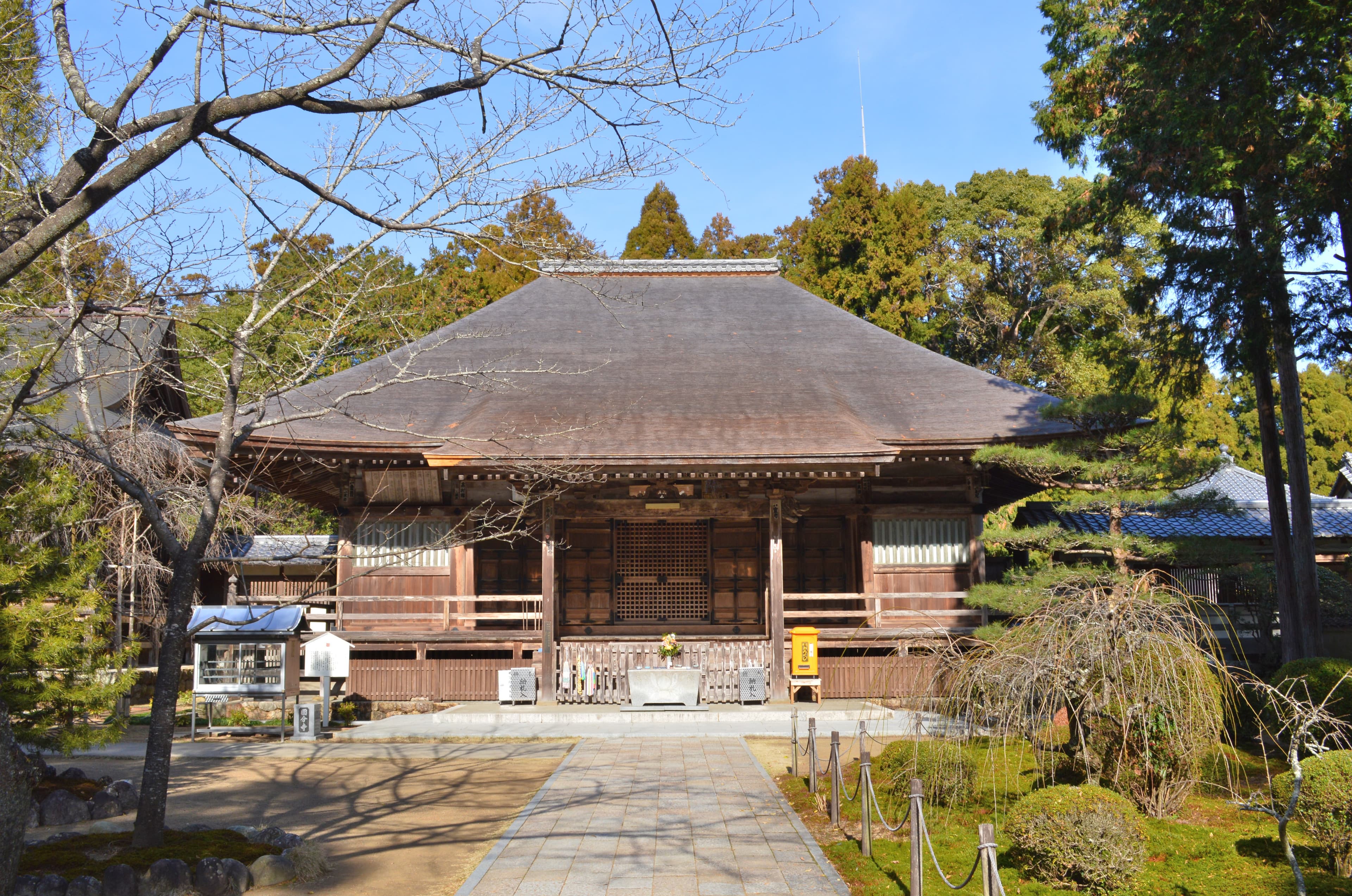
Image of Tosa Kokubun-ji (土佐国分寺). Image source · CC0
Station 29 of 88
Shikoku 88 Temple PilgrimageVisit essentials
A quick read before you go
- Duration
- Forty-five to sixty minutes including time in the precinct garden and at the inner sanctuary…
- Access
- From JR Tosa Nagaoka Station: approximately 1.5 kilometres, walkable.
Overview
Tosa Kokubun-ji is one of the few stations on the Shikoku circuit that carries an explicitly imperial-administrative pedigree. In 741, Emperor Shōmu issued a nationwide decree establishing kokubun-ji — provincial temples — in every Japanese province as part of a state-Buddhist programme intended to pacify epidemic and political crisis through liturgy. Tosa Kokubun-ji is the surviving Tosa Province temple of that programme. Temple tradition holds that Gyōki Bosatsu carved the Senju Kannon honzon.
The Shoku Nihongi, an early Japanese imperial chronicle, documents Buddhist ritual implements bestowed in 756 on twenty-six provincial temples including Tosa — one of the rare cases where an eighth-century Shikoku temple is anchored in primary documentary record. Kūkai is said to have visited in 815 and added a Bishamonten in the inner sanctuary, integrating the precinct into the early Shingon network. The temple was repeatedly damaged in medieval wars.
The Chōsokabe family — Kunichika and his son Motochika — rebuilt the main hall in 1558 after war damage, and the Yamauchi rulers of Tosa han added a Sanmon gate under Yamauchi Tadayoshi in 1655. Most of what stands today reflects these post-medieval rebuilds. The precinct itself was designated a National Historic Site by the Japanese government in 1922, recognising the layered antiquity that distinguishes the site even within the Shikoku circuit.
The principal image is Senju Kannon, the Thousand-Armed Avalokiteśvara, whose vow extends compassion in a thousand directions through the thousand visible arms. The inner sanctuary holds a Bishamonten attributed to Kūkai. The combination is doctrinally meaningful: Senju Kannon as the public-facing compassion of the temple, Bishamonten as the protective fierce deity within — outer mercy held with inner protective force, a classic Shingon mandala pairing.
As Temple 29 of the eighty-eight-temple circuit, Tosa Kokubun-ji is centrally placed in the Kōchi-plain temple sequence, between Dainichi-ji to the east and Zenrakuji to the west. Pilgrims arrive into a precinct that feels older than most stations on the Tosa stretch — the 1558 hondō, a moss garden frequently described as serene, surrounding pine forest, and a quiet rural setting in Nankoku. The ritual is the standard Shikoku 88 sequence; the experience is a markedly slower one.
Why this place is sacred
Tosa Kokubun-ji's thinness comes from layered antiquity. The 741 imperial decree of Emperor Shōmu was a nationwide policy: in every Japanese province, a Buddhist temple and a convent (kokubun-ji and kokubun-niji) were to be established as ritual centres against epidemic and disorder. The kokubun-ji network was one of the earliest centralised expressions of Japanese state Buddhism, and the Tosa station of that network survives as this temple.
The Shoku Nihongi, completed in 797, documents Buddhist ritual implements bestowed in 756 on twenty-six provincial temples including Tosa — a rare case of textual continuity between an eighth-century document and a still-functioning Shikoku temple. Within that frame, the Shingon layer is younger but doctrinally important. Kūkai's 815 visit is said to have introduced a Bishamonten image in the inner sanctuary.
The pairing of Senju Kannon (the principal honzon, public-facing compassion) with Bishamonten (the inner protective force) is a small mandala in itself: outer mercy and inner protection held together. In the medieval period the precinct was repeatedly burned in regional wars. The Chōsokabe rebuild of 1558 produced the main hall that still stands; the Yamauchi addition of a Sanmon in 1655 framed the precinct's southern entry.
The 1922 designation as a National Historic Site anchors the temple's antiquity in modern Japanese heritage law. Today the precinct preserves a distinctive quality among Tosa-stretch temples: visibly older buildings, a moss garden often cited by pilgrims, surrounding pine forest, and a sense that the site has held its position through more disruption than most. Pilgrims describe slowing down here in ways they do not at adjacent stations.
The Senju Kannon honzon and the documented imperial-decree pedigree work together — the temple feels weighty in a way that an obviously old precinct can.
Imperial provincial temple (kokubun-ji) of Tosa Province, established under Emperor Shōmu's 741 nationwide decree as a state-Buddhist ritual centre against epidemic and political crisis.
Founded by tradition in 741 with Gyōki as sculptor of the honzon. Kūkai added a Bishamonten in 815. The medieval period saw repeated war damage; the Chōsokabe rebuilt the main hall in 1558. The Yamauchi added a Sanmon under Yamauchi Tadayoshi in 1655. The precinct was designated a National Historic Site in 1922 and remains an active Shingon-shū Chizan-ha temple and Pilgrimage Temple 29.
Experience and orientation
Tosa Kokubun-ji is roughly ten kilometres from Kōchi City along Route 32, an easy drive into the rural Nankoku plain. From JR Tosa Nagaoka Station the precinct is about a kilometre and a half — walkable. Walking henro arrive on foot from Dainichi-ji. Bow at the Sanmon — the gate added by Yamauchi Tadayoshi in 1655 — before entering. The precinct opens onto the Chōsokabe-rebuilt main hall, the moss garden, and surrounding pine forest.
The atmosphere is older than at most adjacent stations, and pilgrims often slow down here. The Main Hall enshrines Senju Kannon, the Thousand-Armed Avalokiteśvara, with a Bishamonten attributed to Kūkai held in the inner sanctuary. Place a small offering at the saisen-bako, light one candle from a fresh flame, light three incense sticks, deposit a fudasho-fuda name slip, and chant the Heart Sutra in full. Follow with the Senju Kannon mantra (Oṃ basara taranma kiriku).
Close with the gohōgō to Kōbō Daishi: namu daishi henjō kongō. Move to the Daishi-dō and repeat the sequence with the Kōbō Daishi mantra. Take the nōkyōchō to the nōkyō office for the temple stamp before five in the afternoon. The garden visit is open to the public and worth the additional time. Stay on the marked paths — the moss is ecologically delicate, and the precinct has formal heritage status.
The pine forest around the main hall buffers the ambient sound, and the garden becomes particularly notable in late spring (fresh maple) and autumn (foliage). Pilgrims regularly cite Tosa Kokubun-ji as a contemplative high point of the Kōchi prefecture stretch. Many do a longer meditation here than at busier sites, partly because the architectural setting invites it and partly because the documented antiquity gives the visit a different gravity.
Walking henro continue toward Zenrakuji, the next station, often pausing at the temple gate before the next stage.
From JR Tosa Nagaoka Station, walk roughly 1.5 kilometres to the temple. By car, drive approximately 10 kilometres east of Kōchi City via Route 32. Walking henro arrive from Dainichi-ji. Free parking on site.
Context and lineage
By imperial decree in 741, Emperor Shōmu established kokubun-ji — provincial temples — in every Japanese province as part of a nationwide state-Buddhist response to epidemic and political crisis. Gyōki Bosatsu, the chief sculptor and ritual figure of the period, is said to have carved the Senju Kannon honzon for Tosa Kokubun-ji. The Shoku Nihongi documents Buddhist implements bestowed in 756 on twenty-six provincial temples including Tosa — a rare textual anchor for an eighth-century Shikoku site.
Kūkai visited in 815 and is said to have carved a Bishamonten for the inner sanctuary, integrating the precinct into the early Shingon network. The temple was repeatedly burned in medieval wars; the Chōsokabe rebuilt the main hall in 1558 after war damage, and the Yamauchi added a Sanmon under Tadayoshi in 1655. The precinct was designated a National Historic Site of Japan in 1922.
Shingon Buddhism, Chizan-ha (Chisan-ha) sub-lineage. Temple 29 of the eighty-eight-temple Shikoku Pilgrimage. The precinct is a National Historic Site of Japan (designated 1922).
Emperor Shōmu
Imperial founder of the kokubun-ji network
Gyōki Bosatsu
Founding sculptor of the honzon (by tradition)
Kūkai (Kōbō Daishi)
Heian-period addition of the Bishamonten
Chōsokabe Kunichika and Motochika
Medieval rebuilders of the main hall
Yamauchi Tadayoshi
Donor of the Sanmon
Traditions and practice
At each hall: bow, light one candle from a fresh flame, light three incense sticks, deposit a fudasho-fuda name slip, place a coin in the saisen-bako, ring the bell once if a small bell is provided, and chant. At the Main Hall, the Heart Sutra in full followed by the Senju Kannon mantra (Oṃ basara taranma kiriku). At the Daishi-dō, the Heart Sutra and the Kōbō Daishi mantra (Namu Daishi henjō kongō).
After both halls, take the nōkyōchō to the nōkyō office for the temple stamp.
Daily nōkyō service is maintained by resident clergy. Cultural-property maintenance is coordinated with Japanese heritage authorities given the National Historic Site designation. Periodic special services are held at the inner sanctuary holding the Bishamonten image attributed to Kūkai. The garden remains open to the public.
Allow time in the moss garden after the ritual. The precinct's 1922 historic designation, the 1558 main hall, and the surrounding pine forest reward unhurried looking. If new to the kokubun-ji system, take a moment to consider that this is one of the few survivors of an eighth-century imperial network — most provincial temples were lost to fire and political change centuries ago.
Shingon Buddhism (Chizan-ha)
ActiveTosa Kokubun-ji is Temple 29 of the eighty-eight-temple Shikoku Pilgrimage. It holds dual identity: imperial provincial temple of ancient Tosa Province AND Shikoku-pilgrimage station. The kokubun-ji network across Japan was established by imperial decree in 741 to address epidemic and political crisis through Buddhist liturgy.
Standard hondō and Daishi-dō pilgrim ritual. Honzon Senju Kannon at the Main Hall; Bishamonten attributed to Kūkai in the inner sanctuary.
Perspectives and open questions
Historical record, surviving architecture, and modern heritage law offer different measures of the precinct's antiquity.
Scholarly perspective
The 741 founding under Emperor Shōmu's kokubun-ji decree is firmly historical, anchored by Shoku Nihongi documentation. Architectural fabric is mostly post-1558 rebuilds. The 1922 designation as National Historic Site reflects broad consensus on the precinct's antiquity. The original 8th-century building plan is reconstructed mainly from archaeology and analogous kokubun-ji sites elsewhere in Japan.
Living and traditional perspectives
Within Shingon, the temple is read as a meeting of state-Buddhist provincial worship (the Nara-period kokubun-ji system) and esoteric Buddhism (Kūkai's later additions). The Bishamonten in the inner sanctuary connects the precinct to the early Shingon network.
Alternative interpretations
The combination of Senju Kannon (honzon, public-facing compassion) with Bishamonten (inner sanctuary, protective fierce deity) is a classic Shingon mandala pairing — outer mercy held with inner protective force. The temple's continuity through medieval war and modern administrative change is itself read by some pilgrims as a demonstration of the durability of the Dharma in worldly time.
Open questions
Original 8th-century building plan is reconstructed mainly from archaeology and analogous kokubun-ji sites elsewhere; the present garden's attribution and dating remain contested in landscape-history literature. Specific cultural-property numbers for individual structures and current admission or garden fees were not retrieved.
Plan your visit
Access and arrival
From JR Tosa Nagaoka Station: approximately 1.5 kilometres, walkable. By car from Kōchi City: roughly 10 kilometres via Route 32. Walking henro arrive from Dainichi-ji. Free parking on site.
Nankoku and the Kōchi City area have a wide range of ryokan, minshuku, and modern hotels within a short drive.
Respectful visit
Modest casual; henro attire welcome.
Garden and exterior architecture freely photographed; ritual areas inside halls and the honzon typically not.
Candle, three incense, fudasho-fuda, monetary offering. Be considerate of the moss garden and stay on paths.
Standard nōkyō hours (close 17:00). National Historic Site rules — no climbing on stones, no removal of plant material, stay on paths.
National Historic Site rules apply: no climbing on stones, no removal of plant material, stay on the paths in the garden. The honzon is typically not photographable. Stamp office closes at 17:00.
Current practical details
Address
546 Kokubu, Nankoku, Kochi 783-0053, Japan
Phone
Hours
Hours, fees, and access can change — verify on the official source before you travel. Practical details last checked Jun 2026.
Location
Map loads as you approach this section.
Pilgrim reflections
A portrait of encounter, not a score
Pilgrims describe what they felt, how present they could become, and whether the place would shape a journey. There are no stars and no ranking of traditions.
No reviewed reflections yet
The first pilgrims can help describe the character of being here.
Share a reflection
Available after an account-backed “Been there.” Every reflection is reviewed before publication.
Watch deeper
Films, episodes, and recorded talks for visitors who want more context before or after a visit. Speculative and alternative-history entries are labelled as perspectives, not as sources for established claims.
Nearby sacred places
Explore other sacred places in the region. Proximity does not establish access or travel time; check each place’s guidance.

References
Sources consulted for this page. Source categories describe the publication, not a guarantee that every claim is verified. Traditional accounts and outside interpretations may differ.
- 01Tosa Kokubun-ji — Wikipedia — Wikipedia (English)encyclopediaDocumentation: Shoku Nihongi reference, 1922 National Historic Site designation, Chōsokabe and Yamauchi rebuilds
- 02Manizan Houzouin Kokubunji – Shikoku 88 Temple Pilgrimage — Shikoku 88 Reijokai (Official Association)officialOfficial association page
- 03Kokubunji – Nankoku, Kochi Prefecture, Shikoku — Henro.orgguideEnglish henro reference
- 04Customs and Etiquette of the Shikoku Pilgrimage — Henro.orgguideEtiquette baseline
- 05Tosa Kokubunji Temple — Must-See, Access, Hours & Price — GOOD LUCK TRIPguidePractical visitor info
- 06Temple 29, Tosa Kokubun-ji — Japan AdventurerguideTravel guide
Pilgrim glossary
- Honzon
- The principal Buddhist deity enshrined as a temple's central object of worship.
- Kannon
- The bodhisattva of compassion, central to many East Asian pilgrimage routes.
- Mandala
- A symbolic diagram of the cosmos used in meditation and ritual.
- Sutra
- A canonical Buddhist scripture, often chanted as part of practice.
- Mantra
- A sound, word, or phrase repeated as part of meditation or ritual.
- Dharma
- The teachings of the Buddha; also the universal law underlying them.
- Shingon
- An esoteric Japanese Buddhist school emphasizing ritual, mantra, and mandala practice.
Share a photo
Help visitors recognize Tosa Kokubun-ji. Every submission is reviewed before publication.