Karadağ Monuments
An extinct volcano where storm-god inscriptions and Byzantine churches share the same dark basalt
Understand sacred places, explore living traditions, and learn how to engage respectfully with Pilgrim Map.
Access has not been verified. Check current local guidance before planning a visit.
Karaman, Turkey
Read the sources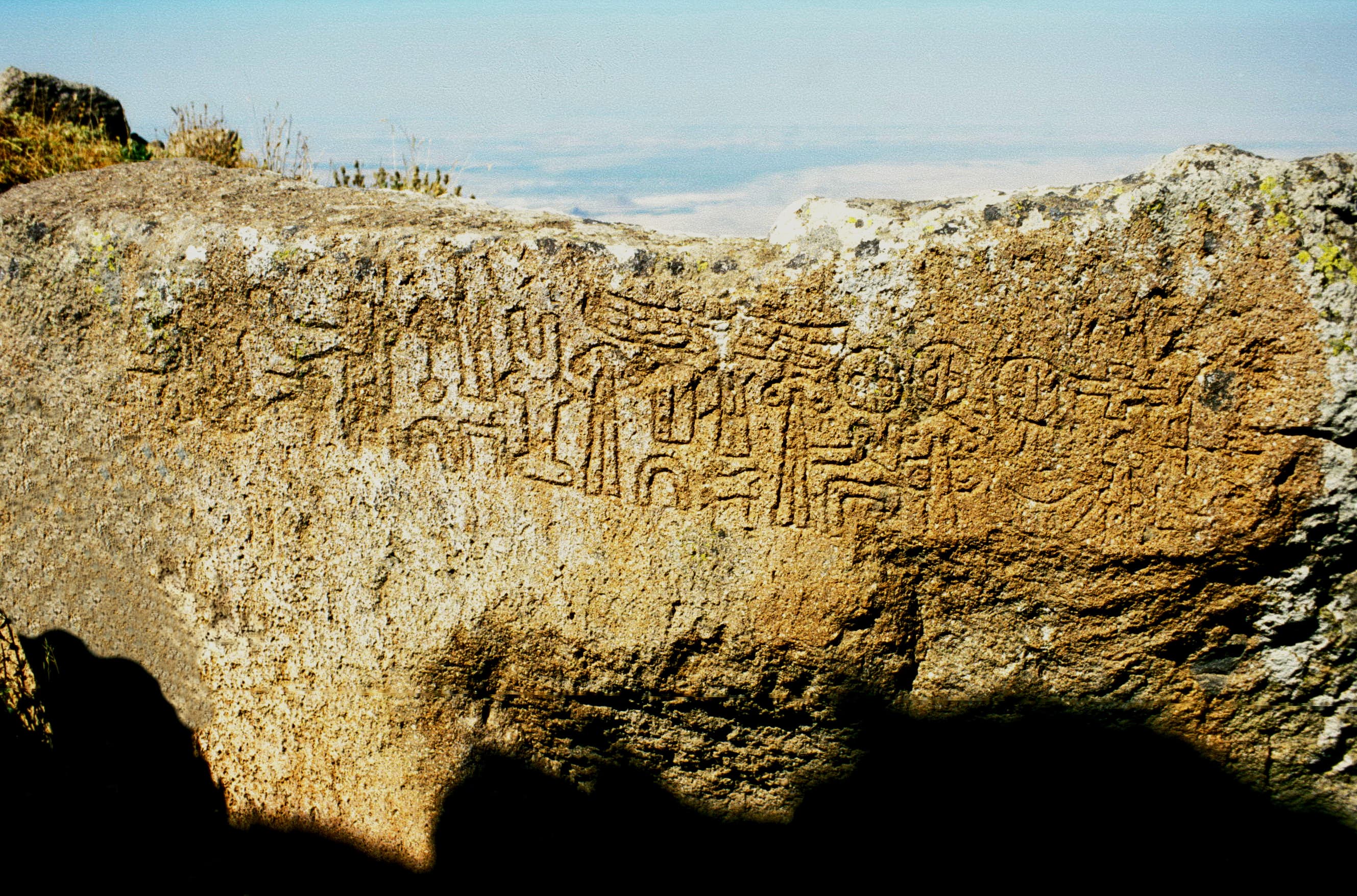
Image of Karadağ Monuments. Image source
Visit essentials
A quick read before you go
- Duration
- Half to full day.
- Access
- Approximately 35km north of Karaman city.
Overview
Karadağ, an extinct volcano above Konya-Karaman, holds the stilled evidence of former catastrophic energy in dark basalt, massive form, and panoramic command of plains to north and south. Iron Age Luwian king Hartapu declared it the 'Divine Great Mountain' of his kingdom; his Mahalaç-peak inscriptions dedicate it 'to the celestial Storm-God, the divine Great Mountain and every god,' treating the mountain itself as divine rather than a backdrop.
Later Byzantine monks built over the Hittite altars rather than beside them, claiming the same sacred density. Its stone thus holds multiple religious traditions that responded to one landscape without cancelling one another.
Why this place is sacred
The theological logic of Karadağ's sacredness is geological. In the Luwian-Hittite religious tradition, the Storm God — Tarḫunzas — was the supreme deity: creator of weather, guarantor of rain and harvest, patron of military power. Mountains were his dwelling; volcanic mountains, with their dark rock, their storm-summoning height, and their memory of fire, were his most natural home. Karadağ's dark basalt against the pale limestone country around it marks it as distinct.
Its height catches clouds when the surrounding plain is clear. Its volcanic profile, heavy and rounded, has the quality of gathered force rather than mere elevation. When Hartapu dedicated its summit 'to the celestial Storm-God and the divine Great Mountain,' he was not projecting religion onto a neutral landscape — he was reading what the landscape was already saying.
The Byzantine occupation of the same mountain carries the same logic in different theological language: the site of power is recognized and claimed, the older sacred structures incorporated rather than erased. The 'Thousand and One Churches' of Binbirkilise — over thirty surviving church structures on the volcanic slopes — represent a community that chose this mountain specifically, not a convenient hilltop. Sacred topography persists across traditions; Karadağ is a case study in why.
Iron Age Luwian peak sanctuary dedicated by King Hartapu to the Storm God Tarḫunzas and the Divine Great Mountain. Subsequently developed as a Byzantine Christian monastic and pilgrimage site (Binbirkilise, 4th–9th centuries AD).
Hartapu's Luwian monuments at Karadağ's Mahalaç/Mihalıç peak date to the 8th century BC. After the absorption of Iron Age Luwian kingdoms into Assyrian-influenced regional politics, the sanctuary fell out of royal use. Byzantine Christian monks occupied the mountain extensively from the 4th century AD, building the Binbirkilise church complex on its slopes and incorporating or building over Hittite sacred structures — a pattern consistent across Anatolian sacred landscapes. The Byzantine occupation declined under Arab raids in the 7th–9th centuries.
Modern scholarship has focused on both the Hittite epigraphic record (J. David Hawkins) and the Byzantine architectural heritage (documented by early traveller Gertrude Bell).
Experience and orientation
A full visit to Karadağ involves navigating two sacred layers that occupy different elevations and require separate approaches. The Hittite monuments — inscribed basalt blocks and altars on the Mahalaç/Mihalıç peak — are the older and less accessible layer, requiring a hike to the higher ground.
The Binbirkilise church ruins on the lower slopes are more easily reached and visually more extensive: the remnants of over thirty churches in dark volcanic stone, scattered across the hillside in a way that communicates a once-dense monastic community. Begin at Binbirkilise if your time is limited — the scale of the Byzantine occupation is immediately legible, and the dark basalt church walls against the sky give you an immediate sense of the mountain's distinctive material character.
For those with time and energy, the ascent to the Mahalaç peak adds the inscription layer: Luwian hieroglyphs on basalt blocks, altar remnants, the geological drama of the summit. From the peak, Kızıldağ's volcanic cone is visible to the north — the two mountains form a visible pair in the landscape, which is precisely their relationship in Hartapu's religious geography.
The experience of standing at the Mahalaç peak, looking north to Kızıldağ and south across the Karaman plain, with Iron Age inscriptions at your feet and Byzantine ruins visible below, is a rare one: you are occupying the overlap between three millennia of sacred recognition of the same place.
Two main zones: (1) Mahalaç/Mihalıç peak — Hittite inscriptions, higher elevation, requires more hiking; (2) Binbirkilise complex — Byzantine church ruins, lower slopes, more accessible. A full visit covers both. The village of Madenşehri is the usual approach point for Binbirkilise.
Context and lineage
Hartapu's inscriptions at Karadağ present the mountain as the 'Divine Great Mountain' of his kingdom — the sacred twin to the Kızıldağ peak sanctuary approximately 5km to the north. His dedication 'to the celestial Storm-God, the divine Great Mountain and every god' makes explicit what the volcanic landscape implied: this mountain was not chosen for inscriptions, it was recognized as a divine entity.
The Tarhuntassa hypothesis — the academic proposal that Karadağ was the location of the legendary Hittite holy city 'City of the Storm God' — adds a further layer of possible significance, though it remains unconfirmed. Centuries later, Byzantine monks arrived on the same mountain and built prolifically: the Binbirkilise complex, despite its popular name ('Thousand and One Churches'), preserves over thirty documented church structures, making it one of the densest concentrations of early Byzantine church architecture in Anatolia.
Karadağ holds the rare distinction of anchoring two complete sacred traditions: the Iron Age Luwian royal religion centred on storm god and divine mountain, and Byzantine Christian monasticism drawn to the same landscape centuries later. The site belongs to the broader Hartapu monument group (Kızıldağ, Karadağ, Burunkaya, Topada), and simultaneously to the tradition of Anatolian Byzantine monastic mountainscapes.
Traditions and practice
Iron Age Luwian: mountain sanctuary rituals including royal inscription ceremonies, offerings to the Storm God and the mountain deity, proclamation of conquest and divine favour. Byzantine Christian: monastic liturgical life across multiple church buildings; Christian pilgrimage to the mountain shrines; possible continuation of sacred water traditions from the earlier period. The physical building of churches over Hittite altars suggests deliberate sacred continuity — a practice common in Anatolia where incoming religious traditions recognized and claimed pre-existing sacred sites.
No active religious use of either the Hittite monuments or the Byzantine ruins. Archaeological research visits and heritage tourism. The Byzantine ruins attract some Christian heritage tourists. The Hittite monuments draw scholars of Neo-Hittite civilization and travellers following the Hartapu monument network.
Approach from Karaman city in the morning. Drive to the Madenşehri area for access to the Binbirkilise complex and begin there — the scale and density of the Byzantine churches orients you to the mountain's sacred history before you ascend to the older Hittite layer.
Walk through the church ruins without rushing: identify the variety of architectural approaches represented, the different states of preservation, the way the dark basalt is used both for structure and for the surrounding landscape's colour and texture. Then, if the route and your energy allow, ascend toward the Mahalaç peak for the Hittite inscriptions. The view from the peak to Kızıldağ in the north, knowing that Hartapu also inscribed that summit, completes the spatial picture of his sacred geography.
Allow the two layers — Iron Age and Byzantine — to coexist in your mind rather than competing. The mountain's significance is precisely that it was recognized by both.
Neo-Hittite / Iron Age Luwian Royal Religion
HistoricalMount Karadağ was the 'Divine Great Mountain' of Hartapu's Iron Age Luwian kingdom — the volcanic embodiment of the Storm God's power and the sacred twin of the Kızıldağ peak sanctuary to the north. Hartapu's inscriptions dedicate the mountain explicitly to the celestial Storm God and to the mountain as divine entity.
Mountain sanctuary ceremonies; royal inscription dedications; offerings to storm deity and mountain; possible seasonal festivals at the peak.
Byzantine Christian Monasticism and Pilgrimage
HistoricalByzantine monks built over thirty churches on Karadağ's slopes (Binbirkilise, 4th–9th centuries AD), making it one of the densest concentrations of early Byzantine church architecture in Anatolia. The deliberate choice of the same volcanic mountain that Hartapu had dedicated to the Storm God reflects the Anatolian pattern of sacred landscape continuity across traditions.
Monastic prayer and liturgy; Christian pilgrimage to mountain churches; possible continuation of sacred water practices from the earlier period; church construction incorporating Hittite sacred sites.
Archaeological Research
ActiveKaradağ's Hittite inscriptions are key evidence for post-Empire Iron Age Luwian kingdoms. The Tarhuntassa debate keeps the mountain at the centre of Hittite scholarship. The 2019 Türkmen-Karahöyük discovery renewed scholarly engagement with the full Hartapu monument group.
Epigraphic study; landscape archaeology; architectural documentation of Binbirkilise; survey.
Perspectives and open questions
Karadağ's interpretive richness lies partly in the convergence of frameworks it invites: Iron Age political religion, Byzantine monasticism, volcanic sacred geography, and the unresolved Tarhuntassa question that haunts Hittite scholarship.
Scholarly perspective
Karadağ's Hittite inscriptions are recognized as Iron Age Neo-Hittite monuments of King Hartapu, dating to c.8th century BC. The mountain was a peak sanctuary dedicated to the Storm God. The ongoing debate over the location of the Hittite holy city Tarhuntassa — 'City of the Storm God' — maintains Karadağ as a plausible but unconfirmed candidate.
The 2019 Türkmen-Karahöyük survey has complicated this by confirming that Hartapu's capital was on the Konya plain, not on the mountain itself; but Karadağ's role as sacred mountain of that capital remains undisputed. The Byzantine Binbirkilise complex is recognized as one of the significant early Christian architectural concentrations in southern Turkey, documented by early travellers including Gertrude Bell.
Living and traditional perspectives
No surviving local religious tradition is specifically connected to the Hittite monuments. The Byzantine Christian heritage of Binbirkilise is acknowledged by some Christian heritage communities as an important early church site in Anatolia. The mountain itself is locally known but not actively venerated.
Alternative interpretations
The Tarhuntassa hypothesis — that Karadağ was the 'Sacred Mountain' and the holy city 'City of the Storm God' of Hittite religious geography — would, if confirmed, make this one of the most religiously significant sites in ancient Anatolia. The volcanic mountain as axis mundi, as the point where the Storm God's power concentrated in visible geological form, is a reading that the landscape actively supports regardless of scholarly confirmation.
The layered occupation by Hittite and Byzantine traditions — each choosing the same mountain — suggests that the sacred gravity of the place is a function of the geology itself, not of any specific tradition's designation.
Open questions
The location of Tarhuntassa remains one of the major unresolved questions in Anatolian archaeology. Whether additional undiscovered Hittite inscriptions exist on Karadağ's slopes is unknown. The full extent and dating of the Binbirkilise monastic community remains incompletely documented. Hartapu's political relationship to Assyrian expansion and the precise fate of his kingdom are still being investigated.
Plan your visit
Access and arrival
Approximately 35km north of Karaman city. Access via roads from Karaman toward the Karadağ massif. The village of Madenşehri is the standard access point for Binbirkilise. Mahalaç peak requires additional hiking. Unpaved roads and 4WD recommended. Karaman has hotels and full services.
Karaman city (~35km south) has hotels and full services and is the most practical base for visiting both Karadağ and Kızıldağ.
Respectful visit
Outdoor and hiking clothing appropriate for a volcanic summit. Wind protection useful at higher elevations.
Photography permitted throughout the site.
Not applicable — no active religious use of either the Hittite or Byzantine structures.
Do not touch inscribed basalt blocks or carved surfaces. Do not disturb or displace stones from Byzantine church structures. Both periods are protected under Turkish cultural heritage law.
The Karadağ massif is large. A full visit to both Hittite and Byzantine zones requires a half to full day and considerable hiking. Exposed volcanic terrain with no shade at higher elevations. Carry water. Summer visits to the peak are taxing. The approach roads are unpaved and 4WD is recommended.
Location
Map loads as you approach this section.
Pilgrim reflections
A portrait of encounter, not a score
Pilgrims describe what they felt, how present they could become, and whether the place would shape a journey. There are no stars and no ranking of traditions.
No reviewed reflections yet
The first pilgrims can help describe the character of being here.
Share a reflection
Available after an account-backed “Been there.” Every reflection is reviewed before publication.
Nearby sacred places
Explore other sacred places in the region. Proximity does not establish access or travel time; check each place’s guidance.

References
Sources consulted for this page. Source categories describe the publication, not a guarantee that every claim is verified. Traditional accounts and outside interpretations may differ.
- 01Hittite Monuments — KaradağacademicSpecialized Hittite monuments reference database
- 02Tarhuntassa, city of the storm-god at the Karadağ volcano?academicAcademic paper examining the possible identification of Karadağ with Tarhuntassa
- 03Hartapu and the Land of Maša. A New Look at the KIZILDAĞ-KARADAĞ GroupacademicPeer-reviewed paper analyzing the combined Kızıldağ-Karadağ monument group
- 04The New Inscription from Türkmenkarahöyük and its Historical ContextacademicDe Gruyter peer-reviewed article on Hartapu's kingdom context
- 05Mount Karadağ — WikipediaencyclopediaGeneral encyclopedia entry; covers Hittite and Byzantine periods
- 06Ḫartapus — WikipediaencyclopediaEncyclopedia article on Hartapu with references to Karadağ inscriptions
- 07The Hartapu (Harttapus) Hittite Monument at KızıldağguideCovers both Kızıldağ and Karadağ in the same article
- 08Binbirkilise and Mount KaradağguideCovers both Hittite monuments and Byzantine churches on Mount Karadağ
Share a photo
Help visitors recognize Karadağ Monuments. Every submission is reviewed before publication.