Kaminaljuyu
The great highland Maya capital, the Hill of the Dead, where Maya still gather to pray among the mounds
Understand sacred places, explore living traditions, and learn how to engage respectfully with Pilgrim Map.
Access has not been verified. Check current local guidance before planning a visit.
Guatemala City, Guatemala, Guatemala
Read the sources
Visit essentials
A quick read before you go
- Duration
- 1 to 2 hours; a guide is recommended.
- Access
- Within Zona 7 of Guatemala City, near Parque Erick Barrondo; reachable by taxi or rideshare from…
Overview
Kaminaljuyú, the Hill of the Dead, once dominated the southern Maya highlands. Founded in the Formative period, perhaps around 1500 BC, it peaked during Miraflores, roughly 400 to 100 BC, commanding obsidian trade and distant Mesoamerican ties. Stela 11 portrays a ruler as cosmic axis: a world-tree rises from his headdress beneath the Principal Bird Deity, placing the king where the world emerged from the underworld.
In the Early Classic, talud-tablero pyramids and richly furnished tombs reveal strong ties to distant Teotihuacan in central Mexico. The city centered on now-dried Lake Miraflores, a focus of water ritual.
Most of Kaminaljuyú lies under modern Guatemala City and faces heavy urban-encroachment pressure. A protected park in Zona 7 preserves grassy mounds, excavated acropolis structures, and altars still used for contemporary Maya prayer. As one account records: 'We are Maya and we worship as Maya.' Ancient capital and living people thus share ground inside the metropolis.
Why this place is sacred
Kaminaljuyu's resonance lies in survival against the odds. The greatest highland Maya city has been largely swallowed by Guatemala City, yet its mounds endure as active altars where Maya still gather to pray as Maya. To stand among the grassy mounds, surrounded by the modern metropolis, is to feel a striking continuity of culture and worship across two thousand years.
The early monuments express rulers as the cosmic axis, the pivot between this world and the underworld, and the now-dried Lake Miraflores once drew water ritual. The thinness here is the thinness of cultural persistence: living Maya ceremony rising from the same ground as an ancient capital, amid and despite the pressures of the city that has grown over it.
Experience and orientation
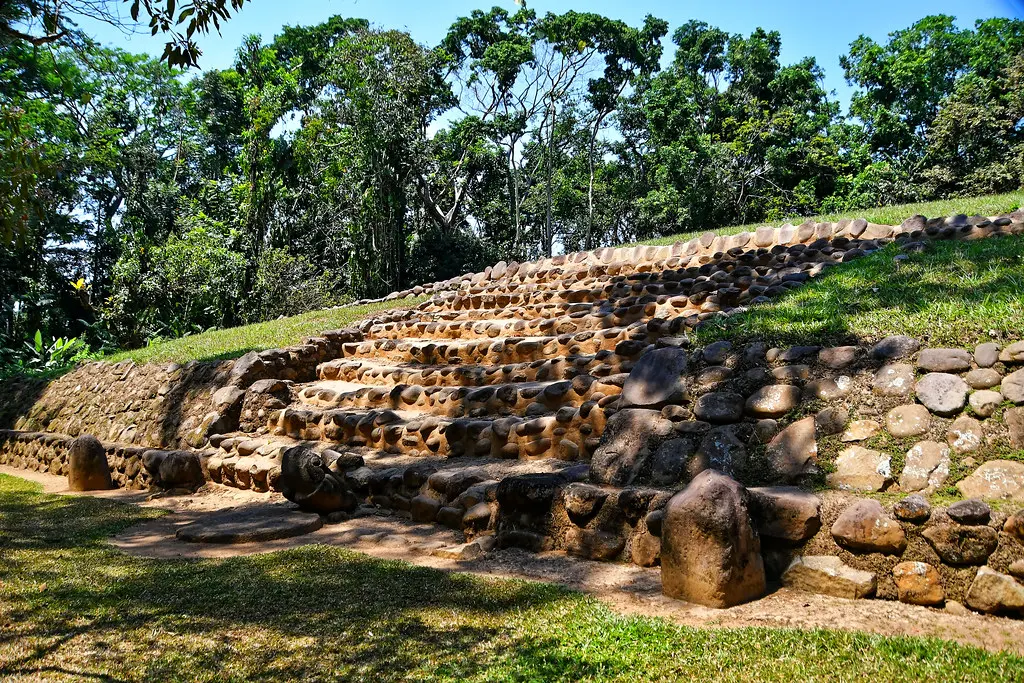
Visitors to the Zona 7 park describe grassy earthen mounds and excavated acropolis structures, with guides explaining features such as the carved 'mushroom stones' and the significance of the ceiba tree. The setting is unusual: an ancient capital surrounded by modern Guatemala City, much of the old city invisible beneath the streets beyond the park.
The most distinctive part of a visit may be the chance to witness active Maya ceremonies at the altars, sometimes drawing large gatherings; these are living rites, not displays, and should be observed respectfully and never photographed without permission. Encountering this living ritual amid an ancient capital offers a striking sense of cultural survival. A guide is recommended to make sense of what is otherwise a subtle, low-relief landscape of mounds.
Allow 1 to 2 hours; a guide is recommended. The park is open roughly 8am to 4pm Monday to Saturday and entry is cash-only in local currency. Stay on paths, do not climb the fragile mounds, and respect ceremonies in progress.
Context and lineage
Kaminaljuyu's significance is told through its monuments and its setting rather than a surviving myth. Stela 11 portrays a ruler with a world-tree growing from his headdress and crossed-bands earflares, placing him at the cosmic center where the world emerged from the underworld. The city grew around the now-dried Lake Miraflores, a focus of water ritual, and its name, Hill of the Dead, reflects its role as a place of burial and ceremony.
From Preclassic and Classic highland Maya religion, through Teotihuacan-influenced Early Classic ritual, to the living Maya spirituality practiced at the altars today.
Highland Maya of the Valley of Guatemala
Builders
Teotihuacan-linked Early Classic elites
Later rulers
Edwin Shook
Archaeologist
Ajq'ijab' (Maya spiritual guides)
Contemporary ritual leaders
Conservators and the Guatemala City heritage authority
Custodians
Traditions and practice
Ancient stela dedication, elite jade and eccentric-flint offerings, water ritual at Lake Miraflores, and sacrificial deposits, including child sacrifice attested around AD 100.
Maya spiritual guides conduct fire and offering ceremonies at the park's altars, sometimes drawing large gatherings.
Walk the mounds with a guide to understand the buried city, and consider the acropolis and altars in light of the rulers' cosmic-axis role. If a ceremony is in progress, observe respectfully and at a distance.
Contemporary Maya spirituality
ActiveThe park's altars draw Maya practitioners who affirm 'We are Maya and we worship as Maya,' sometimes in large gatherings.
Fire and offering ceremonies, prayers and candles led by ajq'ijab' at on-site altars.
Preclassic highland Maya religion
HistoricalKaminaljuyu was the greatest city of the southern Maya area in the Preclassic, with early stelae depicting rulers as cosmic axis-figures.
Stela dedication (e.g., Stela 11 with world-tree headdress and Principal Bird Deity), elite tomb offerings of jade and eccentric flints, and sacrificial deposits.
Teotihuacan-influenced Early Classic ritual
HistoricalEarly Classic tombs and talud-tablero pyramids reveal strong ties to central Mexico's Teotihuacan.
Teotihuacan-style mortuary offerings and architecture, and obsidian-trade ceremonialism.
Perspectives and open questions
Kaminaljuyu is studied as the dominant Preclassic highland capital, venerated as a living place of worship by contemporary Maya, and noted in popular accounts for its mushroom stones and world-tree imagery.
Scholarly perspective
Scholars regard Kaminaljuyu as the dominant Preclassic city of the southern Maya highlands and a key node in the obsidian trade, later showing strong Teotihuacan ties; its early monuments document the emergence of Maya kingship and writing.
Living and traditional perspectives
Contemporary Maya regard the altars as a living place of worship and gather there to perform ceremonies as Maya.
Alternative interpretations
Popular accounts emphasize the ceremonial 'mushroom stones' and the cosmic world-tree imagery of its rulers.
Open questions
Because most of the city lies beneath modern Guatemala City, its full scale, the language of its early script, and the depth of Teotihuacan involvement remain incompletely known.
Plan your visit
Access and arrival
Within Zona 7 of Guatemala City, near Parque Erick Barrondo; reachable by taxi or rideshare from the city center. Entry is cash-only in local currency.
Respectful visit
Casual, modest dress; sun protection.
Permitted for the mounds and structures; do not photograph ceremonies or participants without permission.
Leave offerings only as directed by Maya spiritual guides; do not disturb altar offerings.
Stay on paths; do not climb fragile mounds; entry is cash-only in local currency.
Do not photograph ceremonies or participants without permission, do not disturb altar offerings, and leave offerings only as directed by Maya spiritual guides.
Current practical details
Address
JFJ2+WH4, Guatemala City, Guatemala
Phone
Hours
Hours, fees, and access can change — verify on the official source before you travel. Practical details last checked Jun 2026.
Location
Map loads as you approach this section.
Pilgrim reflections
A portrait of encounter, not a score
Pilgrims describe what they felt, how present they could become, and whether the place would shape a journey. There are no stars and no ranking of traditions.
No reviewed reflections yet
The first pilgrims can help describe the character of being here.
Share a reflection
Available after an account-backed “Been there.” Every reflection is reviewed before publication.
Nearby sacred places
Explore other sacred places in the region. Proximity does not establish access or travel time; check each place’s guidance.

References
Sources consulted for this page. Source categories describe the publication, not a guarantee that every claim is verified. Traditional accounts and outside interpretations may differ.
- 01Kaminaljuyu — Wikipedia — Wikipedia contributorsacademicConfirms Preclassic prominence, Miraflores period (c. 400–100 BC), Teotihuacan-influenced Early Classic tombs and talud-tablero architecture, location under Guatemala City.
- 02Kaminaljuyu | Guatemala, Map, History, & Facts — Britannica — Encyclopaedia BritannicaacademicConfirms Teotihuacán-style tombs and pyramids in Early Classic, role in obsidian trade and far-reaching ties.
- 03Stele 11 — Tulan — Tulan.gtacademicDescribes Stela 11 (earliest stela depicting a standing ruler, Miraflores style), world-tree headdress, Principal Bird Deity, discovered 1957 by Edwin Shook.
- 04Letter from Guatemala — Maya Metropolis (Kaminaljuyu) — Archaeology Magazine — Archaeology MagazineSource contextContext on Kaminaljuyu's scale, Miraflores-period preeminence, and ongoing urban-archaeology challenges.
- 05Kaminaljuyu — The Mayan Ruins Website — themayanruinswebsite.comSource context'Hill of the Dead'; sat at crossroads of trade routes; centered on the now-dried Lake Miraflores; visitor hours and fees.
- 06Divers Find Hundreds of Ritual Offerings in Lake Sacred to the Maya — Ancient Origins — Ancient OriginsSource contextContext on Maya lake/water ritual offerings; relates to Lake Miraflores ritual landscape.
- 07Kaminaljuyu: Urban Archaeology in Guatemala City — Sailingstone Travel — Sailingstone TravelSource contextVisitor experience, ceremonies at altars, mushroom stones and ceiba-tree significance.
Photo gallery
3 curated photos
Share a photo
Help visitors recognize Kaminaljuyu. Every submission is reviewed before publication.