Maya Site of Copan
Where Maya kings became gods in stone and the longest inscription climbs a stairway to heaven
Understand sacred places, explore living traditions, and learn how to engage respectfully with Pilgrim Map.
Access has not been verified. Check current local guidance before planning a visit.
Copán Ruinas, Copán, Honduras
Read the sources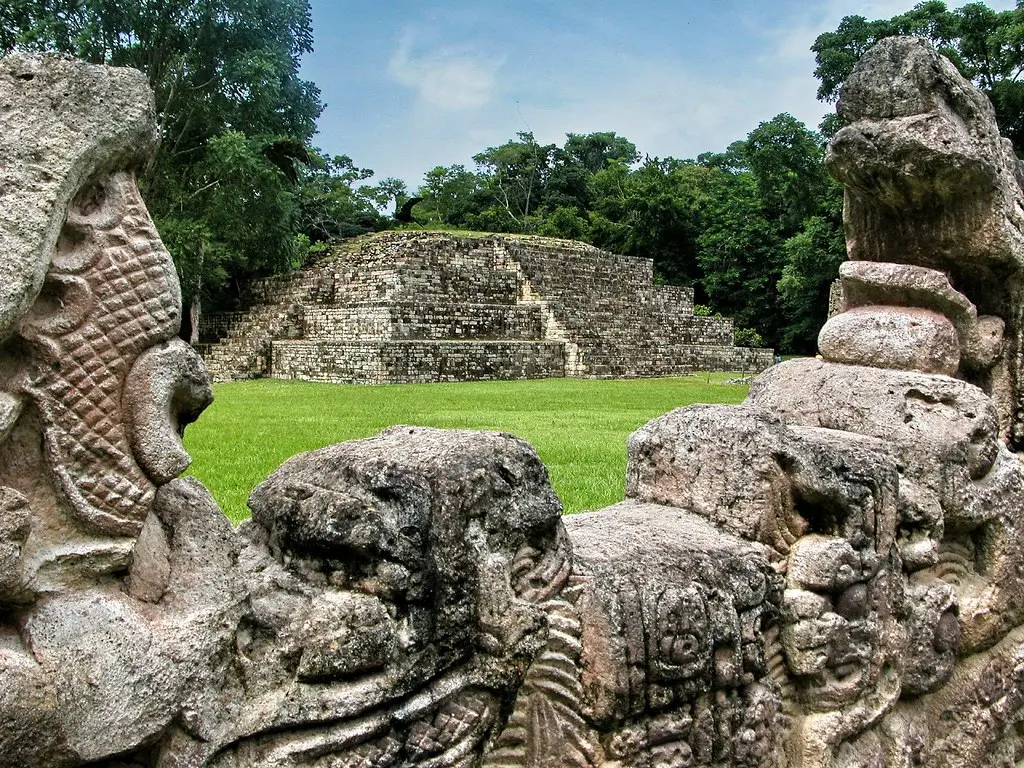
Image of Maya Site of Copan. Image source · CC-BY-NC-2.0
Visit essentials
A quick read before you go
- Duration
- Main archaeological site: 3-4 hours minimum.
- Access
- The archaeological site is located 1 km from Copan Ruinas town center, western Honduras, near…
Overview
Copan was the political and sacred center of a Classic Maya kingdom where rulers were depicted as divine forces—the Maize God, Morning Star, and agents of cosmic order—and carved volcanic-tuff stelae were understood to hold their living essence. Sixteen kings ruled from 426 to 822 CE. Their architecture joined temples layered over temples, a 63-step Hieroglyphic Stairway bearing more than 2,200 glyphs—the longest known Maya inscription—ball play tied to celestial movement, and serpent-mouth doorways opening symbolically toward Xibalba.
Although the city was abandoned in the early 10th century, the Ch'orti' Maya, descendants of its builders, remained in the valley. After centuries of colonial labeling as mestizos or campesinos rather than Maya, they now advocate recognition as stakeholders in their ancestral heritage, and their priests reportedly still conduct ceremonies here. Scarlet macaws—the birds whose name dynastic founder K'inich Yax K'uk Mo' bore—still call from the trees, making continuity audible as well as historical.
Why this place is sacred
What made Copan thin, permeable to the sacred? The Maya would have answered: the stone itself.
The stelae of Copan were not merely commemorative monuments but sacred objects believed to contain divine essence. The Maya understood these carved figures as invested with holiness, holding a soul-like presence that made them almost living beings. When King 18 Rabbit commissioned his stelae depicting himself as the Maize God, he was not simply recording his reign—he was creating a vessel for divine presence that would endure after his mortal body was gone.
The ceremonies reinforced this thinness. Every five years at k'atun endings, rulers performed rituals in which they enacted the roles of gods. The celestial alignments were precise: when 18 Rabbit performed as the Maize God, Venus rose overhead as the Evening Star, and the three stars of Orion's belt—representing the cosmic turtle from which the Maize God was reborn—passed directly above. Earth and sky mirrored each other; the ruler's performance was simultaneously human ceremony and cosmic event.
The architecture created literal thresholds between worlds. Temple 22's doorway is carved as a giant serpent mouth with fangs on the sill and sides—a portal to Xibalba, the underworld, that worshippers entered when passing through. The ball court, where games with cosmic significance were played, connected earthly sport to celestial movements. Beneath the stelae, cruciform vaults held offerings that passed between worlds.
And the Hieroglyphic Stairway was sacred history made permanent—400 years of kings' connection to divine power carved in stone so the narrative would outlast the speakers, climbing upward toward whatever waited above.
For the Ch'orti' Maya whose ancestors built these monuments and who still live in the Copan Valley, the site's spiritual significance does not depend on archaeological designation. Their priests reportedly still conduct ceremonies here. The thinness persists.
Copan functioned as the political, civil, and religious center of the Copan kingdom for 400 years (426-822 CE). The dynasty's founder, K'inich Yax K'uk Mo' ('Great Sun Quetzal-Macaw'), established the site as a major center controlling the lucrative jade and obsidian trade routes. The architectural and sculptural program expressed the rulers' connection to divine power and cosmic order, legitimizing their authority through sacred narrative.
After abandonment in the early 10th century, Copan remained in the memory of Maya descendants who continued living in the valley. Spanish administrator Diego García de Palacio documented the ruins in 1570. Major excavations began in the 19th century with the visits of Stephens and Catherwood (1839) and Peabody Museum expeditions (1892-1893). UNESCO inscription in 1980 established international recognition. The discovery of the intact Rosalila Temple in 1989 revolutionized understanding of the site's early history.
Today, Copan functions as an archaeological park while the Ch'orti' Maya advocate for recognition as stakeholders in their ancestral heritage.
Experience and orientation
The experience of Copan begins with sound. Before you see the monuments, you may hear the scarlet macaws calling from the trees near the entrance—the birds whose name K'inich Yax K'uk Mo' bore, still living where his dynasty rose and fell. Their red, blue, and yellow plumage is visible in the canopy. These are the same birds carved in stone at the ball court, the same whose remains were found sacrificed beneath Altar Q.
The continuity is startling: living macaws above, carved macaws below, 1,600 years between them.
The path leads through jungle to the Great Plaza, a three-hectare ceremonial space studded with stelae. The monuments are not arranged randomly but define the site's sacred geometry. Many depict 18 Rabbit (Uaxaclajuun Ub'aah K'awiil), the 13th ruler who commissioned more sculptures than any king before him. He appears in elaborate ceremonial dress, often in the guise of deities—the Maize God emerging from the cosmic turtle, the Morning Star rising to announce the day.
The sculptural detail is extraordinary: each feather carved, each jade bead rendered, the ruler's face emerging from headdresses that tower above his body.
To know that 18 Rabbit was captured and beheaded by a rival king in 738 CE adds weight to these images. The monuments that were meant to preserve his divine presence outlived him by barely forty years of his reign. His successors completed the Hieroglyphic Stairway in his memory, 63 steps carrying the longest Maya inscription known—over 2,200 glyphs narrating 400 years of dynastic history, climbing the Acropolis toward the temple above.
The stairway is now protected under a covering shelter, but its scale remains impressive. These are not small ceremonial steps but monumental architecture, each riser carved with glyphs that epigraphers can now read approximately 80 percent of. The narrative they tell is sacred history: the kings' connection to divine power, their ceremonies and conquests, the legitimacy that flowed from founder to successor across four centuries.
Beneath the Acropolis, tunnels offer a different experience entirely. Archaeologists have excavated passages through the accumulated layers of temple construction, revealing buried structures that the Maya ceremonially interred rather than destroyed. The most remarkable is Rosalila, a three-story temple discovered in 1989 with its original stucco decoration intact—red, green, yellow pigments preserved in the darkness for 1,300 years. A full-scale replica stands in the Sculpture Museum; the original remains buried, protected by the same earth that preserved it.
At the western end of the site, Altar Q presents the entire dynasty in carved procession. All 16 rulers sit on glyphs bearing their names, with K'inich Yax K'uk Mo' passing the scepter of power to Yax Pasaj Chan Yopaat, the 16th and last major king—a transaction carved 350 years after the founder's death.
Beneath the altar, archaeologists found a sacrificial vault containing the remains of 15 jaguars and several macaws, offerings that fed the monument's spirit and connected the worlds.
Enter through the main gate and follow the path toward the Great Plaza, pausing at the macaw trees. Allow time among the stelae to appreciate 18 Rabbit's portraits and the sculptural detail. Ascend toward the Hieroglyphic Stairway. If visiting the tunnels (additional fee), experience the buried Rosalila Temple in the darkness. End at Altar Q in the West Court for the complete dynastic narrative.
The Sculpture Museum (additional fee) houses original stelae and the Rosalila replica—essential for understanding what the site originally looked like. Allow minimum 3-4 hours; a full day permits unhurried exploration.
Context and lineage
According to the inscriptions, K'inich Yax K'uk Mo' arrived at Copan in 426 CE from elsewhere in the Maya world—perhaps Tikal, perhaps another major center. He came bearing the name of the scarlet macaw, the bird whose call still echoes through the site. He may have been sent to establish control over the valuable jade and obsidian trade routes that passed through this valley near what is now the Guatemala border.
He founded a dynasty that would last four centuries. Altar Q, carved 350 years after his death, shows him passing the scepter of kingship to the 16th ruler—a legitimizing connection across the generations. He was buried beneath what would become Temple 16, and the Rosalila Temple was built above his tomb as a shrine to his memory. His successors built temple upon temple, each layer burying what came before, the accumulated construction rising 30 meters above the valley floor.
The kingdom reached its peak under Smoke Imix (628-695 CE) and his successor 18 Rabbit (695-738 CE), who commissioned more monuments than any ruler before him. But in 738 CE, 18 Rabbit was captured and beheaded by K'ahk' Tiliw Chan Yopaat, king of Quirigua—a former vassal state that had broken free. The catastrophe was spiritual as well as political: a divine king had been killed by a subordinate.
The dynasty continued for another century under diminished circumstances. Yax Pasaj Chan Yopaat, the 16th ruler, commissioned Altar Q showing the complete dynastic lineage, as if to prove the kingdom's legitimacy through its long history. The last inscribed date at Copan is 822 CE. By the early 10th century, the city was abandoned.
Copan represents the southeastern frontier of Classic Maya civilization. The dynasty's 16 kings ruled from 426-822 CE, their reigns documented in inscriptions that epigraphers can now largely read. The Ch'orti' Maya who live in the Copan Valley today are descendants of those who built and inhabited this city. Despite centuries of colonial erasure, they have emerged as an indigenous rights movement advocating for recognition as stakeholders in their ancestral heritage.
K'inich Yax K'uk Mo'
Founder of the Copan dynasty
18 Rabbit (Uaxaclajuun Ub'aah K'awiil)
13th ruler, peak artistic production
Yax Pasaj Chan Yopaat
16th ruler, last major king
Traditions and practice
K'atun period festivals every five years marked the Maya ritual calendar. Rulers erected stelae and performed ceremonies in the guise of deities, reenacting creation myths with celestial alignments overhead. Bloodletting and sacrifice were central: the vault beneath Altar Q contained 15 jaguars and macaws, offerings to feed the monument's spirit. The ball game connected earthly play to cosmic movement. Temple doorways designed as serpent mouths represented portals to Xibalba; passing through them was ritual entry to the underworld.
Astronomical observations aligned ceremonies with Venus positions, solstices, and the annual zenith passage of the sun.
The site is primarily managed as an archaeological park by the Honduran government. However, Ch'orti' Maya priests reportedly conduct ceremonies at the site periodically. In 1998, approximately 2,000 Ch'orti' from Guatemala and Honduras blocked the park entrance for twelve days, demanding recognition as decision-makers in the site's management. In 2001, a Kaqchikel Maya daykeeper led a ceremony at the site. Traditional practices including agricultural rituals and Holy Week ceremonies continue in Ch'orti' communities throughout the Copan Valley.
The tension between archaeological management and living heritage remains unresolved.
Approach Copan as more than archaeology. Spend time among the stelae contemplating what it meant to believe rulers enacted cosmic creation—that the stone held divine essence. Descend into the tunnels to experience Rosalila Temple preserved in darkness. At Altar Q, consider the 350 years between the founder and the 16th king, and the sacrificial vault beneath. Be aware that this is not merely ancient history but ancestral land for people who still live in this valley.
The macaws calling from the trees bear the founder's name.
Classic Maya Religion
HistoricalCopan was a major religious center of the Maya world during the Classic Period (250-900 CE). The site functioned as the political, civil, and religious center of the Copan Valley. Maya religion centered on a complex cosmology connecting the earthly realm, the celestial realm, and Xibalba (the underworld). The stelae were considered invested with holiness—believed to contain divine soul-like essence that made them almost living beings. Rulers enacted ceremonies in which they performed the roles of gods, and temples were designed with portals to the underworld.
K'atun period festivals held every five years, during which stelae were erected and rulers performed in the guise of deities, reenacting creation myths. Bloodletting and sacrifice, including animal and human offerings. Ball game rituals connecting earthly play to celestial movements. Ancestor veneration at temple shrines. Astronomical observations aligned with ceremonial calendars. Offerings placed in cruciform vaults beneath stelae to feed the monuments' spirits and pass between worlds.
Contemporary Ch'orti' Maya Spirituality
ActiveThe Ch'orti' Maya are direct descendants of those who built Copan. They constitute one of 30 Mayan groups in Mesoamerica and maintain cultural and spiritual connections to the site despite centuries of colonial oppression and erasure. For generations, they were unrecognized as Maya, labeled as mestizos or campesinos. In recent decades, they have emerged as a vibrant political movement advocating for recognition of their ancestral heritage. The ruins hold sacred ceremonial importance for the modern Ch'orti'.
Ch'orti' Maya priests reportedly conduct ceremonies at the site periodically, though specific practices are not well documented in public sources. Traditional practices include rituals related to agriculture, fertility, rain, and cosmic alignment. Music involves flutes, conch shells, and clay drums believed to call forth spirits. Dance rituals survive particularly during Holy Week and agricultural rites. In 1998, thousands of Ch'orti' blocked the park entrance demanding recognition; in 2001, a Maya daykeeper led a ceremony at the site.
Perspectives and open questions
Copan invites interpretation through multiple lenses: as archaeological achievement, as Maya sacred site where rulers enacted creation myths, and as ancestral land for the Ch'orti' Maya who still live in this valley. These perspectives need not be reconciled—they coexist in the same space.
Scholarly perspective
Archaeologists recognize Copan as one of the most important Maya sites, often called 'the Athens of the Maya world' for its cultural and artistic achievements. The sculptural tradition represents the pinnacle of Maya relief carving—no other site produced such elaborate stelae. The Hieroglyphic Stairway, with over 2,200 glyphs, is the longest Maya inscription known, providing crucial documentation of dynastic history. UNESCO inscription in 1980 recognized both the architectural achievement and the historical significance.
The discovery of Rosalila Temple in 1989 revolutionized understanding of the site's early development. Current scholarly consensus attributes the city's decline to environmental degradation, overpopulation, and regional political instability rather than any single catastrophic event.
Living and traditional perspectives
For the Ch'orti' Maya, Copan is not an archaeological site but ancestral heritage. The Ch'orti' are direct descendants of the Maya who built and inhabited this city. Despite centuries of colonial oppression—they were labeled mestizos and campesinos rather than recognized as Maya—the Ch'orti' have emerged as an indigenous rights movement. In 1998, approximately 2,000 Ch'orti' blocked the park entrance for twelve days, demanding recognition as decision-makers in the site's management. They maintain that the ruins hold sacred ceremonial importance.
Ch'orti' priests reportedly continue to conduct ceremonies at the site. The tension between archaeological management and living heritage remains unresolved.
Alternative interpretations
Copan attracts visitors interested in Maya astronomy, cosmology, and the calendar. The site's alignments with celestial events—Venus positions, solstices, the annual passage of the sun through zenith—draw those seeking astronomical knowledge. The stelae depicting rulers as deities enacting creation myths invite contemplation of Maya understanding of cosmic order. The ball court and temple doorways designed as portals to Xibalba offer spatial experience of Maya cosmology.
Some visitors experience the site as energetically significant, finding particular resonance in the Great Plaza or the tunnels beneath the Acropolis.
Open questions
Significant questions remain. Why was Copan abandoned in the early 10th century when some Maya sites continued functioning? What was the exact relationship between Copan's rulers and Teotihuacan in central Mexico—the founder's tomb contains artifacts suggesting connections. What ceremonies accompanied the deliberate burial of Rosalila Temple? How was the Hieroglyphic Stairway read and used in its original context? What role did women play in Copan's religious and political life? What percentage of the site remains unexcavated beneath the jungle?
Plan your visit
Access and arrival
The archaeological site is located 1 km from Copan Ruinas town center, western Honduras, near the Guatemala border. A 15-minute walk from town, or accessible by tuk-tuk or taxi. From Guatemala, tourist shuttles from Antigua (5-6 hours) are popular. From Honduras, buses from San Pedro Sula (4+ hours via Hedman Alas). The town has a small airport but limited commercial service.
Copan Ruinas town offers abundant accommodation at various price levels, from backpacker hostels to boutique hotels. The town is walkable with restaurants, cafes, and services oriented toward tourism. Macaw Mountain bird sanctuary and Luna Jaguar hot springs provide additional attractions. The area is considered safe compared to other parts of Honduras.
Respectful visit
Practical clothing for hot, humid tropical climate. Sun protection essential: hat, sunscreen, water. Comfortable walking shoes for extensive grounds and uneven terrain. No specific modest dress requirements, but respectful attire is appropriate given the site's significance for living Maya peoples.
Photography permitted throughout the site for personal use. Tripods and professional equipment may require advance permission. Flash prohibited in tunnels and museum to protect fragile surfaces. Drones prohibited. Be respectful if Ch'orti' Maya visitors are present.
Visitors should not leave offerings. The site is managed as an archaeological park, and unauthorized objects can complicate conservation and interpretation.
Stay on marked paths. Do not climb on structures—this damages both the monuments and visitor safety. Do not touch sculptures; oils from hands degrade the stone. The tunnels have separate fees and limited capacity. Some areas may be closed for conservation work.
Entry fees vary significantly between sources ($20-45 USD); confirm current prices on site. The tunnels require additional fees and have limited capacity. Some areas may be closed for conservation. Hot, humid conditions year-round; bring water and sun protection. The site covers extensive ground; comfortable shoes essential.
Current practical details
Address
RVQ4+CH4, CA-11, Copan Ruinas, Copán, Honduras
Phone
Hours
Hours, fees, and access can change — verify on the official source before you travel. Practical details last checked Jun 2026.
Location
Map loads as you approach this section.
Pilgrim reflections
A portrait of encounter, not a score
Pilgrims describe what they felt, how present they could become, and whether the place would shape a journey. There are no stars and no ranking of traditions.
No reviewed reflections yet
The first pilgrims can help describe the character of being here.
Share a reflection
Available after an account-backed “Been there.” Every reflection is reviewed before publication.
Nearby sacred places
Explore other sacred places in the region. Proximity does not establish access or travel time; check each place’s guidance.


References
Sources consulted for this page. Source categories describe the publication, not a guarantee that every claim is verified. Traditional accounts and outside interpretations may differ.
- 01Maya Site of Copan — UNESCO World Heritage CentreofficialOfficial UNESCO documentation
- 02Copan — World History EncyclopediaencyclopediaComprehensive historical overview
- 03Altar Q and Copán — Peabody Museum of Archaeology & Ethnology, HarvardacademicAcademic museum resource
- 04The Ch'orti' Maya Area: Past and Present — A Contracorriente JournalacademicAcademic source on Ch'orti' Maya
- 05Copán — Living Maya Time, Smithsonian National Museum of the American IndianacademicSmithsonian Institution resource
- 06The Stelae of Copán - An Evolution of Art & Religion — Uncovered HistorySource contextDetailed analysis of stelae
- 07Rosalila Temple in Copán Ruinas — Atlas ObscuraSource contextFocus on Rosalila Temple
Photo gallery
3 curated photos
Share a photo
Help visitors recognize Maya Site of Copan. Every submission is reviewed before publication.