Gumyō-ji
Yokohama's oldest temple, with a Heian Kannon that wears its chisel marks
Understand sacred places, explore living traditions, and learn how to engage respectfully with Pilgrim Map.
Access has not been verified. Check current local guidance before planning a visit.
Yokohama, Kanagawa Prefecture, Japan
Read the sources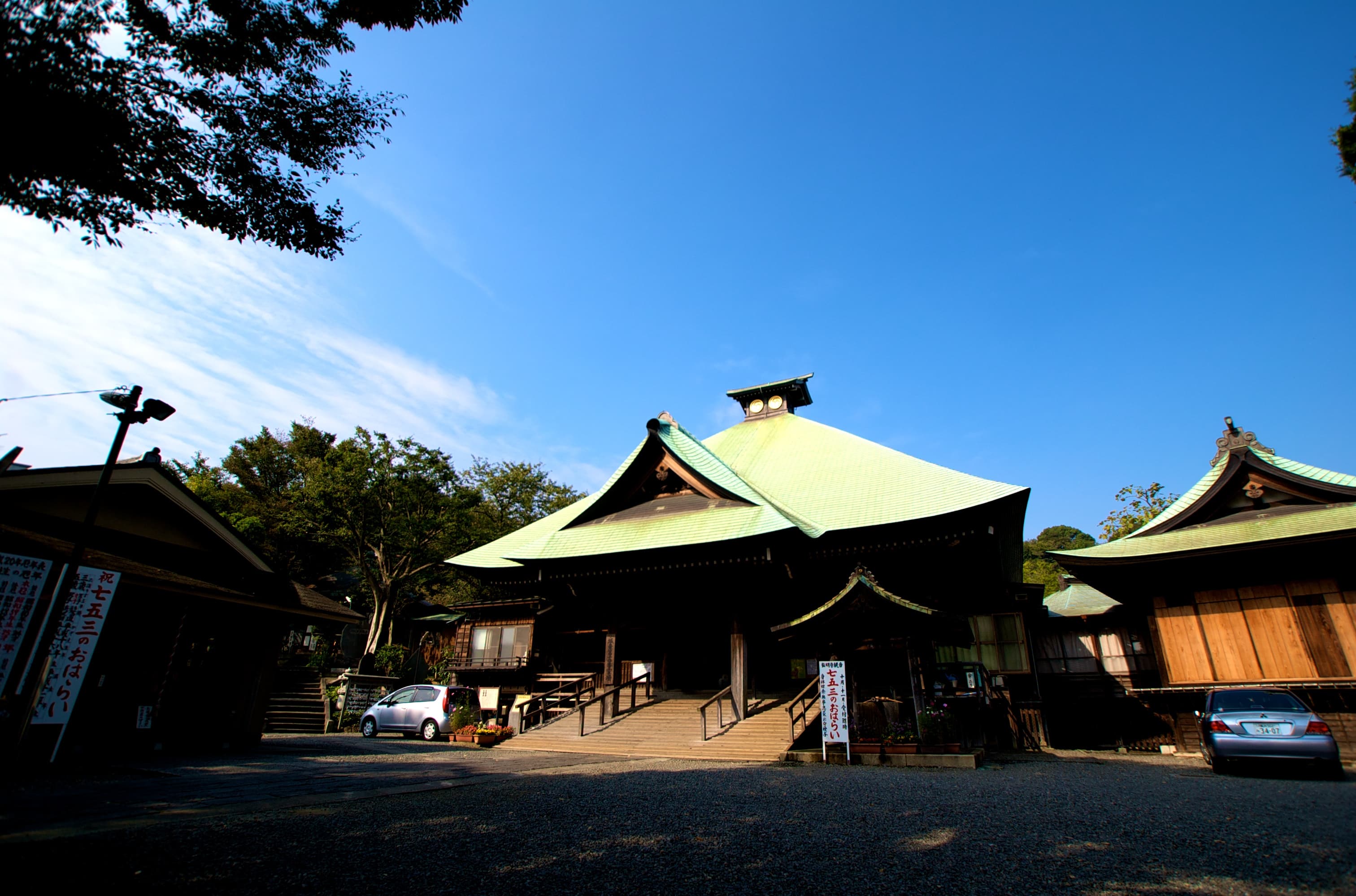
Image of Gumyō-ji (弘明寺). Image source · CC-BY-2.0
Visit essentials
A quick read before you go
- Duration
- 30–60 minutes for an unhurried visit including the precinct, hondō, and Eleven-Headed Kannon…
- Access
- Direct access via Gumyōji Station on the Keikyū Main Line — the temple is approximately 2–3…
Overview
Gumyō-ji sits at the head of the Kannon-dōri shōtengai, a covered shopping arcade running directly from Gumyōji Station on the Keikyū Main Line in central Yokohama. The temple's official name — Zuiōzan Renge-in Gumyō-ji, 'Auspicious-Response Mountain, Lotus Hall, Temple of Vast Light' — sits over a working Kōyasan Shingon-shū institution that has held continuous Kannon devotion since at least 1044 and, by tradition, since 737.
The origin tradition is layered. By temple legend, the priest Gyōki traveled the country during a nationwide epidemic in 737 (Tenpyō 9), praying for relief. At Gumyō-ji's site he carved an Eleven-Headed Kannon — making one full bow for every chisel-stroke (一刀三礼) — and built a hermitage. In 814, Kūkai performed a thousand-seat goma fire rite at the site. The documented temple establishment, however, is March 10, 1044 (Kantoku 1), when Kōkei Shōnin built the first tile-roofed main hall.
Most scholars place the carving of the principal image in the mid-Heian period, consistent with the 1044 founding rather than the 737 tradition. Both dates are preserved in temple history.
The principal image is the temple's gravity. At 181.7 cm tall, carved from a single block of zelkova (or elm, depending on identification), the Eleven-Headed Kannon shows the rare hatabori (鉈彫り, 'chisel-carving') technique: the maker left rounded chisel-marks visible on the surface, leaving the carving process readable on the finished image. The statue was designated a National Treasure in 1915 and reclassified as a national Important Cultural Property under the 1950 Cultural Property Protection Law.
The hatabori tradition is concentrated in mid-Heian Kantō; this is one of its most important surviving examples.
The present main hall dates to 1766 and is itself a survivor — through the 1923 Great Kantō Earthquake that flattened much of central Yokohama, and through the 1945 firebombings that destroyed enormous tracts of the city. Pilgrims often comment that an old wooden hondō survives at the head of a modern Yokohama shōtengai is itself a quiet teaching.
Why this place is sacred
Yokohama is a city largely without old buildings. The 1859 opening to foreign trade reshaped the waterfront, the 1923 Great Kantō Earthquake destroyed central districts, and the 1945 firebombings completed the leveling. Most of what looks old in Yokohama is post-war reconstruction. Gumyō-ji is one of the few exceptions. The 1766 hondō survived all three convulsions. The Heian-period Eleven-Headed Kannon inside has been continuously venerated for roughly nine centuries.
What anchors the temple is the chisel-mark Kannon herself. The hatabori (鉈彫り) carving technique left rounded gouge-traces on the finished surface — the carver's path through the wood remains readable. In most Buddhist sculpture, the goal is to erase the maker, leaving an image that appears self-arising, perfect. Hatabori does the opposite: the body of the Kannon is also the record of its making.
Some contemplative readings interpret this as devotional honesty — the practice is process, not product, and the Kannon shows her own becoming. Others read it as a teaching that sacred work is left visibly unfinished, refusing the closure of perfected form. The technique is concentrated in mid-Heian Kantō and is a regional rather than national style; Gumyō-ji's image is among its most important surviving examples.
The Subhakarasiṃha → Gyōki → Kūkai → Kōkei Shōnin lineage in temple tradition is part of a broader Japanese pattern of associating major Kannon temples with these revered figures, regardless of historical verifiability. Whether or not those figures actually visited the site, the chain functions as a contemplative geography: the temple is held to participate in a pan-Asian Buddhist transmission, from Indian Subhakarasiṃha through Japanese mountain ascetic Gyōki to esoteric founder Kūkai to documented Heian abbot Kōkei.
For pilgrims walking the Bandō circuit, this chain is part of what they walk through.
The second register of thinness here is urban survival. The 1923 earthquake and the 1945 firebombings each removed most of central Yokohama; the temple stood. Pilgrims often arrive expecting a tucked-away mountain station and instead find themselves at the head of a busy shōtengai directly above a metro station — which is part of the temple's particular character. Gumyō-ji's quiet sits inside everyday Yokohama life rather than apart from it.
By tradition, Gyōki carved the Eleven-Headed Kannon in 737 during a nationwide epidemic and built a hermitage to pray for relief from disease. The documented temple was established by Kōkei Shōnin in 1044 with the construction of the first tile-roofed main hall, formalizing the longstanding Kannon devotion at the site. The temple's role on the Bandō Sanjūsankasho circuit dates to the medieval period.
Indian monk Subhakarasiṃha visit (721, traditional) → Gyōki carving the Kannon (737, traditional) → Kūkai's thousand-seat goma rite (814, traditional) → documented temple founding by Kōkei Shōnin (March 10, 1044) → multiple medieval and early-modern fires → present hondō rebuilt 1766 (Meiwa 3) → survives 1923 Great Kantō Earthquake → survives 1945 Yokohama air raids → Eleven-Headed Kannon designated National Treasure (1915), reclassified as Important Cultural Property (1950) → continuous Kōyasan Shingon-shū administration into the present.
Experience and orientation
Most visitors arrive at Gumyōji Station on the Keikyū Main Line. Stepping off the train places you at the foot of the Kannon-dōri shōtengai — a covered shopping arcade with rice-cracker shops, small bakeries, dry-goods sellers, and the everyday inventory of a residential Yokohama district. The shōtengai climbs gently up Kannon-dōri toward the temple gate, perhaps two or three minutes' walk. There is no rural approach, no cedar grove, no suggestion that you are leaving the city. You are not.
The temple sits inside Yokohama rather than away from it.
At the gate, the precinct opens onto the 1766 hondō. The hall is modest in scale — smaller than visitors expect for a temple this old — and unusually time-worn for Yokohama, the dark wood holding centuries of incense and weather. A great ginkgo tree stands in the precinct. The offering box, the incense burner, and the entrance to the inner worship area sit before the hondō.
The Eleven-Headed Kannon — 181.7 cm of single-block zelkova, with hatabori chisel-marks visible across its surface — stands within the hall, viewable under candle and lamp light during pilgrimage hours. Pilgrims approach the inner area, light incense, place offerings, and bow once.
The encounter with the chisel-mark Kannon is unusual in Buddhist sculpture. Most images aim for the seamless surface of perfected form. Here the carver's path is readable — rounded gouge-traces along the body, the head, the eleven small Kannon faces in the upper crown. The light makes the marks more or less visible depending on hour and weather. Many pilgrims report standing longer than they intended.
From the temple, the Ōoka River runs nearby with the Kannon-bashi bridge crossing — 'Cherry-Blossom Bridge' or 'Kannon Bridge' depending on translation — lined with cherry trees that bloom dramatically in early April. The shōtengai itself is a working part of the visit; the temple feels embedded in the small economy of the neighborhood rather than apart from it.
An unhurried visit takes 30 to 60 minutes; longer with the shōtengai walk and a stop at Kannon-bashi. The temple is at its busiest during the early-January Hatsu-Kannon (first Kannon day of the year) festival, the spring cherry-blossom period, and the periodic Gumyō-ji flea market.
Gumyō-ji is directly accessible from Gumyōji Station on the Keikyū Main Line — among the most rail-accessible temples on the Bandō pilgrimage. From the station, walk up the Kannon-dōri shōtengai (covered shopping arcade) approximately 2–3 minutes to the temple gate. The 1766 hondō is straight ahead inside the precinct, with the Eleven-Headed Kannon visible inside. The nōkyōsho for Bandō pilgrimage stamps is to one side. The Ōoka River and Kannon-bashi bridge are a short walk from the temple grounds.
Gumyō-ji is also accessible from Gumyōji Station on the Yokohama Municipal Subway Blue Line via the same shōtengai.
Context and lineage
Tradition holds that in 721 the Indian monk Subhakarasiṃha (Zenmui Sanzō) visited the area, sanctifying the site. In 737, during a nationwide epidemic, the priest Gyōki traveled Japan praying for the suffering. At Gumyō-ji's site he carved the Eleven-Headed Kannon — making, by tradition, one full bow for every chisel-stroke — and built a hermitage. In 814, Kūkai (Kōbō Daishi) performed a thousand-seat goma rite at the site to pray for the people's protection from misfortune.
On March 10, 1044, Kōkei Shōnin built the first tile-roofed main hall, formally establishing Gumyō-ji as an institutional temple. The current main hall dates to 1766 and survived both the 1923 Great Kantō Earthquake and the 1945 Yokohama air raids. The Eleven-Headed Kannon was designated a National Treasure in 1915 and reclassified as a national Important Cultural Property in 1950 under the new Cultural Property Protection Law.
Kōyasan Shingon-shū (高野山真言宗) — the major Shingon school headquartered at Mt. Kōya in Wakayama, founded by Kūkai in the early ninth century. Gumyō-ji is one of the principal Kōyasan Shingon temples in eastern Japan. Its place on the Bandō Sanjūsankasho circuit dates to the medieval period; the route as a whole is documented from at least the early Kamakura period.
Traditions and practice
Daily Shingon liturgy at the hondō centers on Eleven-Headed Kannon devotion, with the principal image visible to pilgrims under hall lighting during open hours. Goma fire rituals are performed on monthly observance days, following Shingon esoteric pattern in which mantras and offerings are burned to transmute obstacles into wisdom. The Hatsu-Kannon (first Kannon day) festival in January marks the year's first major devotional event. Setsubun bean-throwing follows in early February. Periodic kaichō (御開帳) opens the inner area for special veneration.
Daily Bandō pilgrimage stamp service at the nōkyōsho. Family memorial services (hōji) are conducted at the hondō on request. The annual Gumyō-ji flea market draws local visitors and is announced through the temple's website. The temple maintains a regular schedule of community events tied to the surrounding Kannon-dōri shōtengai.
For a contemplative visit, walk up the Kannon-dōri shōtengai slowly rather than hurrying through it — the temple's character is partly the character of its neighborhood. At the hondō, light a single incense stick at the burner and pass smoke deliberately over yourself. Approach the inner worship area, place an offering, and bow once. Spend a few minutes looking at the Eleven-Headed Kannon under the hall lighting; the chisel-marks become more visible the longer you look.
Receive the Bandō pilgrimage stamp at the nōkyōsho if you are walking the circuit. After the temple, walk down to the Ōoka River and cross Kannon-bashi, particularly during cherry-blossom season.
Buddhism
ActiveGumyō-ji is the oldest temple in Yokohama and a key Kōyasan Shingon-shū site in eastern Japan. Its identity rests on its mid-Heian Eleven-Headed Kannon — a 181.7 cm single-block zelkova statue carved in the rare hatabori (chisel-mark) technique that intentionally leaves rounded gouge-traces on the surface. This is one of the most important examples of hatabori-style sculpture in the Kantō region, and the temple's continuous Kannon devotion since 1044 places it at the head of Yokohama's Buddhist heritage.
Perspectives and open questions
Gumyō-ji's significance is read across three registers: the documented institutional history of Yokohama's oldest temple; the Heian-period sculptural achievement of the Eleven-Headed Kannon; and the layered traditional lineage tying the site to a chain of pan-Asian Buddhist transmission.
Scholarly perspective
The Eleven-Headed Kannon is securely dated by stylistic analysis to the mid-Heian period (10th–11th century), consistent with the documented 1044 temple founding by Kōkei Shōnin. The Gyōki and Kūkai attributions are part of a common medieval pattern of associating major Kannon temples with these revered figures and are not historically verifiable. The hatabori (chisel-mark) technique is recognized as a distinctive Kantō regional sculptural mode of the Heian period, with Gumyō-ji's image among its most important surviving examples.
The 1766 hondō's survival of the 1923 earthquake and 1945 firebombings is documented in Yokohama prefectural records.
Living and traditional perspectives
Temple tradition emphasizes the unbroken chain Subhakarasiṃha (721) → Gyōki (737) → Kūkai (814) → Kōkei Shōnin (1044), presenting Gumyō-ji as a pan-Asian Buddhist transmission point in the Kantō region. The temple-history account of Gyōki making 'one full bow for every chisel-stroke' frames the carving itself as a devotional act, integrating the maker's body into the image's formation. The 1766 hondō's survival of repeated catastrophe is read as ongoing Kannon protection.
Alternative interpretations
Within Shingon esoteric practice, the Eleven-Headed Kannon represents Kannon's full encompassment of suffering — eleven faces facing all directions of distress. The hatabori surface is read in some contemplative traditions as a teaching about leaving sacred work visibly unfinished, a counter to the Buddhist idea of perfected form. Some practitioners frame the chisel-marks as the Kannon's ongoing becoming — the image continuing to be carved, in a sense, by every devotional encounter.
Open questions
Pre-1044 institutional history is undocumented; the relationship between the legendary 737 hermitage and the 1044 temple is unclear. The original polychrome of the honzon (if any) is not preserved. Whether Subhakarasiṃha actually visited Japan is historically doubtful; his presence in temple tradition reflects a broader pattern of associating Japanese Buddhist sites with major continental figures.
Plan your visit
Access and arrival
Direct access via Gumyōji Station on the Keikyū Main Line — the temple is approximately 2–3 minutes' walk up the Kannon-dōri shōtengai (covered shopping arcade) from the station. Also accessible from Gumyōji Station on the Yokohama Municipal Subway Blue Line via the same arcade. From central Yokohama (Yokohama Station), the temple is reachable in approximately 10–15 minutes by Keikyū. From central Tokyo, allow approximately 45–60 minutes by train via Shinagawa or Yokohama. Mobile phone signal is excellent throughout.
No keyholder or special booking is required for ordinary visits; for kaichō schedules and special events, contact the temple directly via the official site.
No on-site accommodations. Central Yokohama (Yokohama Station, Sakuragichō, Minato Mirai) has extensive hotel options across all price ranges. Many Bandō pilgrims base themselves in central Tokyo or Yokohama and visit Gumyō-ji as part of a half-day excursion combining nearby Bandō stations.
Respectful visit
Modest dress; no specific code. Bandō pilgrims often wear white hakui (pilgrim's coat). Comfortable walking shoes for the shōtengai approach.
Generally permitted on grounds and at the hondō exterior. Refrain from photographing the Eleven-Headed Kannon directly or during ritual unless specifically allowed; check signs near the hondō. The shōtengai approach is photogenic but be considerate of shopkeepers and customers.
Standard saisen-bako; 5 yen (go-en) is conventional. Light incense at the burner before approaching. The temple sells protective amulets (omamori) at booths in the precinct.
Quiet behavior in the inner hall; remove caps. Hours of access to the inner worship area vary; check temple signage on the day of visit. Photography of the principal image is restricted.
Photography of the Eleven-Headed Kannon and during ritual is generally not permitted; check signs near the hondō. The shōtengai is a working shopping street — eat purchased food at the shop where you buy it rather than while walking. The temple is busy on Hatsu-Kannon and flea-market days; for contemplative visits, weekday mornings are quieter. Do not clap at the offering box; this is Buddhist, not Shinto, etiquette.
Current practical details
Address
267 Gumyōjichō, Minami Ward, Yokohama, Kanagawa 232-0067, Japan
Phone
Hours
Hours, fees, and access can change — verify on the official source before you travel. Practical details last checked Jun 2026.
Location
Map loads as you approach this section.
Pilgrim reflections
A portrait of encounter, not a score
Pilgrims describe what they felt, how present they could become, and whether the place would shape a journey. There are no stars and no ranking of traditions.
No reviewed reflections yet
The first pilgrims can help describe the character of being here.
Share a reflection
Available after an account-backed “Been there.” Every reflection is reviewed before publication.
Nearby sacred places
Explore other sacred places in the region. Proximity does not establish access or travel time; check each place’s guidance.


References
Sources consulted for this page. Source categories describe the publication, not a guarantee that every claim is verified. Traditional accounts and outside interpretations may differ.
- 01弘明寺について|瑞應山 蓮華院 弘明寺 — Gumyō-ji TempleofficialPrimary temple source: Gyōki carving in 737 (Tenpyō 9), Kūkai's 814 (Kōnin 5) goma rite, 1044 main hall by Kōkei Shōnin, statue dimensions, hatabori carving.
- 02境内と見どころ|瑞應山 蓮華院 弘明寺 — Gumyō-ji TempleofficialDetail on present hondō (rebuilt 1766/Meiwa 3) which survived earthquakes and wartime.
- 03瑞応山 弘明寺(弘明寺観音)|坂東三十三観音 公式サイト — Bandō Sanjūsankasho ReijōkaiofficialCanonical pilgrimage page.
- 04Gumyoji Kannon | Tokyo Day Trip — Kanagawa Prefecture — Kanagawa Prefectural Tourist AssociationofficialOfficial prefectural tourism description.
- 05Gumyōji - Wikipedia — Wikipedia contributorsencyclopediaEnglish overview; Bandō #14, Kōyasan Shingon-shū, Yokohama's oldest temple.
- 06弘明寺 - Wikipedia 日本語 — Wikipedia contributorsencyclopediaJapanese Wikipedia: detail on hatabori statue (designated 国宝 1915, demoted to 重要文化財 1950).
- 07Gumyoji: Yokohama's oldest temple and its modern surroundings — Jigsaw JapanacademicVisitor account with shopping-street and ginkgo-tree detail.
Pilgrim glossary
- Kannon
- The bodhisattva of compassion, central to many East Asian pilgrimage routes.
- Shingon
- An esoteric Japanese Buddhist school emphasizing ritual, mantra, and mandala practice.
Share a photo
Help visitors recognize Gumyō-ji. Every submission is reviewed before publication.