Jōrin-ji
A Sōtō Zen Kannon-dō born from a warrior's remorse, now also a beloved anime-pilgrimage site
Understand sacred places, explore living traditions, and learn how to engage respectfully with Pilgrim Map.
Access has not been verified. Check current local guidance before planning a visit.
Chichibu, Saitama Prefecture, Japan
Read the sources
Station 17 of 34
Chichibu 34 Kannon PilgrimageVisit essentials
A quick read before you go
- Duration
- 20–30 minutes for a pilgrim visit; longer if reading the ema board carefully.
- Access
- About 8–10 minutes' walk north-east of Seibu-Chichibu Station, in Sakuragi-chō.
Overview
Jōrin-ji is a Sōtō Zen temple and one of about twenty Sōtō stations on the Chichibu route. Its honzon is Jūichimen Kannon, the Eleven-Faced Kannon. The foundation legend and its unresolved historicity remain in the origin account. The bell, a Saitama Prefectural Tangible Cultural Property, carries the dedicatory poems of all 100 Kannon pilgrimage temples: Saigoku 33, Bandō 33, and Chichibu 34. Once first in the Chōkyō-era ranking, Jōrin-ji became seventeenth when the Edo-period route shifted via the Chichibu Kaidō.
The temple is also a primary location in the 2011 anime Ano Hi Mita Hana no Namae o Boku-tachi wa Mada Shiranai (Anohana). Fan pilgrimage has supplied most visitor revenue since 2011 and, according to the caretaker, sustained the precinct through demographic decline. Character names and messages to Menma dominate the ema board; the caretaker reportedly welcomes anime fans and traditional pilgrims. The 2026 umadoshi sōkaichō opens the honzon for the first time in twelve years.
Why this place is sacred
Jōrin-ji joins two sacred registers. Its Sōtō Kannon hall and 100-temple-inscribed bell carry repentance and the Hyakkannon network. Since 2011, Anohana fans have mapped mourning, unspoken words, and friendship onto Kannon's compassionate listening. That practice has materially supported the temple, whose caretaker reportedly welcomes both forms of pilgrimage.
Jōrin-ji was founded as a Sōtō Zen Kannon hall in memorial to the wronged retainer Hayashi Sadamoto and as the seventeenth-station fudasho on the Chichibu pilgrimage. The temple's founding legend gives it a particular ethical character: a place where conscience and remorse find institutional form.
Once ranked first in the Chōkyō-era Chichibu pilgrimage ranking, Jōrin-ji was renumbered to seventeenth during the Edo-period rerouting that brought pilgrims via the Chichibu Kaidō. The bell with all 100 Kannon dedicatory poems was inscribed at an undocumented later date and is now a Saitama Prefectural Tangible Cultural Property. Since 2011, fan pilgrimage from the Anohana anime has profoundly shaped the temple's visitor base.
Experience and orientation
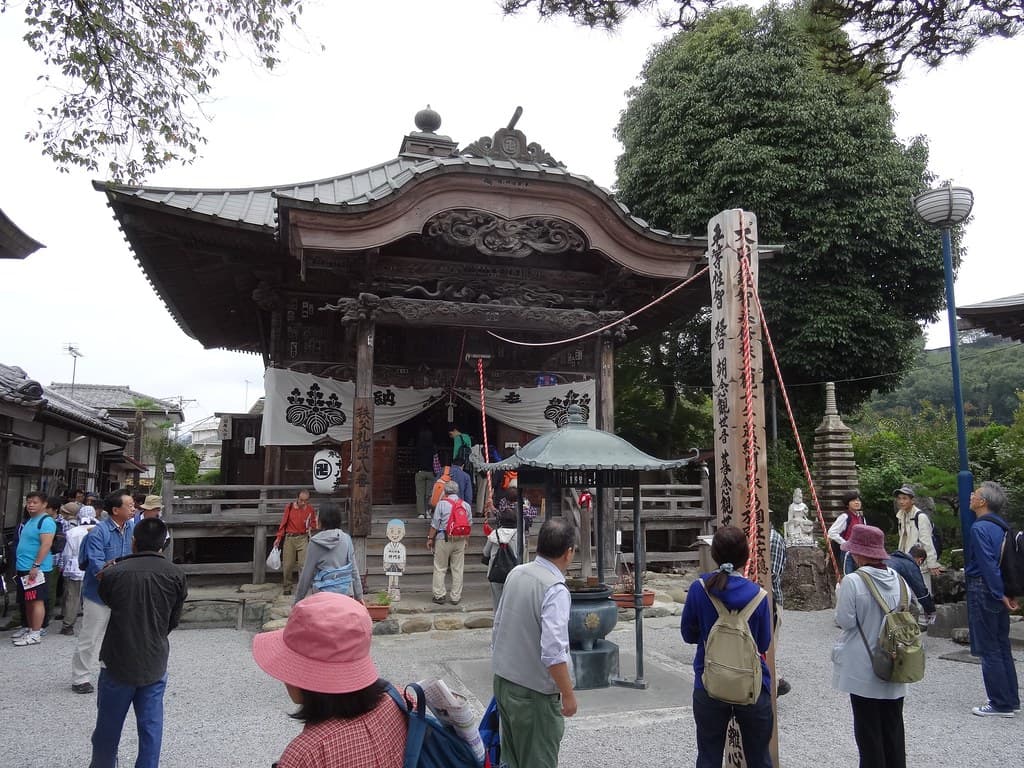
From Seibu-Chichibu Station, walk eight to ten minutes northeast through Sakuragi-chō's quiet residential approach of narrow streets and modest houses, with no theatrical signage. The small grounds center on the Kannon-dō and separate bell structure. Traditional pilgrims may reflect on accountability and confession; Anohana fans bring themes of mourning, friendship, and Menma's unfulfilled wishes. The two modes coexist. Ringing the bell invokes, through its inscriptions, all 100 Kannon temples.
Begin at the Kannon-dō for incense and Heart Sutra recitation, ring the 100-Kannon-inscribed bell, read the ema, and finish at the goshuin desk.
Context and lineage
The warrior Inbu Yoshikado was a harsh and unjust ruler who exiled his retainer Hayashi Tarō Sadamoto for remonstrating with him. Sadamoto and his wife perished as refugees; their orphaned child was raised by a monk named Kūshō. Years later, Yoshikado visited the area, learned of the tragedy, and in remorse founded a temple in Sadamoto's memory — naming it 'Jōrin' after his lost retainer. The temple's founding date is undocumented.
It was once first-ranked in the Chōkyō-era Chichibu pilgrimage ranking and was renumbered to seventeenth during the Edo-period rerouting via the Chichibu Kaidō.
Sōtō Zen has held the temple since at least the early modern period. The temple's bell, inscribed with the dedicatory poems of all 100 Kannon pilgrimage temples (Saigoku 33 + Bandō 33 + Chichibu 34), is a Saitama Prefectural Tangible Cultural Property.
Inbu Yoshikado
founder (legendary)
Warrior who founded Jōrin-ji as an act of repentance for the wrongful exile of his retainer Hayashi Sadamoto. Whether Yoshikado was historical or legendary remains unresolved.
Hayashi Tarō Sadamoto
memorialized retainer
Retainer wrongfully exiled by Yoshikado. The temple's name 'Jōrin' is said to derive from his name.
Jūichimen Kannon
deity
The Eleven-Faced Kannon, the temple's honzon — venerated for the bodhisattva's ability to perceive suffering in every direction.
Traditions and practice
Sōtō Zen liturgy structures the temple's daily practice. Sutra recitation before the Eleven-Faced Kannon and ringing the prefectural-cultural-property bell — inscribed with the dedicatory poems of all 100 Kannon temples — are the foundational devotional acts. The goeika (pilgrimage hymn) is sung as part of fudasho observance.
Pilgrims offer incense and coins, recite the Heart Sutra, ring the bell, and request goshuin. Anohana fans also leave ema for Menma; the caretaker welcomes both.
Read the repentance legend, ring the inscribed bell attentively, and read the ema. In 2026, the umadoshi sōkaichō opens the Eleven-Faced Kannon for the first time in twelve years.
Sōtō Zen Buddhism
ActiveJōrin-ji is one of approximately twenty Sōtō temples on the Chichibu route. Its founding legend frames the temple as an act of warrior repentance, weaving Confucian-loyalist morality into Zen institutional history.
Contents-tourism / Seichi Junrei
ActiveJōrin-ji is a primary location in the 2011 anime Ano Hi Mita Hana no Namae o Boku-tachi wa Mada Shiranai (Anohana). Fan pilgrimage to the temple has supplied the bulk of visitor revenue since 2011, sustaining the temple through demographic decline.
Kannon pilgrimage tradition
ActiveSeventeenth station of the Chichibu 34 Kannon Reijō. Once ranked first in the Chōkyō-era Chichibu pilgrimage ranking, renumbered to seventeenth in the Edo-period rerouting via the Chichibu Kaidō.
Perspectives and open questions
Jōrin-ji rewards readings as warrior-patronage Zen institution (the founding legend), as pilgrimage memorial (the 100-Kannon-inscribed bell), and as contemporary contents-tourism site (the Anohana phenomenon).
Scholarly perspective
Jōrin-ji is a textbook case of late-Muromachi-to-Edo Zen warrior patronage on the Chichibu route. The Chōkyō-to-Edo renumbering reflects the route's reorganization to accommodate Edo-period pilgrim traffic. The Anohana phenomenon is a documented case of seichi junrei (contents-tourism / fan pilgrimage) reshaping a small temple's economic and visitor profile.
Living and traditional perspectives
Local Sōtō tradition emphasizes the temple as a moral lesson on the consequences of unjust governance and the redemptive power of remorse. Yoshikado's repentance is read as a Zen-inflected ethics of conscience that finds institutional form.
Alternative interpretations
The Anohana phenomenon has spawned its own folk-theological reading: the temple is described by fans as a place for 'unspoken-words' and unfulfilled friendships, mapping anime themes onto the Kannon vow of compassionate listening. The caretaker's welcome of both pilgrim modes suggests a generous reading of what counts as devotion.
Open questions
Whether Inbu Yoshikado is a historical or legendary figure remains unresolved; the founding legend serves moral-didactic functions regardless of historicity. The temple's exact founding date is undocumented.
Plan your visit
Access and arrival
About 8–10 minutes' walk north-east of Seibu-Chichibu Station, in Sakuragi-chō. Quiet residential approach.
Central Chichibu offers ryokan, business hotels, and pilgrim-friendly minshuku within walking distance of Seibu-Chichibu Station and the central-cluster temples.
Respectful visit
Casual respectful.
Permitted in the precinct; mind other visitors. Avoid photographing during active sutra-chanting.
Small coins (¥5, ¥25, ¥45 considered auspicious for pilgrims). Incense where provided. Goshuin fee typically ¥300. Ema for petitions or anime tribute.
Maintain quiet appropriate to a working temple even during anime-pilgrimage visits.
Keep working-temple quiet, do not photograph during sutra chanting, and avoid obstructing visitors at anime scene locations.
Current practical details
Address
21-3 Sakuragimachi, Chichibu, Saitama 368-0025, Japan
Phone
Hours, fees, and access can change — verify on the official source before you travel. Practical details last checked Jun 2026.
Location
Map loads as you approach this section.
Pilgrim reflections
A portrait of encounter, not a score
Pilgrims describe what they felt, how present they could become, and whether the place would shape a journey. There are no stars and no ranking of traditions.
No reviewed reflections yet
The first pilgrims can help describe the character of being here.
Share a reflection
Available after an account-backed “Been there.” Every reflection is reviewed before publication.
Nearby sacred places
Explore other sacred places in the region. Proximity does not establish access or travel time; check each place’s guidance.



References
Sources consulted for this page. Source categories describe the publication, not a guarantee that every claim is verified. Traditional accounts and outside interpretations may differ.
- 01Chichibu 34 Kannon Sanctuary — Wikipedia contributorsofficialLists #17 Jōrin-ji enshrining Jūichimen (Eleven-Faced) Kannon.
- 02定林寺 (秩父市) — Japanese Wikipedia contributorsofficialSōtō Zen affiliation (Jisshōzan), founder legend (Hayashi Sadamoto / Inbu Yoshikado), prefectural cultural property bell, original #1 ranking in Chōkyō era.
- 03札所17番 実正山 定林寺 — Chichibu City governmentofficialMunicipal record of sango, founder legend, and bell as Saitama Prefectural Tangible Cultural Property.
- 0417番 定林寺 — Chichibu Fudasho Renraku KyōgikaiofficialOfficial pilgrimage federation page.
- 05Anohana Temple — Jisshozan Jorin-ji — MATCHA travel guideguideDocuments Jōrin-ji's role as a key location in the Anohana anime and the resulting wave of contents-tourism (seichi junrei).
- 06Anohana Fans Keep Chichibu Temple Alive — Otaku USA MagazineguideReports on the temple caretaker's account of how Anohana fans revived visitor numbers.
- 07Touring The Real-Life Anohana — Anime News NetworkguideDetailed locational reporting on Jōrin-ji's anime significance.
Pilgrim glossary
- Honzon
- The principal Buddhist deity enshrined as a temple's central object of worship.
- Kannon
- The bodhisattva of compassion, central to many East Asian pilgrimage routes.
- Sutra
- A canonical Buddhist scripture, often chanted as part of practice.
- Zen
- A Japanese Buddhist school emphasizing seated meditation and direct insight.
Share a photo
Help visitors recognize Jōrin-ji. Every submission is reviewed before publication.