Butsumoku-ji
A Shingon temple where farmers come to bless their cattle and horses
Understand sacred places, explore living traditions, and learn how to engage respectfully with Pilgrim Map.
Access has not been verified. Check current local guidance before planning a visit.
Uwajima, Ehime Prefecture, Japan
Read the sources
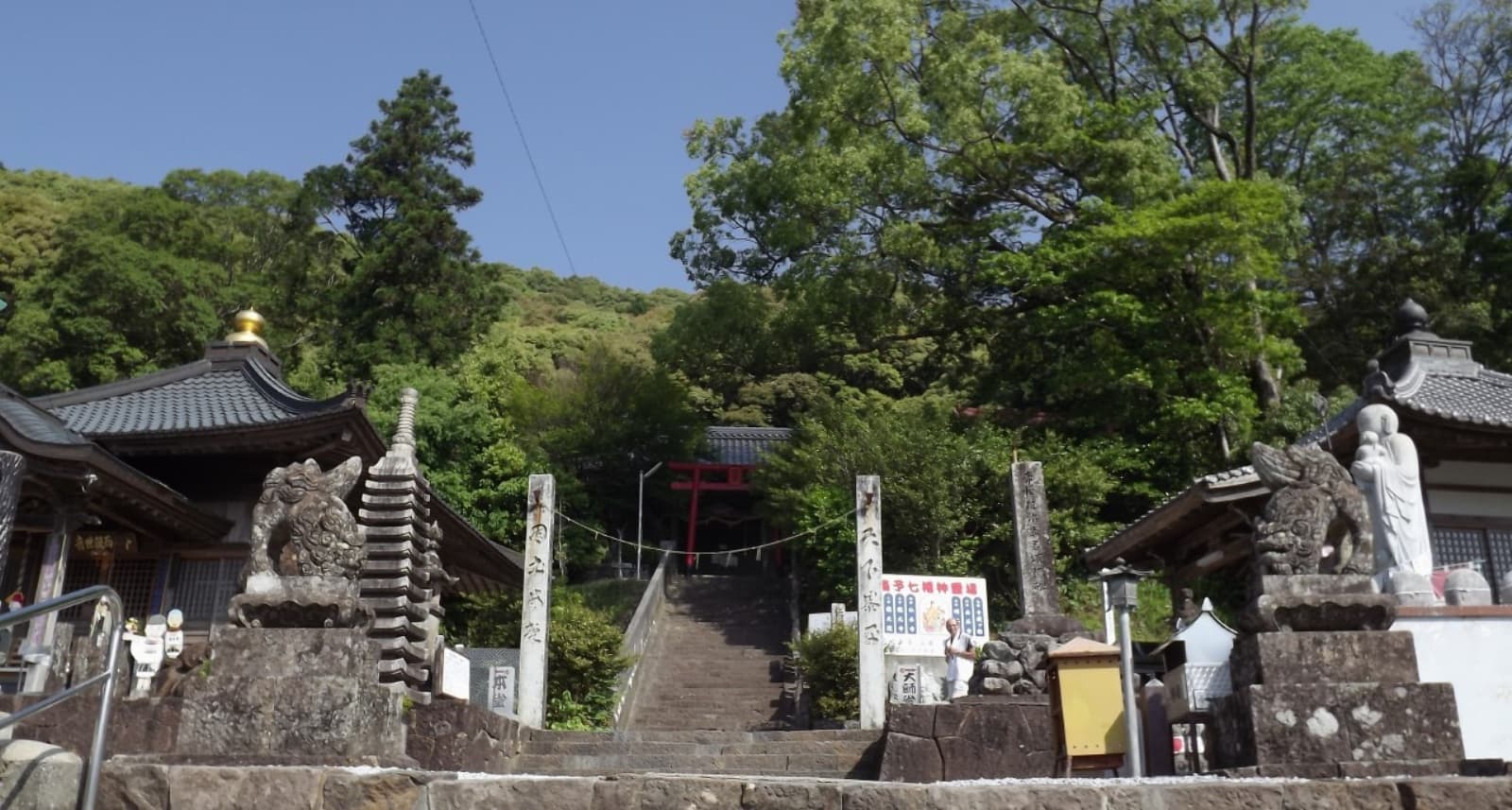
Image of Butsumoku-ji (佛木寺). Image source · CC-BY-SA-4.0
Station 42 of 88
Shikoku 88 Temple PilgrimageVisit essentials
A quick read before you go
- Duration
- 30-45 minutes including the Kachiku-dō.
- Access
- About 3 km north of Temple 41 Ryūkō-ji; about 7 km from JR Mukaibara station.
Overview
The founding legend of Butsumoku-ji begins with an ox.
The ordinary farming history of the Uwajima area sustained the cult. For centuries, families finishing the rice planting in early summer walked the few kilometers up from their fields to receive a talisman for their working cattle, hung in the barn for the year's protection. After harvest in autumn they returned to give thanks. The Kachiku-dō, the Livestock Hall on the precincts, holds miniature straw sandals, ceramics, and ema offered for animal welfare.
Much of the working livestock of the region is gone now, replaced by tractors, but the practice persists in altered form: pet blessings, ema for ailing dogs, requests for the welfare of family animals.
The temple's other identity is doctrinal. The honzon is Dainichi Nyorai, the cosmic Buddha at the center of Shingon mikkyō; the temple is registered with the Omuro branch of Shingon, whose head temple is Ninna-ji in Kyoto. The juxtaposition is part of what gives Butsumoku-ji its character. A pilgrim chants the mantra of Dainichi at the Hondō (Onabokyaron-noukyaron-noukya-shitsudei-jiajiun) and a moment later stands in front of the Kachiku-dō reading prayer slips for cows. Both are practiced here without contradiction.
The bodhisattva vow to liberate all sentient beings is taken at scale that includes barns.
Why this place is sacred
Most Shikoku temples direct devotion at human concerns: healing, longevity, safe childbirth, success at exams. Butsumoku-ji extends the same devotional vocabulary to cattle and horses without apology or symbolic substitution. The Kachiku-dō is not a metaphor for human work animals; the offerings inside are dated, named, and tied to specific creatures. The miniature straw sandals are sized for cows, not for show.
Pilgrims often pause at this hall longer than at the Hondō because it asks something the rest of the circuit does not — to count an animal as a being inside the same field of compassion.
The physical setting reinforces the register. The temple sits among rice paddies that come up to the boundary wall; the rural fabric of Uwajima is unbroken between farm and precinct. The wooded approach is short and quiet. The Hondō houses Dainichi Nyorai, carved from the camphor tree of the founding legend, and the persistence of that material origin — a tree containing a jewel from China — gives the principal image a layered substance pilgrims often note.
The boundary between sentient categories softens here in a way that fits the place. The vow is wider than the human form.
Founded in 807 CE under temple tradition by Kūkai, who carved a Dainichi Nyorai image from the camphor tree of the founding legend and inset a jewel between the statue's brows. The site flourished as the Saionji clan's tutelary temple in the Kamakura period, with documented patronage by the regional warrior family.
Butsumoku-ji was destroyed in the Sengoku-era warfare that swept through Iyo Province and rebuilt in subsequent centuries. The folk livestock-protection cult, traceable to the founding ox legend, became the temple's most distinctive identity by the early modern period. The Saionji-period documentary record is patchy due to the Sengoku destruction. Today the temple operates within the Omuro branch of Shingon, with daily liturgy and continued pilgrim traffic on the Shikoku 88 circuit.
Experience and orientation
The walk in from Temple 41 Ryūkō-ji is short by Shikoku standards — about three kilometers north over flat to gently rolling terrain, an hour's walking pilgrimage at most. Pilgrims arrive at a temple that does not announce itself dramatically. There is no soaring sanmon, no famous cliff, no unusual geological feature. The grounds are intimate. Rice paddies surround the precinct and at the right time of year the smell of wet earth and rice straw is everywhere.
The Kachiku-dō is the unfamiliar element. A separate small hall on the precincts, it holds miniature straw sandals, ema painted with images of cows and horses, and ceramic figures left over decades by farming families. Many of the wooden ema name a specific animal — a cow named Hanako, a workhorse named Tarō, a household dog with an illness. Pilgrims can add a request slip if they have an animal they wish to commend to the temple's care.
Behind the Kachiku-dō the Sengoku-era patronage of the Saionji clan is recorded on a stone marker for those who read Japanese; otherwise the wall opens directly onto rice fields. The pilgrim takes the goshuin stamp at the nōkyō-jō and continues north toward Temple 43 Meiseki-ji over the Hijikawa Pass, a long climb that begins after a final glance back at the paddies.
The temple sits a short walk north of Temple 41 Ryūkō-ji. The Hondō and Daishi-dō form the main devotional axis on the precinct; the Kachiku-dō (Livestock Hall) is a separate smaller hall to one side. The nōkyō-jō for the goshuin stamp is near the Hondō. Bow at the gate on entry. Smoking permitted only in marked outdoor areas. The car park is on site for those arriving by vehicle.
Context and lineage
Temple tradition records that in the Daidō era, traditionally 807 CE, Kūkai met an old man leading an ox in the hills near the present temple. Invited to ride, he was led to a great camphor tree containing a luminous jewel — the same sankō-paired jewel he had hurled from Tang China seeking a sacred ground. He carved a Dainichi Nyorai from the camphor and inset the jewel between the statue's brows, founding what became Butsumoku-ji on the spot.
The ox in the legend is read both as a real animal and as a manifestation of bodhisattva compassion guiding the master, and the temple became the patron site of cattle and horses from that founding act.
Shingon Buddhism, Omuro branch, with head temple at Ninna-ji in Kyoto. The temple is part of the Shikoku 88-temple circuit attributed to Kūkai. The Omuro branch is one of several Shingon sub-lineages and shares the standard Shingon liturgy and esoteric framework.
Kūkai (Kōbō Daishi)
Founder per temple tradition; carver of the principal Dainichi Nyorai image
The ox of the founding legend
The animal that led Kūkai to the camphor tree
The Saionji clan
Kamakura-period patrons of the temple
Traditions and practice
The seven-step pilgrim ritual at each main hall: bow at the threshold, light a candle, place three sticks of incense, deposit a fudasho-fuda in the slip box, place a saisen coin in the offering box, chant the Heart Sutra and the temple's go-eika and the mantra of Dainichi (Onabokyaron-noukyaron-noukya-shitsudei-jiajiun) and the mantra of Kōbō Daishi (Namu-Daishi-Henjō-Kongō), bow on departure.
At the Kachiku-dō pilgrims add an ema or straw sandal for an animal welfare request, name a specific animal if applicable, and place an offering. The kongō-zue staff is set down with the tassel cover removed before entering temple grounds.
The resident priest performs daily Shingon liturgy. The Kachiku-dō continues to receive offerings from local farming families and increasingly from urban visitors with companion animals. Pet blessings and ema for ailing dogs and cats are common. Saionji-clan memorial observances are held historically though the active patronage line is not documented. Pilgrim traffic on the Shikoku 88 circuit is steady year-round.
Walk in from Temple 41 Ryūkō-ji if possible — the three-kilometer route through rice fields prepares the body for the rural register of Butsumoku-ji. After completing the seven-step ritual at the Hondō and Daishi-dō, give time to the Kachiku-dō. If you have a companion animal at home, an ema or written name slip is appropriate; the temple has prepared materials available. Pilgrims unfamiliar with chanting can complete each hall with a silent gasshō.
Shingon Buddhism (Omuro school)
ActiveTemple 42 of the Shikoku 88-temple pilgrimage. Belongs to the Omuro branch of Shingon, with head temple at Ninna-ji in Kyoto. The honzon is Dainichi Nyorai, the cosmic Buddha at the center of Shingon mikkyō.
Heart Sutra; mantra of Dainichi Nyorai (Onabokyaron-noukyaron-noukya-shitsudei-jiajiun); Kōmyō Shingon; candle and incense offerings; fudasho-fuda deposit; goshuin stamp at the nōkyō-jō.
Folk livestock-protection cult
ActiveButsumoku-ji is uniquely associated with the welfare of cattle and horses, traceable to the founding ox-and-jewel legend. The Kachiku-dō (Livestock Hall) on the precincts holds miniature straw sandals, ceramic offerings, and ema for animal welfare. Farming families historically visited after rice planting and at harvest.
Talismans for cattle and horses, hung in barns for the year's protection. The custom continues today as pet blessings and rural household prayers. Ema painted with images of cows, horses, and pets are added to the Kachiku-dō with the animal's name.
Perspectives and open questions
Butsumoku-ji is read variously as an esoteric Shingon Dainichi temple, a rural folk livestock-protection site, and a node in the Kūkai-from-Tang transmission narrative.
Scholarly perspective
Pilgrimage scholars cite Butsumoku-ji as an example of a temple anchored simultaneously in elite esoteric doctrine — Dainichi Nyorai as cosmic Buddha — and rural folk practice (livestock protection), illustrating the layered audience of Shikoku temples. The same building serves doctrinal Shingon and the agrarian world surrounding it.
Living and traditional perspectives
Local Uwajima farming families have for centuries treated the temple as the protector of their working animals, with the Kachiku-dō functioning as a community institution. The temple's principal-image identity (Dainichi Nyorai) is secondary in folk practice to the animal-welfare role.
Alternative interpretations
The jewel-from-China legend at Butsumoku-ji echoes Kūkai's broader self-narrative of transmitting esoteric Dharma from Chang'an to Japan. The Dainichi Nyorai with the jewel inset between the brows can be read as the embodied result of that transmission, making the principal image a material trace of the China-to-Japan continental flow.
Open questions
Whether the camphor tree was an actual landmark predating the temple, or a literary device, is unverifiable. The Saionji-period documentary record is also patchy due to Sengoku destruction. The exact dates of subsequent rebuildings are not consistently sourced.
Plan your visit
Access and arrival
About 3 km north of Temple 41 Ryūkō-ji; about 7 km from JR Mukaibara station. On-site car park. Pilgrims walking the circuit cover the distance from Temple 41 to Temple 42 in under an hour over flat to gently rolling terrain.
Pilgrim minshuku and small inns in Uwajima city to the southwest, and along the route to Temple 43 in the Hijikawa area. Some shukubō (temple lodging) elsewhere on the circuit; contact the temple network for current bookings.
Respectful visit
White pilgrim hakui welcomed; modest casual dress acceptable. Comfortable footwear for the walk between Temples 41 and 42 and the rural approach.
Permitted on grounds and at the Kachiku-dō. Avoid photographing the honzon inside the Hondō and any pilgrim mid-prayer. Ask before photographing priests at close range.
Three incense sticks and one candle at each of the Hondō and Daishi-dō; a fudasho-fuda slip; a saisen coin in each offering box. At the Kachiku-dō an ema or written name slip for an animal welfare request, with a separate small offering.
No loud talking inside the halls. No food or drink in the Hondō. Smoking only in designated outdoor areas. Do not climb on the Kachiku-dō offerings or rearrange the existing straw sandals and ema.
Do not bring food or drink into the Hondō. Photography of the honzon is not permitted. Smoking only in designated outdoor areas. Voices low inside the halls. Avoid photographing other pilgrims mid-prayer.
Current practical details
Address
Japan, 〒798-1102 Ehime, Uwajima, 三間町 則 1683
Phone
Hours
Hours, fees, and access can change — verify on the official source before you travel. Practical details last checked Jun 2026.
Location
Map loads as you approach this section.
Pilgrim reflections
A portrait of encounter, not a score
Pilgrims describe what they felt, how present they could become, and whether the place would shape a journey. There are no stars and no ranking of traditions.
No reviewed reflections yet
The first pilgrims can help describe the character of being here.
Share a reflection
Available after an account-backed “Been there.” Every reflection is reviewed before publication.
Watch deeper
Films, episodes, and recorded talks for visitors who want more context before or after a visit. Speculative and alternative-history entries are labelled as perspectives, not as sources for established claims.
Nearby sacred places
Explore other sacred places in the region. Proximity does not establish access or travel time; check each place’s guidance.

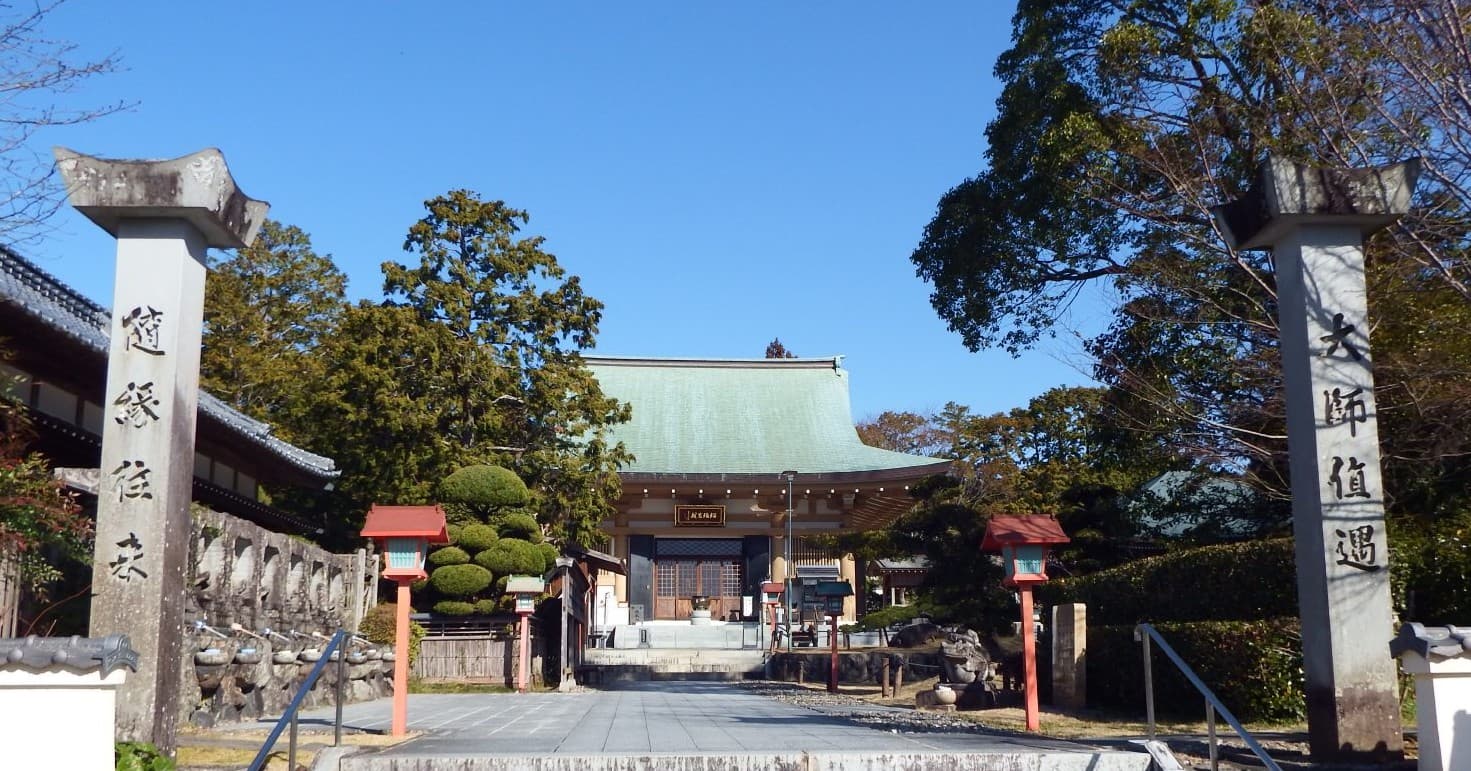

References
Sources consulted for this page. Source categories describe the publication, not a guarantee that every claim is verified. Traditional accounts and outside interpretations may differ.
- 01Butsumokuji – Uwajima, Ehime Prefecture, Shikoku — Henro.orgguideStandard Shikoku pilgrimage reference
- 02Ikkazan Birushanain Butsumokuji – Shikoku 88 Temple Pilgrimage — Shikoku 88 Temple Pilgrimage OfficialofficialOfficial temple network site
- 0342nd temple of the Shikoku Pilgrimage, Butsumokuji Temple — Shikoku Pilgrimage NewsguideDetailed temple history
- 04Customs and Etiquette of the Shikoku Pilgrimage — Henro.orgguidePilgrim etiquette
Pilgrim glossary
- Honzon
- The principal Buddhist deity enshrined as a temple's central object of worship.
- Bodhisattva
- An enlightened being who postpones full nirvana to help others toward awakening.
- Sutra
- A canonical Buddhist scripture, often chanted as part of practice.
- Mantra
- A sound, word, or phrase repeated as part of meditation or ritual.
- Dharma
- The teachings of the Buddha; also the universal law underlying them.
- Shingon
- An esoteric Japanese Buddhist school emphasizing ritual, mantra, and mandala practice.
Share a photo
Help visitors recognize Butsumoku-ji. Every submission is reviewed before publication.