Church of the Holy Miracle of Santarém
A host said to have bled, still kept in silver-gilt in Santarém
Understand sacred places, explore living traditions, and learn how to engage respectfully with Pilgrim Map.
Access has not been verified. Check current local guidance before planning a visit.
Santarém, Santarém, Portugal
Read the sources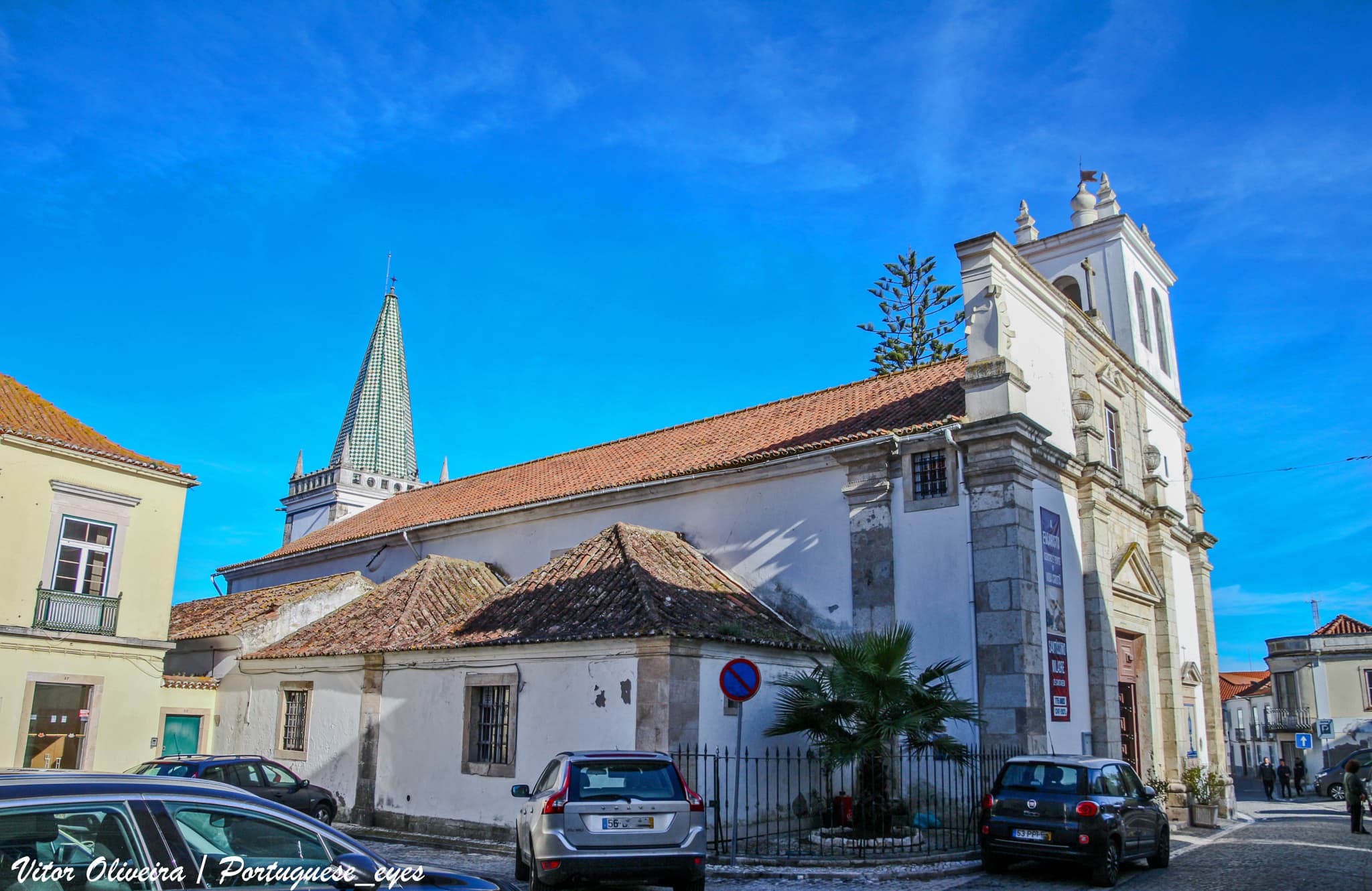
Image of Church of the Holy Miracle of Santarém. Image source
Visit essentials
A quick read before you go
- Duration
- A visit to view the church interior and artwork typically takes 20-40 minutes; longer if…
- Access
- Located in the historic centre of Santarém at Escadinhas do Milagre/Largo do Milagre, a roughly…
Overview
The same historic-center church has borne three names: Igreja de Santo Estêvão, Igreja do Santíssimo Milagre, and officially Santuário do Santíssimo Milagre de Santarém. It is not Igreja da Graça, a separate 14th-century Augustinian church and burial place of navigator Pedro Álvares Cabral; they share a neighborhood, not a relic.
Tradition dates the miracle variously to 1226, 1247, or 1266, without consensus. A woman seeking a sorceress's help after her husband's infidelity secretly kept a consecrated host; it reportedly bled, later shone from a chest, moved the couple to remorse, and was returned to the church in procession. No contemporary thirteenth-century record has been identified.
The relic's documented institutional history includes papal indulgences from the sixteenth century, royal pilgrimages, sanctuary status in 1997, and full Diocesan Sanctuary status on 31 October 2024.
Why this place is sacred
What distinguishes the Santíssimo Milagre from many Marian or apparition-based shrines is where the claimed sacred event is said to have occurred: not on a mountainside or in a vision, but inside a private house, and later inside the consecrated space of the parish church itself.
Tradition holds that in 1340, when the wax reliquary housing the host was opened for a routine exposition, it was found broken apart and the host already sealed within a small crystal vessel — without, tradition says, any human agency. That vessel was set into the silver-gilt monstrance still used on the altar today.
Devotional (non-academic) sources report that a 1997 forensic examination of the relic found human blood and tissue of blood type AB+, said to match other reputed Eucharistic miracles and the Shroud of Turin. This claim appears only on devotional and apologetics websites and could not be corroborated against independent forensic or academic literature during research; it is presented here explicitly as a circulating traditional claim, not as an established scientific finding.
Historians and church heritage bodies treat the church itself — its Gothic-to-Renaissance architectural evolution and its documented ecclesiastical elevations — as well attested, while treating the miracle narrative as a case study in medieval and early-modern popular religion. The earliest surviving accounts and the 1646 commemorative paintings inside the church postdate the purported 13th-century event by centuries, consistent with a legend that crystallized and was elaborated over time rather than one anchored to a contemporary written record.
The building began as a 13th-century Gothic parish church dedicated to Saint Stephen, serving the ordinary sacramental needs of its Santarém parish; its association with the miracle narrative, and its consequent renaming, developed afterward as the legend took hold.
Consecrated, per tradition, in 1241, the church suffered damage in the 1531 earthquake and was substantially rebuilt in Renaissance style between 1536 and 1547. It was classified a Portuguese National Monument in 1917. Elevated to sanctuary status in 1997 by the first Bishop of Santarém, D.
António Francisco Marques, it received full Diocesan Sanctuary status from Bishop José Traquina on 31 October 2024 — a decree the diocese frames as preserving 'the memory of a prodigious event that confirms the real presence of Jesus in the Eucharist.' A single documented removal of the relic from the city occurred during the Napoleonic/Peninsular Wars in the early 19th century, after which it was returned.
Experience and orientation
Because exposition of the relic for close veneration is typically arranged by request rather than continuously on display, many visitors describe contacting the sanctuary ahead of a visit specifically to see the Sacred Particle — a detail travel sources repeat consistently enough to treat as standard practice rather than exception.
What visitors find on arrival, whether by appointment or during regular hours, is a modestly scaled three-nave church whose Renaissance-Mannerist-Baroque decoration, azulejo panels, and 1646 canvases depicting the miracle carry more visual weight than the building's exterior suggests.
For practicing Catholics, veneration of the relic is framed devotionally as an encounter with tangible proof of Christ's Real Presence in the Eucharist. For general visitors, sources describe the site as a striking case study in medieval popular religion and the long institutional life of a local miracle cult — reinforced by centuries of papal indulgences, royal patronage, and the 2024 elevation to Diocesan Sanctuary.
Visitors specifically wanting to view the relic itself, rather than just the church, are advised by travel sources to call ahead (243 329 930) or email in advance, since its exposition is often arranged rather than guaranteed; the annual Festa do Santíssimo Milagre on the Sunday of Pascoela is the one date the relic is reliably processed and displayed publicly.
Context and lineage
According to tradition, in the 13th century (sources place the date variously at 1226, 1247, or 1266) a woman in Santarém, suffering from her husband's infidelity, sought help from a sorceress to win back his affection. The sorceress told her the spell required a consecrated host. The woman received Communion at the parish church of Santo Estêvão, then secretly removed the host from her mouth, wrapping it in her veil, intending to deliver it to the sorceress.
Tradition holds that the host began to bleed as she carried it, staining the cloth. Frightened, she hid it in a chest at home. That night, according to the legend, a brilliant light filled the house, radiating from the chest; the woman and her husband, roused by the light, discovered the bleeding host and, overcome with fear and remorse, knelt in prayer.
The parish priest was informed the next morning, and the host was carried in procession back to the church, which was thereafter increasingly known by the name of the miracle rather than its original dedication to Saint Stephen.
A further legendary detail, reported by later sources, holds that in 1340, when the wax reliquary housing the host was opened for a routine exposition, it was found broken apart and the host discovered — without any known human agency — already enclosed within a small crystal vessel, which was then set into the silver-gilt monstrance still used today.
These are devotional traditions, not independently verified historical events; no contemporary 13th-century documentary record of the incident has been identified in the sources consulted.
The Royal Brotherhood of the Most Holy Miracle of Santarém, a confraternity granted papal indulgences from the 16th century (including under Pius IV, Pius V, Pius VI, and Gregory XIV), maintained the cult across the early modern period. The parish was absorbed into Marvila in the 19th century. Diocesan oversight continues today, with the sanctuary maintaining a dedicated contact line and email for visits and relic expositions.
Queen Elizabeth of Portugal
royal pilgrim
Reported by devotional and travel sources to have visited the relic in 1295 and 1322, part of a tradition of medieval royal pilgrimage to the site.
D. António Francisco Marques
ecclesiastical
First Bishop of Santarém, who elevated the church to sanctuary status in 1997.
José Traquina
ecclesiastical
Bishop of Santarém who elevated the sanctuary to full Diocesan Sanctuary status by decree dated 31 October 2024, announced 26 November 2024.
Traditions and practice
Historic practice centered on exposition of the Blessed Sacrament for veneration, and papal indulgences granted to visiting pilgrims and to members of the Royal Brotherhood of the Most Holy Miracle of Santarém on entry into the confraternity and at death.
The annual Festa do Santíssimo Milagre, held on the Sunday of Pascoela, centers on veneration of the relic, a solemn Mass presided over by the Bishop of Santarém, and an afternoon procession carrying the relic through the historic city streets — Largo do Milagre, Miguel Bombarda, 1º de Dezembro, Largo de Marvila, Serpa Pinto, and Praça Sá da Bandeira — returning to the sanctuary.
Visitors hoping to see the relic itself, rather than only the church building, should contact sanctuary staff in advance (243 329 930 / ssmilagre@gmail.com) to arrange an exposition, since it is not necessarily on continuous open display outside the annual festa.
Roman Catholic Eucharistic devotion
ActiveThe site is one of the Catholic Church's most venerated Eucharistic miracle shrines, alongside the Miracle of Lanciano in Italy, presented by tradition as physical confirmation of the doctrine of the Real Presence of Christ in the consecrated host.
Annual Mass and procession with the relic on the Sunday of Pascoela; papal indulgences historically granted to pilgrims and to members of the Royal Brotherhood of the Most Holy Miracle; ongoing veneration of the reputed relic housed in a silver-gilt monstrance on the church's altar.
Portuguese devotional folk legend (miracle narrative)
ActiveThe origin story — a mistreated wife, a consultation with a sorceress, a stolen and bleeding host, and the couple's repentance — functions as a moral parable of sin, sacrilege, divine intervention, and forgiveness deeply embedded in Portuguese Catholic popular culture, retold at the annual festa and in regional heritage material.
Oral and written retelling of the legend at the annual festival and in parish and tourism literature; commemorative 1646 paintings inside the church depicting the miracle.
Perspectives and open questions
The Santíssimo Milagre asks readers to hold apart what is documented from what is traditional, and the sources are largely consistent about which is which: a well-attested church history and a distinct, unverifiable miracle legend, plus one modern forensic claim that circulates only in devotional literature.
Scholarly perspective
Historians and church heritage bodies treat the Santíssimo Milagre primarily as a case study in medieval and early-modern Portuguese popular religion and Eucharistic cult formation.
The church's Gothic-to-Renaissance architectural evolution and its documented ecclesiastical elevations (1997 sanctuary status, 2024 Diocesan Sanctuary status) are well attested in municipal and diocesan records, but no contemporaneous 13th-century documentary source for the miracle narrative has been identified; the earliest surviving accounts and the 1646 commemorative paintings postdate the purported event by centuries, consistent with a legend elaborated over time rather than one anchored to a contemporary record.
Living and traditional perspectives
Within Portuguese Catholic tradition, the miracle is accepted as historical fact and as one of the Church's most important attestations of the Real Presence, comparable to the Miracle of Lanciano in Italy. The Diocese of Santarém's 2024 elevation decree explicitly frames the sanctuary as preserving 'the memory of a prodigious event that confirms the real presence of Jesus in the Eucharist.'
Alternative interpretations
Devotional, non-academic Catholic websites report that a 1997 forensic examination of the relic found human blood and tissue of blood type AB+, said to match other reputed Eucharistic miracles and the Shroud of Turin. This claim appears only on devotional and apologetics sites and could not be corroborated against independent forensic or academic publications during research; it should be treated as a circulating traditional or alternative claim, not an established scientific fact, and is presented that way throughout this content.
Open questions
The exact date of the original miracle (1226, 1247, or 1266, depending on the source), the precise chain of custody of the relic between the 13th century and its 1340 rediscovery in a crystal vessel, and the evidentiary basis, if any, for the widely repeated 1997 blood-type claim all remain unresolved in the sources available for this research.
Plan your visit
Access and arrival
Located in the historic centre of Santarém at Escadinhas do Milagre/Largo do Milagre, a roughly 10-minute walk from the city's bus station via Av. do Brasil and R. Miguel Bombarda; Santarém is reachable from Lisbon by train or intercity bus (under an hour by fast train).
Respectful visit
Standard modest church-visit attire is expected, as at any active Catholic place of worship; no specific rules were identified in sources beyond general norms.
No explicit restriction was identified in sources consulted; visitors should be respectful during any active liturgy or exposition of the relic and confirm with staff before photographing the relic itself.
No specific offering practice is documented beyond standard Catholic almsgiving and candle customs common to Portuguese churches.
Close viewing of the relic is by arrangement rather than guaranteed on demand; visitors are advised by travel sources to call ahead before a visit specifically to see the Sacred Particle.
Location
Map loads as you approach this section.
Pilgrim reflections
A portrait of encounter, not a score
Pilgrims describe what they felt, how present they could become, and whether the place would shape a journey. There are no stars and no ranking of traditions.
No reviewed reflections yet
The first pilgrims can help describe the character of being here.
Share a reflection
Available after an account-backed “Been there.” Every reflection is reviewed before publication.
Nearby sacred places
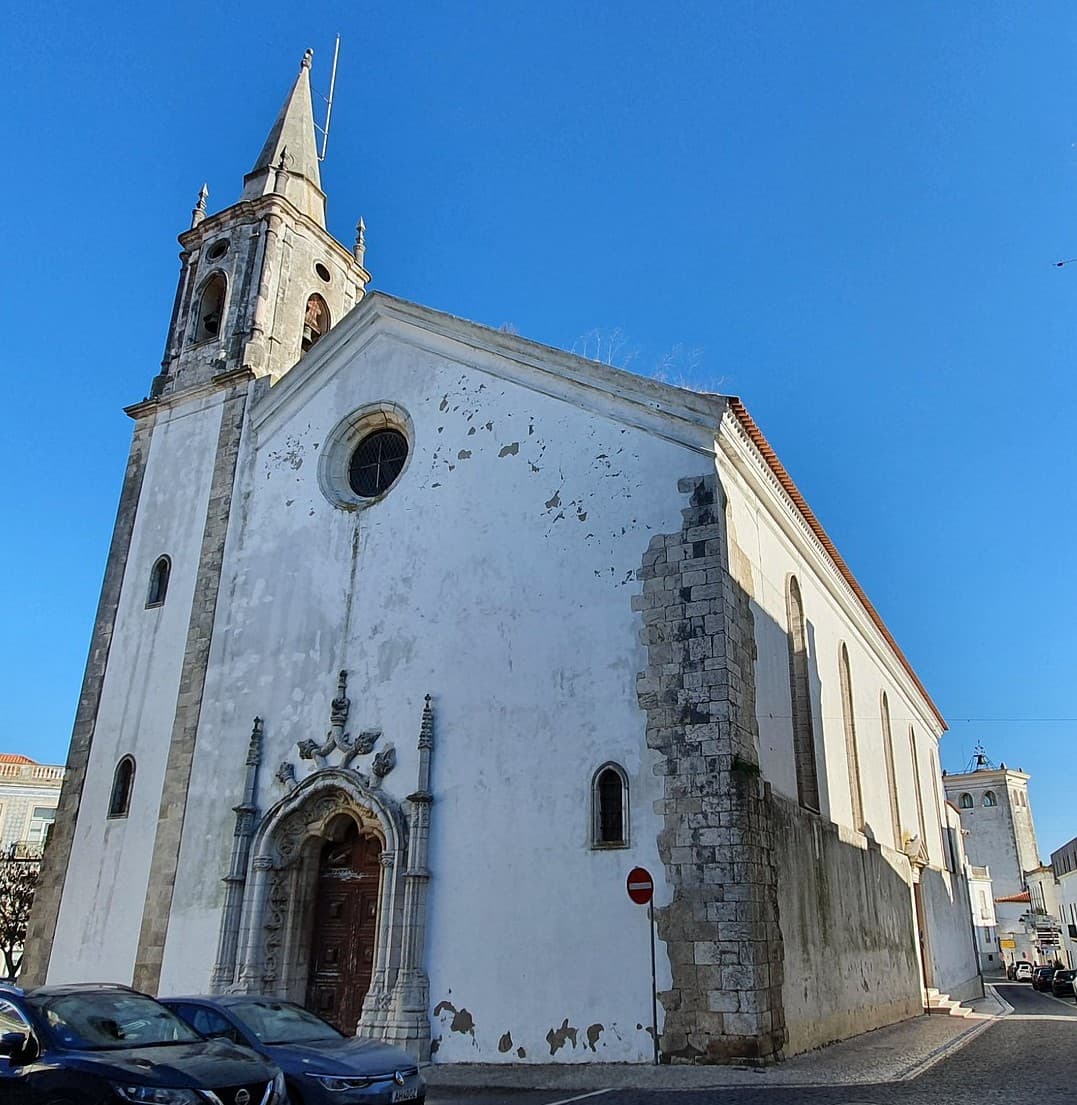
Explore other sacred places in the region. Proximity does not establish access or travel time; check each place’s guidance.


References
Sources consulted for this page. Source categories describe the publication, not a guarantee that every claim is verified. Traditional accounts and outside interpretations may differ.
- 01Santuário do Santíssimo Milagre de Santarém — Diocese de SantarémofficialOfficial diocesan page; confirms current address (Escadinhas do Milagre, n.º6, 2000-069 Santarém), the relic's housing in a silver-gilt monstrance, and provides contact details (ssmilagre@gmail.com, 243 329 930).
- 02Santarém: Bispo eleva Santuário do Santíssimo Milagre a Santuário Diocesano — Agência EcclesiaofficialCatholic news agency of the Portuguese Bishops' Conference; reports Bishop José Traquina's decree (dated 31 October 2024, announced 26 November 2024) elevating the sanctuary to full Diocesan Sanctuary status, and notes the site was previously elevated to sanctuary status in 1997 by the first Bishop of Santarém, D. António Francisco Marques.
- 03Igreja de Santo Estevão (do Santo Milagre) — Município de Santarém — Câmara Municipal de SantarémofficialOfficial municipal tourism listing confirming the church's identity as both Santo Estêvão and 'do Santo Milagre', and its status as a heritage monument in the historic centre.
- 04Igreja de Santo Estêvão / Igreja do Santo Milagre / Santuário do Santíssimo Milagre — Direção-Geral do Património Cultural (SIPA / monumentos.gov.pt)officialPortuguese government heritage inventory (SIPA) record listing all three names for the same building, corroborating that Santo Estêvão and the Santíssimo Milagre sanctuary are one and the same church.
- 05Santarém: Cidade viveu Festa do Santíssimo Milagre, com Eucaristia e procissão — Agência EcclesiaofficialReports on the annual Festa do Santíssimo Milagre, held on the Sunday of Pascoela (the Sunday following the Easter octave), with veneration of the relic, a Mass presided by the Bishop of Santarém, and an afternoon procession through the historic streets (Largo do Milagre, Miguel Bombarda, 1º de Dezembro, Largo de Marvila, Serpa Pinto, Praça Sá da Bandeira).
- 06Eucharistic miracle of Santarém — Wikipedia — Wikipedia contributorsSource contextEnglish-language overview of the legend, papal indulgences, and the relic's current housing in a silver-gilt monstrance at the sanctuary.
- 07Santuário do Santíssimo Milagre de Santarém — Wikipédia — Wikipédia colaboradoresSource contextPortuguese-language article detailing the church's foundation (13th c.), 1241 consecration, 1531 earthquake damage and 16th-century Renaissance rebuild, National Monument status since 1917, and the parish's 19th-century absorption into Marvila.
- 08The Eucharistic Miracle in Santarém: A Testament to Faith and Forgiveness — AV TravelSource contextTravel-industry account of the legend and pilgrimage context; used for narrative colour, cross-checked against higher-reliability sources.
- 09Eucharistic Miracle of Santarem, Portugal Pilgrimage — Shrine Facts — 206 ToursSource contextCatholic pilgrimage tour operator; source for papal indulgences (Pius IV, Pius V, Pius VI, Gregory XIV), Queen St. Elizabeth of Portugal's 1295/1322 visits, and the annual second-Sunday-of-April procession route/timing claim.
- 10Santarem Eucharistic Miracle - Santarem, Portugal — Sacred DestinationsSource contextIndependent sacred-travel reference site; corroborates church history and pilgrimage significance.
- 11Eucharistic Miracle of Santarem — Pierced Hearts (devotional Catholic apostolate)spiritualDevotional (non-academic) source; repeats the claim of a 1997 forensic test finding human blood/flesh with AB+ blood type matching other reputed Eucharistic miracles and the Shroud of Turin. This claim could not be corroborated by independent scientific literature and is flagged as traditional/alternative belief, not verified fact.
Share a photo
Help visitors recognize Church of the Holy Miracle of Santarém. Every submission is reviewed before publication.