Fatima
Where heaven interrupted a Portuguese hillside, and pilgrims still answer the call
Understand sacred places, explore living traditions, and learn how to engage respectfully with Pilgrim Map.
Access has not been verified. Check current local guidance before planning a visit.
Fátima, Santarém, Portugal
Read the sources
Visit essentials
A quick read before you go
- Duration
- A meaningful visit requires at least half a day.
- Etiquette
- Fatima is an active pilgrimage site where millions come for prayer and encounter.
Overview
Some places become sacred through centuries of prayer; Fatima became sacred in an instant. On May 13, 1917, three Portuguese shepherd children tending their flock saw brilliant light above a holm oak. Over the next six months the rural hillside became one of Christianity's most powerful pilgrimage sites. The lady they encountered asked for prayer, penance, and devotion to her Immaculate Heart, and shared three secrets.
On October 13, tens of thousands gathered in pouring rain before something happened in the sky that even skeptical journalists could not explain away.
Nightly candlelight processions carry more than tourism, while people cross the vast esplanade on their knees in a penance continued for over a century. Two of the three visionaries, Francisco and Jacinta, are canonized saints; Sister Lucia lived until 2005 carrying the secrets and memory.
Fatima asks no agreement with a theology, but willingness to consider a veil between worlds thinner than modern assumptions allow. Crowds, candles, and a century of prayer feel palpable: whether called grace, energy, or concentrated human devotion, visitors consistently arrive curious and leave changed.
Places within this site
Why this place is sacred
The thin place quality of Fatima derives from multiple convergent factors. This is not a site where holiness accumulated gradually over centuries. Here, the sacred broke through suddenly, dramatically, and before witnesses.
The apparitions themselves form the foundation. Between May 13 and October 13, 1917, the Virgin Mary appeared six times to Lucia dos Santos and her younger cousins Francisco and Jacinta Marto. The children were poor, largely uneducated, and had no apparent motive for fabrication. Their consistency under questioning, their willingness to endure punishment and even imprisonment rather than recant, and the specific nature of what they reported all contributed to eventual Church approval in 1930.
The Miracle of the Sun provides external corroboration unlike any other Marian apparition. On October 13, 1917, despite heavy rain, an estimated thirty to one hundred thousand people gathered at the Cova da Iria. What they witnessed defies easy explanation. Multiple newspaper accounts, including from anticlerical publications, described the sun appearing to spin, emit colors, and seem to fall toward the earth. The crowd's wet clothes dried almost instantly. Whatever happened, it happened publicly, to believers and skeptics alike.
The three secrets add another dimension. Mary shared prophecies with the children, the last of which was not revealed until 2000. The first two proved prescient: the end of World War I, the rise of Russia as a threat to the Church, the beginning of a second world war.
The third, concerning a bishop dressed in white falling under gunfire, was interpreted as foreseeing the 1981 assassination attempt on Pope John Paul II, who attributed his survival to Our Lady of Fatima.
The canonization of Francisco and Jacinta in 2017 affirms what pilgrims have long sensed: something genuinely sacred happened here. The children's holiness, recognized by the Church's most rigorous process, lends weight to the events they witnessed.
Before 1917, the Cova da Iria was simply grazing land outside the village of Fatima. The children came here regularly with their sheep. Mary's request during the apparitions was specific: she asked that a chapel be built on this spot, that people pray the rosary daily for peace, and that devotion be offered to her Immaculate Heart. The site's purpose from its inception has been as a place of encounter between heaven and earth, of response to a divine invitation.
The first chapel was built in 1919, a simple structure at the spot of the apparitions. In 1922, anticlerical forces dynamited it; within months it was rebuilt, demonstrating the devotion already taking root. The Basilica of Our Lady of the Rosary, begun in 1928 and completed in 1953, established Fatima as a pilgrimage destination of international significance.
Pope Paul VI visited in 1967 for the fiftieth anniversary; Pope John Paul II came three times, deeply devoted to Our Lady of Fatima whom he credited with saving his life.
The 2007 inauguration of the Church of the Most Holy Trinity, one of the largest Catholic churches in the world, reflected Fatima's continued growth. The centenary celebrations of 2017, when Francisco and Jacinta were canonized before hundreds of thousands, marked another milestone. What began as three children and a hillside has become a spiritual complex drawing five to six million visitors annually.
Why pilgrims come
Peace and spiritual conversion
The sanctuary connects the message of Fátima with prayer, conversion and responsibility for peace. The goal is expressed through a change of life as well as a request.
How devotees visit
Pilgrims gather in prayer, including the Rosary at the Chapel of the Apparitions. Sanctuary teaching calls them to carry peace into their conduct beyond the pilgrimage.
These are religious traditions and devotional practices, not promises of an outcome. Follow the community’s current guidance.
Healing traditions
Church-recognized intercession account
The Fátima sanctuary records the recovery of Lucas, a Brazilian child who suffered a serious fall in 2013. His family prayed for the intercession of Francisco and Jacinta Marto, and the Catholic Church accepted the recovery for their canonization in 2017. This healing happened in Brazil, not at the sanctuary: its connection to Fátima is the family's devotion to the two shepherd children.
Ways to participate
At the Chapel of the Apparitions, offer a prayer for the person whose suffering you carry, or join a scheduled rosary. A candle can express that intention when used in the designated area. Walking on one's knees is a personal penitential practice, not a condition for receiving help; quiet seated prayer is equally possible. Ask shrine staff about accessible participation in public celebrations.
These accounts describe religious traditions and reported experiences. They do not promise a cure or replace medical care.
Experience and orientation
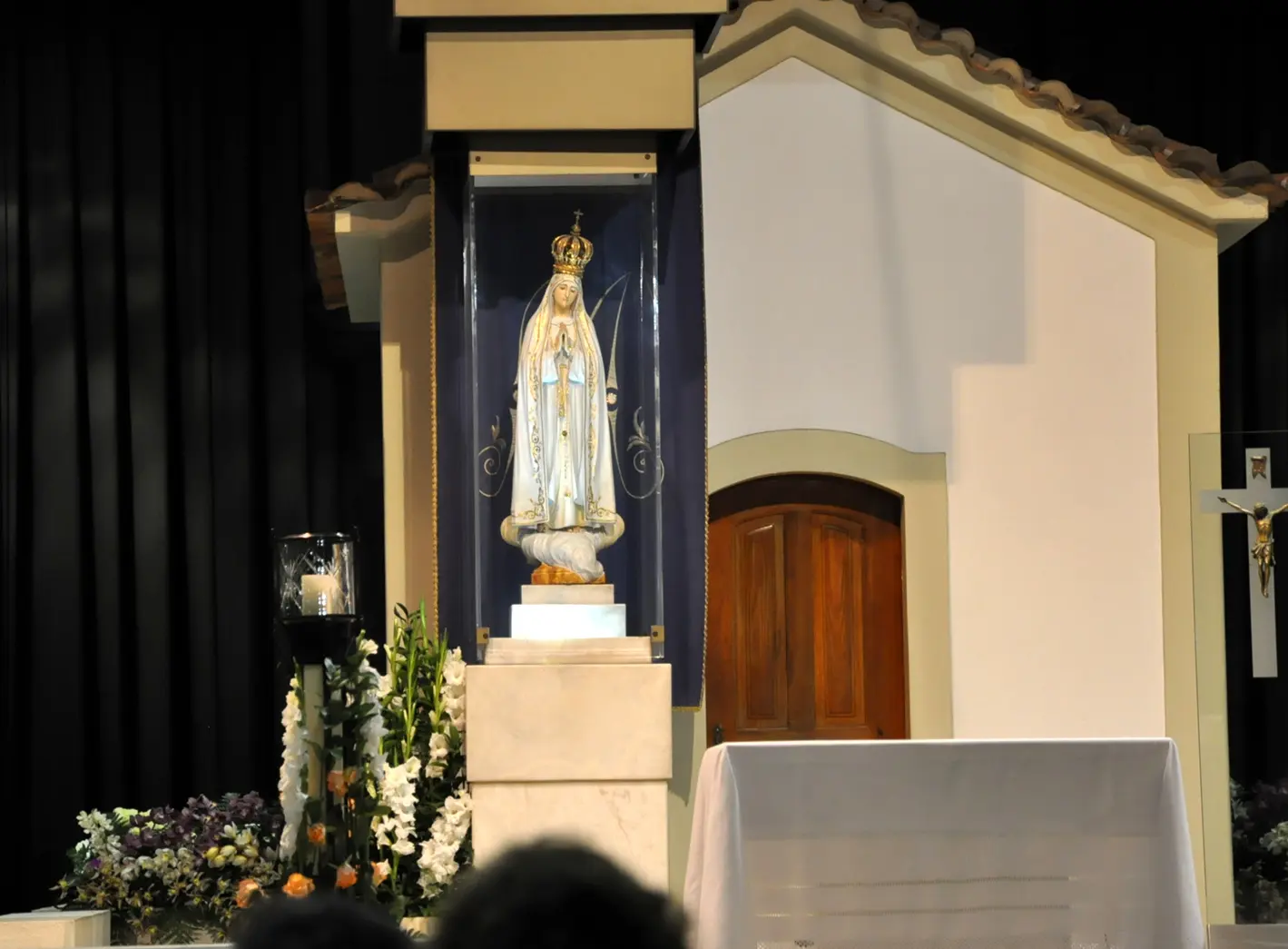
The experience of Fatima operates on multiple registers. There is the scale of the sanctuary, the vast esplanade that can hold hundreds of thousands, the imposing modern basilica. And then there is the Chapel of Apparitions, small enough to feel intimate, marking the exact spot where three children saw the Virgin Mary standing above a tree.
This contrast shapes the pilgrimage. The massive crowds on the 13th of each month between May and October, the seas of candles, the amplified prayers in multiple languages, all create a sense of being part of something vast. Yet the heart of it remains the small chapel where the air seems thicker, where pilgrims pause in silence however briefly, where something persists.
Those who participate in the candlelight procession, held nightly but especially on the eve of the 13th, describe an experience that transcends individual prayer. Holding a candle among thousands, following the statue of Our Lady through the darkness, singing together in the cool Portuguese night, there is a dissolution of the boundaries that normally separate us. Skeptics find themselves moved despite themselves.
The tradition of walking on one's knees across the esplanade to the chapel represents something harder for modern sensibilities. Yet those who undertake it describe a physical prayer that bypasses intellectual resistance. The discomfort becomes offering; the slowness enforces presence. Many who complete it speak of feeling genuinely clean afterward, a lightness that lasts.
Pilgrims consistently report a sense of Mary's presence, whether understood as mystical reality or psychological effect. The site seems to open something. Tears come easily here. So do resolution and peace.
Fatima rewards intention over time. A rushed afternoon visit will show you the buildings and crowds but likely miss what pilgrims come for. If possible, arrive in time for the evening rosary and candlelight procession. Allow the rhythm of communal prayer to do its work.
The Chapel of Apparitions is the heart of the sanctuary. Enter with reverence; this is where it happened. The silence requested inside the chapel creates space for whatever you carry to surface.
Consider what you are seeking. Fatima is not neutral ground; it is explicitly Catholic, devoted to Mary, oriented toward prayer and penance. You need not share this framework to be moved here, but approaching with genuine openness rather than tourism serves the encounter better.
Context and lineage
On May 13, 1917, Lucia dos Santos, age ten, and her cousins Francisco, nine, and Jacinta Marto, seven, were pasturing sheep in the Cova da Iria when they saw two flashes of lightning. Above a holm oak tree, they encountered a lady dressed in white, more brilliant than the sun. She asked them to return on the thirteenth of each month for six months. She asked them to pray the rosary daily for peace in the world.
She promised to tell them who she was and what she wanted at the final apparition.
The children faced disbelief, interrogation, and in August, imprisonment by the local administrator who threatened them with death if they did not recant. They refused. The apparitions continued, each bringing new elements: visions of hell, the request for devotion to Mary's Immaculate Heart, the promise of a miracle so all would believe.
On October 13, a massive crowd gathered despite torrential rain. When the clouds parted and the sun seemed to dance, spin, and plunge toward earth, something unprecedented happened: a miracle visible to believers and skeptics, reported by anticlerical newspapers, witnessed by tens of thousands. The lady identified herself as Our Lady of the Rosary and renewed her call for prayer and penance.
The apparitions created their own lineage. Lucia became a religious sister, first in the Dorothean order, then as a Carmelite nun. She served as the living memory of Fatima until her death in 2005 at age ninety-seven. Francisco and Jacinta, dying so young, became objects of veneration long before their canonization. Their tombs in the basilica draw continuous pilgrims.
The sanctuary itself has been shaped by successive popes. Pius XII, who issued the dogma of Mary's Assumption, was devoted to Fatima. John Paul II, who survived an assassination attempt on May 13, 1981, the anniversary of the first apparition, visited three times and credited Our Lady of Fatima with saving his life. The bullet that struck him is now embedded in the crown of the statue of Our Lady.
Francis canonized Francisco and Jacinta during the centenary pilgrimage in 2017.
Fatima's message has shaped Catholic devotion worldwide: the First Saturday devotion, the consecration of Russia (completed, according to Church teaching, by John Paul II in 1984), and the ongoing emphasis on the rosary as a path to peace.
Lucia dos Santos
visionary
The eldest of the three visionaries, Lucia lived until 2005, entering a Carmelite convent and spending her life in prayer. She was the only one who could hear and communicate with Mary during the apparitions. She recorded the secrets and corresponded with popes. Her cause for canonization is underway.
Francisco Marto
saint
Lucia's younger cousin, Francisco could see the lady but not hear her. He died in 1919 during the influenza pandemic, age ten. He was canonized in 2017, becoming one of the youngest non-martyrs recognized as saints.
Jacinta Marto
saint
The youngest visionary, Jacinta was deeply affected by the vision of hell shown during the apparitions. She died in 1920, also from influenza, age nine. Her incorrupt body was transferred to the basilica. She was canonized with her brother in 2017.
Our Lady of Fatima
divine figure
The Virgin Mary as she appeared at Fatima, requesting prayer, penance, and devotion to her Immaculate Heart. She promised that through the rosary and these devotions, peace would come to the world and many souls would be saved.
Traditions and practice
The devotions Mary requested are specific. She asked that people pray the rosary daily for peace and for the end of war. She requested the First Saturday devotion: on the first Saturday of five consecutive months, the faithful should confess, receive communion, pray the rosary, and meditate on its mysteries for fifteen minutes, all in reparation for sins committed against her Immaculate Heart.
These practices remain central to Fatima spirituality. The rosary is prayed communally at the sanctuary multiple times daily. The First Saturday devotion draws particular crowds. Confession is readily available, with confessors in multiple languages.
The candlelight procession, held each night at 9:30 PM and particularly on the 12th-13th of each month from May to October, has become Fatima's signature devotion. Pilgrims carry candles through the darkness, following the statue of Our Lady, singing the Ave de Fatima. The experience of walking among thousands of flickering lights, voices rising together, creates a profound sense of communion.
The knee-walk remains a living practice. Pilgrims traverse the esplanade on their knees, approaching the Chapel of Apparitions in a posture of humility and penance. The practice is physical prayer, bypassing words. Many complete it in fulfillment of a promise, or in intercession for someone they love.
Water from the site can be collected at taps near the basilica. While not holy water in the sacramental sense, pilgrims often bring it home. The act of collecting and carrying connects the physical journey to continued devotion.
For a meaningful pilgrimage, consider arriving a day before the 13th of any month between May and October, when the anniversary commemorations draw the largest crowds and most fervent devotion.
Participate in the evening rosary and candlelight procession. Even if you do not pray the rosary regularly, allow yourself to be carried by the rhythm of communal prayer. Purchase a candle at the sanctuary and walk with the crowd.
Spend time in silence at the Chapel of Apparitions. This is the site of the encounters, small and humble amid the vast sanctuary. Let yourself be present to whatever arises.
Knee-walking is a voluntary penitential practice. You may instead walk at a comfortable pace or pray seated; bodily hardship is not a condition for receiving help.
Roman Catholicism - Marian Apparition Site
ActiveFatima ranks among the most significant Marian apparition sites in the Catholic world, alongside Lourdes and Guadalupe. The Church's approval of the apparitions, the canonization of two visionaries, and the visits of multiple popes affirm its place in Catholic devotion. The messages delivered at Fatima, particularly the call for the rosary, penance, and devotion to Mary's Immaculate Heart, have shaped Catholic spirituality for over a century.
Pilgrimage to the sanctuary, participation in the rosary and candlelight procession, the First Saturday devotion, walking on knees across the esplanade, veneration of the statues and images of Our Lady of Fatima, collection of water from the site, lighting candles for intentions, and celebration of Mass. The major pilgrimage dates are the 13th of each month from May through October.
Devotion to the Immaculate Heart of Mary
ActiveAt Fatima, Mary specifically requested devotion to her Immaculate Heart. This devotion, while existing before 1917, received powerful impetus from the apparitions. The First Saturday devotion, the consecration of Russia, and the ongoing focus on Mary's heart as a refuge and source of grace all trace to Fatima's messages.
The First Saturday devotion involves confession, communion, rosary, and meditation on the rosary mysteries on the first Saturday of five consecutive months. Consecration to the Immaculate Heart, whether personal or communal, offers one's life and intentions under Mary's protection. Prayers of reparation for sins committed against her Immaculate Heart respond to Mary's specific request.
Perspectives and open questions
Fatima invites interpretation across multiple frameworks. For believers, it represents verified divine intervention in human history. For scholars, it presents a documented case study in religious experience and social phenomena. For skeptics, it raises questions about mass psychology and the nature of religious perception. Honest engagement requires holding these perspectives without premature resolution.
Scholarly perspective
The Fatima events present unusual documentary evidence for a Marian apparition. Contemporary newspaper accounts of the Miracle of the Sun, including from anticlerical publications, provide external verification that something occurred on October 13, 1917, affecting a large crowd.
The consistency of the children's testimony under pressure, their willingness to endure imprisonment without recanting, and the specific nature of their claims (including details they could not have known, such as the impending end of World War I) have made Fatima a significant subject of religious study.
Scholars have analyzed the social context: Portugal in 1917 was torn between a secular, anticlerical government and a deeply Catholic rural population. The apparitions emerged at a moment of crisis, offering comfort and meaning. This does not invalidate the experience but provides context for its reception.
The Miracle of the Sun has attracted various explanations: atmospheric phenomena, mass suggestion, or genuine divine intervention. No natural explanation fully accounts for all reported aspects. The question remains open in scholarly literature.
Living and traditional perspectives
For Catholic teaching, the apparitions at Fatima represent genuine supernatural communication. The Church's approval in 1930, following extensive investigation, declared the apparitions worthy of belief. This does not obligate Catholics to believe, but affirms that such belief is not contrary to faith or reason.
Fatima's message is understood as urgent and prophetic. Mary's call for prayer, penance, and devotion to her Immaculate Heart responds to the spiritual crisis of modernity. The prophecies contained in the secrets, including the prediction of World War II and the persecution of the Church, validated the apparitions' supernatural origin. The consecration of Russia, completed by John Paul II in 1984, fulfilled Mary's request and, according to believers, contributed to the end of Soviet communism.
The canonization of Francisco and Jacinta affirms the holiness that flowed from their encounter. They are models of childhood sanctity, demonstrating that transformative encounter with the divine is available even to the very young.
Alternative interpretations
Some interpreters have sought connections between Fatima and other phenomena: UFO sightings, solar anomalies, or archetypal patterns in religious experience. The description of the Miracle of the Sun, with its spinning, color changes, and apparent descent, bears resemblance to some reported UFO encounters. Whether this suggests a common phenomenon differently interpreted or simply common descriptive categories remains debated.
Others have questioned aspects of the narrative: the third secret's apparent applicability to events decades later, the role of Church authorities in shaping the story, the psychological dynamics of child visionaries. These perspectives do not deny that something happened but complicate simple acceptance.
Some note that the vision of hell reported by the children, with its imagery of suffering souls, reflects early 20th-century Portuguese Catholic catechesis rather than necessarily representing objective spiritual reality.
Open questions
Genuine mysteries persist. What exactly happened on October 13, 1917? Thousands witnessed something, but their descriptions vary in detail while sharing common elements. The sun did not actually spin or fall, as confirmed by observatories elsewhere. Yet something occurred that affected this specific crowd profoundly.
The third secret, revealed in 2000, concerned a bishop in white falling under gunfire. Its interpretation as referring to the 1981 assassination attempt is not universally accepted. Some believe additional content remains unrevealed. Sister Lucia's writings and interviews raise questions that cannot now be resolved.
Whether the consecration of Russia fulfilled Mary's request exactly as she intended, and whether the promised period of peace has begun, remain matters of ongoing discussion. Fatima's story is not closed; it continues to unfold.
Plan your visit
Access and arrival
The town of Fatima offers extensive accommodations at all price points, from simple pilgrim hostels to full-service hotels. Many are within walking distance of the sanctuary. Booking well in advance is essential for anniversary dates. Some pilgrims prefer to stay in the surrounding countryside for quieter reflection between visits to the sanctuary.
Respectful visit
Modest dress is expected. Shoulders and knees should be covered. This applies regardless of weather. Comfortable walking shoes are essential, as the sanctuary complex is extensive.
Photography is generally permitted in the outdoor areas of the sanctuary. Be discreet and respectful. Do not photograph pilgrims in prayer without permission. Inside the chapels and basilicas, photography may be restricted, particularly during services. No flash.
Candles are the traditional offering at Fatima. They can be purchased at the sanctuary and placed in the massive banks near the chapel. The size of candle is less important than the intention it carries. Many pilgrims also leave wax body parts representing intentions for healing.
Reverent silence in the Chapel of Apparitions and the basilicas. No eating within the worship spaces. Modest dress throughout. The sanctuary is not wheelchair accessible in all areas, but main spaces accommodate mobility needs.
Fatima is an active Catholic shrine. While visitors of all backgrounds are welcome, the devotions are specifically Catholic. Approaching with respect for this tradition, even without sharing it, serves everyone.
The major pilgrimage dates draw enormous crowds. May 13 and October 13 in particular may see hundreds of thousands of people. This can be overwhelming but also profoundly moving. Plan accordingly.
Avoid treating devotional practices as spectacle. The pilgrims walking on their knees, or praying in tears before the statue, are not performing for observers. Photograph with discretion or not at all.
Current practical details
Address
Rua de Santa Isabel 360, 2495-424 Fátima, Portugal
Phone
Hours
Hours, fees, and access can change — verify on the official source before you travel. Practical details last checked Jun 2026.
Location
Map loads as you approach this section.
Pilgrim reflections
A portrait of encounter, not a score
Pilgrims describe what they felt, how present they could become, and whether the place would shape a journey. There are no stars and no ranking of traditions.
No reviewed reflections yet
The first pilgrims can help describe the character of being here.
Share a reflection
Available after an account-backed “Been there.” Every reflection is reviewed before publication.
Dates and observances
Upcoming festivals, feast days, and pilgrimages connected to this place. Add any to your calendar, or browse the full observance calendar.
- Add to calendar
Anniversary Pilgrimage of Fátima (13 May)
Thu, May 13, 2027Pilgrimage
Largest annual pilgrimage to the Sanctuary of Fátima, marking the first 1917 apparition; candlelight processions on the 12th–13th.
- Add to calendar
October Apparition Anniversary (Miracle of the Sun)
Wed, Oct 13, 2027Pilgrimage
Marks the final apparition of 13 Oct 1917, when a crowd of tens of thousands witnessed the reported Miracle of the Sun. With May 13, one of the two great annual pilgrimages to Fatima.
Nearby sacred places
Explore other sacred places in the region. Proximity does not establish access or travel time; check each place’s guidance.


References
Sources consulted for this page. Source categories describe the publication, not a guarantee that every claim is verified. Traditional accounts and outside interpretations may differ.
- 01Sanctuary of Fátima — WikipediaencyclopediaOverview of the sanctuary complex
- 02Places of the apparitions — Shrine of FatimaofficialOfficial shrine website
- 03The Chapel of Apparitions (Capelinha das Aparições), Fátima — Lisbon VIPSource contextTourism information
- 04Lucas's parents describe the canonization miracle — Fátima sanctuaryofficialSupports the attributed account or visitor practice in the healing section; not evidence of clinical efficacy.
- 05Saint Francisco Marto — Fátima sanctuaryofficialSupports the attributed account or visitor practice in the healing section; not evidence of clinical efficacy.
Photo gallery
2 curated photos
Share a photo
Help visitors recognize Fatima. Every submission is reviewed before publication.