White Sands, New Mexico
Where 23,000 years of human footprints lead across the world's largest gypsum dunes
Understand sacred places, explore living traditions, and learn how to engage respectfully with Pilgrim Map.
Access has not been verified. Check current local guidance before planning a visit.
Otero County, New Mexico, United States
Read the sources
Visit essentials
A quick read before you go
- Duration
- 2-4 hours for basic visit.
- Access
- Located at Holloman AFB, NM 88330.
Overview
The dunes begin suddenly, brilliant against New Mexico's blue sky and extending beyond sight. Their visual purity disorients: horizons blur, distances become uncertain, and the world simplifies to white, blue, and a body's shadow.
This gypsum sand consists of crystals formed 250 million years ago at the bottom of a shallow sea, uplifted by tectonic forces, dissolved from surrounding mountains, and deposited as ancient Lake Otero evaporated. The resulting dunefield spans 275 square miles and contains 4.5 billion tons of gypsum, the world's largest accumulation. Unlike silica sand, the crystals remain cool even in desert heat, allowing barefoot contact with this strange earth.
In 2021, scientists announced what indigenous peoples had always known: humans have been here a very long time. Fossilized footprints, dated to 21,000-23,000 years ago through multiple methods, established the oldest confirmed human presence in North America. Most tracks were made by teenagers and children, perhaps while adults performed skilled tasks and the young fetched and carried. These traces of Ice Age youth convey continuity beyond statistics.
For the Mescalero Apache, the land lies within an ancestral homeland bounded by four sacred mountains. Creation stories center on Sierra Blanca, visible from the dunes, where White Painted Woman gave birth to culture heroes who saved humankind from monsters. The dunes belong to this sacred geography, a landscape holding human meaning across barely comprehended millennia.
Today the natural wonder is also contemplative space. Walk minutes from the road and no human sound reaches you. In profound silence before the endless white, many describe something spiritual—not doctrinal religion, but a quieting of ordinary mind and opening to scale beyond human life.
Why this place is sacred
The whiteness itself does something to perception. Ordinary visual references disappear. Colors reduce to white and blue and shadow. The brain, accustomed to processing complex environments, encounters something like a blank page. Many visitors describe the effect as meditative without trying, as though the landscape does the work of quieting mind that meditation techniques struggle to achieve.
The silence adds another dimension. Unlike other natural areas where wind or water or wildlife provide constant sound, the dunes offer something close to absolute quiet. Walk ten minutes from the developed areas and the silence becomes presence rather than absence, a quality you notice and then enter.
The 23,000-year-old footprints anchor contemporary visitors in connection that statistics cannot convey. Those were real people, most of them young, walking this landscape when mammoths and giant sloths still roamed, when the Ice Age still gripped the north. The fact that their traces survive, preserved in the gypsum layers, makes continuity tangible. For indigenous peoples, this confirms what oral traditions always maintained: their ancestors have been here since time immemorial.
The Mescalero Apache creation stories center on Sierra Blanca, visible from the dunes, where White Painted Woman gave birth to Child of Water and Killer of Enemies. The dunes exist within sacred geography bounded by four mountains. Whatever specific ceremonies occurred here, the landscape holds meaning within living traditions.
The constant movement of the dunes symbolizes impermanence in ways that resonate across traditions. Nothing here stays fixed. The forms you see today will be different tomorrow. Wind reshapes everything. Yet the dunefield persists, has persisted for thousands of years, will persist long after any visitor. This combination of change and continuity, of impermanence within duration, speaks to something visitors recognize even without religious vocabulary.
The landscape was not built but formed, over 250 million years of geological process. For indigenous peoples, it existed within sacred geography centered on Sierra Blanca and bounded by four mountains. The Jornada Mogollon occupied the basin for nearly two thousand years. The paleo-Indians who left the ancient footprints used the shores of Lake Otero for hunting when mammoths, camels, and giant sloths still roamed.
White Sands was designated a National Monument in 1933, upgraded to National Park status in 2019. The 2021 announcement of the ancient footprints fundamentally changed understanding of human presence in the Americas, moving the confirmed date back by thousands of years.
The park exists within complex context: surrounded by White Sands Missile Range, closed unexpectedly during missile tests, adjacent to the Trinity Site where the first nuclear weapon was detonated. The military presence adds layers of meaning, ancient sacredness juxtaposed with modern destructive power.
Contemporary visitors come seeking both natural wonder and contemplative space. The park offers sunset programs and full moon nights that extend access for those seeking the dunes in special light. The contemplative dimension, while never formalized into religious practice, represents genuine spiritual engagement with the landscape.
Experience and orientation
The first impression is usually disbelief. The whiteness extends further than expected, the dunes larger, the sky bluer against them than photographs suggest. Stepping from the car onto the gypsum, visitors find the sand cool beneath feet even in summer heat. This is not ordinary sand but crystal, and it behaves differently.
Walking into the dunes creates rapid transition. Within minutes, the road disappears behind dune crests. The silence becomes noticeable, then prominent, then the primary quality of experience. Sounds you did not know you were ignoring, the low hum of civilization, fall away. What remains is wind, and often not even that.
Many visitors describe the experience as entering another planet. The visual reference points of ordinary landscape do not apply. Dune forms create horizons that may be ten feet away or a hundred. The white surface under blue sky reduces the world to two colors and the shadows between them. The brain, lacking usual processing tasks, seems to quiet.
Sunset intensifies everything. As the sun lowers, the dunes take on golden and pink tones, shadows lengthen, the visual simplicity becomes visual drama. The park's sunset programs are timed to end at this hour. Visitors standing among the dunes as light fades often fall into silence not from instruction but from the moment's demand.
Full moon nights offer different intensity. The white gypsum reflects moonlight, creating an illuminated landscape unlike anywhere else. Those who venture out during these extended hours describe experiences ranging from peaceful to transcendent.
What visitors carry away is often the silence. Months or years later, many report that recalling the quiet of White Sands brings the same peace experienced there. The landscape has installed something that persists beyond the visit.
White Sands rewards those who leave the developed areas. While the visitor center and Dunes Drive provide accessible introduction, the deeper experience requires walking into the dunes where the silence becomes complete.
Plan to arrive one to two hours before sunset for optimal light and to allow time to walk into the dunes before the color show begins. The interplay of shadow and form during this period creates the most contemplative atmosphere.
Bring water and sun protection even for short walks. The desert environment is serious. The coolness of the sand can mislead visitors into underestimating heat and sun exposure.
The ancient footprints are not accessible to general visitors; they exist within protected areas and are sometimes visible only ephemerally as moisture conditions expose them. But knowing they exist beneath your feet, that this landscape held human meaning 23,000 years ago, adds dimension to whatever you encounter.
For the deepest experience, return. White Sands reveals different qualities at different times: midday brilliance, sunset color, full moon illumination, dawn stillness. Each visit builds on previous ones.
Context and lineage
The gypsum that forms White Sands was deposited 250 million years ago at the bottom of a shallow Permian sea. As the Rocky Mountains formed 70 million years ago, this gypsum field rose with them. Approximately 30 million years ago, tectonic activity created the Tularosa Basin, a closed drainage system with no outlet to the sea.
Over the past 12,000 years, as climate warmed and Lake Otero evaporated, gypsum dissolved from surrounding mountains was carried into the basin by seasonal rainfall. The water evaporated, leaving selenite crystals. Wind broke these crystals into fine sand and shaped them into dunes that migrated northeast. The process continues today.
For the Mescalero Apache, this landscape exists within creation geography. According to tradition, White Painted Woman gave birth to culture heroes Child of Water and Killer of Enemies at Sierra Blanca, the sacred mountain visible from the dunes. When those heroes grew, they slayed the monsters who roamed the earth and saved humankind. The land is not merely geology but the setting of cosmic events.
The 23,000-year-old footprints reveal that humans witnessed Lake Otero when it still held water, when mammoths and giant sloths frequented its shores. Those Ice Age people, whose descendants include today's indigenous nations, walked this land for at least two thousand years during conditions radically different from today.
Human presence at White Sands spans at least 23,000 years. The Jornada Mogollon culture occupied the Tularosa Basin from approximately 500 BCE to 1450 CE, building pueblos at canyon mouths on the eastern edge. The Apache peoples made this region home for centuries before European contact. The Mescalero Apache Reservation, established in 1873, lies approximately 50 miles northeast.
The park itself was established as National Monument in 1933, redesignated as National Park in 2019. The discovery and dating of ancient footprints in 2021 reshaped scientific understanding of human arrival in the Americas.
White Painted Woman
deity
Mother of Child of Water and Killer of Enemies, central figure in Apache creation stories. Gave birth to her sons at Sierra Blanca, the sacred mountain visible from White Sands.
Child of Water
deity
Culture hero who, with his brother, slayed the monsters that once roamed the earth, saving humankind.
Traditions and practice
The Mescalero Apache conducted blessing ceremonies on ancestral homelands at White Sands Missile Range, the first such ceremony in over 100 years. These ceremonies confirm tribal connection to sacred sites, memorialize history, and strengthen culture. The three sub-tribes, Mescalero, Lipan, and Chiricahua, now comprise the Mescalero Apache Tribe.
The Jornada Mogollon practiced agriculture and hunting in the basin for nearly 2,000 years. They used basin resources including soaptree yucca for food and fiber. Paleo-Indians hunted mammoths and other megafauna on the shores of Lake Otero.
Contemporary engagement with White Sands is primarily through hiking, photography, and personal contemplation. The park offers sunset programs on weekends, timed to end as the light becomes most dramatic. Monthly full moon nights extend park hours for nocturnal experience.
Six Native American tribes are actively involved in studying and protecting the ancient footprint trackways. Indigenous consultation shapes how these sacred traces are managed and interpreted.
No specific ceremonies are offered to general visitors. The contemplative dimension of the site operates through the landscape itself rather than formal practice.
Approach White Sands as a place of contemplation rather than mere sightseeing. The landscape does contemplative work if you allow it, but this requires creating conditions: walking away from others into solitude, allowing silence to settle, giving time rather than rushing.
Sunset viewing is strongly recommended. Arrive one to two hours early, walk into the dunes, find a spot where you cannot see other people, and simply be present as the light changes. No instruction is necessary.
If full moon nights are available during your visit, consider returning. The illuminated landscape at night offers something different from daylight experience.
Carry awareness that you walk where humans walked 23,000 years ago. The footprints themselves are not accessible, but knowing of their presence beneath this landscape connects your steps to theirs.
Mescalero Apache Connection
ActiveThe Tularosa Basin lies within ancestral homeland bounded by four sacred mountains including Sierra Blanca, central to Apache creation stories. The Apache maintain cultural connection through blessing ceremonies and consultation on protection of ancient heritage.
Recent blessing ceremonies at White Sands Missile Range, first in over 100 years, confirm tribal connection to ancestral sites. Six Native American tribes are involved in studying and protecting the ancient footprints.
Jornada Mogollon Culture
HistoricalThe Jornada Mogollon occupied the Tularosa Basin from approximately 500 BCE to 1450 CE, building pueblos, farming, and utilizing basin resources. Archaeological surveys document at least 65 ancient campsites.
Agriculture and hunting, use of yucca for food and fiber, development of distinctive ceramics. By 1000 CE they were building large pueblos with surrounding fields.
Contemporary Contemplative Practice
ActiveWhite Sands draws visitors seeking meditative and spiritual experience. The visual purity, profound silence, and vastness create conditions many describe as conducive to contemplation and encounter with something transcendent.
Walking into solitude, sunset viewing, full moon experiences, photography as contemplative practice. The engagement is informal but genuine, the landscape working on those who give it time.
Perspectives and open questions
White Sands invites interpretation from geological, indigenous, and contemporary contemplative perspectives. Each illuminates aspects of what makes this landscape significant across millennia.
Scholarly perspective
Geologists recognize White Sands as the world's largest gypsum dunefield, formed through 250 million years of deposition, uplift, and erosion. The 2023 study using multiple dating methods provides strong scientific consensus that human footprints date to 21,000-23,000 years ago, fundamentally changing understanding of human arrival in the Americas. The Jornada Mogollon occupation from 500 BCE to 1450 CE is documented archaeologically.
Living and traditional perspectives
For the Mescalero Apache, the Tularosa Basin lies within ancestral homeland defined by four sacred mountains. Creation stories center on Sierra Blanca where White Painted Woman gave birth to culture heroes. The Apache maintain active cultural connection through blessing ceremonies and consultation on protection of ancient footprints.
For Pueblo peoples like Acoma and Hopi, the ancient footprints confirm what oral traditions have always maintained: indigenous people have been on this continent since time immemorial. As one Hopi archaeologist noted, this is simply proof of what we were taught as kids.
Alternative interpretations
White Sands draws visitors seeking contemplative experience in its otherworldly landscape. The visual purity, silence, and vastness create conditions many find conducive to meditation and spiritual encounter. The constant movement of the dunes symbolizes impermanence in ways that resonate with Buddhist and other traditions. These contemporary spiritual engagements, while not traditional indigenous teaching, represent authentic response to the landscape's power.
Open questions
Mysteries remain. What is the full extent of ancient footprint trackways? Who were the people who made them, and what was their culture? What specific significance did the white dunes hold for Jornada Mogollon peoples? What is the full detail of Apache relationship with the dunes themselves as distinct from surrounding mountains? How will climate change affect the dunefield's future?
Plan your visit
Access and arrival
Located at Holloman AFB, NM 88330. Open 7 AM to sunset daily. Visitor center 9 AM - 5 PM (6 PM in summer). Extended hours for full moon nights. Entry fee $25 per vehicle (credit/debit only, no cash). Dunes Drive is 8 miles one-way.
No lodging within the park. Alamogordo (15 miles east) offers hotels. Las Cruces (52 miles west) provides more options. 10 backcountry campsites available by permit (first-come first-served at visitor center).
Respectful visit
Appropriate desert clothing: light colors, sun protection, hat, sunscreen. Comfortable walking shoes; sand can be hot during summer midday despite the gypsum's natural coolness.
Encouraged throughout. Best light 1-2 hours before sunset and after sunrise. Add +1 to +2 stops exposure compensation for accurate white rendering. Commercial photography requires permit.
Not applicable. Leave no trace. The site is managed as a National Park.
No collecting sand, crystals, plants, or animals. No drones without permit. Stay on marked roads near protected areas. No camping except at designated backcountry sites (permit required). No pets on backcountry trails. No glass containers. Park closes at sunset. Check for missile range closures. Credit/debit only at entrance (no cash).
The park closes at sunset; visitors must exit by designated time except during full moon nights. Check for missile range closures before visiting; unexpected closures can last up to three hours.
The ancient footprints are protected and not accessible to general visitors. Do not attempt to locate or access them.
The desert environment requires respect: bring water, sun protection, and awareness that conditions can change quickly.
Current practical details
Address
New Mexico, USA
Phone
Hours, fees, and access can change — verify on the official source before you travel. Practical details last checked Jun 2026.
Location
Map loads as you approach this section.
Pilgrim reflections
A portrait of encounter, not a score
Pilgrims describe what they felt, how present they could become, and whether the place would shape a journey. There are no stars and no ranking of traditions.
No reviewed reflections yet
The first pilgrims can help describe the character of being here.
Share a reflection
Available after an account-backed “Been there.” Every reflection is reviewed before publication.
Nearby sacred places
Explore other sacred places in the region. Proximity does not establish access or travel time; check each place’s guidance.
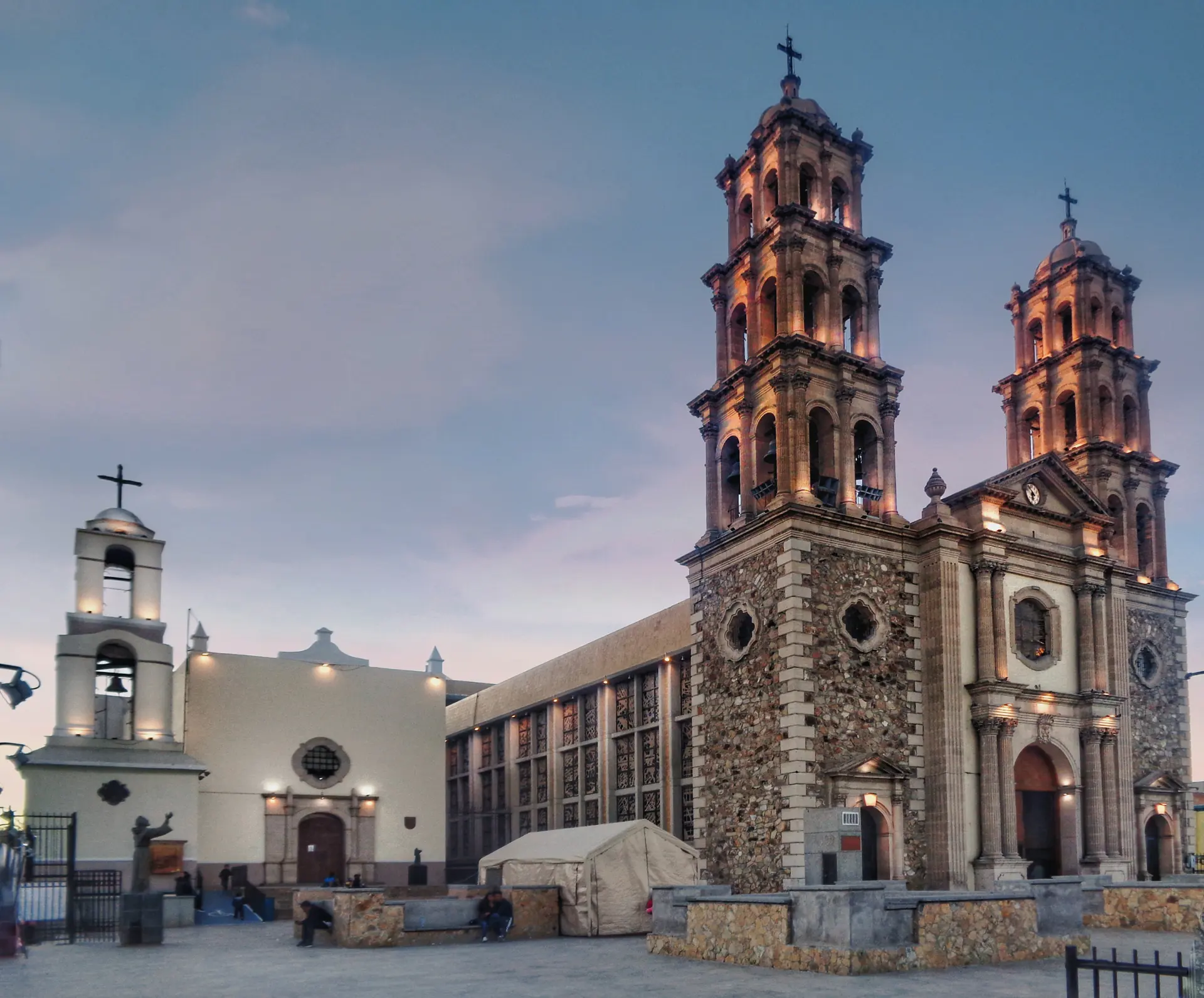
Misión de Guadalupe de los Mansos
Ciudad Juárez, Ciudad Juárez, Chihuahua, Mexico
116.6 km away
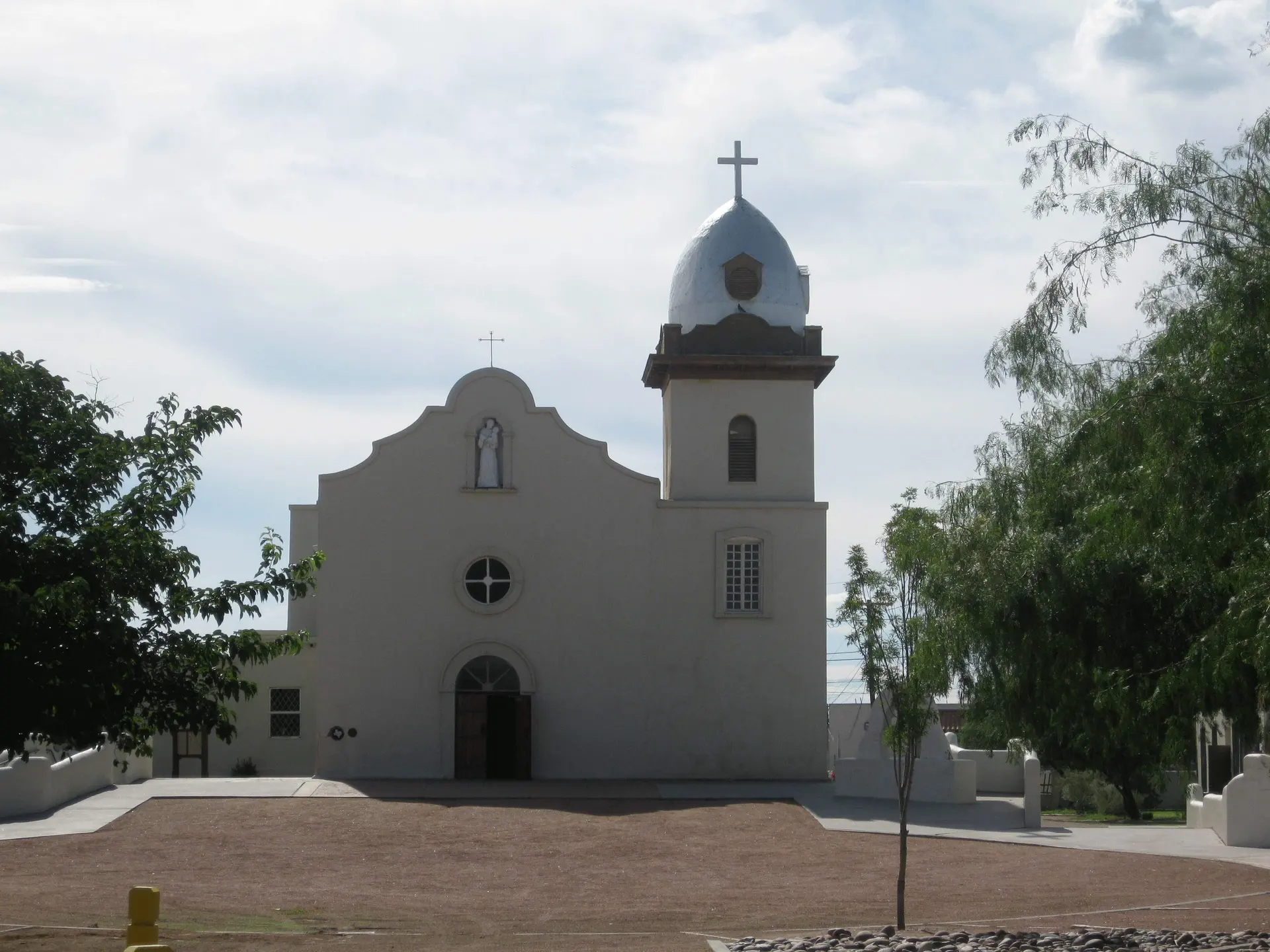
Mission Ysleta (Nuestra Señora del Carmen)
Ysleta, El Paso, Ysleta, El Paso, Texas, United States
121.0 km away
Mission Socorro (Nuestra Señora de la Concepción del Socorro)
Socorro, Socorro, Texas, United States
124.5 km away

Capitan Mountains, New Mexico
Lincoln County, New Mexico, United States
128.9 km away
References
Sources consulted for this page. Source categories describe the publication, not a guarantee that every claim is verified. Traditional accounts and outside interpretations may differ.
- 01Geology of White Sands — National Park ServiceofficialOfficial NPS geology information
- 02Apachean - White Sands National Park — National Park ServiceofficialOfficial NPS cultural history
- 03Cultural History of the Tularosa Basin — National Park ServiceofficialOfficial NPS cultural history
- 04People - White Sands National Park — National Park ServiceofficialOfficial NPS cultural history
- 05Animals - White Sands National Park — National Park ServiceofficialOfficial NPS wildlife information
- 06Operating Hours & Seasons — National Park ServiceofficialOfficial visitor information
- 07Fossilized Footprints — National Park ServiceofficialOfficial NPS information on ancient footprints
- 08Study confirms age of oldest fossil human footprints in North America — U.S. Geological SurveyacademicOfficial USGS scientific findings
- 09Independent age estimates resolve the controversy of ancient human footprints at White Sands — Science journalacademicPeer-reviewed scientific study
- 10Mescalero Apache Tribe Performs Blessing Ceremony at White Sands Missile Range — U.S. ArmyofficialOfficial Army documentation of tribal ceremony
- 11Our Culture — Official Website of the Mescalero Apache TribespiritualOfficial tribal cultural information
- 12Sacred Sites Sustaining Tribal Economies: The Mescalero Apache — Evergreen State College Native CasesacademicAcademic case study on Mescalero sacred sites
- 13White Sands National Monument - UNESCO World Heritage Centre — UNESCOofficialOfficial UNESCO tentative list information
- 14Geologic Tour - White Sands: General Geology — New Mexico Bureau of Geology and Mineral ResourcesacademicAcademic geological information
- 15White Sands National Park | New Mexico, Map, & Facts — BritannicaacademicReputable encyclopedia entry
- 16Ghost Tracks of White Sands — Archaeology MagazineacademicIn-depth archaeological reporting
- 17White Sands National Park — WikipediaspiritualGeneral overview with citations
- 18White Sands footprints — WikipediaspiritualDetailed footprint information with citations
- 19Exploring The Parks: White Sands National Monument — National Parks TravelerguideQuality travel publication
Photo gallery
3 curated photos
Share a photo
Help visitors recognize White Sands, New Mexico. Every submission is reviewed before publication.