Torralba d'en Salort
Menorca's tallest taula, still standing in its Bronze Age sanctuary
Understand sacred places, explore living traditions, and learn how to engage respectfully with Pilgrim Map.
Access has not been verified. Check current local guidance before planning a visit.
Alaior, Balearic Islands, Spain
Read the sources
Visit essentials
A quick read before you go
- Access
- The site lies on the road from Alaior toward Cala en Porter, roughly 3 to 4.5 kilometers from…
- Etiquette
- Standard heritage-site conduct applies: stay on paths, avoid climbing or touching the standing…
Overview
On a limestone shelf above the Alaior–Cala en Porter road, Torralba d'en Salort preserves one of Menorca's most intact Talayotic settlements: two conical talayot towers, a hypostyle hall whose stone-slab roof rests on original pillars, bedrock funerary caves, and a central taula enclosure whose great pillar and capstone have stood outdoors for roughly three thousand years.
Menorca's heritage authority calls this the island's tallest surviving taula and the only one known to face east; other official sources more cautiously describe it as one of the largest and best-conserved. Occupation reaches at least the 13th century BC. Researchers date the sanctuary to around the 4th century BC, with Roman-period pottery showing use centuries later.
The site belongs to Component 6 of UNESCO's "Talayotic Menorca," inscribed in September 2023, a cluster of Bronze and Iron Age sites across the southeast Migjorn plain that includes nearby Calescoves. With no surviving myth or written record, its unnamed builders, unidentified god, and engineered religious stonework must speak through archaeology; the central monument still stands where it was raised.
Why this place is sacred
The core of Torralba d'en Salort's significance is architectural and archaeological, not textual or mythological: no inscriptions, oral tradition, or later religious literature survive to explain what the taula meant to the people who built it. What survives is the enclosure itself — a horseshoe-shaped wall with small lateral chambers or niches, arranged around a central pillar-and-capstone monument unique, within the Talayotic world, to Menorca.
Excavation near the taula recovered an altar area that yielded a small bronze bull figurine and two terracotta figures which the official Balearic tourism authority identifies as representations of Demeter — finds read by heritage authorities as evidence that rites here addressed the fertility of fields, livestock, and people, including offerings of small livestock.
That reading should be held as an archaeological interpretation of votive evidence, not a recovered doctrine: the Talayotic culture is, by definition, known to us only through what it built and buried, never through what it wrote or said about itself.
A taula sanctuary at the ritual center of a Talayotic settlement — a bounded enclosure built to hold ceremony, structured around a single monumental stone form (the pillar-and-capstone taula) that has no parallel outside Menorca, even within the closely related Talayotic culture of neighboring Mallorca.
Settlement activity is attested from at least the 13th century BC (barley grain recovered beneath one of the talayots). The taula sanctuary's principal use is dated by researchers to roughly the 4th century BC, and Roman-period ceramics show the site remained active — or was revisited — into the late 2nd century AD.
Long after its Talayotic and Roman life had ended, the location saw a distinct, unconnected medieval-era reoccupation, evidenced by 17th-century structural remains and a chapel; current (2024) archaeological work is reported to be examining this later, post-medieval phase.
Experience and orientation
The settlement occupies a low limestone rise a few kilometers outside Alaior, reached along the road to Cala en Porter.
Visitors typically move through the site as its excavators mapped it: past the outer cyclopean wall and the remains of dwellings, toward the two talayots — one near the settlement's high point, the smaller nearer the sanctuary — and into the hypostyle hall, a half-buried room roofed with stone slabs resting on interior pillars, whose enclosed, low-ceilinged quality contrasts with the open sanctuary beyond it.
The taula enclosure itself is approached last: a horseshoe of standing stones opening to reveal, at its center, the vertical pillar and its capstone, oriented — distinctively for a Menorcan taula — toward the east. Two funerary caves are cut into the surrounding bedrock, and a deep well associated with the site's much later occupation, known locally as Na Patarrà, descends some 47 meters through the rock.
Descobreix Menorca notes that excavation continues seasonally, so parts of the perimeter may show active dig areas, particularly outside peak summer months.
Approach from the talayots and hall toward the sanctuary rather than the reverse, so the taula enclosure is met last and its scale reads against the smaller, more enclosed spaces already seen.
Context and lineage
No founding narrative survives — the Talayotic culture that built Torralba d'en Salort left no written record of itself. What is dated is the physical sequence: a barley grain recovered from beneath one of the talayots places settlement activity at the 13th century BC; the taula sanctuary's main period of ritual use is placed by researchers around the 4th century BC; Roman-period ceramic finds show activity, or renewed use, continuing into the late 2nd century AD.
Long afterward, in the medieval and early modern periods, the site was reoccupied for unrelated purposes, leaving 17th-century structural remains and a chapel unconnected to the earlier Talayotic sanctuary.
Part of the broader Talayotic culture of prehistoric Menorca (Bronze Age into the Iron Age), a Balearic megalithic tradition related to, but architecturally distinct from, contemporary cultures on Mallorca — the taula form itself is found only on Menorca.
William Waldren
Archaeologist who, with M. Fernández-Miranda, led the site's principal excavation campaign in the 1970s, established the talayot's dating evidence, and helped bring Torralba d'en Salort into the modern archaeological record.
M. Fernández-Miranda
Co-directed the 1970s excavation alongside Waldren.
Consell Insular de Menorca / Menorca Talaiòtica heritage authority
The island's official heritage-management body, which documents, conserves, and interprets the site today and prepared the case for its inclusion in the UNESCO 'Talayotic Menorca' World Heritage inscription (2023).
Museum of Menorca (Museu de Menorca), Maó
Repository for artifacts recovered from the site, including the bronze bull figurine and terracotta figures found near the taula altar.
Traditions and practice
Heritage sources describe fertility-oriented rites conducted within the taula enclosure — addressed, on the evidence of votive finds, to the fertility of fields, livestock, and people, and reportedly including offerings of small livestock. This reconstruction rests on archaeological interpretation of objects (a bronze bull, terracotta figures read as Demeter) recovered near an altar by the taula, not on any surviving account of the rite itself.
None. The site today is a managed, ticketed archaeological monument with no religious or ceremonial use.
Move through the settlement in sequence — outer wall and dwellings, then the talayots, then the enclosed hypostyle hall, then the sanctuary — before entering the taula enclosure itself. Standing at the mouth of the horseshoe wall, note the pillar's east-facing orientation, described by the island's heritage authority as unique among Menorca's taulas, and the visible weight the capstone still carries after roughly three millennia in place.
Talayotic Culture
HistoricalTorralba d'en Salort preserves one of the most complete surviving examples of a Talayotic taula sanctuary, a monument form unique to Menorca among Talayotic-culture sites. Its taula is described by the island's own heritage authority as the tallest known surviving example and the only one facing east; other official sources describe it more conservatively as one of the largest and best-preserved. Votive finds near the sanctuary's altar — a bronze bull figurine and terracotta figures read as representations of Demeter — are cited by heritage authorities as evidence for fertility-oriented ritual practice.
Rites addressed, on the evidence of these votive finds, to the fertility of fields, livestock, and people, reportedly including offerings of small livestock — a reconstruction drawn from archaeological interpretation, not from any surviving account of the practice itself.
Archaeological and heritage-conservation stewardship
ActiveThe site remains under active study: menorcatalayotica.info reports ongoing (2024) excavation examining the settlement's later, post-medieval occupation phase, and Descobreix Menorca notes new areas being opened seasonally. Since September 2023 the site has also been formally protected as part of the 'Talayotic Menorca' UNESCO World Heritage property (Component 6), placing it within an active regional conservation and heritage-interpretation program run by the Consell Insular de Menorca.
Ongoing archaeological excavation, artifact curation at the Museum of Menorca in Maó, and heritage-tourism interpretation for visitors.
Perspectives and open questions
Torralba d'en Salort is read almost entirely through archaeology; without a surviving textual or oral tradition, interpretation of the sanctuary's meaning proceeds from architecture, stratigraphy, and votive finds rather than from any inherited account of belief.
Scholarly perspective
Heritage authorities and the archaeological record concur that the site preserves one of the most intact taula sanctuaries on Menorca, with occupation spanning the Talayotic Bronze and Iron Ages into the Roman period, followed by an unrelated medieval reoccupation.
The taula form — a vertical pillar capped by a horizontal stone — is treated as architecturally unique to Menorca within the wider Balearic Talayotic culture, and the fertility-cult reading of the sanctuary's function is presented as an interpretation of votive evidence (a bronze bull figurine, terracotta figures identified as Demeter) rather than settled fact.
Open questions
The precise liturgy, deity or deities addressed, and the significance of the taula's east-facing orientation (unique among Menorca's known taulas, per the island's heritage authority) are not recoverable from any surviving record. The Talayotic culture is known to us exclusively through what it built and what it left behind — its own account of what happened inside this enclosure does not exist.
Plan your visit
Access and arrival
The site lies on the road from Alaior toward Cala en Porter, roughly 3 to 4.5 kilometers from Alaior (sources give slightly different distances). The Balearic Islands tourism authority lists the address as Ctra. de Torralba, 07760, Alaior, Menorca, with a contact line of +34 971 36 86 78 and email fundaciodesti@menorca.es for visitor inquiries. No public transport serves the site; a car is effectively required.
Mobile phone signal was not documented in sourced material for this specific location — given its proximity to the paved Alaior–Cala en Porter road and the built-up Alaior area a few kilometers away, signal is likely available, but no source confirms this; treat as unverified. For any access or booking questions, contact the numbers above or the Consell Insular de Menorca's Menorca Talaiòtica heritage office (menorcatalayotica.info).
Respectful visit
No specific dress code documented; sturdy footwear is advisable given uneven limestone terrain across the site.
No restriction on photography was found in sourced material; standard courtesy toward other visitors and any active excavation areas applies.
No contemporary offering practice exists at the site; it is not an active place of worship.
No specific published restriction was found beyond implied conservation rules (no climbing on or touching the taula and other standing stonework). No etiquette information was available at time of writing beyond this; check the Menorca Talaiòtica heritage authority (menorcatalayotica.info) or the Alaior tourism office for current on-site rules.
The taula and enclosure walls are original prehistoric stonework, not reconstructions; treat all standing stone as fragile despite its apparent solidity, and stay on marked paths, particularly near active excavation areas that Descobreix Menorca notes may be open seasonally.
Location
Map loads as you approach this section.
Pilgrim reflections
A portrait of encounter, not a score
Pilgrims describe what they felt, how present they could become, and whether the place would shape a journey. There are no stars and no ranking of traditions.
No reviewed reflections yet
The first pilgrims can help describe the character of being here.
Share a reflection
Available after an account-backed “Been there.” Every reflection is reviewed before publication.
Nearby sacred places
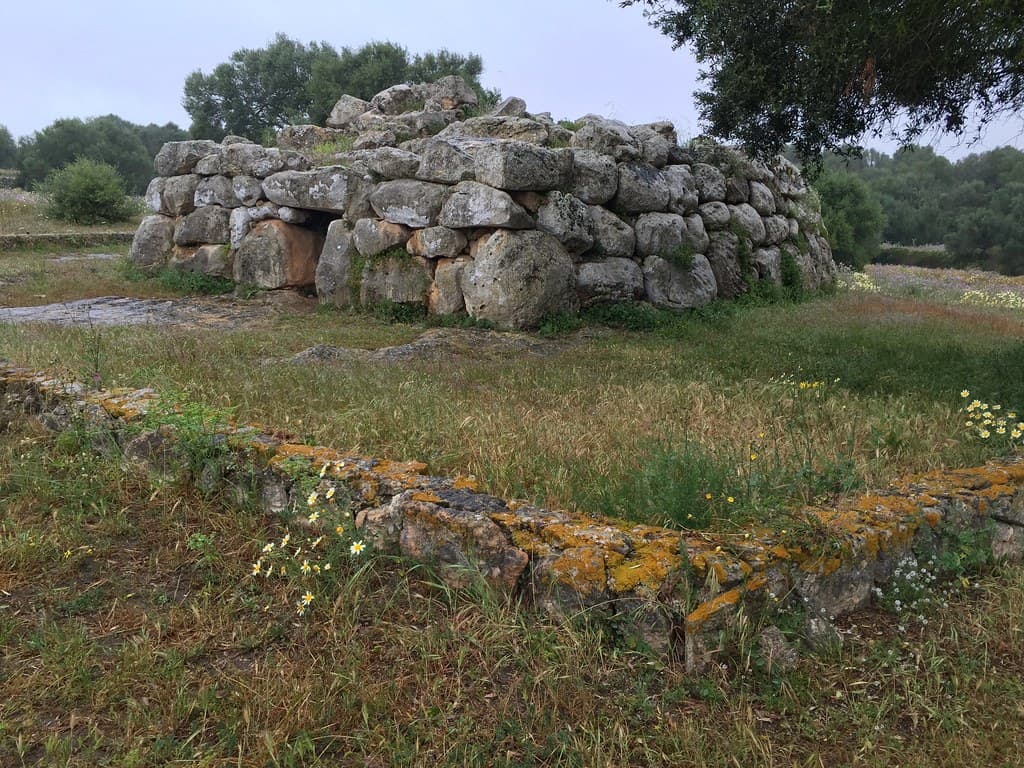
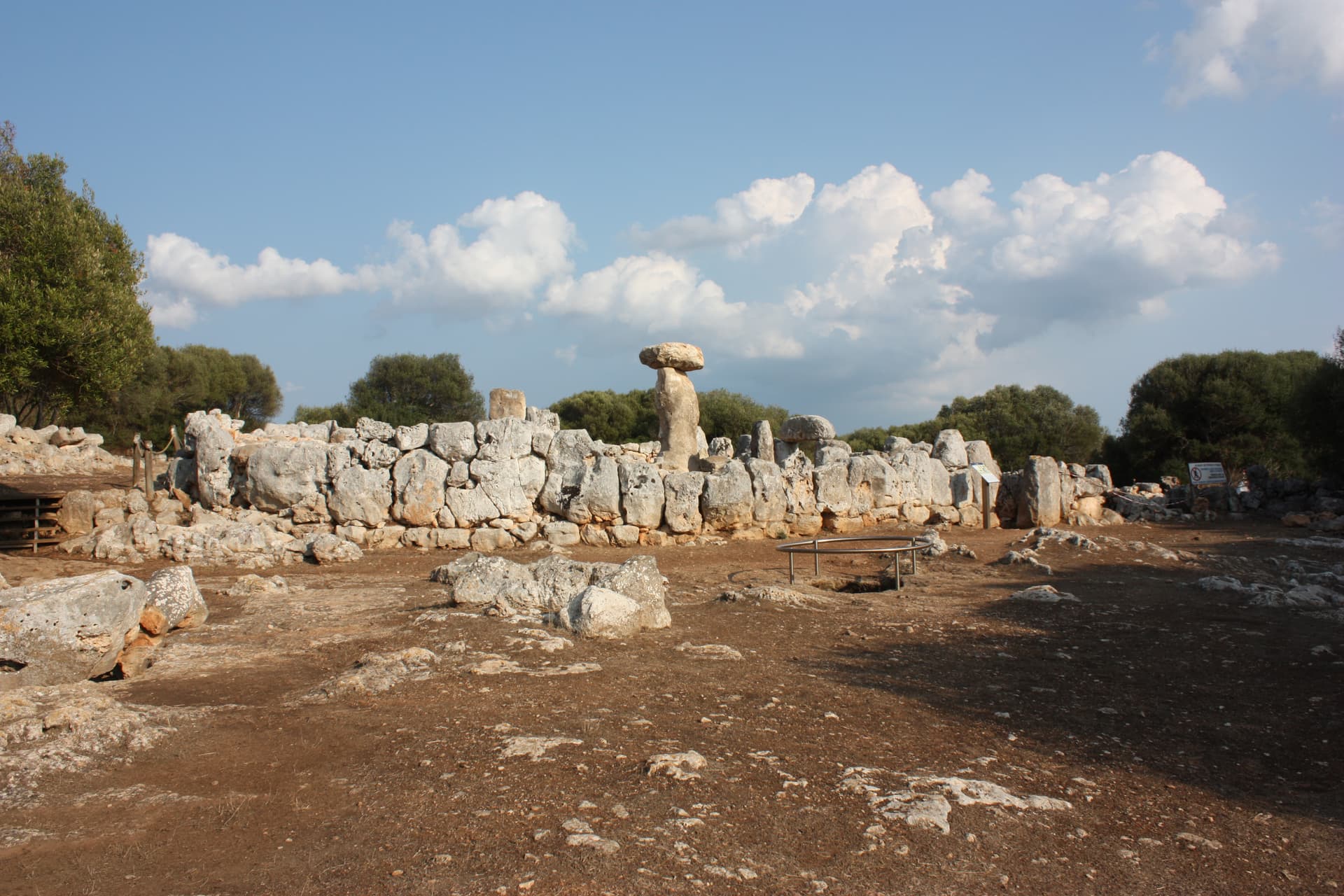
Explore other sacred places in the region. Proximity does not establish access or travel time; check each place’s guidance.


References
Sources consulted for this page. Source categories describe the publication, not a guarantee that every claim is verified. Traditional accounts and outside interpretations may differ.
- 01Talayotic Menorca — UNESCO World Heritage Centre — UNESCO World Heritage CentreofficialOfficial UNESCO listing page for the 'Talayotic Menorca' World Heritage property, inscribed September 2023; confirms the property comprises nine territorial components of cyclopean/Talayotic archaeological landscapes.
- 02Spain achieves with 'Menorca Talayotic' the 50th inscription on the UNESCO World Heritage List — La Moncloa (Government of Spain)officialOfficial Spanish government press release confirming the 18 September 2023 inscription of Talayotic Menorca at the 45th session of the World Heritage Committee (Riyadh).
- 03Talayotic settlement of Torralba d'en Salort — Menorca Talaiòtica — Consell Insular de Menorca / Menorca Talaiòtica (official Talayotic Menorca heritage portal)officialOfficial regional heritage-management portal for the UNESCO property. Source for taula height (5.10 m including capstone, described as the tallest taula on the island), structure inventory (two talayots, horseshoe taula enclosure with lateral chambers/niches, hypostyle hall, two artificial funerary caves, dwelling remains, outer wall, 47 m deep well 'Na Patarrà'), chronology (barley grain dated to 13th century BC beneath the talayot; sanctuary use posited from 4th century BC; Roman ceramics to late 2nd century AD; medieval reoccupation), and 1970s excavation by William Waldren and M. Fernández-Miranda.
- 04Archaeological Site Torralba d'en Salort (Menorca) — Illes Balears / Agència de Turisme de les Illes Balears (official Balearic Islands tourism board)officialOfficial Balearic Islands government tourism site. Describes the taula as ~5 m tall, made of two large smoothly-cut stone blocks, 'the best conserved taula on the island and the only one facing east'; notes ritual/fertility significance and a nearby altar that yielded a small bronze bull figurine and two terracotta figures interpreted as representing Demeter.
- 05Torralba d'en Salort | Megalithic monuments of Menorca — Descobreix Menorca (official Menorca tourism/heritage promotion site)officialDescribes the settlement's two talaiots, large taula ('one of the largest on Menorca and perfectly preserved'), hypostyle room, bedrock caves, cyclopean walls, and later ethnological features (threshing floor, quarry, well, cattle house); gives occupation span roughly 1000 BC to the Roman arrival with medieval reoccupation evidenced by 17th-century remains and a chapel; notes artifacts held at the Museum of Menorca in Maó.
- 06Necropolis of Calescoves — Menorca Talaiòtica — Consell Insular de Menorca / Menorca TalaiòticaofficialCorroborating official page for the same Component 6 grouping (Calescoves, Torralba d'en Salort, So na Caçana, Rafal Rubí) in the south-east Migjorn area of Alaior.
- 07Archaeological heritage of Alaior in Talayotic Menorca — Visit Alaior (Ajuntament d'Alaior / Alaior municipal tourism)officialMunicipal tourism source; describes Torralba d'en Salort as one of Alaior's most spectacular Talayotic sites, notes ongoing excavation activity ('new areas opened up every winter') and the bronze bull figurine now at the Museu de Menorca. Page appears to predate the 2023 UNESCO inscription (references the process as ongoing) and carries an older admission/hours listing, so practical-visit details are flagged as potentially stale.
- 08Talayotic Menorca World Heritage Site — Press Dossier 2024 — Consell Insular de Menorca / Menorca TalaiòticaofficialOfficial press dossier describing the nine UNESCO components. Text (extracted via search indexing rather than direct PDF parse) confirms 'Component 6' covers the south-east Migjorn area around Calescoves, Torralba d'en Salort, So na Caçana and Rafal Rubí — an area of 502 hectares with 57 registered archaeological sites, including four Talayotic villages. This is the primary source explicitly naming Torralba d'en Salort as part of a UNESCO component.
- 09Planimetría de dos recintos de taula: 1: Torralba d'en Salort (figure) — ResearchGate (academic figure/diagram, cited academic study of taula sanctuary enclosures)academicAcademic archaeological figure/plan of the taula precinct at Torralba d'en Salort, used only to corroborate that the site's taula sanctuary layout has been formally surveyed and published in peer-reviewed archaeological literature; full paper text not independently reviewed here.
Share a photo
Help visitors recognize Torralba d'en Salort. Every submission is reviewed before publication.