Sveta Bogoroditsa Church
Where Bulgarian Christians first prayed in their own language and claimed their identity before God
Understand sacred places, explore living traditions, and learn how to engage respectfully with Pilgrim Map.
Access has not been verified. Check current local guidance before planning a visit.
Plovdiv, Plovdiv, Bulgaria
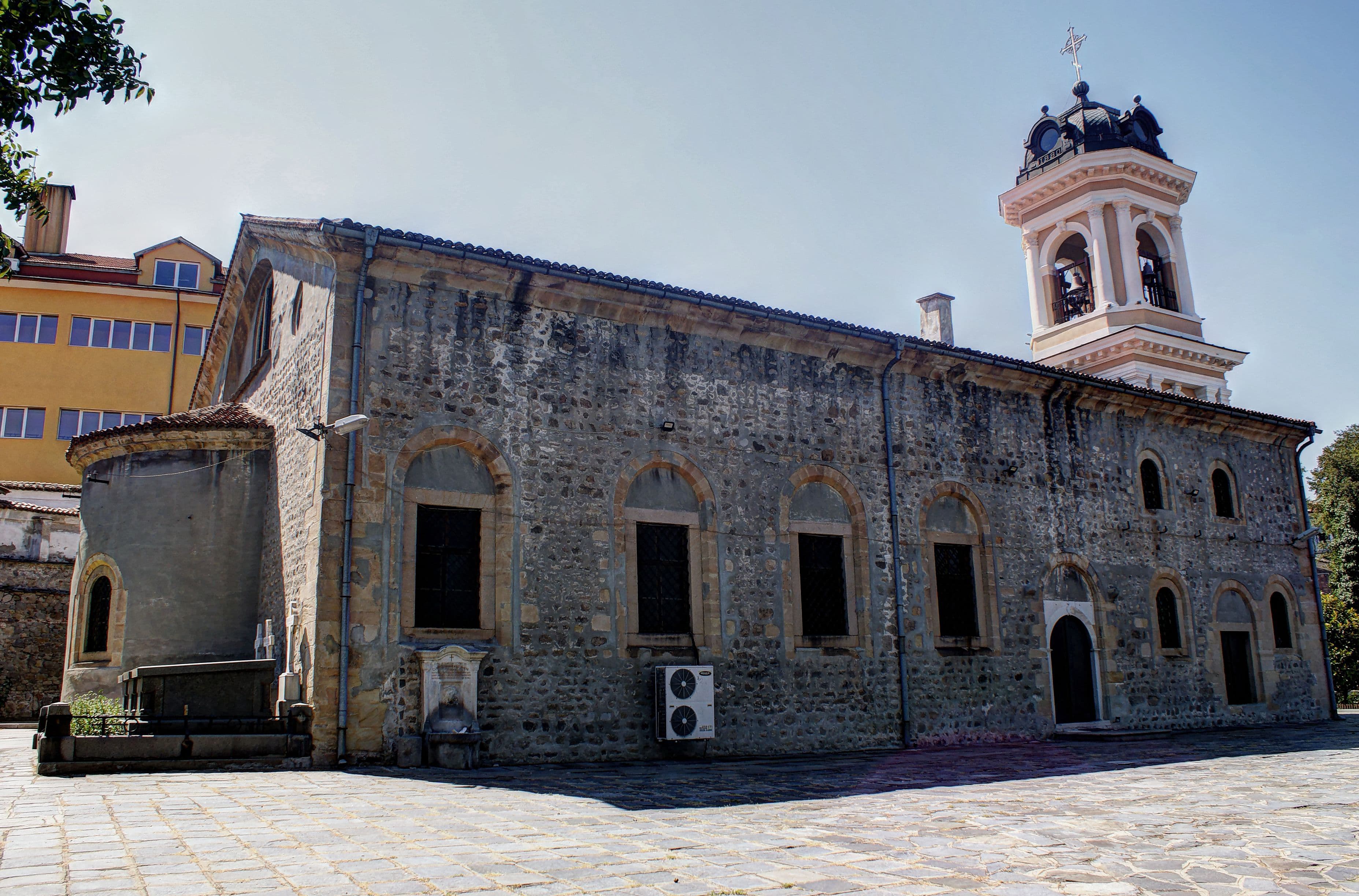
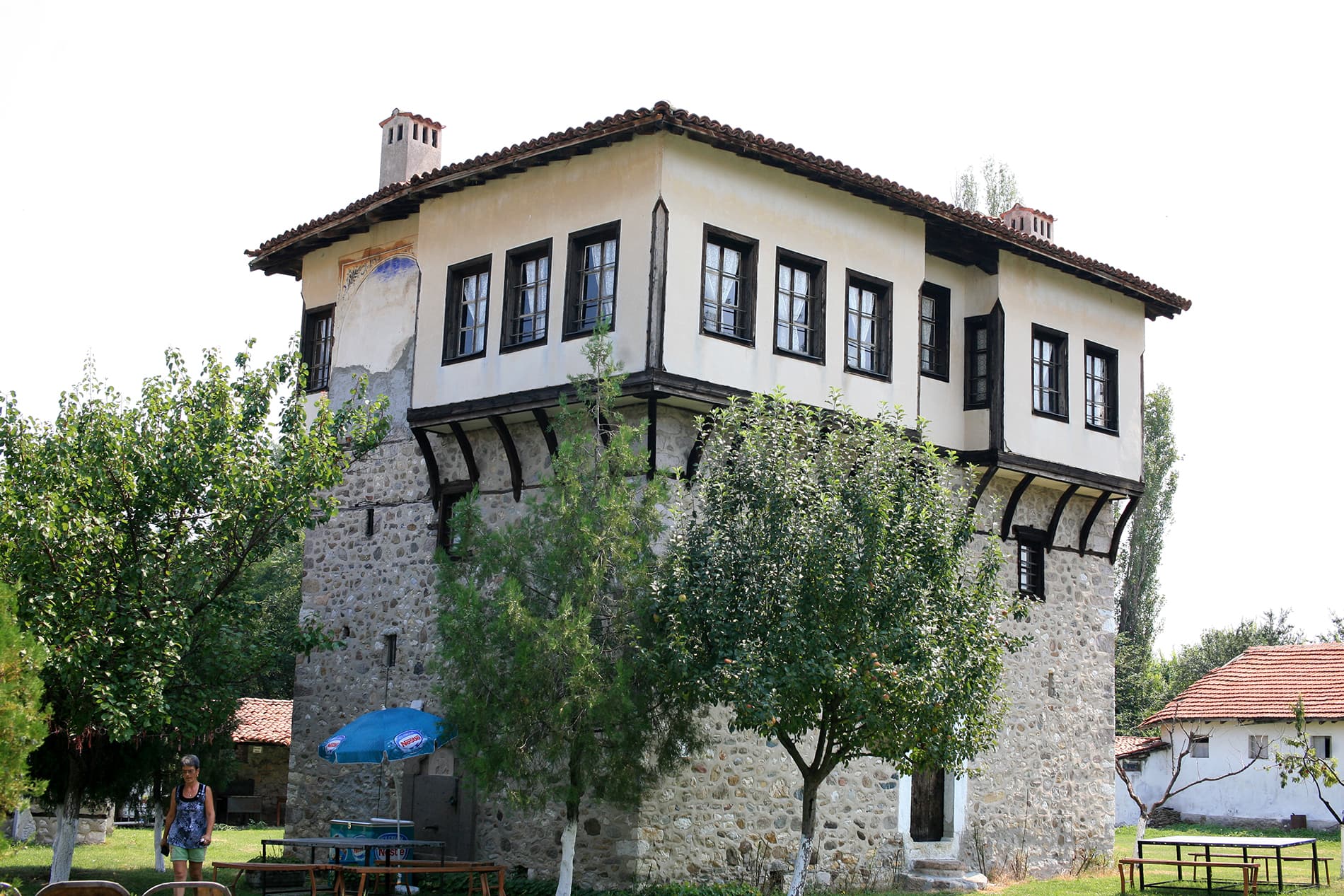
Image of Sveta Bogoroditsa Church. Image source · CC-BY-SA-4.0
Visit essentials
A quick read before you go
- Duration
- Thirty to sixty minutes for a visit.
- Access
- Located in central Plovdiv, near the Old Town quarter and Nebet Tepe hill.
Overview
The Church of the Holy Mother of God rises from one of Plovdiv's ancient hills, Nebet Tepe, where Christians have worshipped for over a millennium. The current building, completed in 1844, replaced a ninth-century predecessor, but the thread of devotion at this location has never broken.
Inside, the Debar School iconostasis arrests attention. Masters from the Debar region of the western Balkans, renowned for their woodcarving across Orthodox lands, created an iconostasis of such intricacy that close observation reveals layer upon layer of detail: vines, figures, and sacred symbols worked into the wood with an almost obsessive precision.
Above it, icons by Nikola of Odrin demonstrate the mature achievement of Bulgarian Revival religious painting, art created during a period when every cultural expression carried the weight of national aspiration.
But the moment that transformed Sveta Bogoroditsa from a significant church into a sacred touchstone of national identity occurred in 1859. Under Ottoman rule, the Ecumenical Patriarchate in Constantinople insisted that liturgical services in Bulgarian churches be conducted in Greek. Bulgarian clergy and laity gathered in this church and held a service in Bulgarian. The act was not merely linguistic.
It was a declaration that a people could approach God in their own tongue, that the language of prayer and the language of the heart could be the same. This service was a direct precursor to the establishment of the Bulgarian Exarchate in 1870 and, ultimately, to Bulgarian political independence. To stand in Sveta Bogoroditsa is to stand where spiritual self-determination began.
Why this place is sacred
The thinness at Sveta Bogoroditsa does not arrive through age alone, though eleven centuries of continuous worship at a single location create their own kind of density. It arrives through the recognition that this is a place where the relationship between language, faith, and identity was forged in a single liturgical act.
When Bulgarian clergy held the 1859 service in Bulgarian rather than Greek, they were not making a scholarly point about translation. They were insisting that the barrier between a person and God should not be the language of a foreign hierarchy. Greek was the language of the Ecumenical Patriarchate and, by extension, of Ottoman-era ecclesiastical authority.
Bulgarian was the language of the people who knelt in these pews, who carried their children to be baptized at this font, who brought their dead to be mourned within these walls. The switch was an act of intimate rebellion: choosing the language of the kitchen and the field as the language of the sacred.
The Debar School iconostasis embodies a parallel principle. Created during the Bulgarian National Revival, when cultural production was inseparable from the struggle for identity, the woodcarving represents beauty as an assertion of worth. To create something this intricate in an era of political subjugation was itself a declaration: this people is capable of greatness, and the proof is carved into the screen before the altar.
The daily services that continue in this church carry all of this forward. The Bulgarian language prayers spoken here today are the direct descendants of that 1859 act. Every liturgy is a repetition of the original assertion.
The earliest church at this location, dating to the ninth century, was established during the Christianization of Bulgaria under Boris I. This was a period of deliberate religious transformation, when churches were built across Bulgarian territories as part of the state's conversion to Orthodox Christianity. The site on Nebet Tepe, one of Plovdiv's ancient hills, was likely chosen for its prominence and visibility.
The church's dedication to the Dormition of the Holy Mother of God placed it within the most important cycle of Orthodox Marian veneration.
The ninth-century church served its community through the medieval period and the centuries of Ottoman rule. By the 1840s, the community needed a larger building. The current church was completed in 1844. The commissioning of the Debar School iconostasis and icons by Nikola of Odrin during the Bulgarian National Revival period meant that the new building was simultaneously a place of worship and a statement of cultural vitality.
The 1859 Bulgarian-language service added a dimension of national significance that transformed the church from a local parish into a site of historical importance. The 1881 bell tower, designed by Austrian architect Josef Schnitter, completed the building as it stands today. The church now functions as the main Orthodox cathedral of the Plovdiv Diocese.
Experience and orientation
Plovdiv is one of the oldest continuously inhabited cities in Europe, and Sveta Bogoroditsa sits within the old city's gravitational center, near the base of Nebet Tepe and within walking distance of the Roman theater, the Old Town's painted houses, and the fragments of settlement layers that reach back thousands of years. Approaching the church through these streets means arriving at a place of worship embedded in deep time.
The exterior is dignified but not monumental. The 1881 bell tower, designed by Josef Schnitter, is the most visible element from a distance. Entering through the main doors, the transition from street noise to interior stillness is immediate. The church is not cavernous; its proportions are human-scaled, which means the Debar School iconostasis fills a significant portion of the visual field. The woodcarving demands close attention.
From a distance it reads as an ornate screen; at arm's length, it reveals a world of micro-detail: intertwined vines, figures in motion, symbolic forms nested within symbolic forms.
The icons by Nikola of Odrin occupy their traditional positions within the iconostasis and on the walls. Their style is distinctly Bulgarian Revival: warm, expressive, grounded in the conventions of Orthodox iconography but marked by a vitality that distinguishes this period's art from both earlier Byzantine austerity and later academic painting.
If you are present during a service, the Bulgarian-language liturgy fills the space with a sound that connects directly to the 1859 assertion. The prayers are chanted in the language of the congregation, a fact so ordinary it requires historical context to feel its weight. This ordinariness is itself the legacy.
Sveta Bogoroditsa is located in central Plovdiv, near the Old Town quarter and the ancient hill of Nebet Tepe.
Context and lineage
The ninth-century establishment of a church at this location coincides with the Christianization of Bulgaria under Boris I in 864. The conversion was a state act with profound cultural consequences, aligning Bulgaria with the Orthodox Christian world and establishing a network of churches and monasteries across Bulgarian territory. A church on Nebet Tepe in Plovdiv, one of the most important cities in the region, would have been among the earliest and most significant.
The current building, completed in 1844, was constructed during a period of intense cultural ferment known as the Bulgarian National Revival. Under Ottoman rule, Bulgarians had limited political autonomy, and cultural expression became a surrogate for political self-assertion. The commissioning of master craftsmen from the Debar woodcarving school and the painter Nikola of Odrin for the new church's interior was a deliberate investment in artistic excellence that served both religious and national purposes.
The 1859 Bulgarian-language service was the culmination of a growing movement among Bulgarian clergy and intellectuals to assert ecclesiastical independence from the Greek-dominated Ecumenical Patriarchate. The Patriarchate required that liturgical services in its jurisdiction be conducted in Greek, regardless of the congregation's native language. The decision to conduct services in Bulgarian was an act of religious and cultural self-determination that galvanized the movement leading to the establishment of the Bulgarian Exarchate in 1870.
Sveta Bogoroditsa belongs to the tradition of Bulgarian Orthodox Christianity that began with the state conversion under Boris I in 864. The church's architecture and art place it within the Bulgarian National Revival, a cultural movement that produced distinctive forms of church architecture, woodcarving, and icon painting across Bulgarian lands. The 1859 service connects it to the movement for Bulgarian ecclesiastical independence that culminated in the Bulgarian Exarchate and, eventually, political independence in 1878.
Boris I of Bulgaria
Christianizer of Bulgaria
The Khan who converted Bulgaria to Orthodox Christianity in 864, initiating the establishment of churches across Bulgarian territories. The ninth-century predecessor to Sveta Bogoroditsa was built during or shortly after this transformative period.
Masters of the Debar School
iconostasis carvers
Woodcarving masters from the Debar region of the western Balkans, renowned across Orthodox lands for their intricate church interiors. Their iconostasis at Sveta Bogoroditsa represents one of the finest achievements of Balkan Orthodox sacred art.
Nikola of Odrin
icon painter
A master of Bulgarian Revival religious painting who created the icons for Sveta Bogoroditsa. His work at the church demonstrates the mature achievement of a distinctly Bulgarian school of sacred art, created during a period when cultural expression was inseparable from national aspiration.
Josef Schnitter
architect of the bell tower
Austrian architect who designed the bell tower added to Sveta Bogoroditsa in 1881, shortly after Bulgaria's liberation from Ottoman rule. The tower's addition marked the church's transition from a building constrained by Ottoman-era restrictions to a fully visible landmark of the newly independent city.
Traditions and practice
As the main Orthodox cathedral of Plovdiv, Sveta Bogoroditsa observes the full cycle of Orthodox worship. The Divine Liturgy, the central act of Orthodox Christian worship, is celebrated regularly. The church is dedicated to the Dormition of the Theotokos, and August 15 is its primary feast day, marked with special services and celebrations. The sacramental life of the parish continues without interruption: baptisms bring new members into the community, weddings consecrate unions, and memorial services honor the dead.
The veneration of icons follows Orthodox tradition, with the faithful approaching icons to kiss them as an act of devotion.
Daily services are open to all visitors. Sunday morning Divine Liturgy remains the principal weekly gathering. The August 15 Dormition feast draws larger congregations and special liturgical observance. The church continues to function as a parish church serving the surrounding community, with an active life of pastoral care, education, and community gathering alongside its role as a historical landmark.
Enter quietly and allow your eyes to adjust to the candlelit interior. Move toward the iconostasis and give it sustained attention. The Debar School carving rewards close looking: what appears from a distance as a single ornate surface reveals, at closer range, distinct narrative and decorative programs nested within each other. If a service is underway, find a place to stand (Orthodox churches have limited seating) and listen to the Bulgarian-language liturgy.
You need not understand the words to appreciate the quality of chanting that fills a space designed to receive it.
If you visit outside service times, light a candle at one of the stands. This simple act, common to all Orthodox church visits, connects the visitor to the tradition of prayer that has been maintained at this location for over a millennium.
Bulgarian Orthodox Christianity
ActiveSveta Bogoroditsa is the main Orthodox cathedral of the Plovdiv Diocese, dedicated to the Dormition of the Theotokos. Its significance extends beyond its religious function into Bulgarian national identity: the 1859 Bulgarian-language service held here was a pivotal moment in the movement for ecclesiastical independence from the Greek-controlled Ecumenical Patriarchate. The church stands where Christians have worshipped since the ninth century, creating over a millennium of continuous devotion at a single location.
Daily Divine Liturgy and Orthodox services. Celebration of the Dormition of the Theotokos on August 15 as the primary feast. Veneration of icons including works by Nikola of Odrin. Liturgical services in Bulgarian, a practice whose historical significance was established in this building. Sacramental life including baptisms, weddings, and memorial services.
Perspectives and open questions
Sveta Bogoroditsa invites understanding as an active place of Orthodox worship, as a monument of Bulgarian Revival art, and as the site of a historical act that fused spiritual practice with national self-determination.
Scholarly perspective
Historians recognize the 1859 Bulgarian-language service as a documented and well-studied event in Bulgarian church history, directly connected to the establishment of the Bulgarian Exarchate in 1870 and the broader movement for national independence. Art historians value the Debar School iconostasis and the icons by Nikola of Odrin as important examples of Bulgarian Revival sacred art, a tradition that produced distinctive work across the Bulgarian lands during the eighteenth and nineteenth centuries.
The ninth-century predecessor church places the site within the Christianization of Bulgaria under Boris I.
Living and traditional perspectives
For the Orthodox faithful of Plovdiv, Sveta Bogoroditsa is their cathedral, the place where the most important moments of life, from baptism to funeral, are sanctified. The 1859 service is a source of deep pride, a moment when their church became the birthplace of something larger than any single congregation. The Dormition feast on August 15 gathers the community in celebration of the church's patron, connecting the local parish to the universal Orthodox calendar.
Open questions
The precise form and extent of the ninth-century predecessor church and its architectural relationship to the current building remain unclear. Whether any pre-Christian Thracian or Roman sacred use existed at the Nebet Tepe location before the ninth-century church has not been established. The full iconographic program of the Debar School iconostasis has not been comprehensively documented in English-language scholarship.
Plan your visit
Access and arrival
Located in central Plovdiv, near the Old Town quarter and Nebet Tepe hill. Walking distance from most central Plovdiv accommodations. Plovdiv is accessible by train and bus from Sofia, approximately two hours. Open daily 7:00 to 19:00. No entrance fee. The church is at street level with step-free access to the main nave. Mobile phone signal is reliable throughout central Plovdiv.
Central Plovdiv offers a wide range of accommodation from budget hostels to boutique hotels, many within walking distance of the church.
Respectful visit
Modest clothing required. Shoulders and knees should be covered. Women may be asked to cover their heads during services, though enforcement varies. Avoid shorts, sleeveless tops, and revealing clothing.
Generally permitted in the church interior outside of services. Flash photography is discouraged near icons and frescoes to protect the pigments. Do not photograph during active services. Tripods and professional equipment may require permission.
Candles can be purchased at the entrance and lit at designated stands. Monetary donations are accepted. Lighting a candle when entering an Orthodox church is customary and appropriate for visitors of any faith.
Maintain quiet, especially during services. Do not touch icons unless following the Orthodox practice of veneration. Mobile phones should be silenced. Do not walk in front of the iconostasis during services. Non-Orthodox visitors are welcome to observe worship but should not participate in the Eucharist.
Services are not performances for visitors. If attending a service, remain for a respectful duration rather than entering and immediately departing.
Current practical details
Address
Staria gradPlovdiv Center, ul. "Saborna" 2, 4000 Plovdiv, Bulgaria
Phone
Hours, fees, and access can change — verify on the official source before you travel. Practical details last checked Jun 2026.
Location
Map loads as you approach this section.
Pilgrim reflections
A portrait of encounter, not a score
Pilgrims describe what they felt, how present they could become, and whether the place would shape a journey. There are no stars and no ranking of traditions.
No reviewed reflections yet
The first pilgrims can help describe the character of being here.
Share a reflection
Available after an account-backed “Been there.” Every reflection is reviewed before publication.
Nearby sacred places
Explore other sacred places in the region. Proximity does not establish access or travel time; check each place’s guidance.
Share a photo
Help visitors recognize Sveta Bogoroditsa Church. Every submission is reviewed before publication.