The Sanctuary of Our Lady of Laghet
Where four centuries of ex-votos testify to answered prayers in the hills above Monaco
Understand sacred places, explore living traditions, and learn how to engage respectfully with Pilgrim Map.
Access has not been verified. Check current local guidance before planning a visit.
La Trinité, Alpes-Maritimes, France
Read the sources
Visit essentials
A quick read before you go
- Duration
- 1-2 hours for a thorough sanctuary visit.
- Etiquette
- The sanctuary is an active Catholic pilgrimage site welcoming visitors of all backgrounds.
Overview
The walls speak. They are covered with paintings—thousands of them, some by professional artists, most by grateful hands with more faith than skill. Each one tells a story: a child healed, a prisoner freed, a ship that did not sink. Four centuries of answered prayers, documented in pigment and hung in thanksgiving.
Notre-Dame de Laghet became holy not through vision but through action. Beginning in 1652, people began healing at a small chapel in these hills, newly restored by a devoted priest. Word spread. Pilgrims came from Nice, Monaco, Italy. A theological commission investigated and confirmed twenty-two miracles in the first year alone. The Bishop of Nice led the first official pilgrimage in 1654.
What happened here was unusual. Most great Marian shrines begin with apparition—a vision of the Virgin that sanctifies the ground. Laghet had no vision. What it had was healing after healing, enough that its reputation came to rival Lourdes itself in southern France. The Virgin was not seen here. She was experienced—in bodies mended, minds restored, prayers answered.
Today the Benedictine Sisters of the Sacred Heart maintain the sanctuary as a retreat center. The mountain setting offers withdrawal from the coastal bustle below. The ex-votos offer something else: proof that others have come here desperate and left grateful, that whatever operates at Laghet has been operating for a very long time.
Why this place is sacred
The name gives a clue. 'Laghet' in local dialect means 'little lake.' A dark statue was said to have been found in water here—the Black Madonna now kept in the crypt, rarely discussed in official histories but present nonetheless. This pattern repeats across Europe: sacred images discovered in lakes or springs, sites that were holy before Christianity arrived.
What we know with certainty begins in the 17th century. Father Jacques Fighiera, a priest from nearby Èze, restored the neglected chapel at his own expense in 1628. For twenty-five years he served there without compensation, 'in honor of God and the Virgin Mary.' Then in 1652, the healings began.
The White Penitents of Èze carried a statue—carved from rowan wood by the Parisian artist Pierre Moïse—in procession to the chapel on June 24th. From that day forward, the sick began recovering. A leper healed. A prisoner escaped from Barbary pirates attributed his freedom to the Virgin's intercession. A possessed girl was delivered. Word spread faster than roads could carry it.
Within eighteen months, thirty-six miracles were claimed. Bishop Palletis, following the rigorous protocols established by the Council of Trent, convened a commission of theologians, assisted by a lawyer and a doctor. They authenticated twenty-two cases. On December 26, 1653, worship was officially authorized. The following April, the Bishop himself led the first formal pilgrimage.
The site's power has never been explained—only documented. The 4,000 ex-votos that now line the walls, the cloister, and the crypt represent centuries of thanksgiving. Each painted panel bears the letters VFGA: 'Votum Fecit Gratiam Accepit'—made a vow and obtained grace. This is empirical religion: not what people believed, but what they experienced.
The original chapel, first documented in the 12th century, served as a modest local pilgrimage site. Father Fighiera's restoration transformed it into something more—a place of active healing rather than mere devotion. The sudden onset of miracles in 1652 suggests that whatever conditions create such phenomena were somehow intensified by the procession, the renewed attention, or the particular statue brought from Èze.
Revolutionary armies sacked the sanctuary in the late 18th century, but a steward named Denis Lanteri hid the statue in nearby La Turbie. It was returned after the church's restoration in 1802. The Carmelites, who had cared for the site since 1674, were expelled in 1903 during France's separation of church and state. The Bishop purchased the property, and in 1978, the Benedictine Sisters of the Sacred Heart of Montmartre took over, establishing the retreat center that operates today.
The June 24th pilgrimage from Èze continues—an unbroken tradition since 1652. Parishioners still walk the mountain paths carrying the statue. The fountain built for pilgrims in 1654 still flows. What changes is how people arrive and what they seek: healing remains, but so does simple retreat, a few days away from the coastal crowds.
Experience and orientation
You enter, and the paintings surround you. They cover the walls of the church, extend into the cloister, fill the crypt. Most are naive art—folk paintings by people whose skill was modest but whose gratitude was immense. A child in a sickbed, the Virgin hovering above. A ship in a storm, sailors praying. A car accident from which someone walked away. Four centuries of danger and delivery, painted and hung in thanksgiving.
The effect is cumulative. One ex-voto is touching. A hundred are overwhelming. Four thousand constitute evidence. Whatever happens at Laghet, whatever the mechanism of healing or deliverance, the walls document that something has been happening here for a very long time. The letters VFGA appear on every panel: 'made a vow and obtained grace.' These are not stories people heard but experiences they had.
Beyond the ex-votos, the sanctuary offers something simpler: mountain quiet. At this altitude, the Mediterranean glitters below but does not intrude. The Baroque church, crowned with a gold-leafed statue of the Virgin, holds daily Mass and regular liturgical hours. The retreat house accommodates those who want more than a day visit—pilgrims, families, groups seeking silence.
The annual pilgrimage on June 24th transforms the experience. Parishioners from Èze walk the mountain paths carrying the statue, reenacting the 1652 procession that inaugurated the miracles. This is not museum religion but living practice, continuous for nearly four hundred years. To participate is to join something older than anyone's memory.
Begin with the ex-votos. Let the sheer quantity register. Notice the range of dates—17th century panels hang near 20th century ones. Read the stories where you can; feel the accumulation where you cannot. This is the sanctuary's primary testimony.
Then move to the crypt, where the Black Madonna waits in less-discussed darkness. The contrast with the white statue in the upper church invites questions about what else might be present here, what older traditions the Marian devotion may have absorbed.
If time permits, walk the grounds. The 1654 fountain still flows. The retreat house welcomes day visitors. The mountain setting itself offers what the coastal cities below cannot: withdrawal, silence, the long view.
Context and lineage
Father Jacques Fighiera was a priest of Èze who felt called to restore the ruined chapel at Laghet. In 1628, at his own expense, he rebuilt the roof, whitewashed the walls, leveled the floor, and installed a proper door. He announced that services would resume and served the chapel for twenty-five years without compensation.
In 1645, Bishop Palletis blessed a statue of the Virgin carved by the Parisian artist Pierre Moïse. It was placed in a church in Èze. Seven years later, on June 24, 1652, the White Penitents—a confraternity of laypeople devoted to works of mercy—carried the statue in procession to Laghet.
From that day, healings began. A leper found his flesh restored. A man imprisoned by Barbary pirates credited his escape to the Virgin's intercession. A girl possessed by demons was delivered. Pilgrims streamed in from Nice, Monaco, Ventimiglia, San Remo. Within eighteen months, thirty-six miracles were claimed.
Bishop Palletis was not credulous. He convened a commission of theologians, assisted by a lawyer and a doctor, to investigate according to the protocols established by the Council of Trent. Twenty-two cases were authenticated as genuinely miraculous. On December 26, 1653, he authorized public worship. The following April, he led the first official pilgrimage, joined by the Consuls of Nice, who funded a fountain for the pilgrims—still flowing today.
The Carmelites of Turin assumed care of the sanctuary in 1674, maintaining it for over two centuries. Their coat of arms still appears on the main altar and stained glass. France's 1905 separation of church and state forced their expulsion; Bishop Chapon purchased the property to prevent secular sale. In 1978, the Benedictine Sisters of the Sacred Heart of Montmartre took over, establishing the retreat center that now welcomes pilgrims.
Through these transitions, the June 24th pilgrimage has continued unbroken. Each year, parishioners from Èze walk the mountain paths carrying the statue, reenacting the procession that inaugurated the miracles. The tradition belongs to the place itself, persisting through changes of religious order and political regime.
Father Jacques Fighiera
restorer
Priest of Èze who restored the neglected Laghet chapel in 1628 and served it without compensation for 25 years. His devotion prepared the conditions for the 1652 miracles. The ex-voto museum bears his name.
Pierre Moïse
artist
Parisian sculptor who carved the rowan-wood statue of the Virgin that was processed to Laghet in 1652. The statue was blessed by Bishop Palletis in 1645.
Bishop Palletis
authorizing bishop
Bishop of Nice who ordered the rigorous theological investigation of the Laghet miracles and authorized official worship in December 1653. His careful process gave the site canonical legitimacy.
Denis Lanteri
protector
Steward of the sanctuary who hid the statue in La Turbie during the revolutionary period, preserving it from destruction.
Traditions and practice
The ex-voto tradition is central to Laghet. When prayers are answered—healing received, danger escaped, grace obtained—the faithful commission or create a painted panel depicting the event. The Virgin appears in the upper portion; the grateful supplicant in the lower; the letters VFGA confirm 'made a vow and obtained grace.' These are hung in the sanctuary as public testimony, inviting others to trust the same intercession.
The June 24th pilgrimage recreates the 1652 procession. Parishioners from Èze walk the mountain paths to Laghet, carrying the statue. This is not commemorative reenactment but continuous practice—the same tradition performed for nearly four hundred years.
For a brief visit, begin with the ex-votos. Walk slowly through the church, cloister, and museum. Let the accumulation of gratitude work on you. Light a candle. Sit in the Baroque church and receive whatever the space offers.
For deeper engagement, consider a retreat stay. The sisters welcome pilgrims for individual retreats, family visits, or organized programs. Living within the rhythm of the Hours—praying at dawn, midday, evening, and night—creates conditions that a day visit cannot.
For the fullest experience, participate in the June 24th pilgrimage. Walking from Èze to Laghet with the statue, you join four centuries of the faithful who have made this journey.
Roman Catholic / Marian Pilgrimage
ActiveNotre-Dame de Laghet is one of the major Marian pilgrimage sites in southern France, unusual in that it developed from documented healings rather than apparition. The 1653 theological investigation gave it canonical legitimacy. Its reputation for healing has rivaled Lourdes in regional devotion.
Annual June 24th pilgrimage from Èze with statue procession; daily Mass and Liturgy of the Hours; Eucharistic adoration; rosary meditation; spiritual retreats; ex-voto offerings in gratitude for answered prayers.
Ex-Voto Tradition
ActiveThe sanctuary's 4,000+ ex-votos constitute one of Europe's richest collections, documenting four centuries of answered prayers. This tradition transforms private gratitude into public testimony, inviting others to trust the same intercession.
Commissioning or creating painted panels depicting healing or deliverance; inscribing VFGA ('made a vow and obtained grace'); hanging panels in church, cloister, or crypt; offering personal objects (crutches, steering wheels, bridal items) as thanksgiving.
Black Madonna Veneration
HistoricalA dark statue in the crypt represents an older tradition that the mainstream Laghet pilgrimage does not emphasize. The name 'Laghet' (little lake) and the legend of a statue found in water suggest connections to pre-Christian goddess worship or to the broader European Black Madonna phenomenon.
The Black Madonna is visible in the crypt but not the focus of current devotion. Visiting her acknowledges a dimension of the site that official histories tend to minimize.
Perspectives and open questions
Notre-Dame de Laghet invites interpretation as both historical phenomenon and living practice. Historians see a well-documented example of Counter-Reformation miracle investigation. Art historians treasure the ex-voto collection as folk art archive. Theologians see intercession demonstrated through healing. Those drawn to older traditions note the Black Madonna in the crypt and wonder what predates the documented miracles.
Scholarly perspective
The 1653 theological investigation provides an unusually well-documented case of Counter-Reformation miracle authentication. Bishop Palletis followed Tridentine protocols rigorously—commissioning theologians, lawyers, and doctors to examine claims before approving public devotion. This makes Laghet valuable for understanding how the Church institutionalized miraculous claims.
The ex-voto collection is recognized as one of Europe's richest, documenting folk religious expression and naive art from the 17th century to present. Art historians study the collection for insights into popular piety, material culture, and changing artistic conventions across four centuries.
Living and traditional perspectives
Catholic tradition sees Laghet as evidence of the Virgin Mary's ongoing intercession. Unlike Lourdes or Fatima, there was no apparition here—only healing after healing, prayer after answered prayer. This suggests that Mary's presence does not require vision, only faith and petition. The authenticated miracles give canonical foundation; the continuous ex-voto tradition demonstrates ongoing grace.
Alternative interpretations
The Black Madonna in the crypt and the name 'Laghet' (little lake) suggest possible pre-Christian dimensions. Across Europe, dark Madonna figures cluster at sites of springs, wells, and lakes—places sacred before Christianity arrived. The statue said to have been found in water here may represent a healing tradition older than the 1652 miracles. From this perspective, the Marian devotion channels but did not originate the site's power.
Open questions
Why did the healings begin in 1652, after Father Fighiera had served the chapel for over twenty years without documented miracles? What changed when the White Penitents brought the statue from Èze? The historical record documents the results but not the cause. Something happened that year that had not happened before, and no one knows what it was.
Plan your visit
Access and arrival
The sanctuary retreat house offers 48 rooms (100 beds), dining facilities, and meeting rooms. External accommodations available in Nice (30 min by car) or Monaco (20 min).
Respectful visit
Modest dress appropriate for a Catholic sanctuary. Cover shoulders and knees.
Generally permitted in public areas. Be discreet in the church during prayer. The ex-votos may be photographed; they were made to be seen.
Candles are available. Donations support the sisters' work. The ex-voto tradition continues—those who receive grace are invited to express gratitude visibly.
Retreat house accommodations by reservation only. Contact hotellerie@sanctuaire-laghet.fr or call 04 92 41 50 50.
The retreat house requires advance reservation. During major pilgrimages, the sanctuary can be crowded. Those seeking quiet should plan visits for ordinary days rather than feast days—unless the communal intensity of pilgrimage is itself what they seek.
Current practical details
Address
Rte de Laghet, 06340 La Trinité, France
Phone
Hours
Hours, fees, and access can change — verify on the official source before you travel. Practical details last checked Jun 2026.
Location
Map loads as you approach this section.
Pilgrim reflections
A portrait of encounter, not a score
Pilgrims describe what they felt, how present they could become, and whether the place would shape a journey. There are no stars and no ranking of traditions.
No reviewed reflections yet
The first pilgrims can help describe the character of being here.
Share a reflection
Available after an account-backed “Been there.” Every reflection is reviewed before publication.
Nearby sacred places
Explore other sacred places in the region. Proximity does not establish access or travel time; check each place’s guidance.
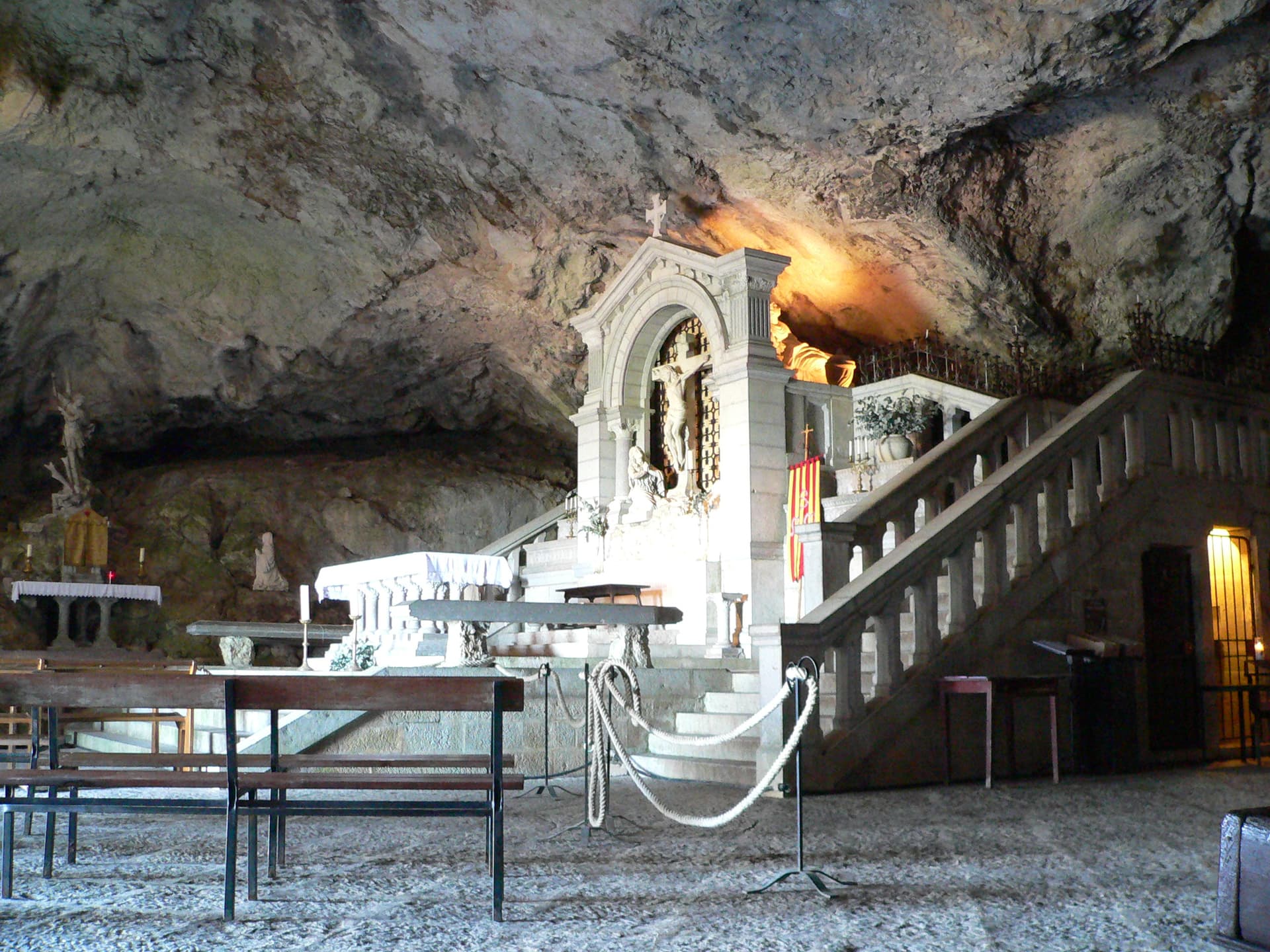
La Sainte-Baume, Grotto of Mary Magdalene
Saint-Raphaël, Var, France
50.8 km away
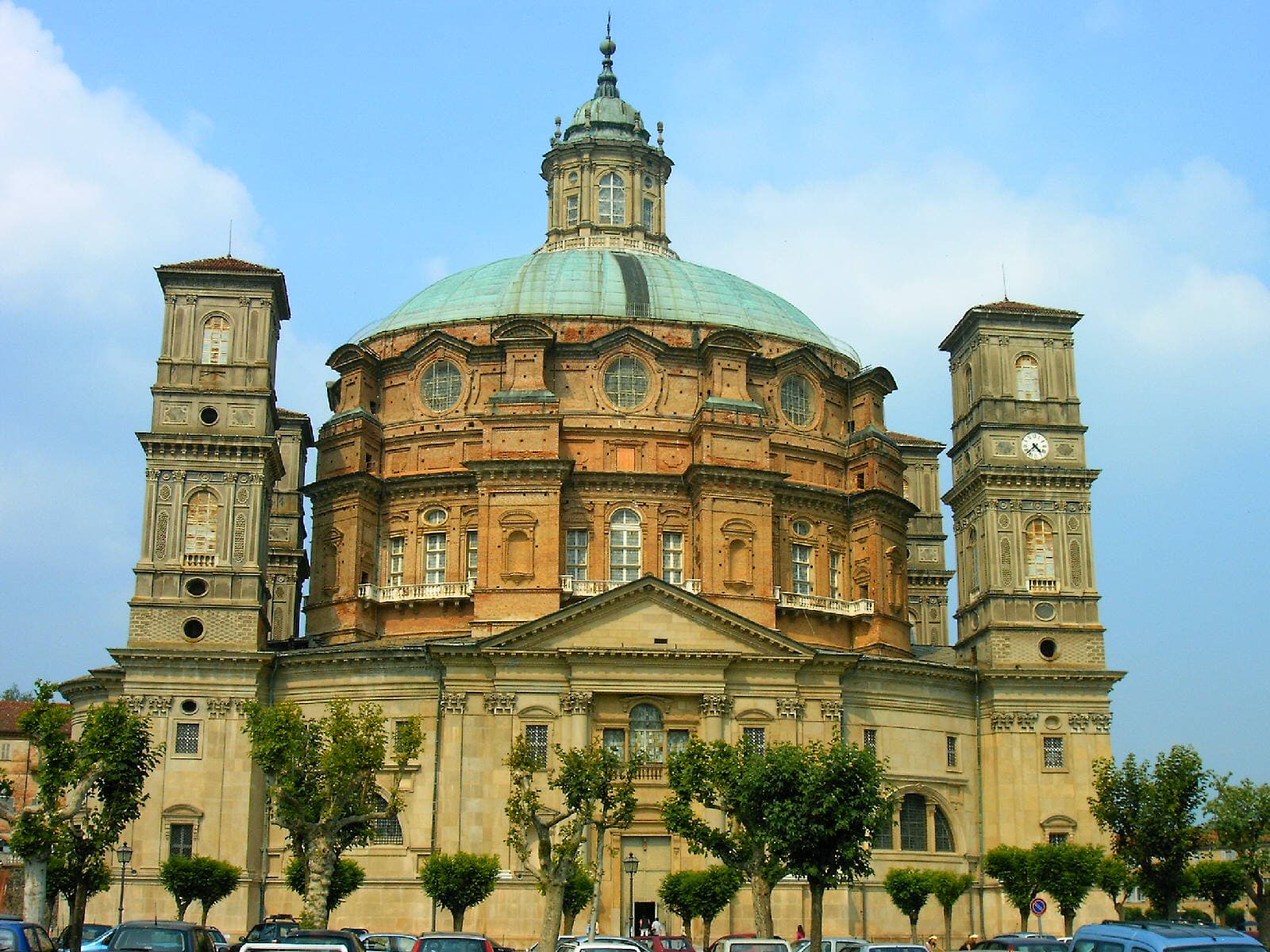
Sanctuary of Vicoforte
Vicoforte, Cuneo, Italy
79.4 km away
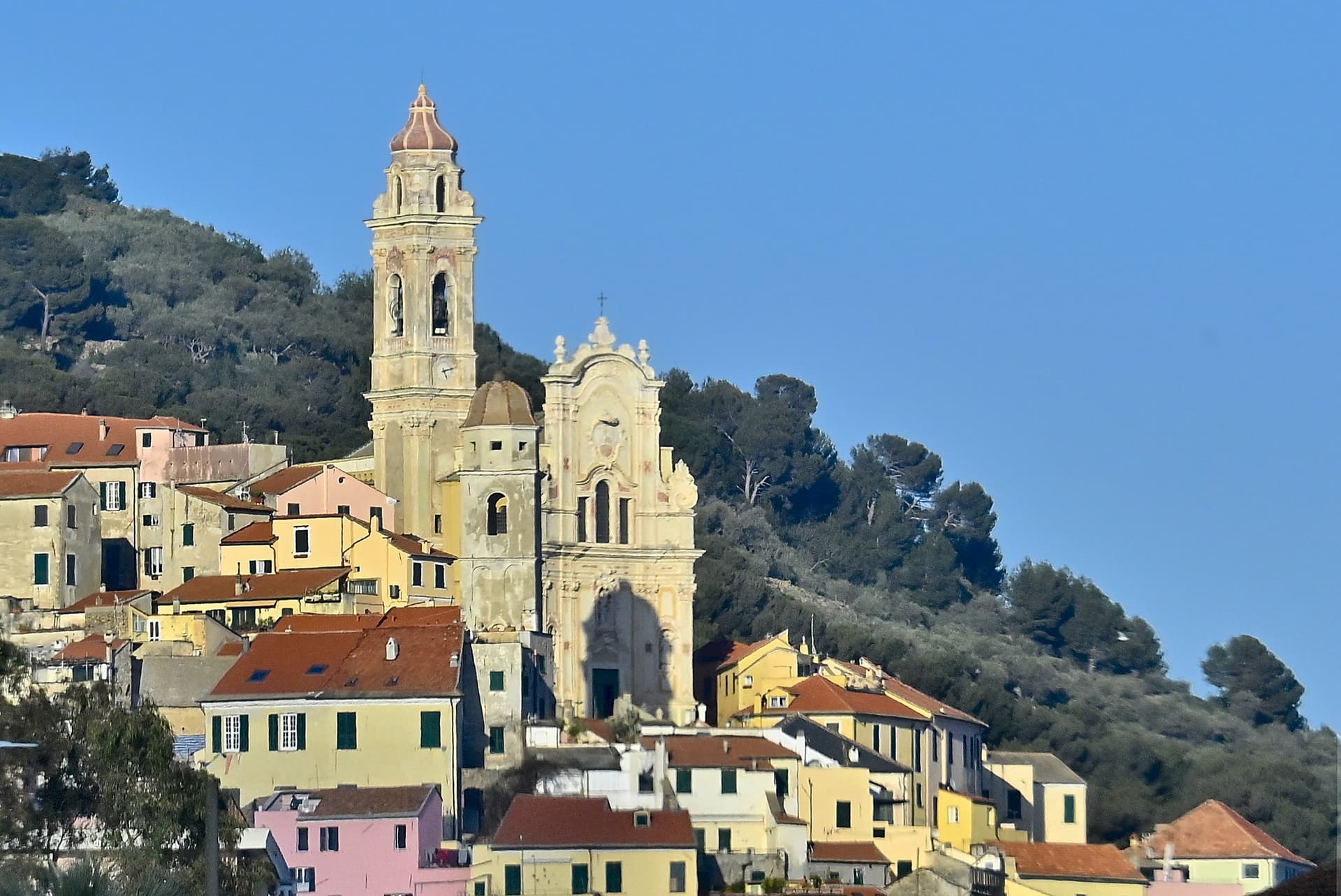
San Giovanni Battista
Cervo, Savona, Italy
108.1 km away
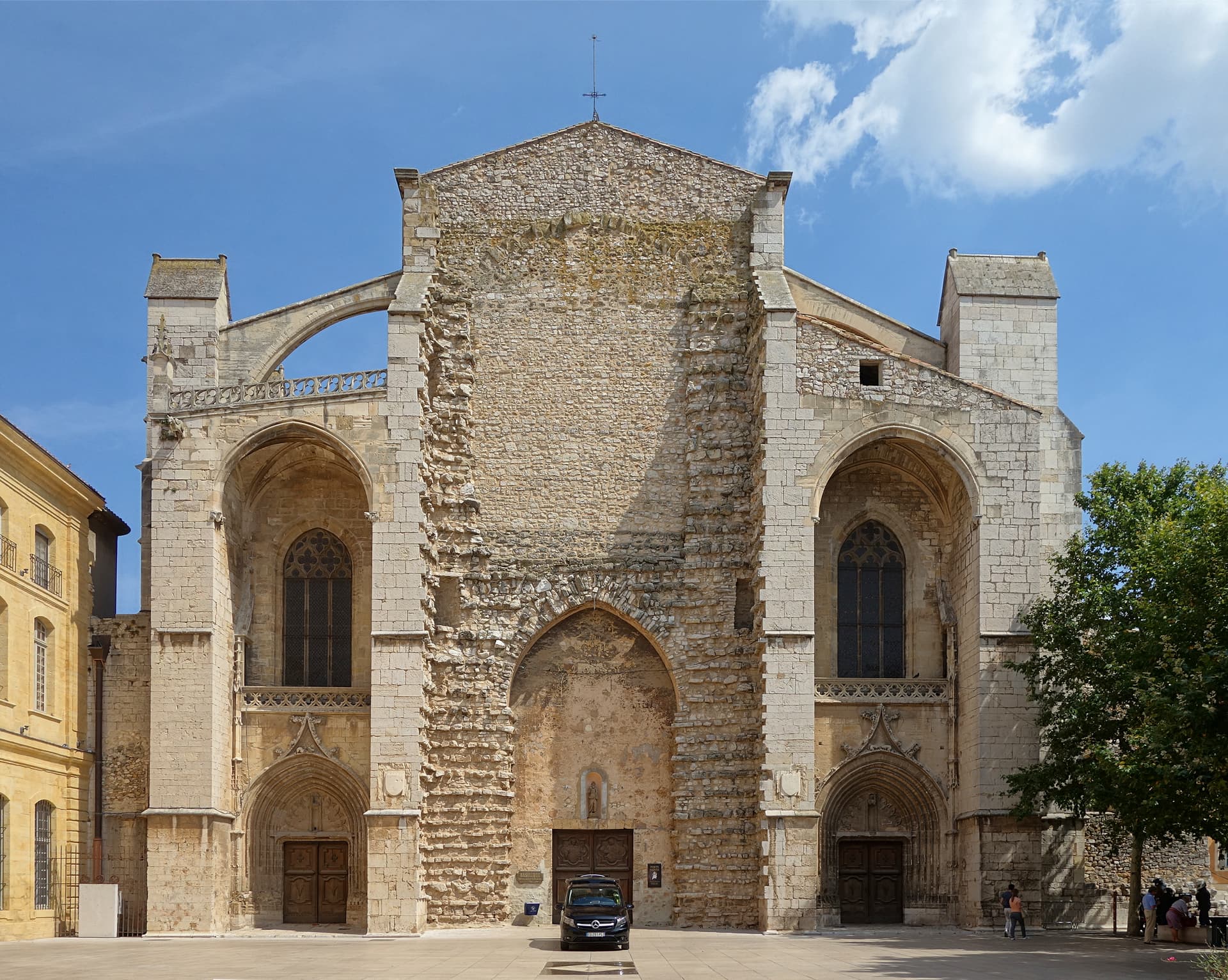
Basilique Sainte-Marie-Madeleine de Saint-Maximin
Saint-Maximin-la-Sainte-Baume, Saint-Maximin-la-Sainte-Baume, Provence-Alpes-Côte d'Azur (Var), France
126.7 km away
References
Sources consulted for this page. Source categories describe the publication, not a guarantee that every claim is verified. Traditional accounts and outside interpretations may differ.
- 01La Trinité: Our Lady of Laghet | Marie de Nazareth — Marie de NazarethspiritualMarian encyclopedia with canonical history
- 02Sanctuaire Notre-Dame-de-Laghet | Nice Tourism Office — Explore Nice Côte d'AzurofficialOfficial regional tourism information
- 03Sanctuaire Notre-Dame de Laghet Official Site — Sanctuaire Notre-Dame de LaghetspiritualOfficial sanctuary website with current visitor information
- 04Miracle working Our Lady of Laghet near Nice | Interfaith Mary Page — Interfaith Mary ProjectspiritualComprehensive coverage including Black Madonna connection and ex-voto tradition
- 05The Sanctuary of Our Lady of Laghet | France Voyage — France VoyageSource contextGeneral tourism information with historical overview
- 06La Trinite France: Sanctuary of Our Lady of Laghet | Catholic Travel Guide — Catholic Travel GuidespiritualDetailed pilgrimage perspective with historical context
- 07Sanctuaire Notre-Dame de Laghet | RITRIT — RITRITSource contextRetreat directory with practical information
- 08Sanctuaire Notre-Dame de Laghet | The Culturium — Paula MarvellyspiritualPersonal account with cultural and artistic perspective
Share a photo
Help visitors recognize The Sanctuary of Our Lady of Laghet. Every submission is reviewed before publication.