Skelton of Mary Magdalene at Saint Maximin la Sainte-Baume
Where the skull of Mary Magdalene gazes across centuries, connecting pilgrims to the woman who first witnessed resurrection
Saint-Maximin-la-Sainte-Baume, Provence-Alpes-Côte d'Azur, France

Plan this visit
Practical context before you go
Allow 1-2 hours to fully experience the basilica and crypt. Those wishing to spend extended time in prayer or meditation should plan accordingly. Combining with the Sainte-Baume grotto requires a full day.
Saint-Maximin-la-Sainte-Baume is located 45 km east of Aix-en-Provence and 60 km northeast of Marseille. The town has a train station with regular service from Marseille. By car, the A8 motorway provides easy access. The basilica is in the town center, clearly visible and walkable from the station.
Respectful comportment appropriate to an active place of worship. Modest dress, quiet behavior, and sensitivity to those engaged in prayer are the essential requirements.
At a glance
- Coordinates
- 43.4527, 5.8638
- Suggested duration
- Allow 1-2 hours to fully experience the basilica and crypt. Those wishing to spend extended time in prayer or meditation should plan accordingly. Combining with the Sainte-Baume grotto requires a full day.
- Access
- Saint-Maximin-la-Sainte-Baume is located 45 km east of Aix-en-Provence and 60 km northeast of Marseille. The town has a train station with regular service from Marseille. By car, the A8 motorway provides easy access. The basilica is in the town center, clearly visible and walkable from the station.
Pilgrim tips
- Modest dress covering shoulders and knees. Casual but respectful attire is acceptable. Remove hats upon entering the basilica.
- Photography permitted in both basilica and crypt, without flash. Exercise discretion around worshippers. No photography during mass or other services.
- The emotional intensity of the crypt experience occasionally surprises visitors. Those carrying significant grief or processing their relationship to mortality may find the encounter brings unexpected feelings to the surface. This is not necessarily unwelcome, but some may wish to build in time for integration afterward.
Continue exploring
Photo gallery
2 curated photos
Overview
In the crypt beneath the largest Gothic basilica in Provence lies a darkened skull behind a golden mask. Since 1279, pilgrims have descended these steps to kneel before what tradition holds are the remains of Mary Magdalene—the Apostle to the Apostles, the first witness to the risen Christ. Whether one believes the identification or not, the power of centuries of prayer and devotion saturates this intimate underground chamber.
Descending into the crypt of the Basilique Sainte-Marie-Madeleine at Saint-Maximin-la-Sainte-Baume, visitors encounter something that transcends ordinary tourism. Fourth-century marble sarcophagi line the walls, their carved scenes bearing witness to the earliest Christian community in Provence. At the chamber's heart, behind glass and gold, rests a skull—blackened with age, empty eye sockets fixed forward, traditionally identified as the remains of Mary Magdalene herself.
The story begins, according to Provencal tradition, with a boat without sails landing on these shores in the first century, carrying Mary Magdalene, her siblings Lazarus and Martha, and other disciples fleeing persecution. After evangelizing the region, Mary retreated to a mountain cave at La Sainte-Baume, spending her final thirty years in contemplation. Upon her death, Saint Maximin—the first bishop of Aix—buried her here.
The 1279 discovery by Charles II of Anjou, guided by a dream, revealed the hidden tomb and established one of medieval Christendom's most important pilgrimage destinations. Pope Boniface VIII's 1295 recognition gave official sanction to what pilgrims had already begun: the continuous veneration that persists to this day.
Modern science confirms the skull belongs to a Mediterranean woman from the first century. Beyond that verification, mystery remains. What cannot be disputed is the weight of seven centuries of prayer pressing into these stone walls, the intimate atmosphere that invites pause and reflection, and the unique power of encountering mortality face to face in the presence of one whom tradition names as the first witness to victory over death.
Context and lineage
Provencal tradition tells of the first century: after Jesus's ascension and the martyrdom of Saint James, persecution scattered the Jerusalem community. Mary Magdalene, with her siblings Martha and Lazarus, Saint Maximin, and other disciples, set sail in a boat provided without sails or oars. Divine guidance brought them to the shores of Provence at what is now Saintes-Maries-de-la-Mer. While her companions evangelized the coastal cities, Mary eventually sought solitude, retreating to a cave high in the Sainte-Baume mountains. There she spent thirty years in prayer and contemplation until angels bore her to Saint Maximin for final communion and burial. He interred her body in a marble sarcophagus, and through centuries of upheaval—Saracen invasions, political turmoil—the tomb lay hidden and protected.
The lineage of guardianship passes through several phases. In the first centuries, local Christian communities maintained the hidden tomb. After the 1279 discovery, the Dominican Order received papal mandate to guard the relics and serve the basilica—a responsibility they continue to this day. The cult of Mary Magdalene spread throughout medieval Christendom, making Saint-Maximin one of the era's most important pilgrimage destinations. The French Revolution posed existential threat, but the relics' survival ensured continuity of the tradition into the modern period.
Mary Magdalene
The Gospel figure whose relics are venerated—a devoted disciple who witnessed the crucifixion, discovered the empty tomb, and was first to see the risen Christ
Saint Maximin
First bishop of Aix according to tradition, who buried Mary Magdalene and for whom the town is named
Charles II of Anjou
Count of Provence and King of Naples who discovered the relics in 1279 after receiving a vision from Mary Magdalene in a dream
Pope Boniface VIII
Pope who officially recognized the relics in 1295 and reunited the skull with its jawbone, which had been venerated in Rome
Lucien Bonaparte
Napoleon's brother who hid the relics during the French Revolution, saving them from revolutionary destruction
Why this place is sacred
What makes a place thin? At Saint-Maximin, the veil between ordinary experience and something deeper seems to dissolve in the descent from Provencal Gothic grandeur to the intimate crypt below. The effect is neither accidental nor constructed—it has accumulated through centuries of pilgrimage, prayer, and the particular intensity that attends the veneration of relics.
Mary Magdalene occupies a singular position in Christian tradition. According to all four Gospels, she witnessed the crucifixion when most disciples fled. She discovered the empty tomb. Most remarkably, she was the first to see the risen Christ and the one commissioned to announce the resurrection to the other disciples—earning her the title 'Apostle to the Apostles.' If these remains are truly hers, they represent a physical continuity with the founding moment of Christianity itself.
But even those who hold uncertainty about the relics' authenticity often report being moved by the crypt experience. The fourth-century sarcophagi—undeniably ancient—establish a tangible connection to the earliest Christian community in Provence. The golden reliquary, the darkened skull, the centuries of prayer that have soaked into these stones all contribute to an atmosphere of concentrated presence.
Scientific analysis confirms what the eye cannot: this skull belonged to a Mediterranean woman who lived in the first century. The facial reconstruction completed in 2017 gave features to the face, yet the essential mystery remains. What visitors encounter is not certainty but invitation—to contemplate mortality, devotion, and the possibility that death might not have the final word.
The crypt serves as the tomb and veneration site for the relics identified as belonging to Mary Magdalene. Since their 1279 discovery, the primary purpose has been pilgrimage—providing a place where the faithful could encounter the physical remains of one who encountered the risen Christ.
Before the 1279 discovery, a small church stood at this site, its crypt holding the hidden sarcophagi. The discovery transformed Saint-Maximin from obscurity into one of medieval Christendom's premier pilgrimage destinations. The massive Gothic basilica—largest in Provence—rose over the crypt. Dominican friars became guardians of the site. Kings, popes, and saints joined ordinary pilgrims on the journey to this tomb. Though the French Revolution nearly destroyed the relics (saved by Lucien Bonaparte), the devotion has continued without interruption to the present day.
Traditions and practice
The primary traditional practice is veneration of the relics—kneeling before the reliquary in prayer, seeking the intercession of Mary Magdalene. For centuries, pilgrims have traveled great distances to spend time in this crypt, believing that proximity to the saint's remains provides spiritual benefit. The annual procession on the Sunday nearest July 22 carries the reliquary through the streets of Saint-Maximin, the gold mask affixed to the skull, borne on the shoulders of men in traditional Provencal dress while the faithful follow with candles and song.
Daily masses are celebrated in the basilica above. Visitors may light candles in designated areas as prayer offerings. The crypt remains accessible for personal prayer and meditation during open hours. Many pilgrims combine the basilica visit with pilgrimage to the Sainte-Baume grotto, following the 'King's Path' that connects the tomb to the cave where Mary Magdalene is said to have lived her final years.
Approach the visit as pilgrimage rather than tourism. Before descending to the crypt, spend time in the basilica's nave, allowing the Gothic architecture to draw your attention upward and inward. Light a candle if this resonates with your practice. In the crypt, find a place to kneel or sit in stillness. Let the accumulated prayer of centuries become available to you. Consider what Mary Magdalene's witness—first to see the resurrection, first to announce it—might mean for your own encounters with endings and beginnings.
Roman Catholic
ActiveMary Magdalene holds special status as the 'Apostle to the Apostles'—the first witness to the resurrection and the one commissioned to announce it. Her relics at Saint-Maximin make this basilica 'the third tomb of Christendom.' The site has been continuously venerated since Pope Boniface VIII's 1295 recognition.
Daily masses, veneration of relics, annual procession on the Sunday nearest July 22, personal prayer in the crypt, pilgrimage combining the basilica with La Sainte-Baume grotto
Dominican Order
ActiveThe Dominican Order has served as guardians of the relics and basilica since the 13th century, maintaining continuous presence and ministry at the site.
Daily liturgical prayer, celebration of mass, spiritual direction for pilgrims, hospitality at the Sainte-Baume hostellerie
Experience and perspectives
The experience begins above ground, in the vast nave of the largest Gothic building in Provence. Light filters through high windows onto worn stone floors. The scale impresses—this is architecture designed to proclaim importance, to draw pilgrims from across Europe. But the journey's true destination lies below.
Descending the narrow stairs into the crypt, the atmosphere shifts immediately. The grandeur contracts into intimacy. Stone walls close in. The temperature drops. Ancient sarcophagi—fourth-century marble carved with biblical scenes—flank the passage, their age evident in every weathered surface. These are among the oldest Christian artifacts in France, tangible links to a community that worshipped here when Rome still ruled.
At the chamber's heart, behind protective glass, the reliquary waits. The golden mask gives way to the skull itself—darkened, ancient, undeniably human. The empty eye sockets seem to hold a gaze across centuries. Many visitors describe an unexpected intensity: goosebumps, tears, a sense of presence that defies rational explanation.
The crypt accommodates kneeling. Space exists for lingering. Despite tourist traffic, the atmosphere remains one of privacy and contemplation. Whether understood as encounter with a saint's relics or simply as confrontation with human mortality made vivid, the experience tends to mark those who enter. The walls hold centuries of prayer, and something of that accumulated devotion seems to remain available to those who pause long enough to receive it.
Approach the crypt as a pilgrim rather than a tourist—with reverence and openness rather than merely curiosity. Take time in the nave above before descending, allowing your eyes to adjust to the transition from light to shadow. In the crypt, find a place to be still. The crowd may flow around you, but the atmosphere rewards patience. Let the ancient stones and the presence behind the gold speak in their own time. Carry no expectations about what you should feel or believe.
The relics of Mary Magdalene at Saint-Maximin exist at the intersection of faith, history, and scientific inquiry. Multiple perspectives illuminate different aspects of their significance without any single lens capturing the whole.
Historical scholarship confirms the 1279 discovery and subsequent development of the pilgrimage cult, attested in papal bulls, architectural evidence, and extensive documentary sources. The basilica's construction history is well documented. Scientific analysis, most recently in 2017, confirms the skull belongs to a Mediterranean woman from the first century. However, no evidence definitively connects these remains to the Mary Magdalene of the Gospels. The relics' authenticity has been questioned since at least the 17th century. Meanwhile, modern biblical scholarship has re-evaluated Mary Magdalene's significance, noting her unique position as resurrection witness and the 'Apostle to the Apostles' designation from early Church tradition.
Catholic tradition holds these relics as authentic, venerated by papal authority since 1295. The Provencal account of Mary Magdalene's arrival, evangelization, and retreat to La Sainte-Baume forms a coherent narrative attested by centuries of pilgrimage. For believers, the relics provide tangible connection to a woman who knew Jesus personally and witnessed his resurrection—making Saint-Maximin 'the third tomb of Christendom' after the Holy Sepulchre and Saint Peter's tomb in Rome.
Some alternative perspectives connect Mary Magdalene to Gnostic Christianity, emphasizing her role as bearer of secret teachings or spiritual companion of Jesus. The Sainte-Baume tradition of contemplative retreat resonates with these views. Others approach the site through the lens of sacred feminine, seeing Mary Magdalene as a crucial but historically suppressed female voice in early Christianity. These perspectives find meaning in the pilgrimage regardless of questions about the relics' physical authenticity.
Definitive resolution of the relics' authenticity may never be possible. The skull's first-century dating is remarkable but not conclusive for identification. The circumstances of Mary Magdalene's arrival in Provence, if historical, remain poorly documented. The location of the relics during the centuries between the first and thirteenth centuries is unknown. Why a fragrance was reported when the tomb opened in 1279 has never been explained. These mysteries persist, perhaps appropriately—faith has never required archaeological proof, and the pilgrim's encounter with the sacred does not depend on museum-quality verification.
Visit planning
Saint-Maximin-la-Sainte-Baume is located 45 km east of Aix-en-Provence and 60 km northeast of Marseille. The town has a train station with regular service from Marseille. By car, the A8 motorway provides easy access. The basilica is in the town center, clearly visible and walkable from the station.
The town offers modest hotel and guesthouse options. The nearby Hostellerie at La Sainte-Baume, run by the Dominicans, provides pilgrim accommodation for those wishing to combine sites.
Respectful comportment appropriate to an active place of worship. Modest dress, quiet behavior, and sensitivity to those engaged in prayer are the essential requirements.
Modest dress covering shoulders and knees. Casual but respectful attire is acceptable. Remove hats upon entering the basilica.
Photography permitted in both basilica and crypt, without flash. Exercise discretion around worshippers. No photography during mass or other services.
Candles may be lit in designated areas for a small donation. Monetary gifts support basilica maintenance and Dominican ministry.
{"Maintain silence in the crypt","Do not touch the reliquary, sarcophagi, or artworks","Choir and rear chapels may be closed during restoration","No food or drink inside the basilica","Respect posted notices regarding restricted areas"}
Plan your visit
Address
Parvis Charles II d'Anjou, 10 Pl. de L Hôtel de ville, 83470 Saint-Maximin-la-Sainte-Baume, France
Phone
Hours
Hours, fees, and access can change — verify on the official source before you travel. Practical details last checked Jun 2026.
Nearby sacred places
Sacred places within a half-day’s reach. Pilgrims often visit them together: walk one, stay for the other.
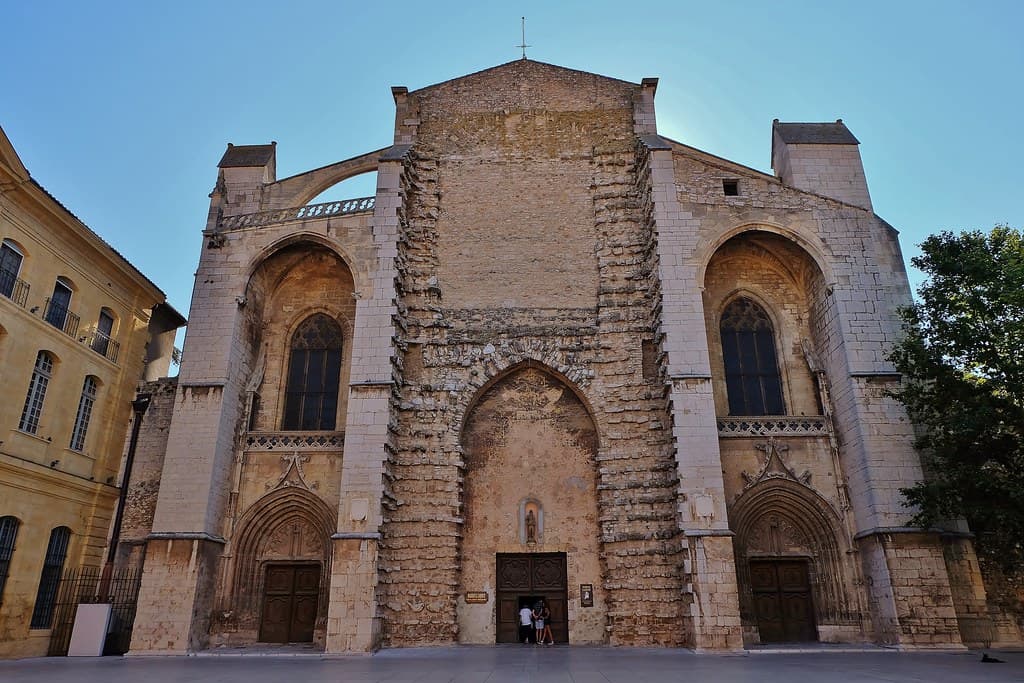
Saint-Maximin-la-Sainte-Baume, Basilica of Mary Magdalene
Saint-Maximin-la-Sainte-Baume, Provence-Alpes-Côte d'Azur, France
0.0 km away

Chapelle du Saint-Pilon
Plan-d'Aups-Sainte-Baume, Provence-Alpes-Côte d'Azur, France
16.1 km away

Aix Cathedral
Provence-Alpes-Côte d'Azur, France
34.7 km away

Abbey of Saint-Victor
Marseille, Provence-Alpes-Côte d'Azur, France
44.2 km away
Key questions
What pilgrims usually ask
- Why is Skelton of Mary Magdalene at Saint Maximin la Sainte-Baume considered sacred?
- Discover the skull and relics of Mary Magdalene at Saint-Maximin-la-Sainte-Baume. Plan your pilgrimage to this sacred crypt in Provence, France.
- What should I wear at Skelton of Mary Magdalene at Saint Maximin la Sainte-Baume?
- Modest dress covering shoulders and knees. Casual but respectful attire is acceptable. Remove hats upon entering the basilica.
- Can I take photos at Skelton of Mary Magdalene at Saint Maximin la Sainte-Baume?
- Photography permitted in both basilica and crypt, without flash. Exercise discretion around worshippers. No photography during mass or other services.
- How long should I spend at Skelton of Mary Magdalene at Saint Maximin la Sainte-Baume?
- Allow 1-2 hours to fully experience the basilica and crypt. Those wishing to spend extended time in prayer or meditation should plan accordingly. Combining with the Sainte-Baume grotto requires a full day.
- How do you visit Skelton of Mary Magdalene at Saint Maximin la Sainte-Baume?
- Saint-Maximin-la-Sainte-Baume is located 45 km east of Aix-en-Provence and 60 km northeast of Marseille. The town has a train station with regular service from Marseille. By car, the A8 motorway provides easy access. The basilica is in the town center, clearly visible and walkable from the station.
- What offerings are appropriate at Skelton of Mary Magdalene at Saint Maximin la Sainte-Baume?
- Candles may be lit in designated areas for a small donation. Monetary gifts support basilica maintenance and Dominican ministry.
- What etiquette should visitors follow at Skelton of Mary Magdalene at Saint Maximin la Sainte-Baume?
- Respectful comportment appropriate to an active place of worship. Modest dress, quiet behavior, and sensitivity to those engaged in prayer are the essential requirements.
- What is the history of Skelton of Mary Magdalene at Saint Maximin la Sainte-Baume?
- Provencal tradition tells of the first century: after Jesus's ascension and the martyrdom of Saint James, persecution scattered the Jerusalem community. Mary Magdalene, with her siblings Martha and Lazarus, Saint Maximin, and other disciples, set sail in a boat provided without sails or oars. Divine guidance brought them to the shores of Provence at what is now Saintes-Maries-de-la-Mer. While her companions evangelized the coastal cities, Mary eventually sought solitude, retreating to a cave high in the Sainte-Baume mountains. There she spent thirty years in prayer and contemplation until angels bore her to Saint Maximin for final communion and burial. He interred her body in a marble sarcophagus, and through centuries of upheaval—Saracen invasions, political turmoil—the tomb lay hidden and protected.