The Giants' Tomb of Madau
A city of the dead rises in the mountain valley, its stelae carved with symbols that may map the stars
Understand sacred places, explore living traditions, and learn how to engage respectfully with Pilgrim Map.
Access has not been verified. Check current local guidance before planning a visit.
Orgòsolo/Orgosolo, Nuoro, Italy
Read the sources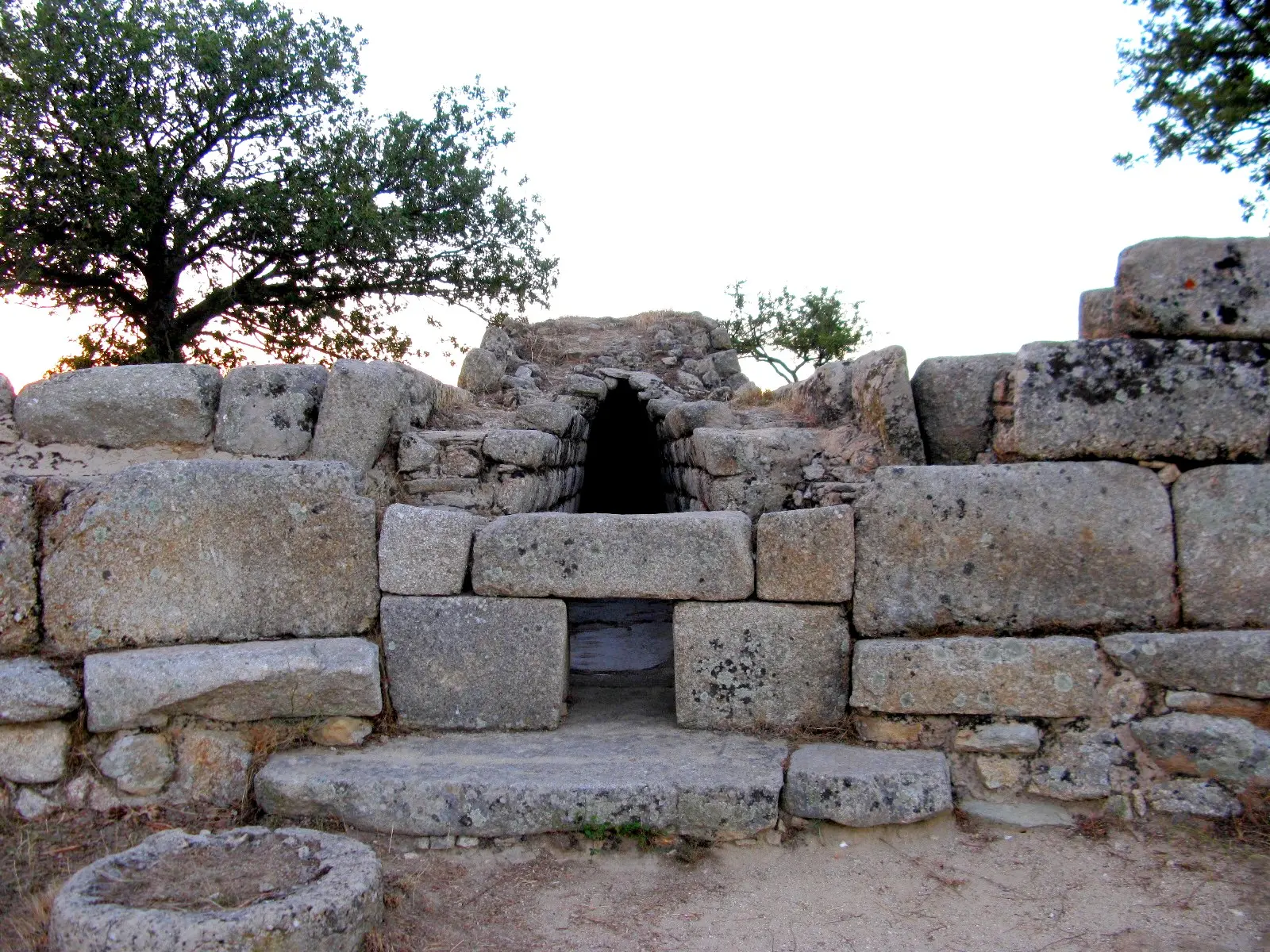
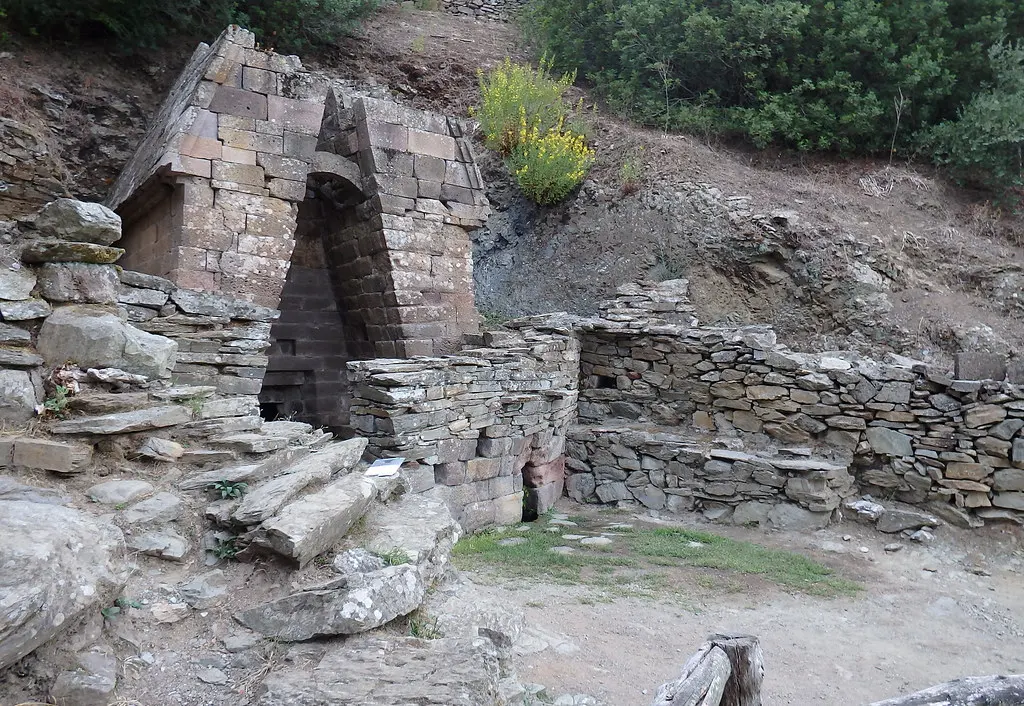
Image of The Giants' Tomb of Madau. Image source · CC-BY-SA-3.0
Visit essentials
A quick read before you go
- Duration
- 1-2 hours for necropolis; longer if combined with Gremanu sanctuary.
- Etiquette
- Respect the necropolis as both archaeological site and accumulated burial ground for hundreds of…
Overview
Madau's mountain valley holds four Giants' Tombs, a community-scale Nuragic necropolis where each tomb could contain hundreds of dead. The first was built over an older dolmen, showing that the valley's sacred use predates this burial tradition.
Stelae carry magical-religious motifs and cup marks. Scholars have connected one image to the Pleiades, though the interpretation remains uncertain. If correct, burial rites may have followed celestial timing; the tombs' southeast orientation toward sunrise adds a solar relationship. The largest exedra extends 24 meters, creating a monumental ceremonial forecourt.
Giovanni Lilliu, called the “father of Sardinian archaeology,” excavated Madau from 1982 to 1986. It is among 31 monuments proposed for UNESCO World Heritage status as representatives of Nuragic civilization. The Sanctuary of Gremanu, about 1.5 kilometers away, places the necropolis within a wider sacred landscape of burial and living ceremony.
Why this place is sacred
Madau's force lies in accumulation: four communal tombs gathered generations of dead in a valley facing the rising sun. Their symbols deepen that concentration. Cup marks belong to a debated prehistoric vocabulary found at sacred sites across Europe. One stele's possible Pleiades image may place death within seasonal and celestial cycles; the cluster's rising and setting provided an agricultural-calendar context, but this reading remains scholarly interpretation rather than certainty.
The first tomb overlays an older dolmen, so sacred use preceded the visible necropolis. The nearby Sanctuary of Gremanu links burial to a broader ceremonial geography. Mountain landscape, interment, worship, solar orientation, and possible stellar observation converge here, even though Nuragic meanings cannot be fully recovered.
Built during Bronze Age (Early or Late) as collective burial necropolis. Four tombs facing southeast toward the rising sun. Magical-religious symbols including possible Pleiades imagery suggest ceremonies timed to celestial events.
First tomb built over older dolmen structure, showing earlier sacred use. Excavated by Giovanni Lilliu 1982-1986. Selected for UNESCO nomination as one of 31 representative Nuragic monuments.
Experience and orientation
From Fonni toward Pratobello, follow SP 2 toward Lanusei to kilometer 7.2; the four tombs lie a short distance off the road on the right.
Begin with their collective scale, then approach the largest tomb's 24-meter exedra. Each tomb uses the familiar curved-exedra, corridor-burial, stone-construction form; together they create a community necropolis. The largest forecourt suggests community ceremony without establishing exactly what rites occurred. At the Stela di Madau, examine imagery scholars have associated with the Pleiades while keeping that interpretation provisional. The tombs face southeast toward sunrise; cup marks on several stelae are deliberate, but their meaning remains uncertain.
If time allows, continue about 1.5 kilometers to the Sanctuary of Gremanu. Its proximity shows that Madau's mountain sacred geography included more than burial.
From Nuoro, take SS 389 toward Mamoiada, then road to Fonni. Turn left toward Pratobello. After hamlet, continue on SP 2 toward Lanusei to km 7.2. Tombs on right, short distance from road. Check locally for current visiting arrangements.
Context and lineage
The Giants' Tombs of Madau were built during the Bronze Age, creating a necropolis in the mountain valley near Fonni—Sardinia's highest town. Four tombs, each capable of holding hundreds of deceased, transformed this valley into a landscape dedicated to the dead.
The first tomb was built over an older dolmen structure, indicating that sacred use of this location predates the Giants' Tomb tradition itself. Generation after generation recognized the valley's appropriateness for burial, adding tombs until the current four marked the landscape.
What makes Madau exceptional is the symbolic carvings on the stelae. Magical-religious motifs, cup marks, and imagery possibly representing the Pleiades indicate sophisticated spiritual beliefs that may have included astronomical observation. The tombs face southeast toward the rising sun, adding solar orientation to possible stellar symbolism.
Giovanni Lilliu, the 'father of Sardinian archaeology,' excavated Madau between 1982 and 1986. His work established the site's significance for understanding Nuragic funerary practices and religious beliefs.
The nearby Sanctuary of Gremanu, approximately 1.5 kilometers away, connects the necropolis to living sacred practice. The valley held concentration of religious activity that included both burial and worship.
Madau is now among 31 monuments proposed for UNESCO World Heritage status as representatives of Nuragic civilization—recognition of its exceptional importance for understanding Bronze Age Sardinian culture.
Built by Nuragic civilization (Bronze Age). First tomb over older dolmen showing earlier sacred use. Excavated 1982-1986 by Giovanni Lilliu. Selected for UNESCO nomination as one of 31 representative monuments.
Giovanni Lilliu
Archaeologist
Traditions and practice
Collective burial with possibly hundreds of deceased per tomb. Funerary ceremonies in large exedra (up to 24 meters). Symbols on stelae suggesting ceremonies timed to celestial events. Tombs oriented southeast toward the rising sun.
Archaeological appreciation and cultural tourism. Both Madau and nearby Gremanu sanctuary are open to visitors. Guided tours may be available.
Visit all four tombs to appreciate the necropolis scale. Seek out the Stela di Madau with its symbolic carvings. Contemplate the possible Pleiades connection and what it implies about Nuragic cosmology. Visit Gremanu sanctuary to understand the valley's broader sacred significance.
Nuragic Collective Burial with Astronomical Symbolism
HistoricalMadau represents Nuragic collective burial at unprecedented necropolis scale, with symbolic carvings suggesting astronomical knowledge. The possible Pleiades imagery indicates sophisticated understanding of celestial cycles integrated with funerary practice.
Collective burial with possibly hundreds of deceased per tomb. Ceremonies in large exedra (up to 24 meters). Symbols carved on stelae possibly representing the Pleiades. Southeast orientation toward the rising sun.
Perspectives and open questions
Madau can be understood as unprecedented necropolis scale, as evidence of Nuragic astronomical knowledge, as the work of Giovanni Lilliu, or as UNESCO-nominated testimony to Bronze Age Sardinian civilization.
Scholarly perspective
Giovanni Lilliu's excavation established Madau as one of the most important Giants' Tomb sites. The presence of multiple tombs and symbolic carvings makes it exceptional for understanding Nuragic funerary practices and religious beliefs. The possible astronomical symbolism is active area of research.
Living and traditional perspectives
The site's selection for UNESCO nomination reflects its importance to Sardinian cultural heritage. Connection to Giovanni Lilliu, who dedicated his life to Sardinian archaeology, adds cultural significance.
Alternative interpretations
The possible Pleiades symbolism attracts researchers interested in ancient astronomical knowledge. The multiple tombs and their orientation generate interest in sacred geometry and landscape alignments.
Open questions
The full meaning of the symbols on the Stela di Madau remains uncertain. Whether the Pleiades interpretation is correct requires further research. The contents of the fourth unexplored tomb are undocumented. The relationship between the necropolis and Gremanu sanctuary invites further study.
Plan your visit
Access and arrival
Accommodation available in Fonni and surrounding area.
Respectful visit
No specific requirements. Comfortable walking shoes recommended for mountain terrain.
Photography permitted.
Not appropriate at archaeological sites.
Respect the ancient structures and carvings. Stay on designated paths. Do not touch the symbolic carvings.
Mountain terrain; may present challenges for mobility-impaired visitors. Check locally for current visiting arrangements.
Current practical details
Address
08023 Fonni, Province of Nuoro, Italy
Hours
Hours, fees, and access can change — verify on the official source before you travel. Practical details last checked Jun 2026.
Location
Map loads as you approach this section.
Pilgrim reflections
A portrait of encounter, not a score
Pilgrims describe what they felt, how present they could become, and whether the place would shape a journey. There are no stars and no ranking of traditions.
No reviewed reflections yet
The first pilgrims can help describe the character of being here.
Share a reflection
Available after an account-backed “Been there.” Every reflection is reviewed before publication.
Nearby sacred places
Explore other sacred places in the region. Proximity does not establish access or travel time; check each place’s guidance.
References
Sources consulted for this page. Source categories describe the publication, not a guarantee that every claim is verified. Traditional accounts and outside interpretations may differ.
- 01Giants' Tombs of Madau - Fonni - La Sardegna verso l'Unesco — La Sardegna verso l'UnescoSource contextUNESCO candidacy documentation
- 02Fonni, Tombs of the Giants of Madau - Sardegna Cultura — Sardegna CulturaofficialOfficial cultural information
- 03Necropolis of Madau - Sardegna Turismo — Sardegna TurismoofficialOfficial tourism information
- 04A Guide To Fonni, Sardinia: 10 Best Things To Do — Strictly SardiniaguideVisitor-oriented guide
- 05Giants' grave - Wikipedia — Wikipedia contributorsencyclopediaGeneral reference
Share a photo
Help visitors recognize The Giants' Tomb of Madau. Every submission is reviewed before publication.