Fonte Sacra Su Tempiesu
The only Nuragic sacred well preserving its original temple structure
Understand sacred places, explore living traditions, and learn how to engage respectfully with Pilgrim Map.
Access has not been verified. Check current local guidance before planning a visit.
Orune, Nuoro, Italy
Read the sources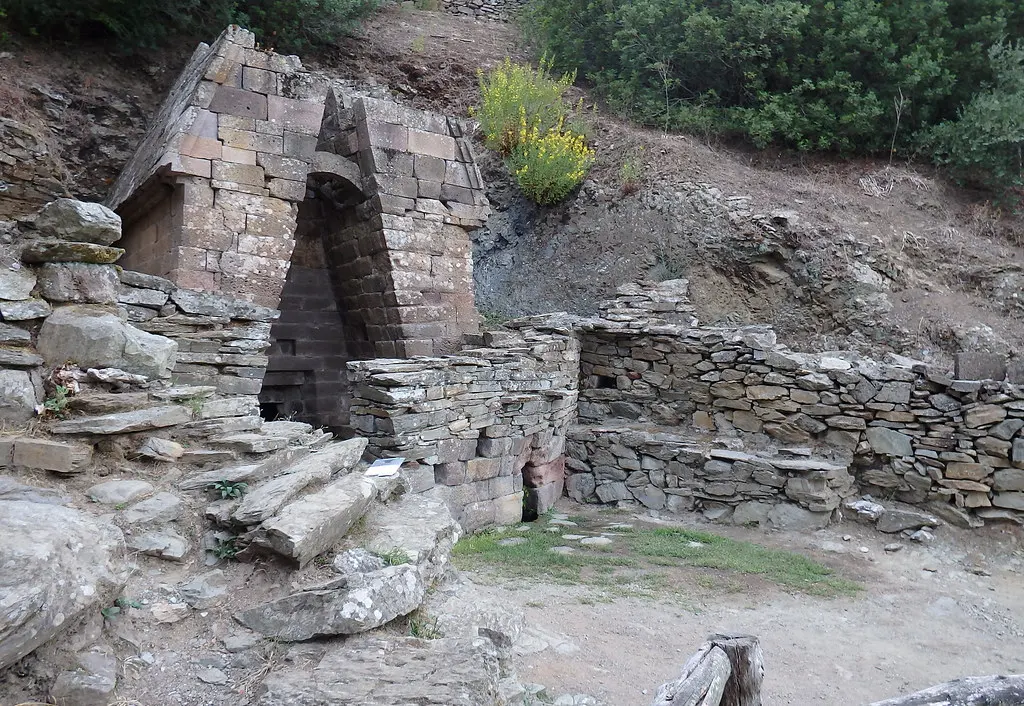
Image of Fonte Sacra Su Tempiesu. Image source
Visit essentials
A quick read before you go
- Duration
- 1 hour with guided tour
- Access
- From Orune, follow signs to Su Tempiesu.
Overview
Although the surrounding landscape yields granite and shale, Su Tempiesu's builders transported trachyte and basalt from distant quarries, shaping precise ashlars by the Opus isodomum technique and joining them with lead clamps for sacred architecture. Its vestibule and staircase descend to a cell collecting spring water, the typical form of a Nuragic water sanctuary. Yet among Sardinia's Nuragic sacred wells and springs, Su Tempiesu alone preserves its elevated structures and covering rather than only foundations or subterranean portions.
Rising 6.85 meters with walls and roof, it reveals a complete Bronze Age temple whose sophistication rivals contemporary Mediterranean cultures.
Why this place is sacred
The Nuragic civilization left over 7,000 monuments across Sardinia—nuraghi, giants' graves, sacred wells. But Su Tempiesu holds a singular position: it is the only sacred well-temple where we can see what the original building looked like above ground.
This uniqueness changes understanding. The foundations of other sacred wells suggest subterranean chambers; Su Tempiesu proves that these chambers were topped by substantial architecture. The 6.85-meter height, the Opus isodomum stonework, the lead clamps connecting ashlars—all reveal engineering competence that confirms the Nuragic civilization as a sophisticated Bronze Age culture.
The Opus isodomum technique itself demands attention. Perfectly worked ashlars of trachyte and basalt, fitted with precision, connected by lead—this is not primitive construction but expert masonry. The stone came from distant sources; the surrounding region produces granite and shale. The builders chose their materials deliberately, transporting them at significant cost to achieve the quality their sacred architecture required.
The water cult that animated Su Tempiesu lasted nine centuries. From the 13th century BCE, when the temple was constructed in the Late Bronze Age, until the Early Iron Age (4th century BCE), worshippers came to these healing waters. They deposited offerings in the sacred spring: rings, bracelets, and bronze figurines depicting warriors and commanders.
The gifts suggest the importance of those who came—individuals of sufficient status to afford bronze, seeking healing or purification or connection with water deities whose names we no longer know.
A landslide ended the temple's active life but preserved what time otherwise would have destroyed. When rediscovered in 1953 during aquifer work, the buried structures revealed what no other Nuragic site could show. The archaeological campaigns of the 1980s and 1990s confirmed the significance: here was original evidence of Nuragic sacred architecture in its complete form.
The 31 Nuragic monuments proposed for UNESCO World Heritage include Su Tempiesu as a singular example of what the civilization achieved in its water sanctuaries. The temple stands as proof of beliefs we can no longer fully recover but whose physical expression survives in stone and bronze.
Nuragic sacred well-temple for water worship. Vestibule, staircase, and cell collecting spring water. Opus isodomum construction. Votive offerings deposited in healing waters.
13th century BCE: Temple constructed. 13th-4th century BCE: Nine centuries of worship. Early Iron Age: Landslide causes abandonment and preservation. 1953: Rediscovered. 1980s-90s: Excavation by Maria Ausilia Fadda.
Experience and orientation
The approach to Su Tempiesu leads through the countryside of central-northern Sardinia, near Orune. The forested setting creates peaceful transition from the modern world to a monument that has stood for over three millennia.
The temple appears as no other Nuragic sacred well appears: complete. Rising 6.85 meters, the structure reveals what foundations elsewhere can only suggest. The walls of worked trachyte and basalt ashlars demonstrate the Opus isodomum technique—precisely fitted stones connected by lead clamps. This is Bronze Age masonry of the highest order.
The three-part structure follows Nuragic sacred well design: vestibule where worshippers entered, staircase descending toward the water, cell where the spring flows and where votive offerings were once deposited. The descent from vestibule to cell creates a journey—from surface to depth, from air to water, from the everyday world to the sacred element.
The guide explains what the stones cannot tell: the healing and purifying powers the Nuragic people attributed to water, the rings and bracelets and bronze figurines deposited as gifts, the nine centuries during which worshippers returned to this spring. The archaeological finds—now in museums—revealed warriors and commanders in bronze, suggesting that those who came were of significant status.
The landslide that ended the temple's active use is part of its story. Without that burial, the elevated structures would have collapsed; with it, they survived to reveal what no other Nuragic site preserves. The tragedy that ended worship became the means of preservation.
Visiting Su Tempiesu requires guides, who can provide context that deepens the encounter. The UNESCO tentative list recognition confirms what any visitor senses: this is a monument of exceptional importance, singular in what it reveals about Nuragic sacred architecture.
Su Tempiesu is located in the countryside near Orune in central-northern Sardinia (Nuoro area). Access is with guides.
Context and lineage
In the 13th century BCE, Nuragic builders chose a spring in what is now the Orune countryside and constructed a sacred well-temple unlike any other that would survive. They transported trachyte and basalt from distant sources, worked the stone with the Opus isodomum technique, and connected the ashlars with lead clamps. The temple rose 6.85 meters—vestibule, staircase, cell containing the sacred water.
For nine centuries, until a landslide caused abandonment in the Early Iron Age, worshippers deposited votive offerings in the healing spring: rings, bracelets, bronze figurines of warriors and commanders. That same landslide preserved what it ended; when rediscovered in 1953, Su Tempiesu revealed what no other Nuragic site could show: the complete architecture of a sacred well.
Built by Nuragic civilization. Part of broader Nuragic water cult tradition. No descendant tradition preserves original practices.
Maria Ausilia Fadda
Traditions and practice
Water worship at sacred spring. Deposition of votive offerings (rings, bracelets, bronze figurines of warriors and commanders). Healing and purification rituals.
Archaeological site visitation with guides.
Visit with a guide who can explain the architectural significance and the votive practices. Appreciate the descent from vestibule to cell—the journey toward sacred water. Consider the nine centuries of worship that filled the spring with offerings.
Nuragic Water Cult
HistoricalSu Tempiesu is the only Nuragic well-temple preserving its original elevated structures. The 6.85-meter temple was built in the 13th century BCE and used for nine centuries. Votive offerings deposited in the sacred spring included bronze figurines of warriors and commanders.
No longer practiced. Archaeological evidence indicates water worship with votive offerings seeking healing or purification.
Perspectives and open questions
Su Tempiesu offers encounter with the only Nuragic well-temple preserving its original elevated structures—6.85 meters of Bronze Age sacred architecture that reveals what other sites can only suggest.
Scholarly perspective
The only Nuragic sacred well-temple preserving elevated structures and covering. Built 13th century BCE with Opus isodomum technique using lead clamps. Height 6.85m. Used until 4th century BCE. Votive offerings include bronze figurines. UNESCO tentative list.
Living and traditional perspectives
No living tradition preserves Nuragic water cult practices.
Alternative interpretations
The sacred spring and its temple have attracted interest in healing water traditions and ancient hydrotherapy.
Open questions
The identity of the water deities. The specific healing or purification rituals. Why stone was transported from distant sources. The full range of ceremonies.
Plan your visit
Access and arrival
From Orune, follow signs to Su Tempiesu. Car recommended. Access with guides only.
Accommodations in Nuoro and Barbagia region.
Respectful visit
No dress code. Comfortable walking shoes.
Photography permitted.
None; archaeological site.
Access with guides | Respect archaeological structures
Access with guides only. Check locally for available times.
Current practical details
Address
Str. di Sa Costa ‘e Sa Binza, 08020 Orune NU, Italy
Phone
Hours
Hours, fees, and access can change — verify on the official source before you travel. Practical details last checked Jun 2026.
Location
Map loads as you approach this section.
Pilgrim reflections
A portrait of encounter, not a score
Pilgrims describe what they felt, how present they could become, and whether the place would shape a journey. There are no stars and no ranking of traditions.
No reviewed reflections yet
The first pilgrims can help describe the character of being here.
Share a reflection
Available after an account-backed “Been there.” Every reflection is reviewed before publication.
Nearby sacred places
Explore other sacred places in the region. Proximity does not establish access or travel time; check each place’s guidance.


References
Sources consulted for this page. Source categories describe the publication, not a guarantee that every claim is verified. Traditional accounts and outside interpretations may differ.
- 01Su Tempiesu | SardegnaTurismo — Regione Sardegna TourismofficialOfficial tourism information
- 02Orune, Sacred Source of Su Tempiesu | SardegnaCultura — Regione SardegnaofficialOfficial cultural heritage
- 03Sacred Spring of Su Tempiesu - Orune | Sardegna verso UNESCO — Sardegna verso UNESCOSource contextUNESCO candidacy documentation
- 04Nuragic monuments of Sardinia | UNESCO — UNESCO World Heritage CentreofficialUNESCO tentative list
Share a photo
Help visitors recognize Fonte Sacra Su Tempiesu. Every submission is reviewed before publication.