Archaeological Zone Tepozteco
The cliff-edge temple of the pulque god where pilgrimage endures across five centuries
Understand sacred places, explore living traditions, and learn how to engage respectfully with Pilgrim Map.
Access has not been verified. Check current local guidance before planning a visit.
Tepoztlan, Morelos, Mexico
Read the sources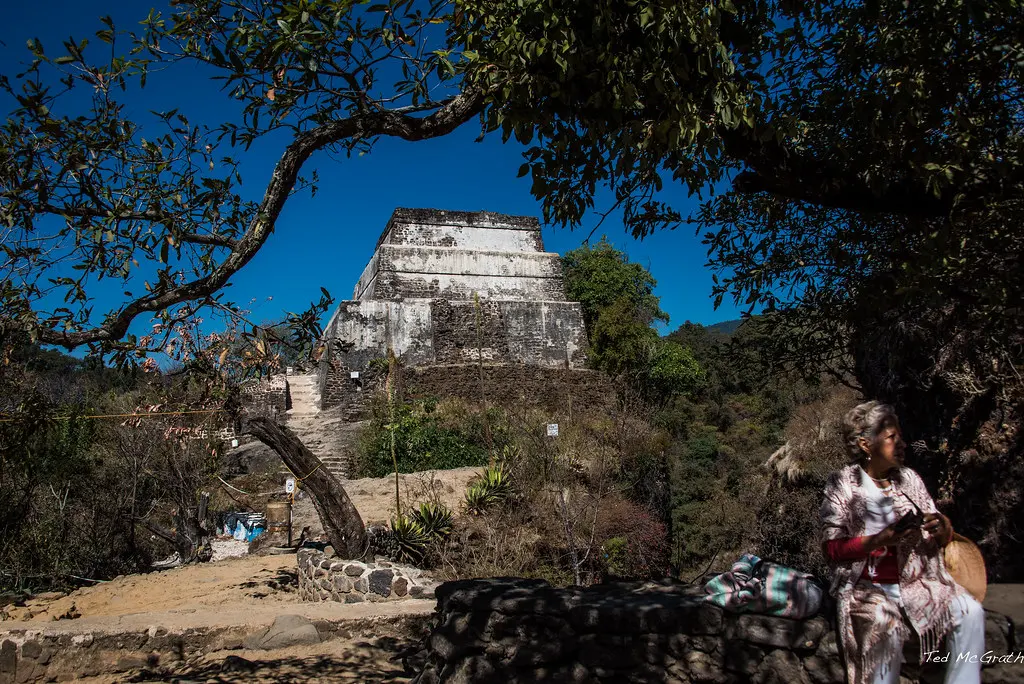
Image of Archaeological Zone Tepozteco. Image source
Visit essentials
A quick read before you go
- Duration
- 4 hours including time at the pyramid and descent
- Etiquette
- Archaeological site within a National Park.
Overview
The Xochimilca people built El Tepozteco between 1150 and 1350 CE, carrying stones on their backs up a mountain too steep for beasts of burden. This was not merely construction but devotion made physical, each step an offering. The temple they created honored Ometochtli-Tepoztecatl, Two Rabbit, the god who presided over pulque, the sacred fermented drink of the maguey plant.
In ancient times, pilgrims came from as far as Guatemala and Chiapas to seek blessings for fertility, good harvests, and personal vitality. Pulque was not mere intoxication but communion, a sacred substance that opened channels to the divine. When the Aztec Triple Alliance conquered Tepoztlan in 1452, they recognized what the Xochimilca had built. They added imperial glyphs to the temple, turquoise crown and shield with arrows symbolizing Aztec sovereignty, incorporating this sacred site into their network of ceremonial centers.
Stones bearing the name of Emperor Ahuizotl and the date 1502 CE mark this imperial investment. Then came the Spanish. A Dominican friar destroyed the shrine and statue of Tepoztecatl atop the pyramid, attempting to supplant indigenous worship with the Fiesta del Templo on September 8th. But the local people simply moved their celebration to September 7th and continued their ancient observance.
Five hundred years later, the Festival del Tepoztecatl continues each September, with pilgrims climbing through the night to the pyramid for all-night ceremonies featuring copious consumption of pulque in honor of the god. This is no reconstruction or revival but unbroken tradition, devotion that outlasted conquest. The temple sits within what modern seekers call one of Mexico's most powerful energy vortexes. Nearby Amatlan claims to be the birthplace of Quetzalcoatl, the feathered serpent. Temazcal ceremonies continue throughout the region.
Ancient pilgrims sought transformation here for over a thousand years. Contemporary seekers find something similar, though they may use different language.
Why this place is sacred
What makes El Tepozteco feel sacred begins with the approach. The climb is steep, over 1,200 feet of elevation gain through cloud forest, testing devotion before granting encounter. This is pilgrimage architecture as old as religion itself: the journey transforms the pilgrim before arrival. By the time you reach the summit, gasping and sweating, you have earned the temple through effort. Your body has participated in something your mind alone could not accomplish. The setting amplifies what the journey initiates.
From the pyramid's platform, you look down on the valley of Tepoztlan, the Sierra de Tepoztlan mountains rising on all sides. Mist moves through the peaks, revealing and concealing. The world feels arranged, as if this vantage point exists specifically for seeing something important. The temple clings to a cliff edge, 600 meters above the town, positioned between earth and sky in a way that feels intentional rather than accidental. The continuous devotion matters.
When the Spanish destroyed the original shrine, they believed they were ending something. Instead, they merely changed its surface. The people of Tepoztlan adapted their celebration, moved their festival, and continued their communion with Tepoztecatl. Five centuries of unbroken tradition have invested this place with accumulated presence. The pulque consumed each September connects contemporary pilgrims to ancient worshippers through the same sacred substance, the same gestures of offering, the same night vigil awaiting dawn. The legend adds another dimension.
Okuninushi and Sukunabikona in their stone; here Tepoztecatl declared that his spirit would reside within the temple stone for eternity, pacifying the land. Spanish destruction removed the statue but not, according to local belief, the god. He remains, accessible to those who make the climb and approach with proper intent.
The region's reputation as an energy vortex, as the birthplace of Quetzalcoatl, as a center for healing traditions, all contribute to an atmosphere where the boundary between ordinary and sacred seems permeable.
Pilgrimage temple for veneration of the pulque god, designed to be earned through physical effort and to connect worshippers with divine presence.
Built 1150-1350 CE by Xochimilca people. Incorporated into Aztec Triple Alliance after 1452 conquest. Spanish destruction of shrine in 16th century. Continuous pilgrimage tradition despite colonial suppression. Annual September festival unbroken for centuries. National Park established 1937. Contemporary spiritual tourism alongside traditional pilgrimage.
Experience and orientation
The pilgrimage to El Tepozteco begins at the end of Avenida del Tepozteco in the town center. From there, a 2.9-kilometer trail climbs steeply through increasingly lush vegetation. Stone steps, concrete sections, and metal staircases mark the path, evidence of both ancient engineering and modern maintenance. The trail is clear but demanding; count on 1.5 hours for the ascent. As you climb, the valley falls away below. The town of Tepoztlan shrinks to tile roofs and church spires.
The Sierra de Tepoztlan rises around you, dramatic cliffs and green peaks emerging from mist. Coatis, raccoon-like mammals, congregate near the summit, accustomed to hikers but best left unfed. The vegetation thickens into cloud forest, and the air carries moisture even in dry season. The pyramid appears suddenly, perched on a cliff edge that seems to defy architectural logic. It is smaller than you might expect from photographs, approximately 10 meters high, built of carved stone now weathered by centuries.
The structure faces west toward the setting sun, its platform offering views that explain why this location was chosen: you can see everything from here, and everything can see you. Walk around the pyramid, absorbing its presence from different angles. Examine the carved glyphs on the stone benches, though their meaning may not be immediately clear. Notice the bas-reliefs depicting the 20 days of the tonalpohualli, the sacred 260-day calendar.
This is a calendar as much as a temple, cosmic time encoded in stone. The descent takes about 1.5 hours and requires attention; the same stone steps that challenged you ascending become treacherous going down. By the time you reach the valley floor, you will understand viscerally why this is a pilgrimage site. The temple cannot be reached casually. It demands investment, and in that demand lies its teaching.
Trailhead at the end of Avenida del Tepozteco (formerly Avenida 5 de Mayo) in Tepoztlan town. The trail is well-marked but steep, with stone steps, concrete sections, and metal staircases. The pyramid is at 2,310 meters elevation. Allow 1.5 hours up, 1.5 hours down. Archaeological site entrance after the climb. Town and market accessible before or after.
Context and lineage
According to Aztec mythology, Tepoztecatl was one of the 400 children of Mayahuel, goddess of the maguey plant, and Patecatl, god who discovered fermentation. As leader of the Centzon Totochtin, the Four Hundred Rabbits representing drunkenness, Tepoztecatl personified the ritual and cultural significance of pulque. His alternative name Ometochtli, Two Rabbit, reflects his calendrical association. He was also known as Ehecacone, 'son of the wind,' connecting him to Tlaloc's rain cult and the forces necessary for maguey cultivation.
According to local tradition, the gods Okuninushi and Sukunabikona came from Izumo to this region as peacemakers. Granted one day to build a stone palace, they labored through the night but were thwarted by rebellious local kami. By dawn the structure remained incomplete, but the gods proclaimed their spirits would reside within the stone for eternity, pacifying the land.
Another legend holds that the nearby village of Amatlan is the birthplace of Quetzalcoatl, the feathered serpent, making the entire region sacred geography.
El Tepozteco exists within a network of sacred sites including Teotihuacan, Malinalco, Xochicalco, Cholula, and Templo Mayor. The region's connection to Quetzalcoatl and continuing temazcal traditions place it within ongoing Mesoamerican spiritual practice. The unbroken September festival represents one of Mexico's most remarkable examples of religious continuity across colonial and modern periods.
Tepoztecatl (Ometochtli)
The Xochimilca
Traditions and practice
Ancient pilgrims traveled from as far as Guatemala and Chiapas, climbing the mountain with offerings of pulque, flowers, and copal incense to seek blessings from Tepoztecatl. Pulque consumption was central to worship, understood not as intoxication but as communion with the divine. All-night ceremonies honored the god during festival periods. These practices survived Spanish conquest through adaptation.
The Festival del Tepoztecatl on September 7 continues ancient traditions with an overnight vigil at the pyramid, copious consumption of pulque, traditional music and dance. The following day (September 8) features the Fiesta del Templo, a Catholic celebration that now includes Nahuatl-language theater performances. Temazcal ceremonies are available throughout Tepoztlan, offered by local curanderos who maintain traditional practices of energetic cleansing with copal, chanting in Nahuatl, and ceremonial herbs.
The hike to the pyramid is treated by many visitors as spiritual pilgrimage rather than mere exercise.
Approach the hike as pilgrimage rather than exercise. Leave early to avoid midday heat and crowds. Carry water and rest when needed; the steep climb rewards patience rather than rushing. At the summit, allow time to simply be present with the pyramid rather than immediately photographing and moving on. Consider the pulque god whose spirits are said to dwell within the stone. If visiting during the September 7-8 festival, participate with respect for an unbroken tradition.
If interested in temazcal, seek recommendations from locals for authentic practitioners.
Aztec/Mexica and Nahua
ActiveEl Tepozteco was one of the most important religious sites in the Aztec sphere, dedicated to Tepoztecatl, god of pulque, fertility, and harvest. The temple attracted pilgrims from across Mesoamerica. Contemporary celebrations continue unbroken from pre-Hispanic times.
Pilgrimage to the mountain temple. Offerings of pulque, flowers, and copal incense. All-night ceremonies during festivals. Pulque consumption as sacred communion. Temazcal ceremonies in the region.
Contemporary Spiritual/New Age
ActiveTepoztlan has become one of Mexico's premier spiritual centers, attracting healers, mystics, and seekers. The region is believed to sit on a healing energy vortex.
Temazcal ceremonies led by curanderos. Energy healing and spiritual retreats. Meditation at sacred sites. Pilgrimage to Quetzalcoatl's legendary birthplace in Amatlan.
Perspectives and open questions
El Tepozteco exists at the intersection of pre-Hispanic pilgrimage, colonial resistance, continuous indigenous tradition, and contemporary spiritual seeking.
Scholarly perspective
Archaeological consensus confirms the temple was built during the Postclassic period (1150-1350 CE) by the Xochimilca and later modified by the Aztec Triple Alliance. The carved glyphs, including the 20 days of the tonalpohualli calendar and imperial symbols, provide key dating evidence. The site functioned as a major regional cult center for the pulque god, attracting pilgrims from across Mesoamerica. Scholars debate whether the 1502 CE date on certain stones indicates original construction or later commemorative additions.
Living and traditional perspectives
Within Nahua tradition, Tepoztecatl remains a living deity honored through the annual September festival. The mountain and temple represent sacred space where divine and human worlds meet. Pulque is understood not merely as alcoholic beverage but as sacred substance connecting worshippers to fertility, harvest, and cosmic forces. The steep pilgrimage ascent embodies the spiritual truth that sacred connection requires effort and sacrifice.
Alternative interpretations
Contemporary spiritual practitioners view Tepoztlan as one of Mexico's most powerful energy vortexes. The region is considered part of a sacred grid connecting ancient pyramid sites. Some believe accumulated energy from over 500 years of pilgrimage and worship has created a concentrated spiritual field. The area's association with Quetzalcoatl adds to its significance as a place of transformation and spiritual awakening.
Open questions
How ancient builders transported construction materials up the steep mountain. The exact nature and scope of pilgrimages from Guatemala and Chiapas. The location of the original shrine and statue destroyed by Spanish friars. The full meaning of all glyphs carved on the temple. Why this particular mountain peak was chosen over others in the Sierra de Tepoztlan.
Plan your visit
Access and arrival
Range of hotels and guesthouses in Tepoztlan. The town is popular for weekend escapes from Mexico City.
Respectful visit
Sturdy footwear with good grip is essential; the trail includes steep stone steps that become slippery. Layers recommended for temperature changes between valley and summit. Rain gear advisable, especially May-October. Modest clothing appropriate for a sacred site.
Photography is generally permitted at the archaeological site. Be mindful of other visitors. During the September festival, ask permission before photographing ceremony participants.
Traditional offerings include pulque, flowers, and copal incense. Modern visitors may bring small offerings if done respectfully. Do not leave trash or non-biodegradable items.
Do not feed the coatis. Stay on marked trails. Do not climb on restricted areas of the pyramid. No drones without special permits. Site closed Mondays and Tuesdays. Opening hours 9 AM-4 PM Wednesday-Sunday.
Bring cash for entrance fee (approximately 70 pesos).
Current practical details
Address
Carretera Federal libre, Cuernavaca - Tepoztlan, 62520 Tepoztlán, Mor., Mexico
Phone
Hours
Hours, fees, and access can change — verify on the official source before you travel. Practical details last checked Jun 2026.
Location
Map loads as you approach this section.
Pilgrim reflections
A portrait of encounter, not a score
Pilgrims describe what they felt, how present they could become, and whether the place would shape a journey. There are no stars and no ranking of traditions.
No reviewed reflections yet
The first pilgrims can help describe the character of being here.
Share a reflection
Available after an account-backed “Been there.” Every reflection is reviewed before publication.
Nearby sacred places
Explore other sacred places in the region. Proximity does not establish access or travel time; check each place’s guidance.


References
Sources consulted for this page. Source categories describe the publication, not a guarantee that every claim is verified. Traditional accounts and outside interpretations may differ.
- 01Tepozteco - INAH — Instituto Nacional de Antropologia e HistoriaofficialOfficial Mexican archaeological authority
- 02Tepozteco Archaeological Site, Morelos — Visit MexicoofficialOfficial Mexican tourism authority
- 03El Tepozteco - Wikipedia — Wikipedia contributorsacademicDetailed archaeological and historical information
- 04Tepoztecatl - Wikipedia — Wikipedia contributorsacademicComprehensive information on the deity
- 05Tepoztlan - Wikipedia — Wikipedia contributorsacademicOverview of the town and its cultural significance
- 06El Tepozteco in Tepoztlan — Atlas ObscuraguideCultural context and visitor information
- 07Tepozteco Ruins Guide | Aztec Shrine Above Tepoztlan — Lost Ruins of the AmericasguideDetailed visitor guide and historical context
- 08Piramide de Tepozteco | Lonely Planet — Lonely PlanetguideEstablished travel resource
- 09Tepoztecatl God: An Aztec Deity of Pulque, Intoxication, and Fertility — Old World GodsspiritualDetailed mythological information
- 10Tepoztlan: Inside Mexico's most powerful spiritual center — Mexico News DailyguideContemporary spiritual significance
- 11Fiestas of Tepoztlan — Don KarpguideLocal festival information
- 1210 Best hikes and trails in El Tepozteco National Park — AllTrailsguideTrail and hiking information
- 13El Tepozteco National Park — PeakVisorguideGeographic and elevation data
- 14Sacred Mexico Pilgrimage To Pyramids, Volcanoes And Tepoztlan — Sacred TreksspiritualPilgrimage and spiritual significance
Share a photo
Help visitors recognize Archaeological Zone Tepozteco. Every submission is reviewed before publication.