Mt. Iztaccihuatl
The Sleeping Woman, a princess turned to stone by grief, still watched over by her warrior's smoking breath
Understand sacred places, explore living traditions, and learn how to engage respectfully with Pilgrim Map.
Access has not been verified. Check current local guidance before planning a visit.
Tlalmanalco, Puebla, Mexico
Read the sources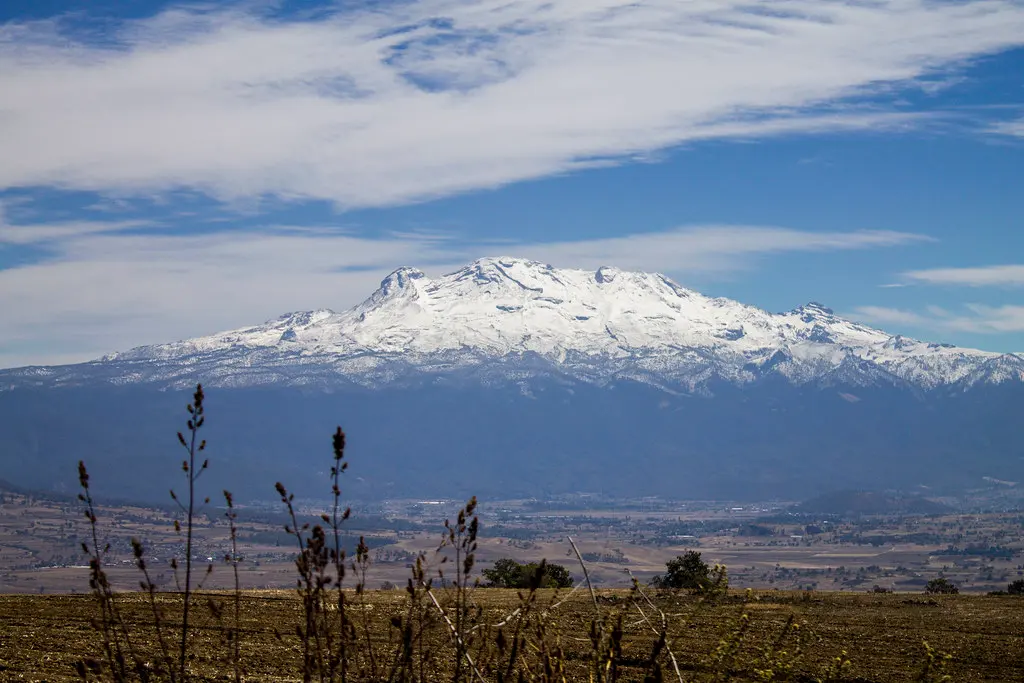
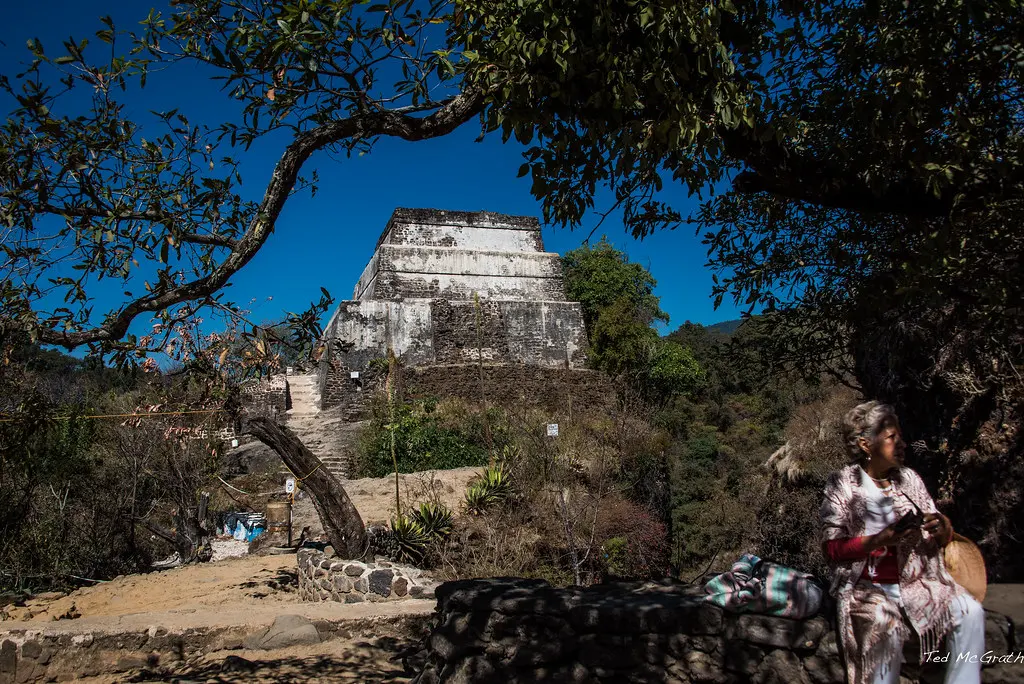
Image of Mt. Iztaccihuatl. Image source
Visit essentials
A quick read before you go
- Duration
- Viewpoint visit: 1-2 hours.
- Etiquette
- Approach the Sleeping Woman with respect appropriate to millennia of devotion.
Overview
Mexico's third-highest peak reclines like a sleeping woman. Iztaccihuatl—White Woman in Nahuatl—shows head, chest, knees, and feet in snow southeast of the Valley of Mexico. In the Aztec legend, the emperor promises her hand to her beloved warrior Popocatepetl upon his return, while never expecting him to survive the war he sends him to fight in Oaxaca; a rival's false report of his death kills her with grief.
He returns victorious, carries her beyond Tenochtitlan, and keeps vigil until the gods cover them with snow and make them mountains: the princess sleeping while the warrior still smokes and erupts beside her.
This remains a living relationship in Santiago Xalitzintla. Twice yearly, hundreds leave before dawn for a three-hour trek through pine forest, bringing offerings and petitions for rain, protection from hail, and calm from Popocatepetl. Catholic prayer and pre-Hispanic invocation meet without erasing their difference; for participants, efficacy matters more than category. Shrine ruins at 12,000 feet show that mountain worship predates the Aztecs. Izta-Popo Zoquiapan National Park now encompasses a sacred geography older than Mexico itself.
Why this place is sacred
Some mountains become sacred through human designation; Iztaccihuatl became sacred through her own form. The four peaks that compose her silhouette require no imagination to see as sleeping woman. She names herself to anyone who looks.
This self-naming creates the foundation for thinness. When a mountain presents as person, relationship becomes possible. You do not petition a geological formation; you petition a presence. The Sleeping Woman's shape invites approach, creates the possibility of being heard, makes pilgrimage sensible rather than symbolic.
The legend deepens what the form suggests. Iztaccihuatl did not choose to become mountain; grief transformed her. The princess who sleeps here sleeps because she could not bear life without her beloved. This is not divine power at comfortable distance but comprehensible human emotion rendered in stone and snow. Pilgrims who climb to her slopes bring their own griefs, their own loves, their own needs that sleep cannot solve. She understands.
Popocatepetl beside her adds dramatic tension. His smoke rises visible from Mexico City; his eruptions make news. The warrior who could not protect his princess in life now cannot stop threatening those who live in his shadow. The villagers who climb to Iztaccihuatl petition her in part to calm him, to speak to her lover across the saddle of Paso de Cortes, to use whatever influence eternal proximity grants.
The shrine ruins at 12,000 feet mark where generations before the Aztecs found the threshold thin enough to cross. At that altitude, oxygen thins along with the membrane between worlds. The body labors; the mind shifts; perception opens to what lower elevations obscure. Those who built shrines so high understood that the climb itself was preparation.
Today's pilgrims from Santiago Xalitzintla carry this understanding forward. Their ceremonies mix traditions because mixture is what survival required—Spanish power demanded Catholic form while efficacy demanded ancient practice. The result is not confusion but synthesis: prayers that reach because they have always reached, offered to a presence whose shape never changed.
The mountain served as sacred geography where deities connected to weather, fertility, and cosmic order could be approached through pilgrimage and offering.
From pre-Aztec shrine sites through Classic period worship to contemporary syncretic ceremonies, Iztaccihuatl has continuously served communities seeking agricultural blessing and volcanic protection.
Experience and orientation
Standing at Paso de Cortes, the high saddle between Iztaccihuatl and Popocatepetl, you occupy the space between legendary lovers. The Sleeping Woman lies to your left, her four peaks traced against sky. The Smoking Warrior rises to your right, plume ascending from his crater. At 3,600 meters, the thin air already carries different weight than the valley below.
For most visitors, this viewpoint offers sufficient encounter. Let the scale of what you see become real. These are not modest hills but massive volcanic structures—Iztaccihuatl rising to 5,230 meters, Popocatepetl to 5,426. The legend that animates them gains credibility at this altitude: of course gods transformed such presences from human passion. What else could have created them?
For climbers, Iztaccihuatl offers Mexico's most accessible high-altitude mountaineering. The standard route via La Joya begins at 3,900 meters and ascends 1,337 vertical meters to the summit. This is serious endeavor: crampons and ice axes necessary above 5,000 meters, the Grupo de los Cien hut at 16,000 feet providing high camp. Technical difficulty reaches Class 2-3 scrambling with glacier passage. Six hours up, four down, assuming fitness and acclimatization.
But climbing the summit differs from pilgrimage. The villagers of Santiago Xalitzintla do not summit; they approach as far as devotion requires, then offer what they have brought. Their three-hour trek through pine forest reaches whatever altitude the ceremony needs. The Sleeping Woman hears from slopes as well as summit.
Join the biannual pilgrimages if possible. Before dawn, the community gathers with offerings prepared. The climb through forest follows paths their ancestors traced. At the ceremonial site, Catholic prayers weave with pre-Hispanic invocations. Flowers, food, incense: what the tradition has learned the mountain accepts. The petitions are practical—rain for crops, protection from hail, calming of volcanic threat—but the practice is profound.
Descending from either summit or ceremony, the valley below seems smaller than before. You have been where the air thins and presence thickens, where the shape of a sleeping woman has invited human approach for longer than history records.
Izta-Popo Zoquiapan National Park lies approximately 35 miles from Mexico City, accessed via Amecameca. Paso de Cortes viewpoint at 3,600m. La Joya trailhead serves summit climbers. Santiago Xalitzintla serves as base for pilgrimages.
Context and lineage
Long before the Aztecs told their legend, someone climbed to 12,000 feet on Iztaccihuatl and built shrines. The ruins discovered at that altitude testify to worship whose origins we cannot date and whose practitioners we cannot name. They saw the shape. They climbed toward it. They left stones arranged for purposes we can only guess.
The Aztecs inherited this tradition and enriched it with story. Iztaccihuatl became a princess, daughter of an emperor, in love with the warrior Popocatepetl. The narrative explains what the landscape shows: a woman lying in snow-draped sleep, a man smoking beside her. The emperor's scheme, the false report of death, the grief that killed, the transformation that eternalized—these story elements give meaning to geography, making the mountains characters in perpetual drama.
The volcanoes bordering the Valley of Mexico were always more than scenery to those who lived in their shadow. Weather came from their heights; fertility depended on their blessing; destruction smoked from Popocatepetl's crater as reminder of power that could unmake as easily as make. To worship these peaks was to recognize dependency and seek relationship.
Contemporary practice maintains what colonial pressure could not destroy. The villagers of Santiago Xalitzintla carry Catholic names and speak Spanish, but their ceremonies blend what doctrine would separate. The Sleeping Woman they petition responds to whatever name she is given. Rain falls or withholds; hail strikes or spares; Popocatepetl smokes quietly or erupts. The transactions between community and mountain continue as they have for millennia.
Pre-Aztec shrine builders whose identity is unknown; Aztec religious tradition; colonial-era syncretic practices; contemporary communities maintaining pilgrimage traditions.
Iztaccihuatl (legendary)
Princess
Popocatepetl (legendary)
Warrior
Traditions and practice
Pre-Hispanic worship included shrine construction at high altitude, offerings for agricultural fertility and weather control, and ceremonies addressing the mountains as deities or deity-dwellings.
Villagers from Santiago Xalitzintla make biannual pilgrimages, climbing through pine forest to bring offerings. Ceremonies mix Catholic prayers with pre-Hispanic invocations. Petitions focus on rain for crops, protection from hail, and calming of Popocatepetl's activity. Mountaineering pilgrimage—climbing as spiritual practice—also occurs.
If possible, coordinate with Santiago Xalitzintla community to participate in pilgrimage. Alternatively, visit Paso de Cortes for contemplative encounter with both mountains. Mountaineers can climb Iztaccihuatl as embodied practice, understanding the physical challenge as offering.
Aztec/Nahua Mountain Worship
ActiveThe volcanoes bordering the Valley of Mexico received worship as deities or deity-dwellings, with shrine construction at high altitude and ceremonies seeking agricultural blessing and volcanic protection.
Pilgrimage ascents, offerings of flowers, food, and incense, petitions for rain and protection from hail and volcanic activity, ceremonies mixing Catholic and pre-Hispanic elements.
Perspectives and open questions
Iztaccihuatl can be understood as geological feature, as legendary princess, as agricultural deity, or as living presence with whom communities maintain centuries-old relationship.
Scholarly perspective
Volcanologists study Iztaccihuatl's dormant status and glacial recession. Anthropologists document the syncretic practices of communities maintaining mountain worship. Folklorists analyze the legend's variations and persistence.
Living and traditional perspectives
For communities like Santiago Xalitzintla, Iztaccihuatl is not metaphor but presence—a being who hears petitions, grants or withholds blessing, and requires respectful approach. The ceremonies that have continued since before memory continue because they work.
Alternative interpretations
Mountaineers may experience climbing as its own spiritual practice, the physical challenge creating conditions for transcendence regardless of legendary framework.
Open questions
The identity and practices of the pre-Aztec shrine builders remain mysterious. The specific mechanisms by which community petition affects weather and volcanic activity remain beyond scientific explanation.
Plan your visit
Access and arrival
Mountain hut (Refugio del Grupo de los Cien) at 16,000 feet for climbers. Full services in Amecameca.
Respectful visit
Appropriate mountaineering or hiking gear depending on your approach. Layers essential for high altitude. Sun protection critical.
Landscape photography welcomed. If encountering pilgrimage ceremonies, ask permission before photographing people in worship.
Community members bring traditional offerings during ceremonies. Visitors might simply offer attention and respect.
Summit climbing requires registration at park office and climbing permit. Respect all park regulations. Do not leave trash at any altitude.
Summit climbing requires proper mountaineering equipment, experience, and acclimatization. This is technical terrain with glaciers and serious altitude. Do not attempt without appropriate preparation or ideally a professional guide.
Current practical details
Address
Pl. de la Constitucion 9, Centro, 56900 Amecameca de Juárez, Méx., Mexico
Phone
Hours
Hours, fees, and access can change — verify on the official source before you travel. Practical details last checked Jun 2026.
Location
Map loads as you approach this section.
Pilgrim reflections
A portrait of encounter, not a score
Pilgrims describe what they felt, how present they could become, and whether the place would shape a journey. There are no stars and no ranking of traditions.
No reviewed reflections yet
The first pilgrims can help describe the character of being here.
Share a reflection
Available after an account-backed “Been there.” Every reflection is reviewed before publication.
Nearby sacred places
Explore other sacred places in the region. Proximity does not establish access or travel time; check each place’s guidance.
References
Sources consulted for this page. Source categories describe the publication, not a guarantee that every claim is verified. Traditional accounts and outside interpretations may differ.
- 01Iztaccihuatl - WikipediaSource context
- 02Popocatepetl and Iztaccihuatl - WikipediaSource context
- 03Popocatepetl and Iztaccihuatl: A Tragic Romance - Ancient OriginsSource context
- 04Mexican Villagers Beseech Sleeping Woman Volcano - Yucatan TimesSource context
- 05Iztaccihuatl Climbing Guide - Brooke BeyondSource context
- 06Ultimate Guide to Hiking in Izta-Popo National ParkSource context
Share a photo
Help visitors recognize Mt. Iztaccihuatl. Every submission is reviewed before publication.