Mt. Popocatepetl
The Smoking Mountain, a warrior's grief made visible in fire and ash for five centuries
Understand sacred places, explore living traditions, and learn how to engage respectfully with Pilgrim Map.
Access has not been verified. Check current local guidance before planning a visit.
Atlautla, Mexico, Mexico
Read the sources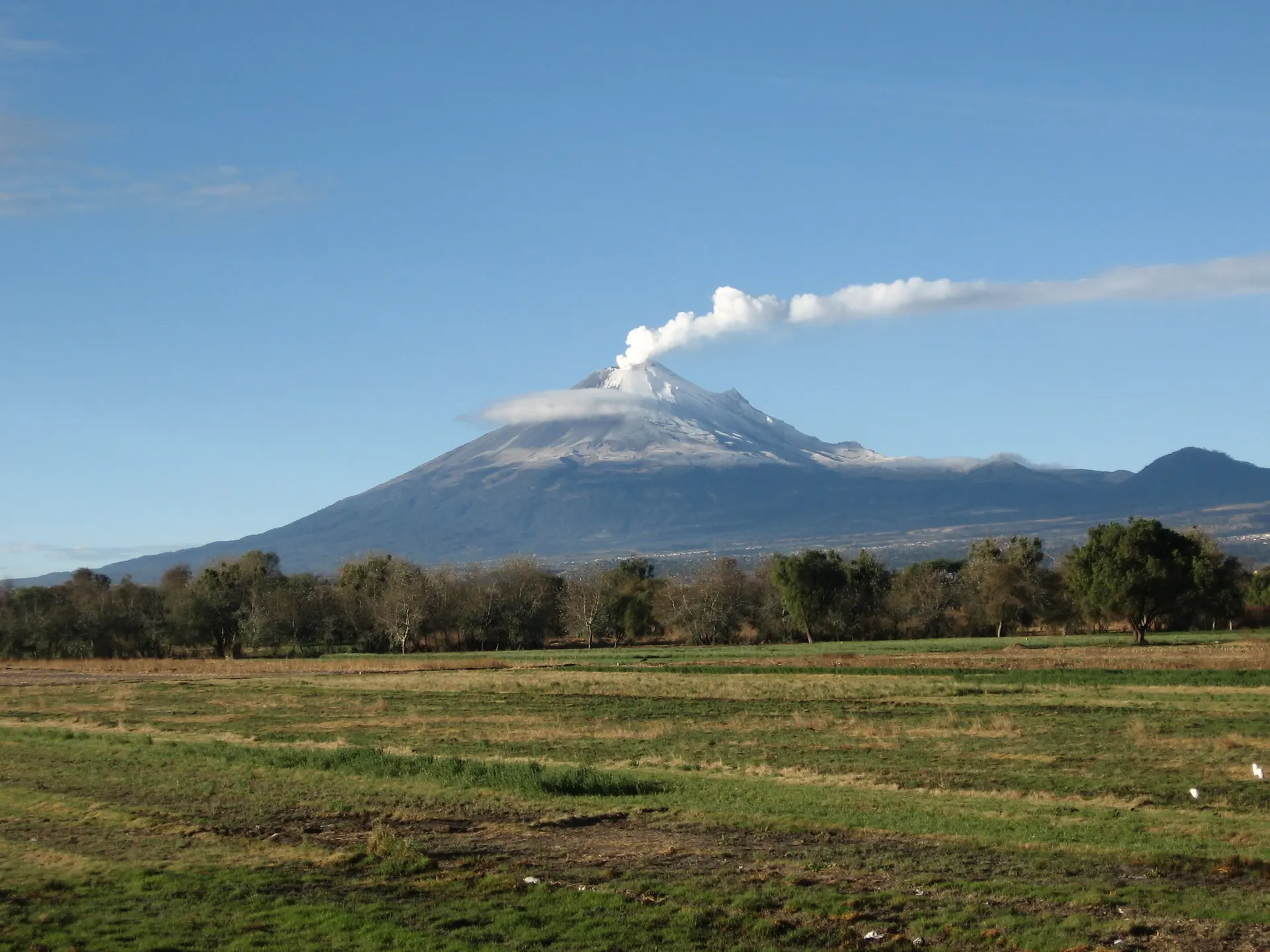
Image of Mt. Popocatepetl. Image source · CC-BY-SA-4.0
Visit essentials
A quick read before you go
- Duration
- Viewing from Paso de Cortes: 1-2 hours including travel within the park.
- Etiquette
- Primary etiquette is respect for the exclusion zone and prohibition on climbing.
Overview
From Mexico City's smog-filtered skyline to villages at his base, Popocatepetl announces himself in smoke. Mexico's second highest peak and one of North America's most active volcanoes, he has erupted nearly continuously since January 2005. His plume is visible for a hundred kilometers, and explosions scatter ash across states sharing his slopes.
The Aztec name Smoking Mountain joins Nahuatl popoca, 'it smokes,' and tepetl, 'mountain.' Moctezuma's ten warriors climbed to seek the smoke's source within an already ancient tradition; shrine ruins at 12,000 feet prove pre-Aztec cultures built at these heights seeking relationship with the power above.
Legend makes him a warrior who loved Princess Iztaccihuatl. Sent to war by an emperor expecting his death, he returned victorious to find her dead from grief after false news of his fall. He carried her outside Tenochtitlan and knelt beside her. The gods made her the Sleeping Woman and him the volcano whose rage and grief burn beside her.
Aztec religion associated Popocatepetl with Huitzilopochtli, god of war and sun. Eruptions signaled divine presence and smoke showed gods watching and acting. Rituals and offerings—including, historical sources suggest, human sacrifices—sought blessing rather than destruction.
Climbing is now prohibited. In 2022, volcanic rocks and debris struck climbers who ignored the restriction; one died. A twelve-kilometer exclusion zone surrounds the crater. Yet Santiago Xalitzintla and other villages still address the Smoking Warrior, asking him to spare fields and find peace with the Sleeping Woman.
He is a presence witnessed from safe valleys, not a destination. The thirty million who see his daily smoke practice an ancient worship: recognizing power beyond human control.
Why this place is sacred
Most thin places invite approach. Popocatepetl forbids it. The twelve-kilometer exclusion zone, the alert level permanently at Yellow, the prohibition enforced by real consequence—a climber's death in 2022—all establish that this threshold cannot be crossed in the usual way.
Yet the power is undeniable. Thirty million people see his smoke daily. His eruptions make international news. The ash that falls across Puebla and Mexico State carries his presence into homes and fields whether invited or not. Popocatepetl acts without requiring human approach; his thinness is broadcast rather than sought.
The legend encodes what experience confirms: this is grief made geological, rage transformed into physical force. The warrior who could not save his princess, who knelt beside her body and would not leave—his emotions found permanent expression in the mountain that smokes and sometimes explodes. To witness Popocatepetl is to witness passion that could not be contained, love that became destruction, devotion that became danger.
The Aztecs understood this as divine presence. They associated the Smoking Mountain with Huitzilopochtli, the war god who demanded sacrifice and granted victory. The volcano's fire matched the god's nature: life-giving and life-taking, protective and destructive, necessary and terrible. Offerings made at his slopes sought to maintain relationship with power that could not be ignored.
Contemporary worship maintains the relationship through distance. Villages still perform ceremonies; communities still bring offerings. But they approach only as far as safety permits, addressing the mountain from slopes that the exclusion zone has not reached. The petitions have shifted—less for victory in war, more for protection from the volcano itself—but the recognition of power remains constant.
What makes Popocatepetl thin is precisely his unapproachability. The membrane between worlds does not open here to human passage; it is too charged, too active, too dangerous. Instead, the power flows outward: smoke visible from two states, ash falling on millions, occasional eruptions reminding everyone that the Smoking Mountain still watches, still rages, still mourns his princess who sleeps beside him and cannot wake.
The volcano served as axis mundi for the Valley of Mexico—connection between earthly and divine realms, dwelling place of deities, focus of offerings seeking blessing and protection.
From pre-Aztec shrine construction through Classic period worship to colonial-era suppression to contemporary syncretic ceremonies, relationship with Popocatepetl continues despite prohibition of direct approach.
Experience and orientation
You cannot climb Popocatepetl. This must be stated first and emphasized throughout. The volcano has been in near-continuous eruption since 2005; the exclusion zone extends twelve kilometers from the crater; the alert level remains at Yellow, Phase Two. In 2022, a climber died when the prohibited approach brought volcanic rocks raining down. This is not bureaucratic restriction but survival recognition.
What remains is witnessing. From Mexico City, sixty kilometers northwest, the Smoking Mountain dominates the southeastern horizon on clear days. His plume rises visible above the basin's pollution, a reminder that geology operates on timescales that dwarf human concern. Watch from rooftops, from parks, from any elevation that opens the view. Let the scale become real.
Closer approach is possible within Izta-Popo Zoquiapan National Park. Paso de Cortes, the saddle between Popocatepetl and his beloved Iztaccihuatl, offers views of both mountains from 3,600 meters. Stand where the legendary lovers' connection is visible—the Sleeping Woman on one side, the Smoking Warrior on the other, the gap between them charged with story and danger.
From this viewpoint, the prohibition becomes visceral. The smoke rises. The mountain's active nature is not abstract but visible, continuous, undeniable. You cannot approach because you might die. The ancient worshippers who built shrines at 12,000 feet took risks we can only partially imagine; modern regulation protects us from ourselves.
If you can arrange it, participate in or witness the ceremonies that communities still perform. Villages like Santiago Xalitzintla maintain traditions addressing both mountains, seeking blessing from Iztaccihuatl and peace from Popocatepetl. These ceremonies represent living relationship with powers that bureaucratic prohibition cannot sever. The communities who live closest to the volcano understand best why it must be respected.
Leave the national park with one final view. The Smoking Mountain continues his work whether you watch or not. His grief, if that is what it is, finds expression in emissions that the wind carries across Mexico. Relationship with Popocatepetl requires acceptance of distance—worship through recognition rather than approach, respect expressed in staying away.
Viewing from Mexico City (60 km away) or Paso de Cortes viewpoint (3,600 m) in Izta-Popo Zoquiapan National Park. Climbing is prohibited; exclusion zone extends 12 km from crater.
Context and lineage
Shrine ruins at 12,000 feet on Popocatepetl predate the Aztecs, proving that whoever inhabited the Valley of Mexico before them also climbed toward the Smoking Mountain with offerings. The volcanic activity that makes modern approach impossible was present then too—perhaps less intense, perhaps accepted as part of what made the mountain sacred.
The Aztecs elaborated what they inherited. They associated Popocatepetl with Huitzilopochtli, the war god who demanded blood and granted victory. The volcano's fire matched the god's nature. Emperor Moctezuma sent warriors to investigate the smoke's source, initiating contact with power that could not be ignored.
The legend emerged from this context. A warrior named Popocatepetl loved the princess Iztaccihuatl. Her father sent him to war expecting his death; a jealous rival sent false news of his fall; she died of grief before he could return victorious. Finding her dead, he carried her body beyond the city and knelt in vigil that became transformation. The gods covered them with snow and changed them into mountains—she sleeping, he smoking, their love and grief made permanent.
Spanish conquest suppressed the most dramatic forms of worship—the human sacrifices that historical sources describe—but could not eliminate relationship with a mountain that continued smoking regardless of religious regime. Colonial and modern periods have seen continuous ceremonies in communities near the volcano, practices that blend Catholic forms with pre-Hispanic content.
Since the volcano's activity intensified in the 1990s, the relationship has necessarily changed. Climbing is prohibited. Approach is restricted. But watching continues, and watching thirty million strong constitutes its own form of attention. Popocatepetl does not need human approach to maintain his presence; he broadcasts it across two states every day.
Pre-Aztec shrine builders (unknown identity); Aztec religious hierarchy; colonial syncretic practices; contemporary village communities maintaining ceremonies despite access restrictions.
Popocatepetl (legendary)
Warrior
Huitzilopochtli
Aztec deity
Traditions and practice
Pre-Hispanic practices included shrine construction at high altitude, offerings including human sacrifices to appease the volcano and its associated deities, and ceremonies seeking protection and blessing.
Community ceremonies in villages near the volcano continue, blending Catholic and pre-Hispanic elements. These ceremonies petition for protection from volcanic activity, favorable weather, and agricultural success. Viewing from distance—Mexico City, Paso de Cortes, surrounding valleys—constitutes passive but real relationship with the mountain's presence.
View Popocatepetl from Paso de Cortes or from Mexico City viewpoints on clear days. Let the scale and the smoke create appropriate awe. If possible, learn about and witness community ceremonies. Understand the prohibition on climbing as recognition of power too great for casual approach.
Aztec/Nahua Volcano Worship
ActivePopocatepetl received worship as deity or deity-dwelling, associated with Huitzilopochtli and requiring offerings to ensure protection rather than destruction.
Historical practices included shrine construction and sacrifice. Contemporary practices include community ceremonies maintaining relationship from safe distance, blending Catholic and pre-Hispanic elements.
Perspectives and open questions
Popocatepetl can be understood as geological hazard requiring management, as legendary figure expressing eternal grief, as deity or deity-dwelling, or as natural phenomenon that humbles human pretension.
Scholarly perspective
Volcanologists monitor Popocatepetl continuously given his proximity to thirty million people. Anthropologists study the persistence of mountain worship despite prohibition. Historians trace the volcano's role in Aztec religion and its transformation under colonialism.
Living and traditional perspectives
For communities near the volcano, Popocatepetl remains a power requiring relationship. Ceremonies continue because the mountain continues—smoking, occasionally erupting, demanding attention whether or not modern categories recognize the relationship as valid.
Alternative interpretations
Some experience the volcano's presence as energetically significant regardless of traditional framework—the simple fact of ongoing eruption as reminder of powers beyond human control.
Open questions
When the current eruptive phase will end remains unpredictable. The volcano's long-term behavior cannot be forecast with certainty. The communities living in his shadow live with unknowing as their constant condition.
Plan your visit
Access and arrival
Full services in Amecameca and surrounding towns. Mexico City provides extensive options.
Respectful visit
Appropriate hiking gear for national park viewpoints. Layers for altitude. Sun protection.
Photography from viewpoints welcomed. The plume makes dramatic images. Do not attempt to photograph from prohibited areas.
Community ceremonies include traditional offerings. Visitors might offer attention and respect.
Climbing prohibited. Exclusion zone of 12 km from crater. Alert level Yellow, Phase Two. Violations can result in death.
Do not attempt to climb. The exclusion zone is enforced for life-safety reasons. Volcanic activity has killed those who ignored restrictions. Respect the danger.
Current practical details
Address
Popocatépetl, 56977 State of Mexico, Mexico
Hours, fees, and access can change — verify on the official source before you travel. Practical details last checked Jun 2026.
Location
Map loads as you approach this section.
Pilgrim reflections
A portrait of encounter, not a score
Pilgrims describe what they felt, how present they could become, and whether the place would shape a journey. There are no stars and no ranking of traditions.
No reviewed reflections yet
The first pilgrims can help describe the character of being here.
Share a reflection
Available after an account-backed “Been there.” Every reflection is reviewed before publication.
Nearby sacred places
Explore other sacred places in the region. Proximity does not establish access or travel time; check each place’s guidance.
References
Sources consulted for this page. Source categories describe the publication, not a guarantee that every claim is verified. Traditional accounts and outside interpretations may differ.
- 01Popocatepetl - WikipediaSource context
- 02Popocatepetl - BritannicaSource context
- 03Popocatepetl - Global Volcanism ProgramSource context
- 04Sacred Mountains of Mexico - World Pilgrimage GuideSource context
- 05Popocatepetl and Iztaccihuatl: A Tragic Romance - Ancient OriginsSource context
- 06Popocatepetl and Iztaccihuatl Legend - WikipediaSource context
Share a photo
Help visitors recognize Mt. Popocatepetl. Every submission is reviewed before publication.