Fıraktın Relief
Where the most powerful couple of the Hittite world knelt before their gods at a mountain pass river
Understand sacred places, explore living traditions, and learn how to engage respectfully with Pilgrim Map.
Access has not been verified. Check current local guidance before planning a visit.
Kayseri, Turkey
Read the sources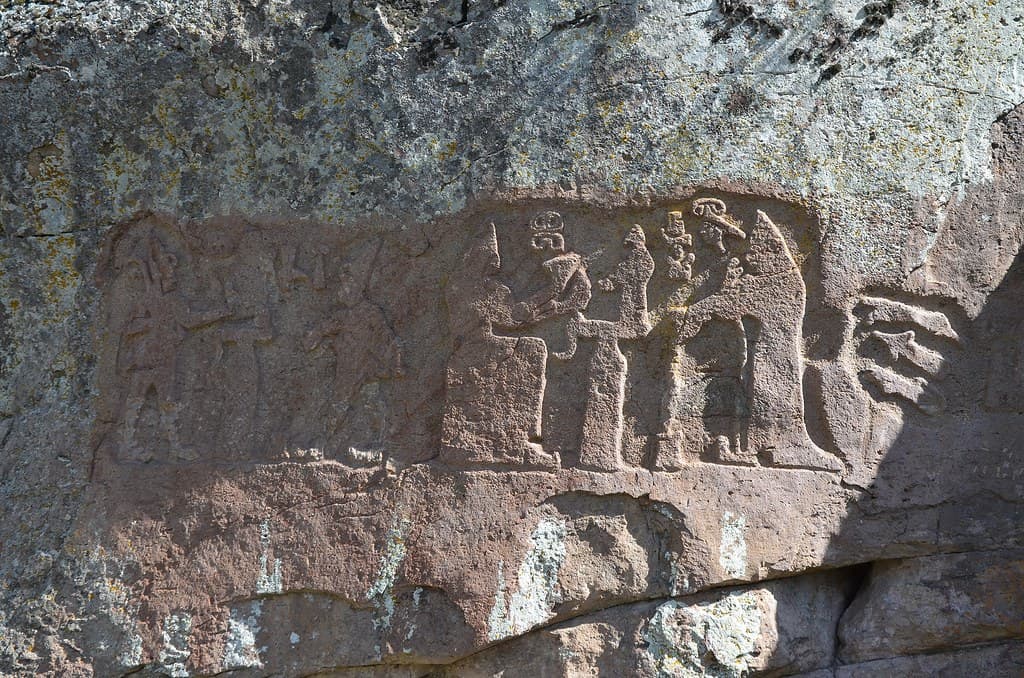
Image of Fıraktın Relief. Image source
Visit essentials
A quick read before you go
- Duration
- 1–2 hours at the site; allow 1 hour each way from Kayseri or Develi.
- Access
- Near Fıraktın village on the Enzel Dere, east of Develi, approximately 50 km south of Kayseri.
Overview
On a boulder beside the Enzel Dere river, fifty kilometers south of Kayseri in a valley approaching the Taurus Mountains, two figures perform libations. At left, the pointed-hatted Hittite Great King Hattusili III pours water to the Weather God Teshub; at right, disc-crowned Queen and co-ruler Puduhepa offers to the Sun Goddess Hebat.
Hattusili was a powerful Bronze Age ruler and co-signatory of the first recorded peace treaty; Puduhepa, among the ancient world's most formidable queens, corresponded with Ramesses II of Egypt in archives surviving in both civilizations.
Both wear divine-status pointed hats, perhaps because the relief records ritual after Hattusili's believed posthumous deification under their son Tudhaliya IV. It may portray the dead king and queen eternally maintaining cosmic order at the Taurus threshold.
Four other Hittite rock reliefs make Fıraktın's valley Anatolia's densest concentration of Hittite sacred rock art. The location controlled the ancient Taurus route into Cilicia, while Mount Erciyes—the northern volcanic cone venerated as a Hittite mountain deity—overlooked the carvings.
Why this place is sacred
The Fıraktın valley's thinness is layered and geographical before it is symbolic. The valley is a corridor between worlds: lowland Anatolia to the north and the Taurus Mountains to the south, the Hittite heartland and the approaches to Cilicia, Syria, and the Mediterranean. Ancient movements of armies, merchants, and officials all passed through routes like this one. The relief was carved to consecrate the transition.
Hittite religion understood the libation — the pouring of water or wine to a god — as an act of cosmic maintenance. The king's ritual performance kept the divine order in proper relationship with the human world. Carved in stone at a mountain pass, that ritual became permanent: even after the king's death, the image of Hattusili III continues to pour water to Teshub at this valley's edge. The relief is not a record of something that happened once.
It is the perpetuation of the act itself, frozen into the landscape.
The presence of Puduhepa in equal scale and prominence to the king is unusual in Hittite royal iconography. She was a priestess of Hebat before she became queen, and her religious authority was explicitly recognized in Hittite records. At Fıraktın, she faces the Sun Goddess directly — her role in the cosmic ritual equal to the king's.
The valley holds this pairing in stone: two figures of equal divine standing, performing the ritual that maintained the world, beside a river, in sight of a sacred mountain.
To consecrate the mountain valley and the pass route into the Taurus, making the libation act permanent at a threshold between the Hittite heartland and the southern corridor to Cilicia; possibly also to establish Hattusili III's posthumous divine status through depiction in the canonical pose of ritual performance.
After the Hittite collapse (c. 1180 BCE), the valley's significance as an imperial route diminished. The relief remained visible beside the river, weathering slowly. In 1880 it was first recorded by modern scholars; four additional reliefs in the valley were discovered between 1880 and 1939. A plaster cast was made and sent to the Pergamonmuseum in Berlin; a concrete copy stands outside the Kayseri Museum. The original remains in situ beside the Enzel Dere.
Experience and orientation
The Fıraktın relief sits at the end of a short walk along the Enzel Dere riverbank, reached by road from Develi to Fıraktın village and then on foot. The approach follows the sound of the river. The boulder on which the relief is carved sits directly on the bank, its carved face — roughly 3.2 meters wide by 1.3 meters high — at approximately eye level when approached from the front.
The composition reads left to right: Hattusili III tall and formal on the left, Teshub receiving the water libation at center-left, then space, then Puduhepa smaller but similarly crowned on the right, facing Hebat. Both royal figures wear the pointed divine cap. The detail in the carving — the vessel held by the king, the precise crown of the queen — is still legible despite three thousand years of weathering.
Take time to read both sides of the scene separately before holding them together.
Then look north. Mount Erciyes, the great volcanic summit at 3,916 meters, is visible on a clear day. In Hittite religion, Erciyes was a mountain deity — one of thousands of mountain gods in the Hittite pantheon, but among the most prominent in the Kayseri region. The relief was placed where it was in part because this mountain was visible from it. The ritual scene faces a sacred mountain.
The river adds something that a museum cast cannot reproduce: the sound of moving water, the cool air of the bank, the fact that the carved figures have been beside this water since before the Hittite Empire fell. The libation the king pours to the Weather God was made partly in acknowledgment of water — of rain, of rivers, of the storm god's gift. The Enzel Dere is still here.
GPS: 38.2717°N, 35.6317°E. Located near Fıraktın village on the Enzel Dere river, east of Develi, approximately 50 km south of Kayseri city. Access by road to Fıraktın village followed by a short walk along the riverbank. A concrete cast of the relief is displayed outside the Archaeological Museum of Kayseri for those unable to reach the site.
Context and lineage
In the 13th century BCE, the Hittite Empire reached its greatest territorial extent and diplomatic influence. Hattusili III — who had seized the throne from his nephew Mursili III in a civil conflict — ruled from Hattusha (near modern Boğazkale) in central Anatolia. His queen, Puduhepa, was the daughter of a priest of the goddess Hebat and brought her own religious authority to the Great Kingship. Together they negotiated the Egyptian–Hittite peace treaty with Ramesses II (c.
1259 BCE), the oldest surviving international treaty, copies of which are held in both Hattusha and the Cairo Museum.
The Fıraktın relief was carved at some point during or after Hattusili III's reign (c. 1267–1237 BCE). The debated question is whether it was made during his lifetime — as a record of royal ritual — or posthumously, under his son and successor Tudhaliya IV, as part of the deification of the deceased king.
The Hittite practice of royal deification after death would explain the divine pointed caps worn by both figures: they are not merely performing ritual, they are already in the realm of the divine.
The valley around Fıraktın holds four additional Hittite reliefs discovered between 1880 and 1939 (İmamkullu, Hanyeri, and the Taşçı group). The concentration suggests this valley was understood as a formally sacred zone — a corridor into the Taurus where the sacred geography of the Hittite Empire was most intensively inscribed.
The Fıraktın relief belongs to the Hittite tradition of royal libation scenes at sacred mountain passes — a practice concentrated in the Kayseri/Taurus region and documented at five sites in this single valley system. The combination of a king and a queen performing separate but parallel rituals is unusual; Puduhepa's prominence at Fıraktın reflects her documented religious authority in contemporary Hittite texts.
Hattusili III
Hittite Great King depicted on the left side of the relief, pouring water libation to the Weather God Teshub; one of the most prominent rulers of the Bronze Age, co-signatory of the Egyptian–Hittite peace treaty
Puduhepa
Hittite Great Queen (Tawannanna), depicted on the right side making a libation to the Sun Goddess Hebat; daughter of a priest of Hebat, considered a divine intermediary in her own right
Tudhaliya IV
Son and successor of Hattusili III; possibly the commissioner of the relief as part of his father's posthumous deification
Traditions and practice
In Hittite religion, the libation was an act of cosmic maintenance — the ritual pouring of water or wine to gods maintained the proper order between the divine and human worlds. At Fıraktın, the libation is carved permanently: the ritual does not need to be re-enacted because it has been made eternal in stone. The site was thus both the location of an original act and its permanent instantiation.
The proximity to five Hittite reliefs in one valley suggests that this corridor was a formally recognized sacred zone, possibly visited by officials or clergy responsible for maintaining the mountain pass routes.
No active practices. The site receives visits from scholars, heritage tourists, and travelers following Hittite monument circuits. Occasionally included in specialist Hittite archaeological tours from Kayseri.
Walk to the site along the river. The approach on foot, following the sound of water through the valley, gives the encounter a different quality than arriving by vehicle. When you reach the carved boulder, stand before it and read the composition methodically: the king pouring water on the left, the queen with her vessel on the right, both in the pointed hats that mark divine status.
Ask the question the site invites: is this a record of something that happened, or a wish for something to be permanent? Hittite royal deification — the belief that a dead king continued to exist in divine form — makes both answers possible at once. The carving may show a living king performing ritual; or it may show a deified king performing ritual forever, installed in stone at the pass he once traveled.
Look north toward Mount Erciyes. Consider that the relief was placed in sight of that mountain deliberately — that the sacred geography of this valley was not accidental but designed, with multiple carvings distributed through the corridor in a pattern we can partly reconstruct but not fully understand. The five reliefs in this valley system were not the work of one moment but of a sustained Hittite investment in this particular landscape as sacred ground.
Hittite Royal and Divine Cult
HistoricalThe relief depicts the Hittite Great King Hattusili III and Great Queen Puduhepa performing libation rituals to the Weather God Teshub and Sun Goddess Hebat, possibly as a posthumous deification installation. The Fıraktın valley is the most concentrated site of Hittite rock sacred art in Anatolia.
Royal libation ritual to the storm god and sun goddess; the carving may have functioned as both commemoration of a living king's piety and perpetuation of the ritual act after his death.
Archaeological / Scholarly
ActiveThe site provides critical evidence for Hittite religious iconography, royal ideology, and the importance of the Taurus mountain passes for Hittite sacred geography. Casts held at Kayseri Museum and Pergamonmuseum Berlin.
Academic fieldwork, cast-making and museum display, inclusion in specialist Hittite monument tours.
Perspectives and open questions
The Fıraktın relief invites at least three distinct modes of encounter: the historical (who are these figures and what were they doing?), the theological (what does the libation scene mean in Hittite cosmology?), and the geographical (why here, in this valley, beside this river, facing this mountain?).
Scholarly perspective
Scholarly consensus identifies the figures as Hattusili III and Puduhepa, the Hittite Great King and Queen of the 13th century BCE. The debate centers on the date of carving: whether it was made during Hattusili III's lifetime or posthumously under Tudhaliya IV as part of the program of royal deification. The Fıraktın area contains five Hittite reliefs discovered between 1880 and 1939, making it the most concentrated site of Hittite rock sacred art in Anatolia.
The Kayseri Museum and the Pergamonmuseum both hold casts; the original is in situ.
Living and traditional perspectives
No living tradition is directly associated with the site. The area remains inhabited by Turkish-speaking communities who are aware of the site's historical importance. No organized Hittite descendant community maintains it.
Alternative interpretations
The river, the mountain, the carved libation: the sacred geography of Fıraktın is still readable in its natural features. The Enzel Dere flows as it did when the relief was carved; Mount Erciyes is still visible to the north. The site could be understood as a point where the vertical axis of the mountain (the sky, the storm god) meets the horizontal axis of the river valley (the route, the threshold) — a cosmogram embedded in the landscape itself.
The royal libation is not simply a record of what happened but a map of how the Hittites understood their world to be structured.
Open questions
Whether the carving was made during Hattusili III's lifetime or posthumously remains debated. The full religious program connecting the five reliefs in this valley has not been reconstructed. Whether this valley had a formal name as a sacred precinct in Hittite records is unknown.
Plan your visit
Access and arrival
Near Fıraktın village on the Enzel Dere, east of Develi, approximately 50 km south of Kayseri. GPS: 38.2717°N, 35.6317°E. The road to Fıraktın village is paved; the final approach is on foot along the riverbank. No formal visitor facilities at the site. A concrete copy of the relief is displayed outside the Archaeological Museum of Kayseri; a plaster cast is held at the Pergamonmuseum, Berlin.
Kayseri city (50 km north) offers a full range of accommodation. Develi has limited local options. No facilities near the site.
Respectful visit
No specific requirements. Practical footwear for riverbank terrain.
Photography permitted. The northwest-facing relief surface is best captured in morning light or under diffuse overcast. The cast at the Kayseri Museum provides an alternative for documentation.
None appropriate. This is an archaeological site.
Do not touch the carved surface. Exercise caution on the riverbank. Do not remove any stones or material from the site.
The riverbank can be slippery. Do not touch the carved surface. The site has no visitor infrastructure and requires a degree of navigation to reach.
Location
Map loads as you approach this section.
Pilgrim reflections
A portrait of encounter, not a score
Pilgrims describe what they felt, how present they could become, and whether the place would shape a journey. There are no stars and no ranking of traditions.
No reviewed reflections yet
The first pilgrims can help describe the character of being here.
Share a reflection
Available after an account-backed “Been there.” Every reflection is reviewed before publication.
Nearby sacred places
Explore other sacred places in the region. Proximity does not establish access or travel time; check each place’s guidance.

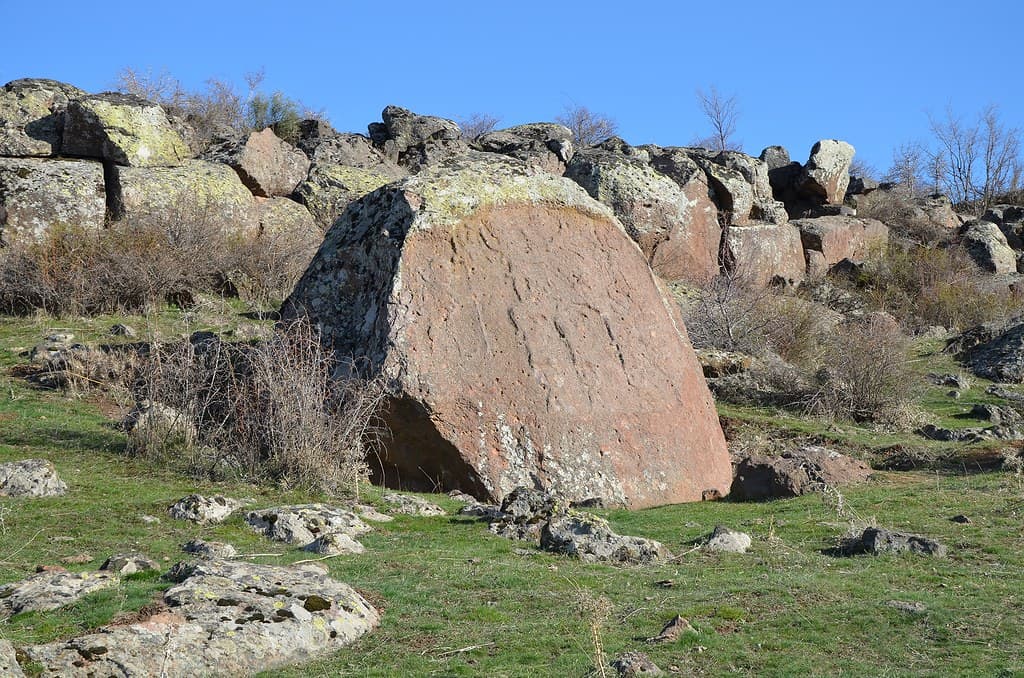
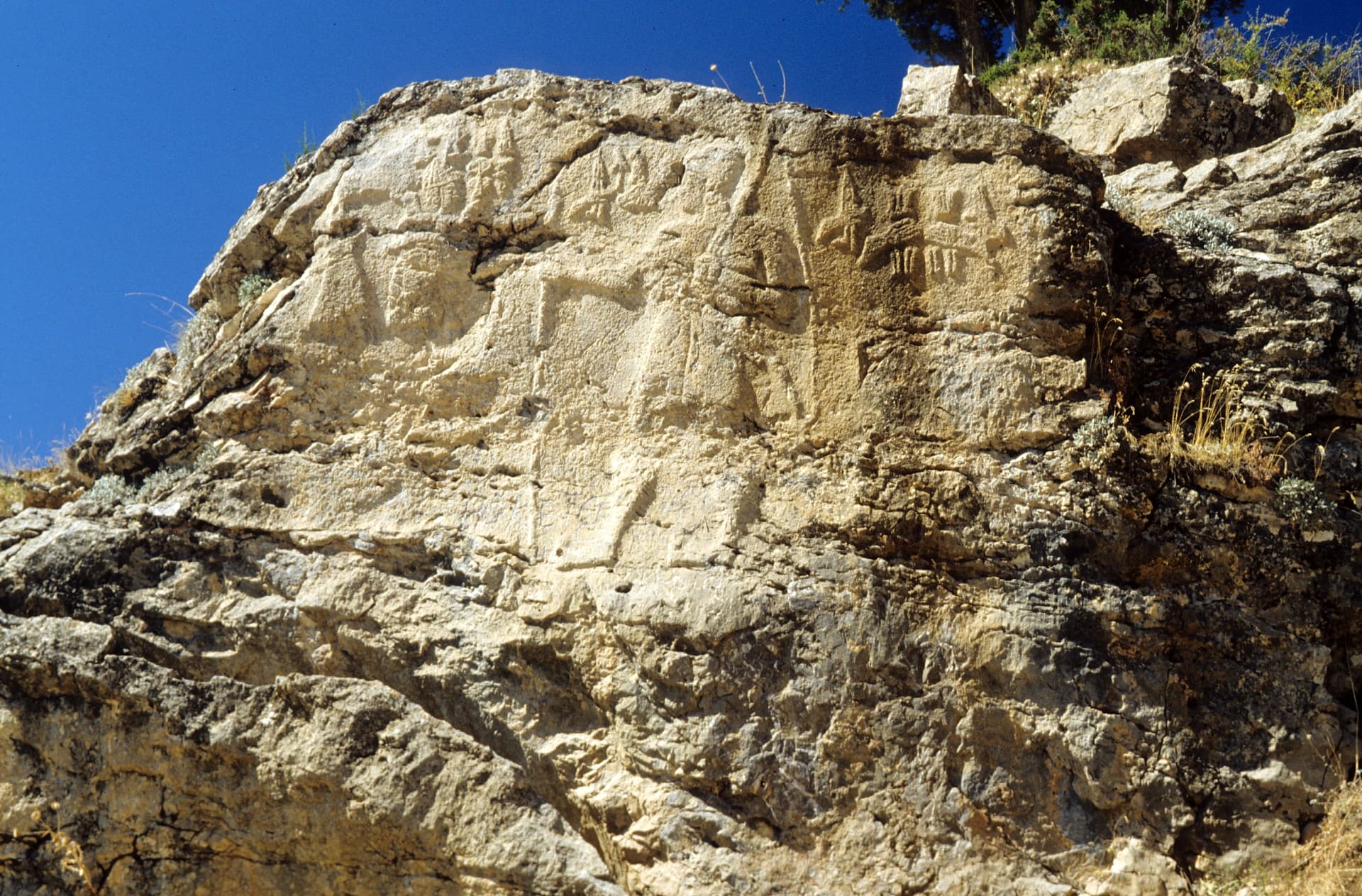
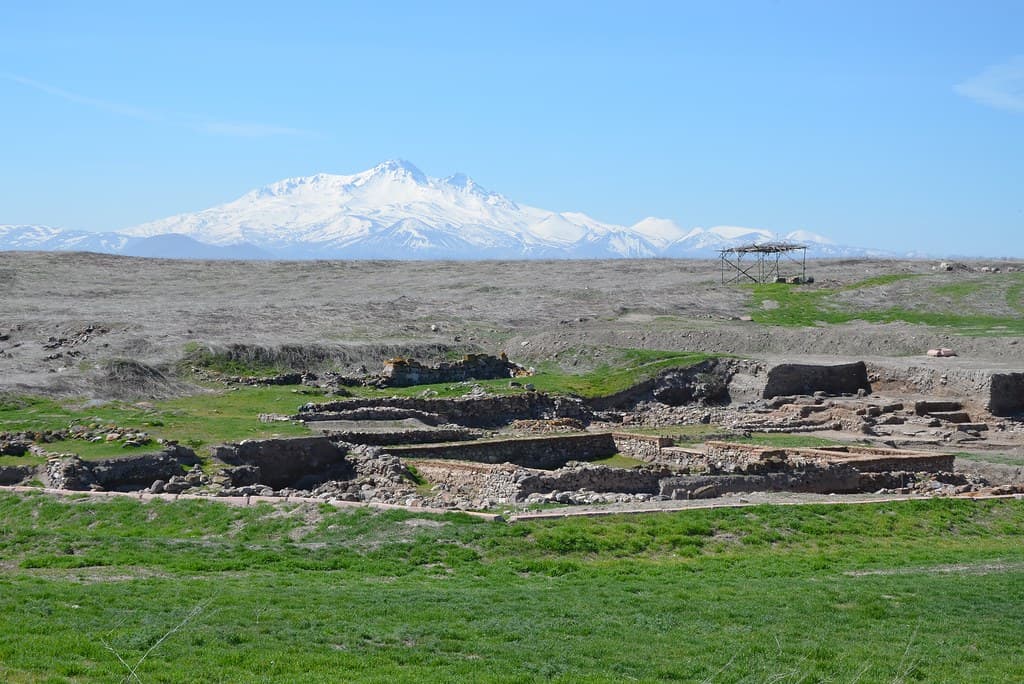
References
Sources consulted for this page. Source categories describe the publication, not a guarantee that every claim is verified. Traditional accounts and outside interpretations may differ.
- 01Hittite Monuments - Fraktin — Hittite Monuments ProjectacademicSpecialist documentation of the relief with iconographic analysis and historical context
- 02Fraktin Hittite Rock Relief — World History EncyclopediaencyclopediaCurated image and description from World History Encyclopedia
- 03Fıraktın relief - Wikipedia — Wikipedia contributorsencyclopediaDetailed article on iconography, dating, and comparison with related reliefs in the area
- 04Fraktin (Fıraktın) Relief - Vici.org — Vici.org contributorsguideArchaeological site inventory entry with coordinates and description
- 05Kayseri - The Firaktin Hittite Rock Relief — Wow CappadociaguideVisitor-oriented overview with practical access information
- 06Fraktin Hittite Relief – Following Hadrian Photography — Following HadrianguidePhotographic documentation and visitor account
- 07About: Fıraktın relief — DBpediaencyclopediaStructured data entry derived from Wikipedia
Share a photo
Help visitors recognize Fıraktın Relief. Every submission is reviewed before publication.