Talayot de Son Fred
A well-preserved Talayotic tower on Mallorca's inland plain
Sencelles, Balearic Islands, Spain

Plan this visit
Practical context before you go
Not specified in available sources; visits to comparably sized single-monument talayots are typically brief, well under an hour.
Approximately 2 km from Sencelles town center, reached across rustic farmland; the site is a stop on the Sencelles–Costitx Archaeological Route. Entry is free per tourist-guide sources. No mobile phone signal information was available at time of writing; check the Sencelles town council or the Ruta Arqueològica Sencelles-Costitx for current access details and any keyholder or booking requirements.
No formal dress code or offering customs apply; visitors should treat the surrounding rustic land with care and stay on established paths.
At a glance
- Coordinates
- 39.6586, 2.9119
- Type
- Talayot
- Suggested duration
- Not specified in available sources; visits to comparably sized single-monument talayots are typically brief, well under an hour.
- Access
- Approximately 2 km from Sencelles town center, reached across rustic farmland; the site is a stop on the Sencelles–Costitx Archaeological Route. Entry is free per tourist-guide sources. No mobile phone signal information was available at time of writing; check the Sencelles town council or the Ruta Arqueològica Sencelles-Costitx for current access details and any keyholder or booking requirements.
Pilgrim tips
- No dress code specified in sources; ordinary outdoor walking attire is appropriate given the rustic farmland setting.
- No restrictions found. The site has itself been extensively photographed for a public 3D digitization project (over 1,100 images), so visitor photography is clearly permitted.
Overview
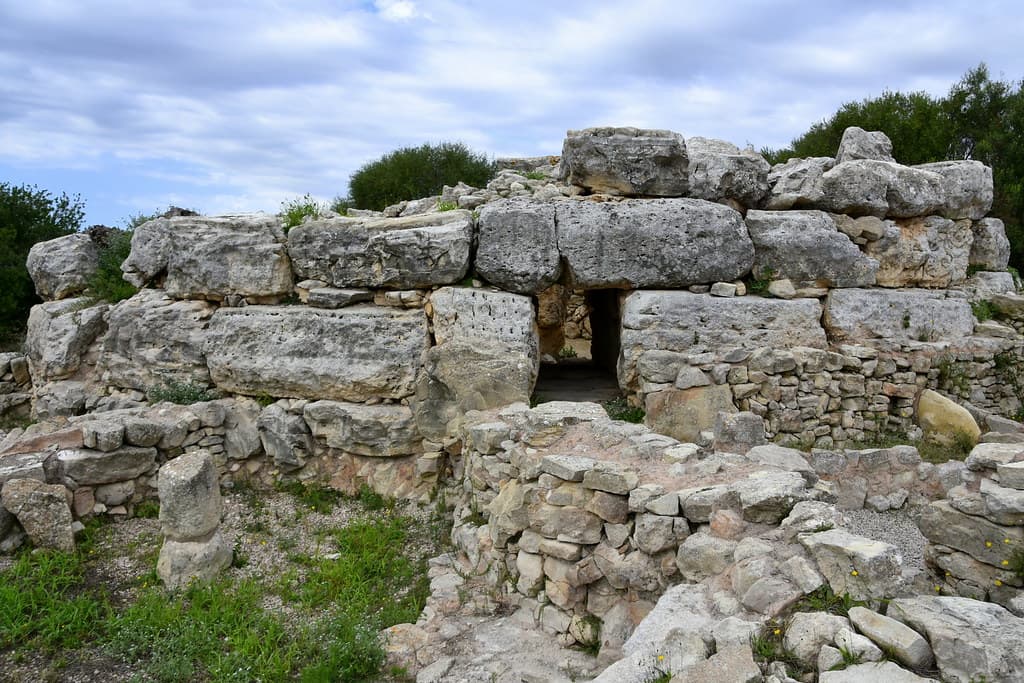
Near Sencelles, a circular stone tower roughly 13 meters across still stands to about 5 meters, its central chamber ringed by a zigzag corridor. Built by the Talayotic culture around the 1st millennium BCE, it remains one of the island's largest and best-preserved talayots.
Context and lineage
First noted in the modern record by local historian Nadal Gelabert in the mid-20th century, the site passed into public stewardship when the Fundación Juan March purchased the land in the early 1980s and donated it to the municipality of Sencelles. Formal excavation began around 2005 under archaeologist Javier Aramburu Zabala with Damià Ramis i Bernad, and in 2021 heritage specialist Joan Gual produced a photogrammetric 3D model of the monument from more than 1,100 photographs.
Nadal Gelabert
Local historian who first described the talayot in the modern record, mid-20th century
Javier Aramburu Zabala
Archaeologist who led excavation and consolidation of the site beginning around 2005
Damià Ramis i Bernad
Archaeologist, co-director of the excavation with Aramburu Zabala
Joan Gual
Heritage specialist who produced a 2021 photogrammetric 3D digitization of the monument
Why this place is sacred
The tower's scale (roughly 13.6 meters at its base, standing some 5 meters high with a preserved interior of 3.70 meters) and the survival of its central four-block limestone pillar make it one of the more legible examples of Talayotic monumental architecture on Mallorca. Excavation recovered evidence of grain, legume, and lentisk storage or consumption, supporting the idea that the tower served a 'supra-domestic' role for a wider settlement rather than a single household — though whether that role was primarily practical, ceremonial, or a display of a community's authority is not resolved. No origin story or local legend specific to Son Fred survives in the sources consulted.
Debated: possible defensive structure, communal storage facility, symbol of a settlement leadership's authority, or funerary monument. Excavation evidence of stored grain, legumes, and lentisk points toward a communal storage or consumption function, without settling the question.
Constructed and used during the Talayotic period (roughly 1st millennium BCE); later damaged by fire, abandoned, and at some point reused for burial deposits before being formally excavated and consolidated from around 2005 onward.
Traditions and practice
Ongoing scholarly and conservation stewardship: the excavation and consolidation work begun around 2005, and the 2021 photogrammetric documentation project, both continue a tradition of active archaeological research and heritage preservation at the site.
Approach the tower slowly across the open farmland, taking in its scale before entering. Follow the zigzag corridor into the central chamber at a walking pace, noting how the turns control both light and sightline. Inside, observe the four-block limestone pillar and the double-layer wall construction — large exterior stones backed by smaller polygonal interior stones — details that are easy to miss from photographs alone.
Talayotic Culture
HistoricalSon Fred is one of the largest and best-preserved examples of the monumental stone towers that define the Talayotic culture, the Bronze/Iron Age prehistoric culture of Mallorca and Menorca (roughly the 1st millennium BCE) and the island's most visibly monumental prehistoric period.
Excavation evidence points to storage or consumption of grains, legumes, and lentisk, consistent with a communal function serving a wider settlement rather than a single household; the tower's precise original role remains debated among defensive, status-symbol, storage, and funerary hypotheses.
Archaeological and Conservation Stewardship
ActiveSince the Fundación Juan March donated the site to the municipality of Sencelles in the early 1980s, Son Fred has been the subject of active excavation, consolidation, and digital heritage documentation, making ongoing scholarship and preservation the site's living tradition today.
Excavation and consolidation work led by Javier Aramburu Zabala and Damià Ramis i Bernad from around 2005, and a 2021 photogrammetric 3D digitization project by heritage specialist Joan Gual using over 1,100 in-situ photographs.
Experience and perspectives
Archaeologists broadly agree on what Son Fred is structurally, while its original purpose remains an open question.
The consensus view treats Son Fred as a circular Talayotic tower with a central pillared chamber and zigzag access corridor, serving a communal ('supra-domestic') function for a broader settlement rather than a single household. Recovered evidence of grain, legume, and lentisk storage or consumption supports a communal storage or consumption role, but does not rule out additional defensive, status-symbol, or funerary functions proposed by different researchers.
The exact original function of the tower — defensive, ceremonial, storage, or funerary — is unresolved. The cause and precise timing of the fire damage noted in its later history, and the full extent of its later reuse for burial deposits, are not detailed in the sources available for this research.
Pilgrim reflections
A portrait of encounter, not a score
Pilgrims describe what they felt, how present they could become, and whether the place would shape a journey. There are no stars and no ranking of traditions.
No reviewed reflections yet
The first pilgrims can help describe the character of being here.
Share a reflection
Available after an account-backed “Been there.” Every reflection is reviewed before publication.
Visit planning
Approximately 2 km from Sencelles town center, reached across rustic farmland; the site is a stop on the Sencelles–Costitx Archaeological Route. Entry is free per tourist-guide sources. No mobile phone signal information was available at time of writing; check the Sencelles town council or the Ruta Arqueològica Sencelles-Costitx for current access details and any keyholder or booking requirements.
No formal dress code or offering customs apply; visitors should treat the surrounding rustic land with care and stay on established paths.
No dress code specified in sources; ordinary outdoor walking attire is appropriate given the rustic farmland setting.
No restrictions found. The site has itself been extensively photographed for a public 3D digitization project (over 1,100 images), so visitor photography is clearly permitted.
The tower sits on rustic (agricultural) land; visitors should keep to marked paths and be mindful of the working farmland context. No further formal restrictions were found in the sources consulted.
Nearby sacred places
Sacred places within a half-day’s reach. Pilgrims often visit them together: walk one, stay for the other.


References
Sources consulted when researching this page. Independent verification by readers is welcome.
- 01Excavaciones en el talayot de Son Fred (Sencelles, Mallorca) — Javier Aramburu Zabalahigh-reliability
- 02Talaiot de Son Fred — Viquipèdia, l'enciclopèdia lliure — Wikipedia contributors (Catalan)
- 03Arqueología en Mallorca: talayot de Son Fred de Sencelles en 3D — Última Hora
- 04Talayot de Son Fred, Sencelles — Mallorca Tourist Guide
- 05Talaiot de Son Fred — Aprop Mallorca
- 06Talaiot de Son Fred Map — Archaeological site, Sencelles, Balearic Islands, Spain — Mapcarta
- 07Talaiot de Son Fred – excursión en Sencelles — mallorca.com
Key questions
What pilgrims usually ask
- Why is Talayot de Son Fred considered sacred?
- Stand inside a well-preserved Talayotic tower near Sencelles, Mallorca, with a zigzag corridor and central stone pillar dating to the 1st millennium BCE.
- What should I wear at Talayot de Son Fred?
- No dress code specified in sources; ordinary outdoor walking attire is appropriate given the rustic farmland setting.
- Can I take photos at Talayot de Son Fred?
- No restrictions found. The site has itself been extensively photographed for a public 3D digitization project (over 1,100 images), so visitor photography is clearly permitted.
- How long should I spend at Talayot de Son Fred?
- Not specified in available sources; visits to comparably sized single-monument talayots are typically brief, well under an hour.
- How do you visit Talayot de Son Fred?
- Approximately 2 km from Sencelles town center, reached across rustic farmland; the site is a stop on the Sencelles–Costitx Archaeological Route. Entry is free per tourist-guide sources. No mobile phone signal information was available at time of writing; check the Sencelles town council or the Ruta Arqueològica Sencelles-Costitx for current access details and any keyholder or booking requirements.
- What etiquette should visitors follow at Talayot de Son Fred?
- No formal dress code or offering customs apply; visitors should treat the surrounding rustic land with care and stay on established paths.
- Who is associated with Talayot de Son Fred?
- Nadal Gelabert (Local historian who first described the talayot in the modern record, mid-20th century), Javier Aramburu Zabala (Archaeologist who led excavation and consolidation of the site beginning around 2005), Damià Ramis i Bernad (Archaeologist, co-director of the excavation with Aramburu Zabala), Joan Gual (Heritage specialist who produced a 2021 photogrammetric 3D digitization of the monument)