Tachibana-dera
Asuka temple at the traditional birthplace of Prince Shōtoku
Understand sacred places, explore living traditions, and learn how to engage respectfully with Pilgrim Map.
Access has not been verified. Check current local guidance before planning a visit.
Nara Prefecture, Japan
Read the sources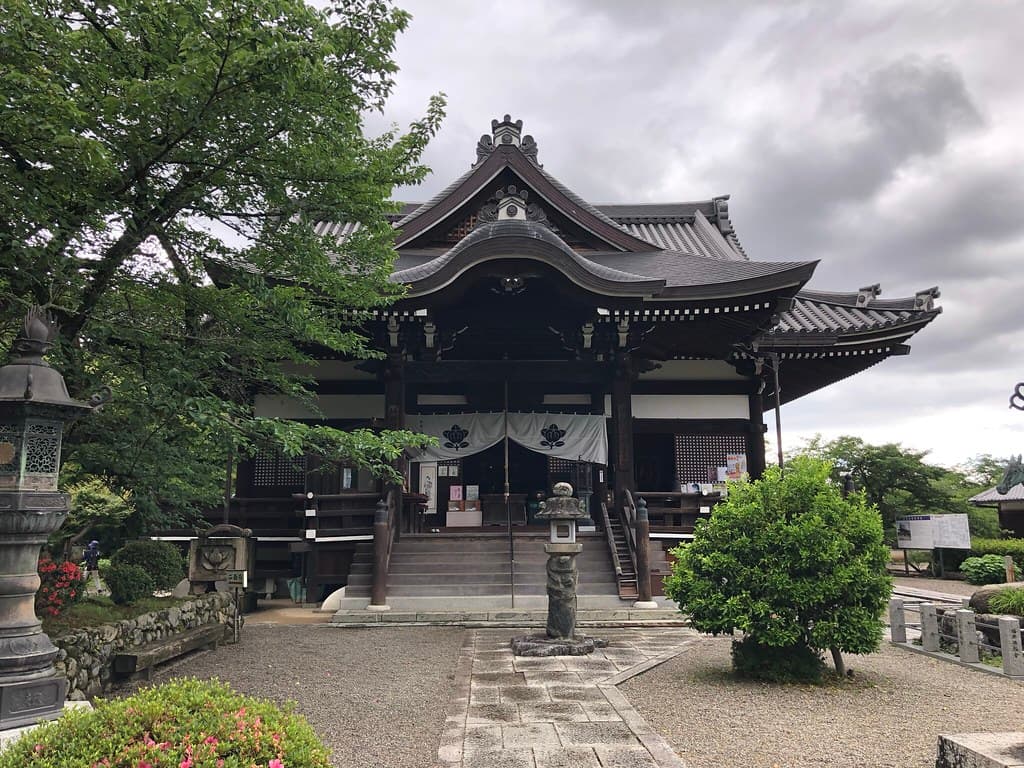
Image of Tachibana-dera. Image source
Station 10 of 33
New Saigoku Kannon PilgrimageVisit essentials
A quick read before you go
- Duration
- 45 minutes to 1 hour at Tachibana-dera alone; half-day to full-day for the wider Asuka circuit.
- Access
- From Kintetsu Asuka Station (Yoshino Line), bicycle rental or 25-minute walk; the 'Asuka Loop…
Overview
Among the Asuka basin's rice fields, Tachibana-dera is one of Japan's oldest ritually continuous Buddhist sites. Tradition says Prince Shōtoku founded it where he was born during his mother's stay at the Tachibana branch palace. While Eifuku-ji at Taishi-chō commemorates his death, Tachibana-dera commemorates his birth, bookending two centuries of foundational legend.
Uniquely, the principal hall venerates Shōtoku directly through a wooden statue. The pilgrimage hall's Heian-period Nyoirin Kannon, the Wish-Fulfilling Wheel Avalokiteśvara, is the focus of New Saigoku station #10. The precinct also holds the Asuka-period Nimenseki Two-Faced Stone, whose faces represent good and evil. Like the basin's Sakafune-ishi, Kameishi, and other enigmatic ritual stones, its original function remains debated.
The original 8th-century complex reportedly held 66 buildings. Lightning destroyed its pagoda in 1148; Myōraku-ji warrior monks burned the main complex in 1506; the present main hall dates to 1864. Tachibana-dera still anchors the southern end of Asuka's unusually intact sacred geography, amid yellow rapeseed in late spring and red rice in mid-October.
Why this place is sacred
The Asuka basin holds an unusually layered ancient geography. Within a few square kilometres lie the Asuka-dera (Japan's first official temple, 596 CE), the Ishibutai burial chamber, the Takamatsuzuka and Kitora painted tombs, and a scatter of enigmatic carved stones — the Sakafune-ishi, the Kameishi, the Two-Faced Stone at Tachibana-dera itself. Tachibana-dera anchors this geography at its southern end.
The traditional founding by Prince Shōtoku at his birthplace adds a Buddhist layer to a pre-existing imperial-ritual landscape; the temple's principal image — uniquely, a wooden statue of the prince himself — makes the site a place where Shōtoku is venerated directly rather than through a separate Buddhist deity.
What shifts between visits is the seasonal register. Late April brings the bright yellow nano-hana fields surrounding the precinct; mid-October the deep red of the Asuka rice harvest; mid-November the maples around the temple grounds. The Two-Faced Stone is permanent through all seasons — a small, weathered Asuka-period sculpture whose carved faces of good and evil remain interpretively open after fourteen centuries.
Pilgrims tracing Shōtoku's life report a 'closing the circle' feeling here after visiting Eifuku-ji: birth on one side of the Yamato basin, death on the other, with the entire foundational story of Japanese Buddhism stretched between them.
Founded c. 606 CE by Prince Shōtoku, who is said to have converted the Tachibana branch palace of his father Emperor Yōmei into a Buddhist temple at the site of his own birth.
First documented in the Nihon Shoki for 680 CE (the 9th year of Emperor Tenmu). Major medieval damage included the 1148 lightning fire and the 1506 burning by warrior monks; the current main hall was rebuilt in 1864. The temple has remained Tendai-affiliated and continues as #10 of the New Saigoku Kannon Pilgrimage and as one of the seven temples traditionally founded by Shōtoku.
Experience and orientation
Cycling is the iconic local approach. From Kintetsu Asuka Station the rental bicycles take the rolling country lanes through low hills, past the Ishibutai chamber tomb, into the openness of the basin where Tachibana-dera sits among rice paddies. The precinct is small and unfortified — a working temple in farmland.
The main hall (rebuilt 1864) holds the wooden statue of Prince Shōtoku that serves as the principal image; nearby, the pilgrimage hall enshrines the Heian-period Nyoirin Kannon for the New Saigoku #10 station.
On the open precinct stands the Nimenseki — the Two-Faced Stone — a roughly waist-high Asuka-period sculpture with two faces carved on opposing sides. Visitors typically circumambulate it slowly. Some interpret the faces as good and evil and meditate on the doubled nature of human action; others note the stone's pre-Buddhist style and treat it as a remnant of an older Asuka ritual layer. Either reading is consistent with the precinct.
In late April the surrounding fields turn brilliant yellow with nano-hana (rapeseed flower); in mid-October the same fields go red as the red rice ripens. Mid-November adds maple colour around the temple itself. Beyond Tachibana-dera the wider circuit includes Asuka-dera, the Ishibutai Tomb, Takamatsuzuka and Kitora — a full day's pilgrimage through the original capital of Japan from which Buddhism, the imperial system, and the kana-script tradition all emerged.
Approach by bicycle through the Asuka rice fields. Begin at the Two-Faced Stone, then move to the main hall and the pilgrimage hall. Allow time for an unhurried walk through the surrounding paddy landscape — the setting is part of the experience.
Context and lineage
Two layered legends shape the temple's identity. The older concerns Tajimamori, who according to the Kojiki and Nihon Shoki was sent by Emperor Suinin to the Tokoyo no Kuni — the eternal land beyond the sea — to retrieve the tachibana fruit of immortality. He returned with a sapling and planted it at this site, which took the tachibana name.
The Buddhist legend, attached centuries later, holds that Prince Shōtoku was born here during his mother's stay at the Tachibana branch palace; on becoming regent, he converted the palace into a temple, making it one of the seven great temples his lineage credits him with founding.
Tendai Buddhism, with deep Asuka-period origins predating the formal Tendai school. The temple is counted among the seven great temples traditionally founded by Prince Shōtoku.
Traditions and practice
The temple maintains Tendai daily ritual including chanting and Kannon recitation. Shōtoku Taishi memorial services are held on the prince's death anniversary; given the unusual fact that the principal hall image is Shōtoku himself, these services have particular intensity here. The Nyoirin Kannon at the pilgrimage hall receives the standard pilgrim devotion of the New Saigoku circuit.
Daily Tendai liturgy continues. Pilgrim stamps are issued for the New Saigoku #10 station and the Shōtoku Taishi Sacred Sites circuit. Seasonal flower openings — the surrounding rapeseed fields in late April, the red rice harvest in mid-October — function effectively as additional pilgrimage windows that draw photographers and contemplative visitors.
Begin at the Two-Faced Stone; circumambulate it slowly and consider the doubled imagery on its opposing faces. Move to the main hall and pause before the wooden Shōtoku image; this is one of the rare temples where the prince is venerated directly rather than through Buddhist iconography. Continue to the pilgrimage hall for the Nyoirin Kannon, then walk a portion of the surrounding paddy land before leaving.
Tendai Buddhism
ActiveTachibana-dera is among the oldest ritually continuous Buddhist sites in Japan, traditionally founded by Prince Shōtoku at his birthplace and still functioning today. It preserves Asuka-period sanctity within the broader Asuka archaeological landscape and serves as #10 of the New Saigoku Kannon Pilgrimage.
Perspectives and open questions
Tachibana-dera sits at the intersection of well-attested early Buddhist history and traditional legend. Holding both registers without forcing resolution produces the most accurate interpretive frame.
Scholarly perspective
The temple's existence by 680 CE is securely documented in the Nihon Shoki. Its founding by Prince Shōtoku himself is a traditional claim consistent with the early-7th-century setting but not independently archaeologically confirmed. The current architecture is post-1864; the original 7th-century plan is not extant. The Two-Faced Stone is dated to the Asuka period on stylistic grounds and remains interpretively open. The wider Asuka-Fujiwara region is on Japan's UNESCO World Heritage Tentative List.
Living and traditional perspectives
Within Buddhist tradition, Shōtoku's birth at Tachibana-dera is treated as a conscious incarnation of Kannon; the temple is therefore understood as a Kannon-emergence place. The principal hall image — uniquely, a statue of Shōtoku himself — embodies this theology in unusually direct form.
Alternative interpretations
The Asuka basin's scatter of carved stone sites — Nimenseki at Tachibana-dera, Sakafune-ishi, Kameishi — has inspired esoteric readings of the region as a single ritual landscape, with Tachibana-dera anchoring the southern end. Some practitioners read the doubled faces of the Nimenseki as a contemplative device for working with the dual nature of human action.
Open questions
The Two-Faced Stone's original function and the original 7th-century plan of the temple remain debated. Whether the legendary Tajimamori narrative attaches genuinely to this site or whether the link was constructed in later periods is unresolved by current scholarship.
Plan your visit
Access and arrival
From Kintetsu Asuka Station (Yoshino Line), bicycle rental or 25-minute walk; the 'Asuka Loop Bus' (Asuka Kameishi Bus) also stops nearby. Cycling through the Asuka basin is the iconic approach.
Limited local lodging in Asuka village; most pilgrims base in Nara, Kashihara, or Yoshino. Day-trip access from Osaka and Kyoto is straightforward.
Respectful visit
Modest, comfortable clothing. Cycling-appropriate clothing is normal given the standard local approach. Layered for variable weather across the open Asuka basin.
Permitted outdoors, including the Two-Faced Stone; ask before photographing interior images.
Incense, saisen, pilgrim slips at both halls.
Quiet expected during services | Do not touch the Two-Faced Stone
The precinct is small and shares space with active rice agriculture; respect field boundaries when walking the surrounding landscape. The Two-Faced Stone is on the open precinct but should not be touched.
Current practical details
Address
532 Tachibana, Asuka, Takaichi District, Nara 634-0142, Japan
Phone
Hours
Hours, fees, and access can change — verify on the official source before you travel. Practical details last checked Jun 2026.
Location
Map loads as you approach this section.
Pilgrim reflections
A portrait of encounter, not a score
Pilgrims describe what they felt, how present they could become, and whether the place would shape a journey. There are no stars and no ranking of traditions.
No reviewed reflections yet
The first pilgrims can help describe the character of being here.
Share a reflection
Available after an account-backed “Been there.” Every reflection is reviewed before publication.
Nearby sacred places
Explore other sacred places in the region. Proximity does not establish access or travel time; check each place’s guidance.

References
Sources consulted for this page. Source categories describe the publication, not a guarantee that every claim is verified. Traditional accounts and outside interpretations may differ.
- 01Tachibana-dera — Wikipedia (English) — Wikipedia contributorsofficialCoordinates 34°28'12"N 135°49'5"E; Tendai school; principal image is a statue of Prince Shōtoku; first documented in Nihon Shoki entry for 680 CE; National Historic Site since 1966; seven Important Cultural Properties.
- 02Tachibana-dera Temple, A Birthplace of Prince Shotoku — Kansai OdysseyguideConfirms tradition of Shōtoku's birth at the site, 8th-century 66-building complex, 1148 lightning destruction, 1506 burning by warrior monks, 1864 main hall.
- 03Tachibana Temple — Asuka Village Tourism — Asuka Village TourismofficialLocal tourism source confirming setting in Asuka rice fields, traditional founding by Shōtoku, principal images including Nyoirin Kannon.
- 04Tachibana-dera — Japan Travel — JapanTravel.comguideConfirms Two-Faced Stone (Nimenseki) on the precinct — an Asuka-period stone with two carved faces representing good and evil.
Pilgrim glossary
- Kannon
- The bodhisattva of compassion, central to many East Asian pilgrimage routes.
- Tendai
- A Japanese Buddhist school based on the Lotus Sutra, foundational to many later traditions.
Share a photo
Help visitors recognize Tachibana-dera. Every submission is reviewed before publication.