Stella Maris Monastery and Elijah’s Cave, Haifa, Israel
Where Elijah's cave meets Carmelite contemplation, and four faiths pray under one mountain
Understand sacred places, explore living traditions, and learn how to engage respectfully with Pilgrim Map.
Access has not been verified. Check current local guidance before planning a visit.
Haifa, Haifa District, Israel
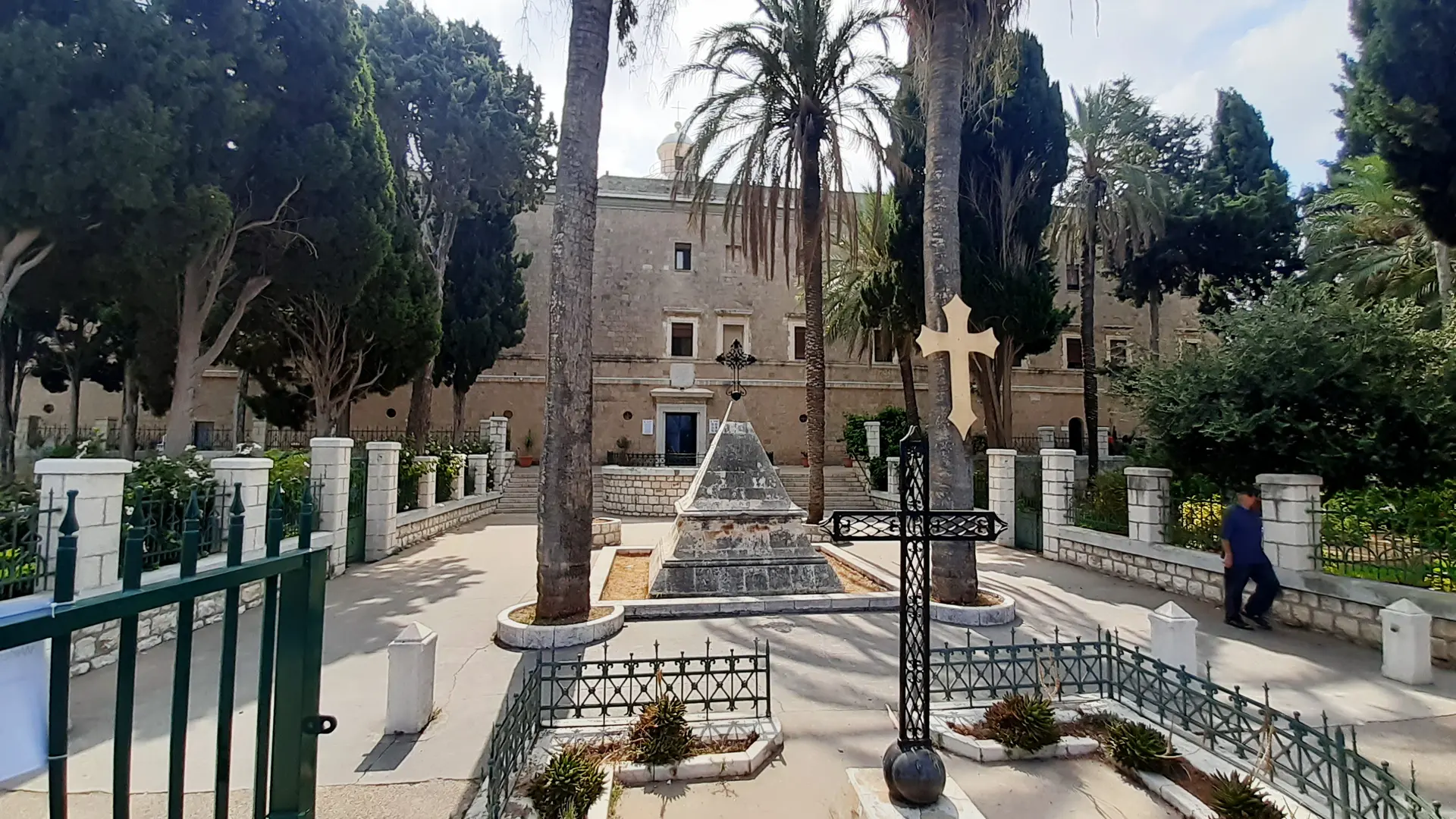
Image of Stella Maris Monastery and Elijah’s Cave, Haifa, Israel. Image source · CC-BY-2.5
Visit essentials
A quick read before you go
- Duration
- 1.5 to 3 hours for both sites combined.
- Access
- Stella Maris is at the summit of Mount Carmel's western promontory.
Overview
Four traditions converge on this headland, and none of them are wrong.
Mount Carmel is where Elijah challenged the prophets of Baal and fire fell from heaven — the foundational moment of monotheistic triumph in the Hebrew Bible. The cave below the monastery is where, according to tradition, the prophet withdrew afterward, hiding from Jezebel, listening for the still small voice of God. Christians see the same cave as shelter for the Holy Family on their return from Egypt. Muslims identify it with Al-Khidr, the immortal green prophet of wisdom.
The Druze venerate Elijah as El-Khidr, healer and miracle worker.
Stella Maris — Star of the Sea — is the name the Carmelites gave to their monastery at the summit. It was here, in the 12th century, that Crusader-era hermits imitating Elijah's solitary prayer organized into what would become one of the Catholic Church's most contemplative orders.
The church that stands today, rebuilt in 1836 after a series of destructions, holds a richly painted dome where Elijah ascends in a fiery chariot while David plays his harp and the Holy Family rests.
Below, on Allenby Road, the public cave functions as a Jewish holy site with men's and women's prayer sections, candles flickering against blackened walls, and the persistent smell of smoke and devotion.
The two sites are physically separate but spiritually continuous. The mountain holds them both. What distinguishes this place from other multi-faith sacred sites is not tolerance — a thin, modern word — but depth. Each tradition has found something genuine here, something it did not borrow from the others. The layers do not compete. They accumulate.
Why this place is sacred
The cave is the anchor. Before hermits settled here, before Crusaders built churches, before the Carmelites organized their rule, the cave existed — a dark space cut into the mountain's western face, opening toward the sea. Caves have functioned as places of spiritual withdrawal across cultures and millennia. Something about the act of entering the earth, leaving daylight behind, and sitting in enclosed darkness triggers a shift in consciousness that is documented across traditions and continents.
At Mount Carmel, this universal phenomenon is intensified by the specificity of what is remembered here. Elijah's confrontation with the prophets of Baal, as recorded in 1 Kings 18, is not a quiet story. It involves drought, slaughter, fire from heaven, and a prophet running for his life. The cave where Elijah retreated afterward represents the opposite pole of prophetic experience — not public power but private vulnerability, not fire but silence.
The Carmelite tradition of contemplative prayer emerged directly from this polarity. The monks who settled here sought not Elijah's public miracles but his interior stillness. St. Teresa of Avila's 'Interior Castle' and St. John of the Cross's 'Dark Night of the Soul' — two of Christianity's greatest mystical texts — both draw on cave and mountain imagery rooted in the Carmelite experience of this place.
The Mediterranean stretches below the monastery, an unbroken line of blue. The combination of height, enclosure, sea light, and historical density creates conditions that visitors across all traditions describe in similar terms: a sense of being both exposed and sheltered, both alone and accompanied.
The cave's original sacred use is unknown and may predate historical record. The earliest documented veneration dates to the early centuries of the Common Era. Jewish tradition identifies it as Elijah's refuge; Christian tradition adds the Holy Family connection. The Carmelite hermits who arrived in the 12th century chose this mountain precisely because of its association with Elijah, establishing a life of solitary prayer and contemplation modeled on the prophet's example.
The site has been built, destroyed, and rebuilt repeatedly — a pattern that itself testifies to its enduring draw. Byzantine Christians built a chapel. The Carmelite hermits organized their order here under the Rule of St. Albert (c. 1206-1214). The first formal monastery was built in 1631, destroyed in 1761, rebuilt and destroyed again during Napoleon's campaign in 1799 — the monastery garden still holds the graves of French soldiers who died in the nearby battle.
The current church, completed in 1836 by Brother Giovanni Battista Cassini, was elevated to a Minor Basilica in 1839. Through each destruction and reconstruction, the cave beneath endured.
Experience and orientation
Begin at the top. The view from Stella Maris extends across the Mediterranean, and on clear days the coast curves away in both directions. The monastery garden, with its memorial to Napoleon's soldiers, grounds you in the site's turbulent history before you enter the church.
Inside the basilica, the dome commands attention. Giovanni Battista Cassini's 19th-century paintings cover the ceiling — Elijah ascending in his fiery chariot, King David with his harp, Isaiah proclaiming, the Holy Family at rest, the four Evangelists at the pendentives. The colors are warm, the figures confident, the overall effect one of upward movement.
Beneath the altar, a small cave is venerated as a place where Elijah prayed. Descending to this lower level creates a physical and psychological shift — from the painted heavens of the dome to the raw stone of the mountain's interior.
The public Elijah's Cave on Allenby Road, at the mountain's base, offers a different experience entirely. The space is larger, darker, and more pungent — the accumulated smoke of countless candles has blackened the ceiling and walls. Jewish worshippers pray in separate men's and women's sections. Candles flicker. Written prayers accumulate.
The presence of accoutrements from multiple faiths within a single chamber — menorahs alongside icons, a prayer carpet near an altar — makes visible the multi-faith reality that most sacred sites only claim.
The walk between the two sites takes fifteen to twenty minutes along the hillside path. This transit time is part of the experience — a physical descent from monastery heights to cave depths that mirrors the spiritual movement from Elijah's public power to his private silence.
Consider visiting both sites in sequence: Stella Maris first for its panoramic perspective and artistic grandeur, then the cave below for its intimate, raw spiritual atmosphere. The descent from monastery to cave mirrors the narrative arc of Elijah's own story — from mountain triumph to cave retreat.
At the monastery, spend time with the dome paintings rather than rushing through. Each panel tells part of a story that connects Elijah to the broader arc of prophetic tradition.
At the cave, let your eyes adjust to the darkness. Notice the candle smoke, the worn surfaces, the quiet murmur of prayer. If you are comfortable doing so, light a candle — it is the simplest and most universal devotional act available here, shared by all four traditions that pray in this space.
Context and lineage
The foundational story is told in the First Book of Kings. During the reign of Ahab and Jezebel, when Israel had turned to worshipping the Phoenician god Baal, the prophet Elijah challenged 450 prophets of Baal to a contest on Mount Carmel. Each side prepared a sacrifice; the god who answered with fire would be proven true. The prophets of Baal called out all day without response.
Elijah then drenched his altar with water and prayed — fire from heaven consumed the offering, the water, and the stone altar itself.
After this triumph, Elijah fled Jezebel's vengeance and sought shelter in a cave. In that enclosure, stripped of his public power, he heard not thunder or earthquake or fire but a 'still small voice' — one of the most influential descriptions of divine communication in all of scripture.
Christian tradition adds that the Holy Family sheltered in the same cave during their return from Egypt. The Carmelite founding narrative tells of Crusader-era pilgrims who, inspired by Elijah's example, chose hermitic life in the caves of Mount Carmel, eventually organizing into a religious order under the Rule of St. Albert around 1206-1214.
Hermits on Mount Carmel. Then monks under a rule. Then an order that spread across Europe, producing some of Christianity's greatest mystics — Teresa of Avila, John of the Cross, Therese of Lisieux. All traced their spiritual lineage back to this mountain and to Elijah's example of solitary prayer. The cave, meanwhile, continued to receive worshippers from traditions that predated and outlasted the Crusader presence: Jewish pilgrims, Muslim devotees, Druze seekers.
The Carmelite story is one thread in a multi-stranded rope that extends back to the earliest recorded veneration of this mountain.
Elijah (Eliyahu HaNavi)
prophet
The prophet who challenged Baal worship on Mount Carmel and withdrew to the cave afterward. In Jewish tradition, he is the herald of the Messiah, present at every Passover Seder and circumcision. In Islam, he is revered as a righteous prophet. In Druze tradition, he is El-Khidr, the healing prophet.
Al-Khidr (The Green Prophet)
prophet
An immortal figure of divine wisdom mentioned in the Quran (Surah Al-Kahf), sometimes identified with or as a companion of Elijah. Muslims and Druze venerate the cave as his dwelling place. His association with 'greenness' resonates with the verdant slopes of Mount Carmel.
St. Albert of Jerusalem
historical
The Latin Patriarch of Jerusalem who composed the Rule of the Carmelites (c. 1206-1214), giving organizational form to the hermits who had gathered on Mount Carmel in imitation of Elijah.
Brother Giovanni Battista Cassini
historical
The Carmelite brother who designed and built the current Stella Maris church, completed in 1836, after the previous structure was destroyed during Napoleon's 1799 campaign.
Bellarmino Bagatti
historical
Franciscan archaeologist who excavated beneath the monastery in the 1950s-60s, confirming Byzantine and medieval structural remains and establishing the site's deep archaeological stratigraphy.
Traditions and practice
The cave has hosted practices from multiple traditions for centuries. Cave incubation — sleeping in the cave seeking healing dreams — was documented across all faiths, connecting to ancient Near Eastern traditions that predate the Abrahamic religions. Jewish pilgrims have long sought Elijah's blessing here, understanding the cave as a place where the prophet's presence remains especially accessible. Oil anointing and candle lighting were shared practices across faiths.
Historical accounts from the 19th century describe joint multi-faith processions to the cave — Jews, Christians, Muslims, and Druze walking together.
Stella Maris hosts regular Catholic Mass and Carmelite liturgical services. The annual Easter procession — the second largest Catholic procession in the Holy Land — carries a statue of the Virgin Mary from downtown Haifa up Mount Carmel to the monastery on the first Sunday after Easter. The Feast of Our Lady of Mount Carmel (July 16) is a major celebration.
At Elijah's Cave, the primary observance is Jewish. The most significant annual event occurs on the Shabbat following Tisha B'Av (usually late July or August), when thousands of Mizrahi Jewish pilgrims come to recite Isaiah 40, light candles, and seek blessings for their children, healing from illness, and fertility. Year-round, Jewish worshippers pray in separate men's and women's sections.
Muslim pilgrims visit to pray and seek blessings from Al-Khidr. A prayer carpet has traditionally been maintained inside the cave. Druze pilgrims come seeking healing, continuing a tradition of cross-faith veneration that has persisted for centuries.
At Stella Maris, attend Mass if your schedule permits — hearing the Carmelite liturgy in its place of origin adds a dimension that visiting the empty church cannot provide. If Mass is not possible, sit in the basilica and study the dome paintings. Each panel rewards sustained attention.
At Elijah's Cave, light a candle. The gesture transcends denominational boundaries and connects you to the simplest, oldest form of devotion practiced here. Sit in the dimness afterward and notice what the cave does to your sense of time and interiority.
If you have the inclination, walk the path between the two sites slowly rather than driving. The physical descent from monastery heights to cave depths can become a contemplative practice in itself — an embodied movement from public worship to private prayer, mirroring Elijah's own narrative arc.
Roman Catholicism (Carmelite Order)
ActiveStella Maris is the spiritual birthplace of the Carmelite Order and a Minor Basilica dedicated to Our Lady of Mount Carmel. The Carmelites trace their origins to 12th-century hermits who settled on Mount Carmel in imitation of Elijah, establishing a tradition of contemplative prayer that produced some of Christianity's greatest mystics.
Regular Catholic Mass and Carmelite liturgical services. The annual Easter procession — the second largest Catholic procession in the Holy Land — processes from downtown Haifa up Mount Carmel carrying a statue of the Virgin Mary. The Feast of Our Lady of Mount Carmel (July 16) is a major celebration with special liturgies.
Judaism
ActiveMount Carmel is the site of Elijah's confrontation with the prophets of Baal (1 Kings 18), one of the most dramatic episodes in the Hebrew Bible. The cave is believed to be where Elijah meditated and hid from Jezebel. Elijah holds a singular place in Jewish tradition as the herald of the Messiah, invoked at every Passover Seder and circumcision ceremony.
Jewish pilgrims pray at the cave year-round. The most significant annual pilgrimage occurs on the Shabbat following Tisha B'Av, when thousands of Mizrahi Jewish pilgrims come to recite Isaiah 40, light candles, and seek blessings for children, healing, and fertility. Family celebrations including bar and bat mitzvah blessings also take place at the cave.
Islam
ActiveMuslims identify the cave with Al-Khidr, an immortal figure of divine wisdom mentioned in the Quran. The cave was converted into a mosque in the 17th century and has been venerated by Muslims from diverse backgrounds including Turks, Berbers, and Arabs.
Muslim pilgrims visit the cave to pray and seek blessings from Al-Khidr. A prayer carpet has traditionally been maintained inside the cave. Historical accounts document Muslims praying alongside worshippers of other faiths at the site.
Druze
ActiveThe Druze venerate Elijah as El-Khidr, the green prophet who symbolizes water and life. They regard him as a miracle worker with the power to heal the sick, and the Druze community in the Haifa and Carmel region has a longstanding tradition of pilgrimage to the cave.
Druze pilgrims visit the cave seeking healing and blessings. Historical accounts from the 19th and early 20th centuries describe Druze participating in joint processions to the cave alongside worshippers of other faiths.
Perspectives and open questions
Stella Maris and Elijah's Cave invite interpretation from multiple directions simultaneously. The scholarly interest lies in how a single sacred space can be 'co-produced' by traditions that do not share theology but do share geography. The traditional perspectives each illuminate different facets of the same mountain. The mystery lies in what drew them all here — and whether it can be explained by anything less than the mountain itself.
Scholarly perspective
Scholars recognize Mount Carmel as one of the most important sacred landscapes in the Near East, with evidence of veneration stretching back to prehistoric times. The academic concept of 'co-produced sacred sites' finds one of its clearest examples here — each tradition has layered its own narrative onto the same physical space without erasing the others.
Archaeological work by Bellarmino Bagatti confirmed Byzantine and medieval structural remains beneath the monastery, establishing that Christian veneration predates the Crusader period. The Carmelite Order's emergence from Crusader-era hermits imitating Elijah is well-documented, though whether they truly found an unbroken chain of hermitic presence stretching back to the prophet, as their tradition claims, is an open historical question.
The cave's role in healing traditions — with documented accounts of 'cave incubation' for mental illness — parallels similar practices at ancient Greek healing temples, though any historical connection remains unexplained.
Living and traditional perspectives
Jewish tradition sees Elijah as the forerunner of the Messiah who will return at the end of days. The cave is where his presence is most tangible — a place where the boundary between the living prophet and his future return becomes thin. At every Passover Seder, a cup of wine is set for Elijah; at every circumcision, a chair is reserved for him. The cave is an extension of this constant expectation.
Christian tradition, specifically the Carmelite strand, views the monks as inheritors of Elijah's prophetic charism. Mary is their spiritual mother, and the cave is simultaneously Elijah's refuge and the Holy Family's shelter — two narratives of divine protection converging in one space. The monastery's name, Stella Maris, invokes Mary as guide through darkness.
Islamic tradition identifies the cave with Al-Khidr, the immortal guide who appears to those in need of divine wisdom. His 'greenness' — the word khidr means green — connects to the verdant slopes of the mountain itself. For Druze worshippers, El-Khidr is a healing prophet whose blessing can cure the sick.
Alternative interpretations
Some esoteric traditions regard Mount Carmel as a major sacred node in a global network of holy mountains. The cave is sometimes interpreted as a symbol of the inner chamber of the heart — a reading that finds support in Carmelite mystical texts, where the language of cave and mountain serves as metaphor for interior spiritual states.
The convergence of multiple traditions at a single site has prompted some to see it as evidence that sacred geography transcends doctrine — that certain places carry an inherent quality that different traditions recognize and name differently but respond to similarly.
Open questions
The exact identification of which cave Elijah used remains uncertain — several caves on Mount Carmel carry competing claims. Whether the cave beneath the Stella Maris altar and the public cave on Allenby Road are connected or represent entirely separate sacred sites is described differently in different sources.
The nature of pre-Israelite worship on Mount Carmel — the Baal cult that Elijah confronted — is only partially understood. What was the mountain sacred for before the prophets of Baal claimed it, and before the Israelites after them?
The persistence of cave incubation healing practices across centuries and traditions raises questions that neither archaeology nor theology has fully answered. What is it about this particular cave, this particular mountain, that so consistently generates reports of spiritual encounter?
Plan your visit
Access and arrival
Stella Maris is at the summit of Mount Carmel's western promontory. Accessible by Haifa city bus (routes to the Stella Maris/Bat Galim area), by car with parking near the monastery, or by the Haifa Cable Car (Rakavlit) from Bat Galim beach. Elijah's Cave is at 230 Allenby Road, at the mountain's base near Bat Galim beach, accessible on foot from the Bat Galim Promenade. Haifa is well-connected by train from Tel Aviv (approximately 1 hour) and by bus.
Stella Maris opening hours: approximately 9:00-12:00 and 15:00-18:00. Elijah's Cave: Monday-Thursday 8:00-17:00, Friday 8:00-13:00, closed Saturday, Sunday, and Jewish holidays. Mobile phone signal is reliable in this urban area of Haifa.
Haifa offers accommodation at all price points throughout the city. The Bat Galim neighborhood, at the foot of Mount Carmel near both sites, has beachfront hotels. The German Colony area, near the Baha'i Gardens, combines access to multiple sacred sites with excellent dining and walkability. For pilgrimage-oriented stays, the monastery does not offer guest rooms, but retreat centers and guesthouses in the Haifa area cater to spiritual visitors.
Respectful visit
Stella Maris: Modest dress — shoulders and knees covered. Men should remove hats inside the church. Elijah's Cave: Modest dress required. Men should cover their heads — coverings are available at the entrance. The cave's temperature is cool year-round; a light layer may be welcome.
Photography is generally permitted at both sites' exteriors, the monastery garden, and the museum. Inside the basilica, photography may be restricted during services. At Elijah's Cave, photography is generally permitted but visitors should be sensitive to worshippers in prayer — do not photograph people praying without their permission.
Candle lighting is the primary devotional offering at both sites. Candles are available for purchase or donation. At Elijah's Cave, written prayers can be left. Donations are accepted at the monastery.
Stella Maris: closed during siesta hours (typically 12:00-15:00). Elijah's Cave: closed Saturdays, Sundays, and Jewish holidays. Separate men's and women's sections at the cave must be respected. Silence during prayer services at both sites. No food or drink inside either site.
The cave's management as a primarily Jewish holy site may not fully reflect its multi-faith heritage. Visitors should be aware that the separate men's and women's sections are a Jewish religious requirement and should be respected regardless of personal views. Do not attempt to enter the wrong section.
During the Tisha B'Av period, the cave is extremely crowded and emotionally charged. This is a time of mourning and hope in Jewish tradition; approach with appropriate gravity.
The Carmelite monastery is an active religious house. The monks' schedule of prayer takes precedence over tourist access. If the church is closed for services, return later rather than attempting to enter.
Current practical details
Address
Stella Maris Rd 100, Haifa, 3109002, Israel
Phone
Hours, fees, and access can change — verify on the official source before you travel. Practical details last checked Jun 2026.
Location
Map loads as you approach this section.
Pilgrim reflections
A portrait of encounter, not a score
Pilgrims describe what they felt, how present they could become, and whether the place would shape a journey. There are no stars and no ranking of traditions.
No reviewed reflections yet
The first pilgrims can help describe the character of being here.
Share a reflection
Available after an account-backed “Been there.” Every reflection is reviewed before publication.
Nearby sacred places
Explore other sacred places in the region. Proximity does not establish access or travel time; check each place’s guidance.

Cave of Elijah on Mount Carmel, Haifa
Haifa, Haifa District, Israel
0.3 km away
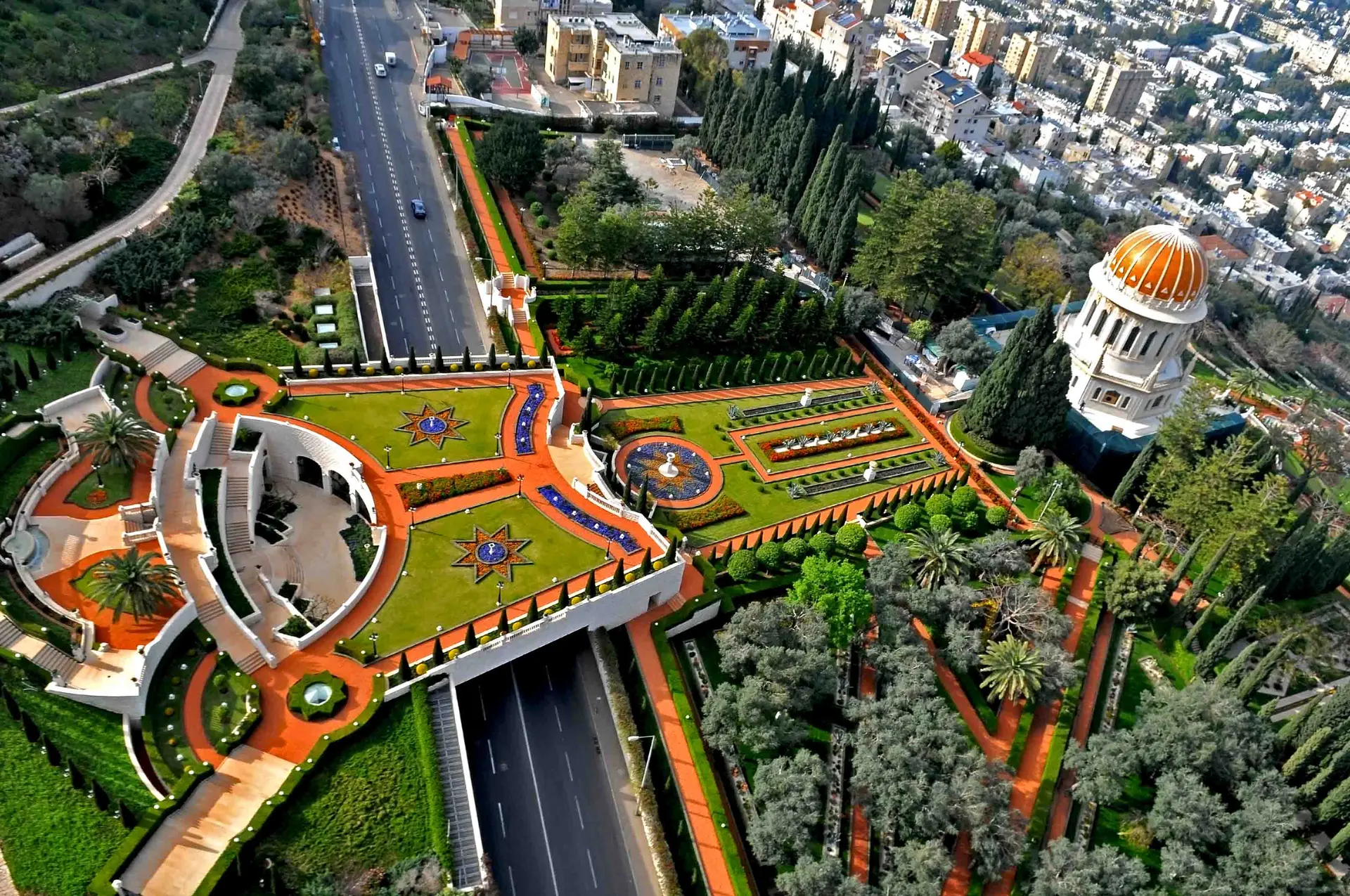
Shrine of the Báb, Haifa
Haifa, Haifa District, Israel
2.1 km away
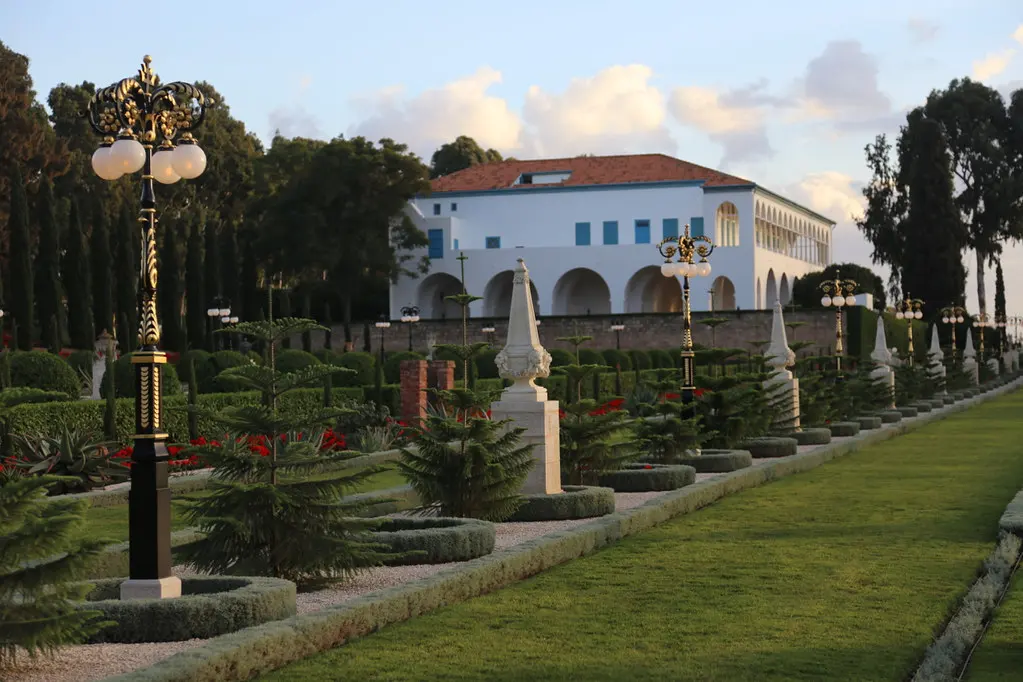
Shrine of Bahá’ú’lláh, Acre
Bustan HaGalil, Northern District, Israel
17.2 km away
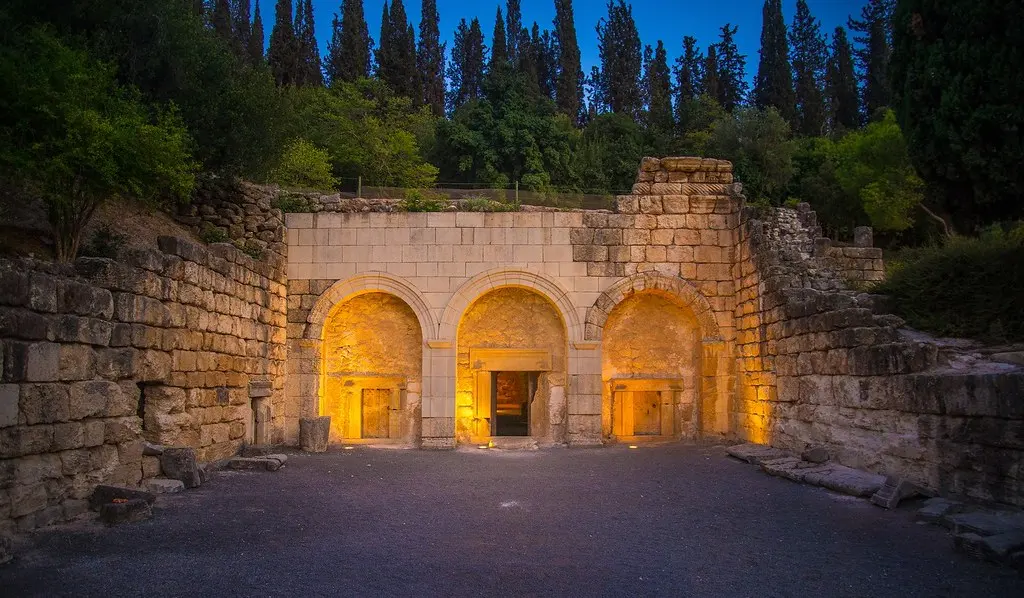
Necropolis of Bet Shearim
Emek Izrael Regional Council, Haifa District, Israel
20.2 km away
Share a photo
Help visitors recognize Stella Maris Monastery and Elijah’s Cave, Haifa, Israel. Every submission is reviewed before publication.