Shrine of the Báb, Haifa
Where a 19th-century martyrdom became the heart of a world faith, framed by gardens descending Mount Carmel
Understand sacred places, explore living traditions, and learn how to engage respectfully with Pilgrim Map.
Access has not been verified. Check current local guidance before planning a visit.
Haifa, Haifa District, Israel
Read the sources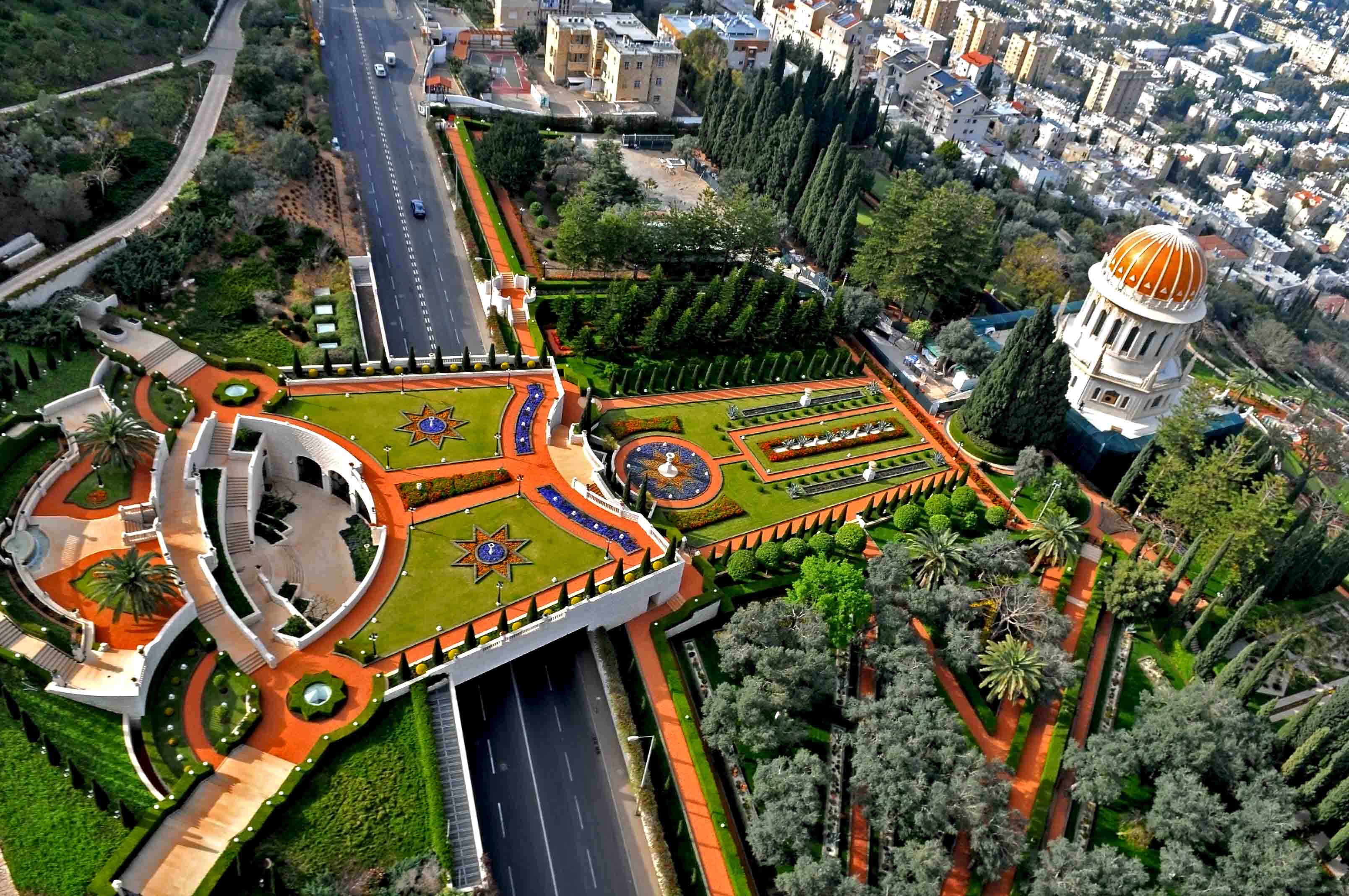
Image of Shrine of the Báb, Haifa. Image source · CC-BY-3.0
Visit essentials
A quick read before you go
- Duration
- One to two hours allows a meaningful visit to the gardens and shrine.
- Etiquette
- The Shrine of the Bab welcomes visitors of all backgrounds with clear expectations: modest…
Overview
Some shrines announce themselves through age; the Shrine of the Bab announces itself through care. Its golden dome atop Mount Carmel holds light from morning through dusk, a beacon over Haifa visible from the Mediterranean. Eighteen meticulously tended garden terraces descend to the German Colony, their geometry and abundance creating structured peace and intentional beauty.
Beneath the dome rests the Bab, born in Persia in 1819 and executed by firing squad in 1850. Followers secretly hid and moved his remains for sixty years before they reached the mountainside Bahaullah himself had indicated. In an era of persecution and scarce resources, the shrine rose stone by stone with what Abdu'l-Baha called “infinite tears.”
The Bahai World Centre now surrounds it, with the global faith's administrative buildings along the mountain. Pilgrims from every continent pray in the simple interior room, where silence is not requested but given.
Scarcely two centuries old, the Bahai Faith and its shrine remain living and still becoming. The gardens will never be finished; neither is the faith. The luminous, completed shrine remains a beginning.
Why this place is sacred
What makes a place thin? The presence of relics, tradition says. The weight of pilgrimage. The intensity of devotion that has soaked into stone.
The Shrine of the Bab holds all of these. But it holds something else too, something rarer: evidence of love translated into matter.
The gardens are not simply landscaped; they are tended with a care that verges on the devotional. Bahai volunteers from around the world come to work them, considering the labor itself a form of service. The symmetry is precise enough to read as obsessive, yet the living plants soften it into something organic. The effect is not cold perfection but warm attention—as though someone is watching over you while you walk, not from above but through the ground itself.
The shrine's location was not chosen by committee or convenience. Bahaullah, prophet-founder of the faith, visited Mount Carmel in 1891 and pointed to the spot where his forerunner should rest. The mountain already carried weight—Elijah had walked here; the Carmelites took their name from it; Jewish and Christian traditions held it holy. But for Bahais, the designation transcends geography.
The Bab belongs here because Bahaullah said so, and Bahaullah said so because he understood something about the relationship between this mountain and what was coming.
The remains themselves arrived after sixty years of concealment. Following the Bab's execution, his followers retrieved the body from where it had been discarded outside Tabriz and began a decades-long journey of hiding, moving, protecting. The interment in 1909 marked the end of that exile and the beginning of this shrine's life.
Visitors who know nothing of this history still report something unusual. The phrase 'like a hug' appears in accounts. So does 'held.' The gardens welcome rather than impress. The dome, which could dominate, instead seems to glow from within, giving rather than taking. Whether this reflects the intention of builders, the prayers of pilgrims, or qualities beyond explanation, it is consistent enough across cultures and beliefs to take seriously.
The shrine exists to house the remains of the Bab and to provide Bahai pilgrims a place for prayer and meditation in his presence. There are no religious ceremonies here, no liturgies or services. The purpose is simpler: to create conditions for encounter between visitor and sacred presence. The gardens exist to prepare that encounter, to slow the approach, to shift the state of those who climb or descend the terraces before entering the shrine's quiet interior.
The shrine has grown in stages, each marking a moment in Bahai history. The simple stone mausoleum where the remains were first interred in 1909 was transformed when Shoghi Effendi, great-grandson of Bahaullah and Guardian of the faith, directed construction of the golden-domed superstructure between 1942 and 1953. The architect William Sutherland Maxwell combined Eastern and Western elements, embodying the Bahai teaching of religious unity in the building itself.
The terraces came later, from 1987 to 2001. Where once visitors approached the shrine through the mountain's natural terrain, they now move through geometry and bloom. The gardens are designed not as ornament but as transition space, each level preparing the visitor for what waits at the center.
UNESCO inscribed the site as World Heritage in 2008—the first time a relatively new religion received such recognition. The designation marked the architectural and horticultural achievement, but it also acknowledged something harder to measure: that places can matter beyond their original tradition, speaking to something universal in human seeking.
Experience and orientation
The climb through the gardens takes longer than expected. Not because of distance, but because the pace changes. Visitors who arrived energized find themselves slowing, stopping at terraces to look back over the bay, noticing the light on stone, the particular green of that hedge.
By the time you reach the shrine, something has shifted. The building itself is modest by grand religious architecture standards—no Gothic immensity, no baroque excess. The golden dome, so visible from the city below, seems somehow approachable up close. The stone is warm. The proportions are human.
Inside, absolute silence. Not enforced silence but offered silence, the kind that descends in certain spaces and makes speaking feel unnecessary. The interior is simple: a central room, soft carpet, flowers. Bahai pilgrims pray here, often moving through prescribed prayers or reciting the Tablet of Visitation, a special prayer revealed for shrine visits. Others simply sit. The room holds both with equal ease.
The most common report from visitors is peace, but a specific kind: not drowsy peace, not absence-of-conflict peace, but something more like clarity. The noise that usually fills the mind—plans, worries, the running commentary on experience—quiets. What remains feels both simpler and more vivid. Colors look brighter leaving than they did arriving. The world seems, briefly, restored to freshness.
Bahai pilgrims describe deeper encounters: a sense of presence in the shrine room, tears arising without apparent cause, insights into personal questions they carried here. The nine-day pilgrimage, which includes this and other holy sites, often marks a turning point in Bahais' lives—a before and after whose division becomes clearer with years.
Even visitors who arrive with no spiritual intent often leave thoughtful. The combination of beauty and care prompts questions: Who tends these gardens, and why? What would it mean to treat anything in your life with this attention? What did the person buried here do to inspire such devotion?
Approach the shrine as you would approach someone you want to know. The gardens are not obstacles between you and the destination; they are the beginning of the encounter, shaping your state as you move through them.
If possible, enter from the top of the mountain and descend toward the shrine. The terraces unfold below you, the bay beyond them, the horizon beyond that. By the time you reach the dome, you have walked through layers of beauty, each preparing you for the next.
At the shrine threshold, pause. The shift from garden to interior is significant—from living abundance to contained stillness. Allow time for the transition. Remove shoes before entering; find a spot on the carpet; let yourself be present without agenda.
You need not be Bahai to have a meaningful encounter here. The shrine is open to all, and the Bab, in Bahai understanding, came not for one people but for humanity. However you conceive the sacred—or whether you use that word at all—this space makes room for you.
Context and lineage
On the evening of May 23, 1844, in Shiraz, Persia, a young merchant named Siyyid Ali-Muhammad declared himself the Bab—'the Gate'—and announced that the age prophesied by all religions was at hand. A greater messenger than himself would soon appear, one whose coming would usher in an era of unity and peace.
The claim ignited Persia. Thousands recognized the Bab and became known as Babis. Religious authorities saw heresy; political authorities saw threat. The Bab was arrested, imprisoned, moved from fortress to fortress. His followers faced waves of persecution.
On July 9, 1850, in Tabriz, the Bab was brought before a firing squad of 750 soldiers. When the smoke cleared, he was nowhere to be found. The bullets had merely cut the ropes binding him. He was discovered in a nearby room, completing a final conversation with his secretary. 'I have finished my conversation,' he said when they came for him. 'Now you may proceed.'
A second regiment was assembled. This time the execution succeeded. The Bab's body was thrown outside the city gates, intended for animal desecration. But his followers came in darkness and retrieved the remains.
For sixty years, those remains moved in secret—from hiding place to hiding place, across Persia and eventually to the Holy Land. The story of that journey involves risks taken, lives endangered, devotion sustained across generations.
When Abdu'l-Baha finally interred the Bab on Mount Carmel on the first day of spring in 1909, he said of the shrine's construction: 'Every stone of that building, every stone of the road leading to it, I have with infinite tears and at tremendous cost, raised and placed in position.'
The Bahai Faith is young, and its lineage is clear. From the Bab's declaration in 1844 to the present, the faith has passed through defined periods: the Bab's ministry, Bahaullah's revelation and exile, Abdu'l-Baha's leadership, Shoghi Effendi's guardianship, and the current era under the Universal House of Justice.
The shrine stands at the center of this living lineage. It is not a museum of past faith but a functioning heart of a global community. Bahais from every continent come here on pilgrimage, adding their prayers to those of generations before them. The administrative buildings of the Bahai World Centre surround the shrine, their white columns and green lawns forming a context of ongoing work—the translation of spiritual inheritance into planetary organization.
The terraces too are part of this continuity. They were not built in the Bab's time, nor in Abdu'l-Baha's, but in the 1990s, a hundred and fifty years after the Bab's declaration. They represent the faith's capacity to continue creating beauty, to express devotion through labor, to treat the work of building as itself a form of worship.
The Bab
prophet
Born in Shiraz, Persia in 1819, the Bab declared his mission in 1844 as the herald of a greater messenger. His teachings emphasized spiritual renewal and prophesied the imminent appearance of 'Him Whom God Shall Make Manifest.' After six years of imprisonment, he was executed in 1850. Bahais regard him as a Manifestation of God and twin prophet with Bahaullah.
Bahaullah
prophet
Founder of the Bahai Faith, Bahaullah declared himself the messenger foretold by the Bab. Exiled from Persia, he eventually reached the Holy Land, where he designated the location for the Bab's shrine on Mount Carmel. His shrine in Acre is the holiest site in the Bahai Faith.
Abdu'l-Baha
historical
Eldest son of Bahaullah and designated interpreter of his teachings. Abdu'l-Baha oversaw the interment of the Bab's remains and construction of the original mausoleum despite great difficulty during the Ottoman period. His own remains were interred in the shrine in 1921.
Shoghi Effendi
historical
Great-grandson of Bahaullah and Guardian of the Bahai Faith from 1921 to 1957. He directed the construction of the shrine's superstructure and golden dome, working with architect William Sutherland Maxwell to create the building seen today.
Traditions and practice
The Tablet of Visitation is a prayer revealed specifically for visiting the shrine. Bahai pilgrims typically recite it upon entering, either silently or in barely audible whisper. The prayer addresses the Bab directly, acknowledging his station and seeking his intercession. Its language is formal, reverent, patterned in a way that creates its own rhythm when spoken.
Beyond this specific prayer, pilgrims often bring personal prayers or sit in silent communion. There is no liturgy here, no priest, no structure beyond what each visitor brings. The shrine functions as a space for individual encounter rather than collective ritual.
Bahai Faith
ActiveThe Shrine of the Bab is the second holiest place in the Bahai Faith, after the Shrine of Bahaullah in Acre. The Bab is understood as a Manifestation of God, the forerunner of Bahaullah, and the herald of the age of fulfillment prophesied by all religions. His remains are interred here, and the shrine serves as a focal point for Bahai pilgrimage and prayer worldwide.
Bahai pilgrims recite the Tablet of Visitation, a prayer revealed specifically for visiting the shrine. The nine-day pilgrimage includes this site among others. Daily, Bahais and visitors of all backgrounds enter for silent prayer and meditation. No religious ceremonies or services take place in the shrine itself—it is reserved for individual spiritual encounter.
Perspectives and open questions
The Shrine of the Bab can be approached through multiple lenses: as a Bahai holy site, as an architectural and horticultural achievement, as a node in Mount Carmel's longer sacred history. Each perspective illuminates something the others might miss. The site is young enough that scholarly and traditional views largely align, though alternative interpretations connect it to older esoteric frameworks.
Scholarly perspective
Scholars of new religious movements recognize the Bahai Faith as one of the most successful new religions of the modern era, with an estimated five to eight million adherents worldwide. The shrine's architecture has drawn attention for its deliberate synthesis of Eastern and Western elements—Persian garden traditions meeting European classical form—embodying the Bahai teaching of unity in the building itself.
The UNESCO World Heritage inscription in 2008 marked a scholarly and institutional recognition that the site transcends its religious specificity. The citation notes the outstanding universal value of the architecture and gardens, as well as their testimony to a religious tradition with global significance. This was the first inscription for a site associated with a religion founded in the 19th century.
Living and traditional perspectives
For Bahais, the Shrine of the Bab is the second holiest place in the world, after the Shrine of Bahaullah in Acre. The Bab is understood as a Manifestation of God—a being through whom divine attributes become accessible to humanity—and as the twin prophet with Bahaullah. His declaration in 1844 begins the Bahai calendar; his martyrdom in 1850 is commemorated as a holy day.
The shrine's location on Mount Carmel holds layered significance. Bahaullah designated the spot, and Bahai teachings interpret this as fulfillment of prophecy. Isaiah's words—'the glory of Lebanon shall come unto thee'—are read as foretelling the Bahai presence on Carmel. The mountain itself, associated with Elijah in Jewish and Christian tradition, becomes in Bahai understanding a site where multiple prophetic threads converge.
Alternative interpretations
Mount Carmel has drawn spiritual interpretation beyond organized religion. Some interpret the Bahai presence there as part of a larger pattern of sacred geography, connecting the mountain to planetary energy lines or understanding it as a node in global spiritual architecture. Others note the mountain's associations with Elijah, the Carmelites, and now the Bahais as evidence of enduring sacred power that different traditions have recognized in different eras.
These interpretations are not endorsed by the Bahai community but arise from visitors attempting to place their experiences in frameworks broader than any single religion. The consistent reports of peace and presence at the site prompt questions about what makes certain places sacred—questions that neither religious tradition nor skeptical analysis fully answer.
Open questions
Genuine mysteries attend even this relatively documented site. The first execution's failure—how did the Bab survive a firing squad of 750 soldiers?—remains unexplained by conventional means. Multiple eyewitness accounts exist but vary in details. The sixty-year journey of his remains, moved secretly across Persia and eventually to the Holy Land, involved risks and sacrifices whose full story may never be completely known.
What happened in those hidden rooms, those midnight transfers, those years of waiting? Who knew what, and when? The faith's records preserve the outline, but the lived experience of protecting those remains—the fear, the devotion, the close calls—belongs to people whose names we may never learn.
Plan your visit
Access and arrival
Haifa offers lodging at all price points, from hostels to hotels. The German Colony at the base of the gardens has cafes and restaurants. For Bahai pilgrims, accommodation is arranged through the pilgrimage registration process.
Respectful visit
Modest, respectful clothing. Cover shoulders and knees. No head covering required. Comfortable shoes for garden walking; shoes are removed inside the shrine.
Permitted in gardens. Not permitted inside the shrine. The gardens photograph beautifully, but consider experiencing them before capturing them. The interior's prohibition exists to protect the quality of silence there.
Not traditional. The Bahai Faith does not practice physical offerings at shrines. If you wish to support the site, donations can be made through official Bahai channels, though only Bahais may contribute to Bahai funds—a policy rooted in the principle that faith should not be influenced by outside financial interest.
Stay on designated paths in gardens. No food in garden areas. Absolute silence in shrine interior. No photography inside shrine. No climbing, touching structures unnecessarily, or behavior that would disrupt others' contemplation.
The shrine interior requires absolute silence. This is not a guideline but a condition—speech breaks the container the space provides. If you need to speak, step outside.
Photography is not permitted inside the shrine. The request reflects more than policy: some experiences are diminished by documentation. Let this be one you simply have.
The gardens ask for appropriate behavior: stay on paths, do not pick plants, do not eat in the garden areas. The care visible in every hedge and flower is maintained by devoted volunteers; honor it by not creating extra work.
Current practical details
Address
Shrine of the Báb, Haifa, 3339213, Israel
Phone
Hours
Hours, fees, and access can change — verify on the official source before you travel. Practical details last checked Jun 2026.
Location
Map loads as you approach this section.
Pilgrim reflections
A portrait of encounter, not a score
Pilgrims describe what they felt, how present they could become, and whether the place would shape a journey. There are no stars and no ranking of traditions.
No reviewed reflections yet
The first pilgrims can help describe the character of being here.
Share a reflection
Available after an account-backed “Been there.” Every reflection is reviewed before publication.
Nearby sacred places
Explore other sacred places in the region. Proximity does not establish access or travel time; check each place’s guidance.
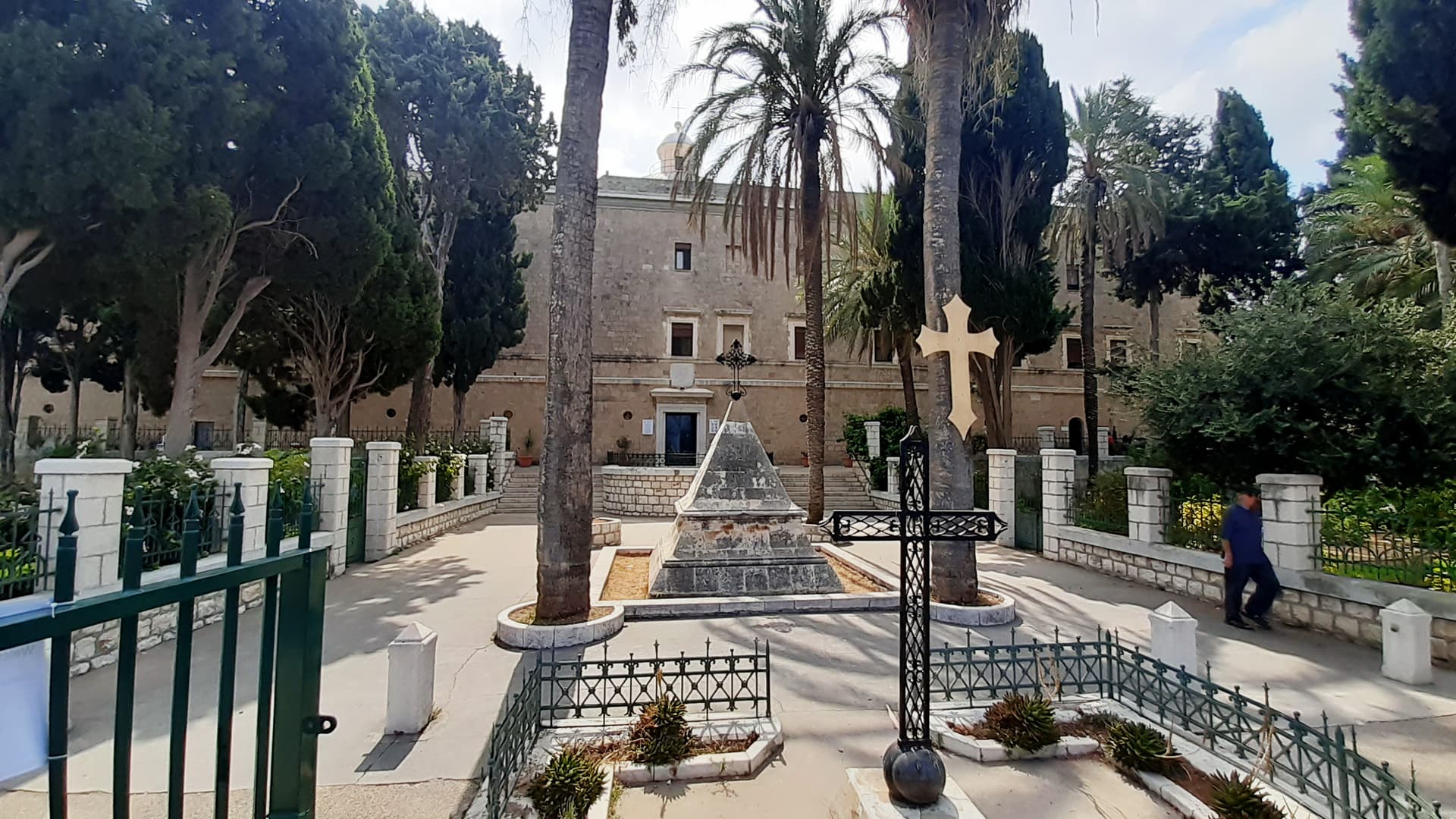
Stella Maris Monastery and Elijah’s Cave, Haifa, Israel
Haifa, Haifa District, Israel
2.1 km away

Cave of Elijah on Mount Carmel, Haifa
Haifa, Haifa District, Israel
2.4 km away
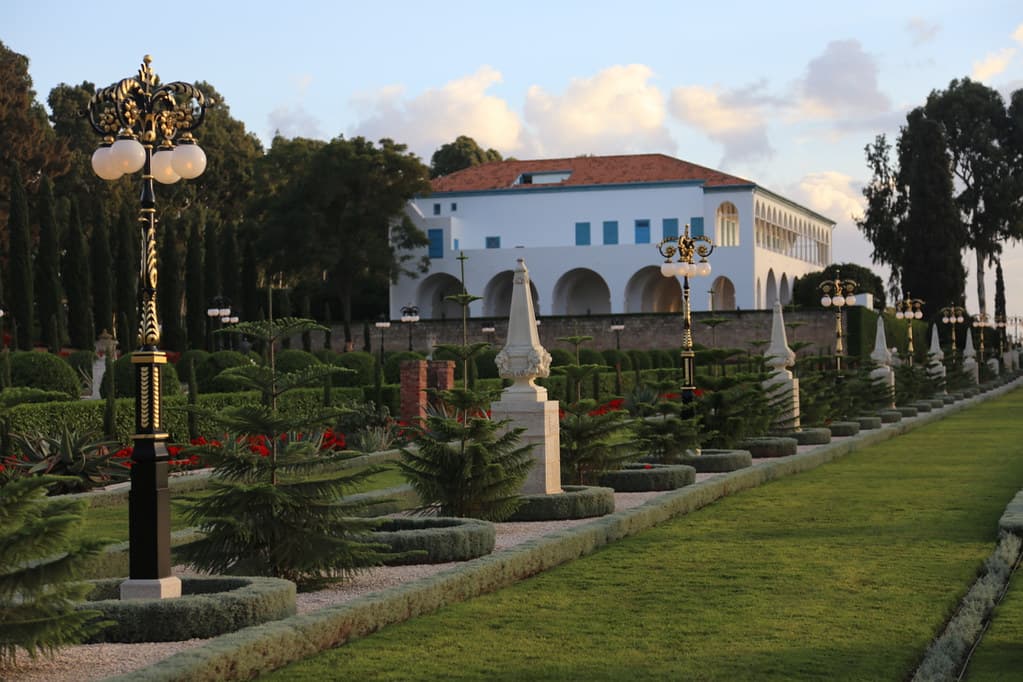
Shrine of Bahá’ú’lláh, Acre
Bustan HaGalil, Northern District, Israel
17.3 km away
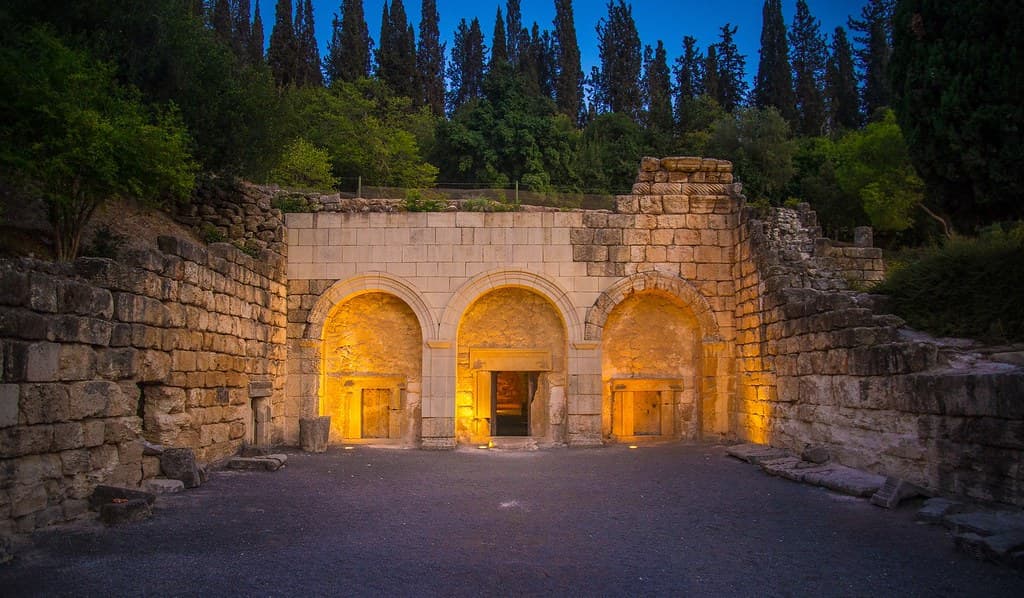
Necropolis of Bet Shearim
Emek Izrael Regional Council, Haifa District, Israel
18.0 km away
References
Sources consulted for this page. Source categories describe the publication, not a guarantee that every claim is verified. Traditional accounts and outside interpretations may differ.
- 01Shrine of the Báb — WikipediaencyclopediaComprehensive overview
- 02The Shrine of the Bab — Baháʼí International CommunityofficialOfficial Bahá'í source
- 03Bahá'í Holy Places in Haifa and the Western Galilee — UNESCO World Heritage CentreofficialUNESCO listing documentation
- 04The Shrine of the Bab and its Significance — Baháʼí BlogSource contextBahá'í community perspective
- 05Shrine of the Báb — Lonely PlanetSource contextTourism perspective
Share a photo
Help visitors recognize Shrine of the Báb, Haifa. Every submission is reviewed before publication.