Skorba Prehistoric Site
Where the sacred and the domestic coexisted — Malta's deepest prehistoric stratigraphic record in two quiet temples
Understand sacred places, explore living traditions, and learn how to engage respectfully with Pilgrim Map.
Access has not been verified. Check current local guidance before planning a visit.
Mġarr, Malta
Read the sources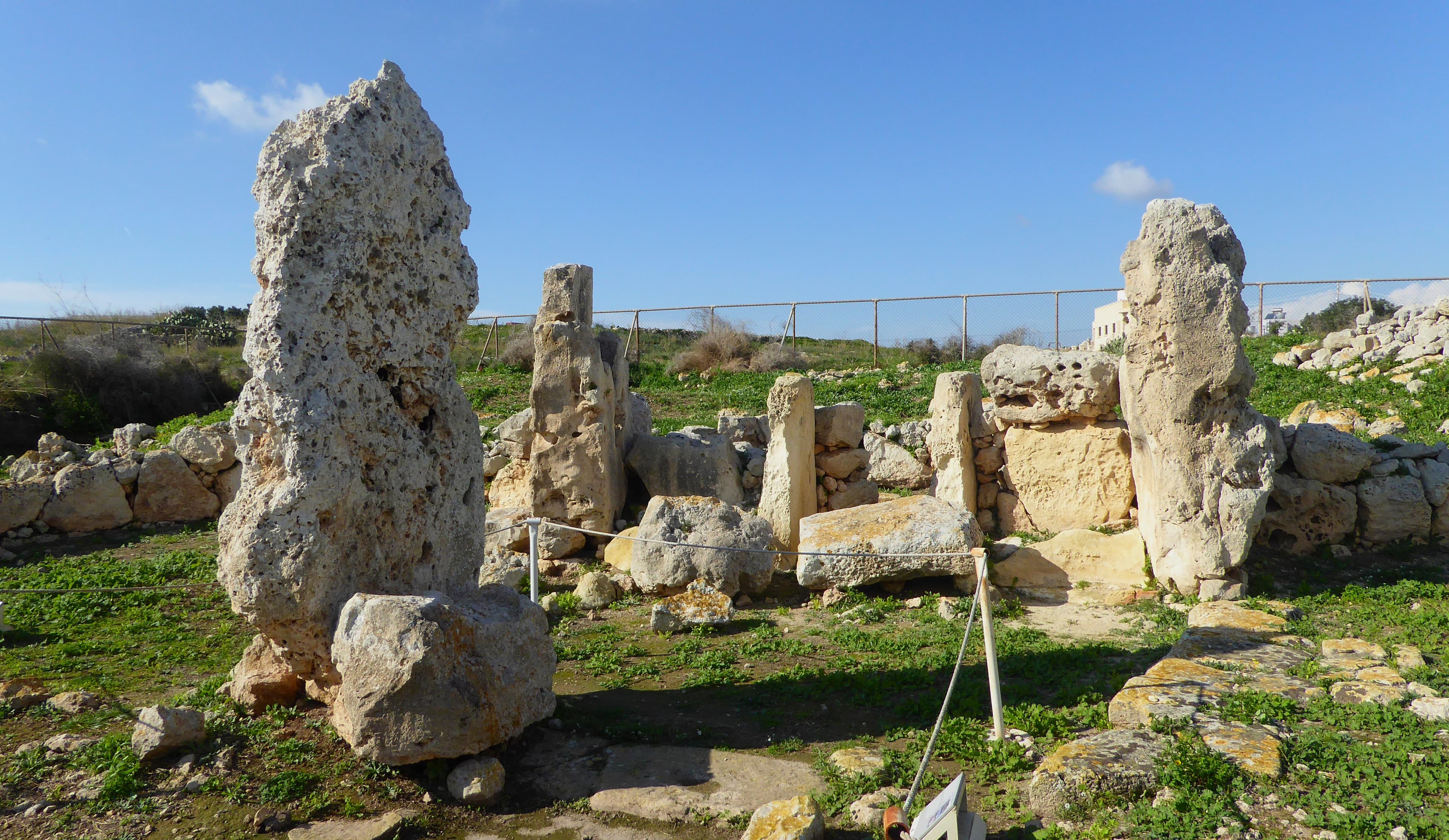
Image of Skorba Prehistoric Site. Image source
Visit essentials
A quick read before you go
- Duration
- 1–1.5 hours.
- Access
- Located on the northern edge of Żebbiegħ village, Northern Region of Malta.
Overview
Skorba is the quietest and most intimate of Malta's UNESCO World Heritage temple sites. Ġgantija and Ħaġar Qim are more visually imposing, and Mnajdra's Lower Temple is more astronomically precise; Skorba instead reveals the full texture of Neolithic sacred life beyond monumental centres.
David Trump's 1960–63 excavation found domestic hut remains beside the temples—the earliest known domestic structures in Malta. Hearths and storage pits stood metres from altars and ritual deposits. People lived beside sacred places rather than journeying to them exceptionally; domestic and sacred calendars were apparently one.
Stratigraphy begins around 5000 BCE in the Ghar Dalam phase, Malta's earliest documented Neolithic occupation, and spans the full Temple Period to approximately 2500 BCE. No other Maltese site offers this range; its pottery records two and a half millennia of technological and cultural development.
Of the two modest temples, one follows the Ġgantija phase's triapsidal plan; the later one has four apses and a central niche. Approach slowly, without equating size with sacred significance.
Why this place is sacred
The quality of sacred depth at Skorba is not one of scale or spectacle. It comes from something harder to articulate: the sheer density of human time compressed into a modest area of northern Maltese plateau. Seven thousand years of occupation — beginning before the temples were conceived and continuing through the full arc of the Temple Period — accumulated here, stratum by stratum, in a place that was at once a home and a sanctuary.
This is, in fact, the rarer and more challenging sacred phenomenon. The great temples — Ħaġar Qim, Ġgantija, Mnajdra — impress through scale and precision, through the demonstration of extraordinary collective effort. Skorba asks something quieter: it asks you to register the ordinariness of Neolithic sacred life. The huts were here. The temples were here. The people moved between them without apparently experiencing the movement as a change in kind.
For contemporary visitors who feel the separation between the sacred and the everyday as a kind of wound — who sense that modern life has evacuated the domestic sphere of its spiritual weight — Skorba offers a different model. Not an exceptional place set apart from life, but a place where the boundary between life and its larger meaning was permeable or perhaps absent altogether.
The site is less visited than the southern temples, which means visitors often have it largely to themselves. Silence is available here in a way that Ħaġar Qim and Ġgantija, at their busiest, cannot provide.
Two megalithic temples in active use during the Temple Period (c. 3600–2500 BCE), built alongside and within a community's domestic settlement. The proximity of hut foundations to temples suggests that ritual and daily life were not compartmentalised but integrated aspects of the same community's existence.
Skorba's earliest occupation dates to approximately 5000 BCE in the Ghar Dalam phase — the initial Neolithic colonisation of Malta. Temples were built during the Ġgantija phase (c. 3600–3200 BCE) and further developed in the Tarxien phase (c. 3150–2500 BCE). The site was abandoned, along with the rest of Maltese Temple Period culture, around 2500 BCE. Temi Zammit discovered the site in 1925; David Trump's 1960–63 excavation produced the foundational report.
UNESCO World Heritage inscription followed in 1992 as part of the Megalithic Temples of Malta listing. Heritage Malta now manages the site for public access.
Experience and orientation
Reaching Skorba requires a modest effort. The site is on the northern edge of Żebbiegħ village — a small settlement in Malta's Northern Region that does not have a significant tourist infrastructure. The absence of a large visitor centre, a car park, or a prominent sign is part of the character of the place.
The two temples are enclosed within Heritage Malta fencing and are clearly visible from the site entrance. Begin with the older, Ġgantija-phase temple — the larger of the two, with its triapsidal plan. The scale is considerably smaller than the southern monuments; the apses feel proportioned to a human body rather than designed to overwhelm it. Move through the plan deliberately, noting the altar configurations and the quality of the stonework.
The Tarxien-phase temple, built later, has four apses and a central niche. Its more complex plan suggests a development in architectural thinking between the two phases — a refinement, perhaps, of how the interior space was conceived for ritual use.
What to look for, especially: the hut foundations. They are low and not immediately legible as structures, but they are there, adjacent to the temples, and their presence is the most important thing Skorba has to tell. Stand at a point where both the temple wall and the hut foundations are visible simultaneously, and hold both in attention at once.
This is what Neolithic sacred life looked like from the inside: not a pilgrimage to a remote monument, but a morning walk from the hearth to the altar.
Midweek mornings in any season except midsummer are likely to find the site quiet, possibly empty. The interpretive panels provide context. Allow more time than the scale of the site suggests — there is more here than is immediately apparent.
Allow 1–1.5 hours. Verify current opening hours with Heritage Malta before visiting (Tuesday–Sunday 10:00–16:30 is the reported schedule, but confirm). Car is the most practical mode of access; bus from Valletta to Mġarr with a short walk is possible.
Context and lineage
The name 'Skorba' is of uncertain etymology; no indigenous mythology from the site's period of use survives. The site was discovered in 1925 by the Maltese archaeologist Sir Temi Zammit, but its full significance — including the domestic hut remains and the extraordinary stratigraphic depth — was not established until David Trump's systematic excavation of 1960–63.
Trump's work defined what is now known as the Skorba cultural phases of Maltese prehistory: a refined chronological and typological sequence that uses the pottery and structural remains from this site to anchor the entire Maltese Neolithic timeline. The site gave its name to a period of cultural development; in this sense, Skorba has shaped how we understand all other Maltese prehistoric sites.
Skorba is one of the seven sites in the UNESCO Megalithic Temples of Malta World Heritage listing, inscribed in the extended 1992 designation. As the site with the longest continuous stratigraphic record, it occupies a foundational place in Malta's prehistoric chronology, even though it is less prominent in the public heritage landscape than the larger southern sites.
Sir Temi Zammit
Maltese archaeologist who discovered the site in 1925; instrumental in establishing the significance of Maltese prehistoric culture more broadly
David Trump
Principal excavator, 1960–63; his excavation report defined the Skorba phases of Maltese prehistory and established the site's unique importance for understanding the full arc of the Neolithic Temple Period
Traditions and practice
The proximity of domestic and sacred structures at Skorba suggests that ritual practice was integrated into the rhythms of daily community life rather than confined to exceptional, pilgrim-attracting events. Probable seasonal ceremonies and votive offerings consistent with other Temple Period sites; the two temples may have served different ritual functions within the same community's practice.
No organised religious or spiritual events. Heritage Malta manages public access with interpretive panels. The site is quieter and less commercially developed than the southern temples, which allows for a more self-directed visit.
Arrive on a weekday morning, if possible the first opening of the day. Begin outside the enclosure fence, walking its perimeter before entering — the relationship between the two temples, the hut foundations, and the surrounding landscape is easier to read from outside than from within.
Inside, spend time at the hut foundations. They are not temples; they are houses. They are where people slept, prepared food, stored tools. The temples are metres away. Think about what it would mean to wake in the morning with a sacred structure visible from your door — not as an exceptional destination, but as an ordinary feature of the landscape of daily life.
In each temple, find the altar configurations and spend a moment at them without movement. The altars at Skorba are similar in form to those at the larger sites; what is different is the scale of the context around them. Here the altar does not feel like the centre of an extraordinary ceremonial machine. It feels like a familiar place — a place visited regularly, like a well or a hearth.
Before leaving, stand at a point where both the older and the newer temple are visible simultaneously. The two structures are four to five centuries apart; their differences in plan and execution record something about how the community's architectural thinking evolved. The sacred form was not fixed; it was worked on, refined, reconsidered across generations.
Neolithic Temple and Domestic Culture (prehistoric)
HistoricalSkorba is uniquely important as the site where domestic hut remains were found alongside the temples, establishing that Neolithic Maltese sacred life was integrated with everyday community existence rather than confined to exceptional ceremonial contexts. Its stratigraphic sequence, reaching back to approximately 5000 BCE, provides the deepest continuous record of human occupation in Maltese prehistory.
Communal living in huts adjacent to the temples; regular ritual activity in both temples; pottery production; animal husbandry; probable seasonal ceremonies and votive offerings.
Archaeological Heritage and Scholarly Research
ActiveDavid Trump's 1960–63 excavation defined the Skorba phases of Maltese prehistoric chronology, making this site foundational for the entire field of Maltese archaeology. The UNESCO listing recognises Skorba as part of the most significant prehistoric monument group in the Mediterranean.
Ongoing conservation, Heritage Malta visitor management, scholarly research, public education and interpretation. Trump's stratigraphic report remains the primary reference for Maltese Neolithic chronology.
Perspectives and open questions
Skorba is primarily understood through the lens of Maltese prehistoric archaeology, where its stratigraphic depth and domestic-sacred coexistence make it foundational for understanding the Temple Period. It has a lower profile in alternative and esoteric traditions than the more prominent southern sites.
Scholarly perspective
Skorba is regarded by archaeologists as the most important site for understanding Malta's early Neolithic culture and the transition to the Temple Period. Trump's 1960–63 stratigraphic sequence remains the chronological backbone for all subsequent Maltese prehistoric study. The domestic hut remains are unique in the Maltese archaeological record — no other Temple Period site has produced comparable evidence of the residential community that built and used the temples.
The site is therefore essential for any reconstruction of Neolithic Maltese social organisation.
Living and traditional perspectives
No living tradition is tied to Skorba. The Maltese nation regards it, along with the other six sites of the UNESCO listing, as a defining prehistoric heritage monument, though its lower public profile means it features less prominently in national heritage discourse than Ħaġar Qim or Ġgantija.
Alternative interpretations
Skorba is less prominent in alternative and Goddess spirituality traditions than the larger southern sites, partly due to its lower visual drama and less well-known public identity. It fits within the broader sacred landscape of Neolithic Malta as understood in earth mysteries traditions, but has not become a focal point in the way that Ħaġar Qim has.
Open questions
The full extent of the prehistoric settlement around the temples; whether the domestic community living here was specifically dedicated to temple maintenance and ritual; the nature of the different ritual functions served by the two temples within the same community; how Skorba's community related to the larger and more visually prominent temple sites in the south of Malta; and why the site was chosen in the first place — what the northern Maltese plateau offered that warranted a major settlement.
Plan your visit
Access and arrival
Located on the northern edge of Żebbiegħ village, Northern Region of Malta. By car: from Valletta, take the road north toward Mġarr; Żebbiegħ is approximately 15 km, 20 minutes. By bus: services to Mġarr from Valletta; Żebbiegħ is a short walk from Mġarr. Heritage Malta opening hours: Tuesday–Sunday 10:00–16:30; verify with Heritage Malta before visiting as these have changed historically. Ticketed entry. Mobile signal is generally available in Żebbiegħ village; confirm signal conditions before departing for the site.
No information on emergency services at time of writing; Mġarr and St Paul's Bay (nearby) have full services.
Żebbiegħ has no accommodation; the nearest options are in Mġarr (~2 km) or St Paul's Bay (~5 km). Valletta (15 km) is within reasonable day-trip distance.
Respectful visit
No formal dress code. Comfortable footwear recommended.
Permitted for personal use throughout the site.
Skorba is an archaeological heritage site under scientific management; no offerings are appropriate.
Do not touch the megalithic fabric. Do not cross any fencing or barriers. Stay on designated pathways. Follow Heritage Malta staff instructions if staff are present.
Verify Heritage Malta opening hours before visiting — the site has had variable access in the past and may be closed on Mondays. The site is small; the visit does not take long, but rushing it misses most of what makes it significant.
Location
Map loads as you approach this section.
Pilgrim reflections
A portrait of encounter, not a score
Pilgrims describe what they felt, how present they could become, and whether the place would shape a journey. There are no stars and no ranking of traditions.
No reviewed reflections yet
The first pilgrims can help describe the character of being here.
Share a reflection
Available after an account-backed “Been there.” Every reflection is reviewed before publication.
Nearby sacred places
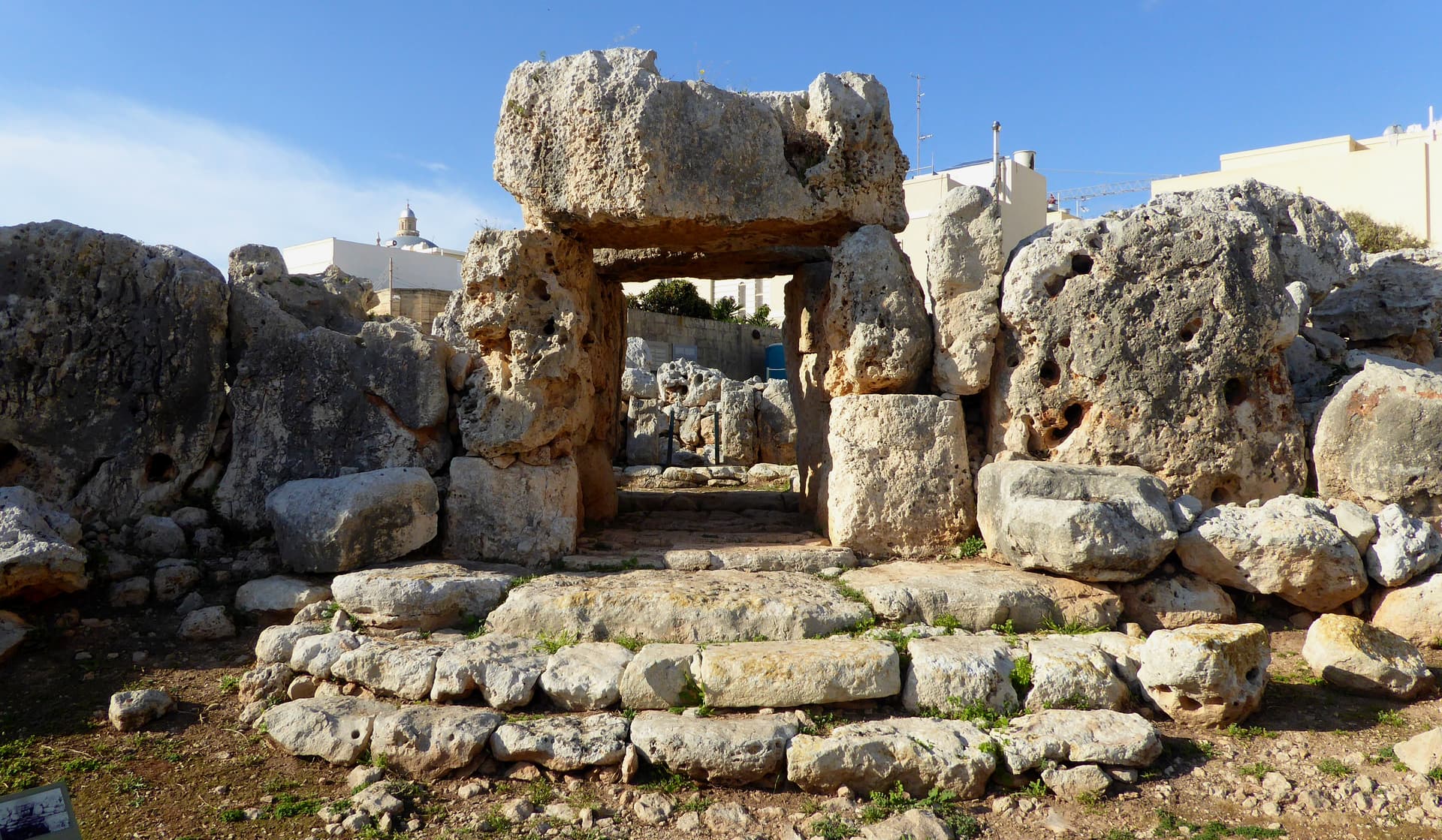
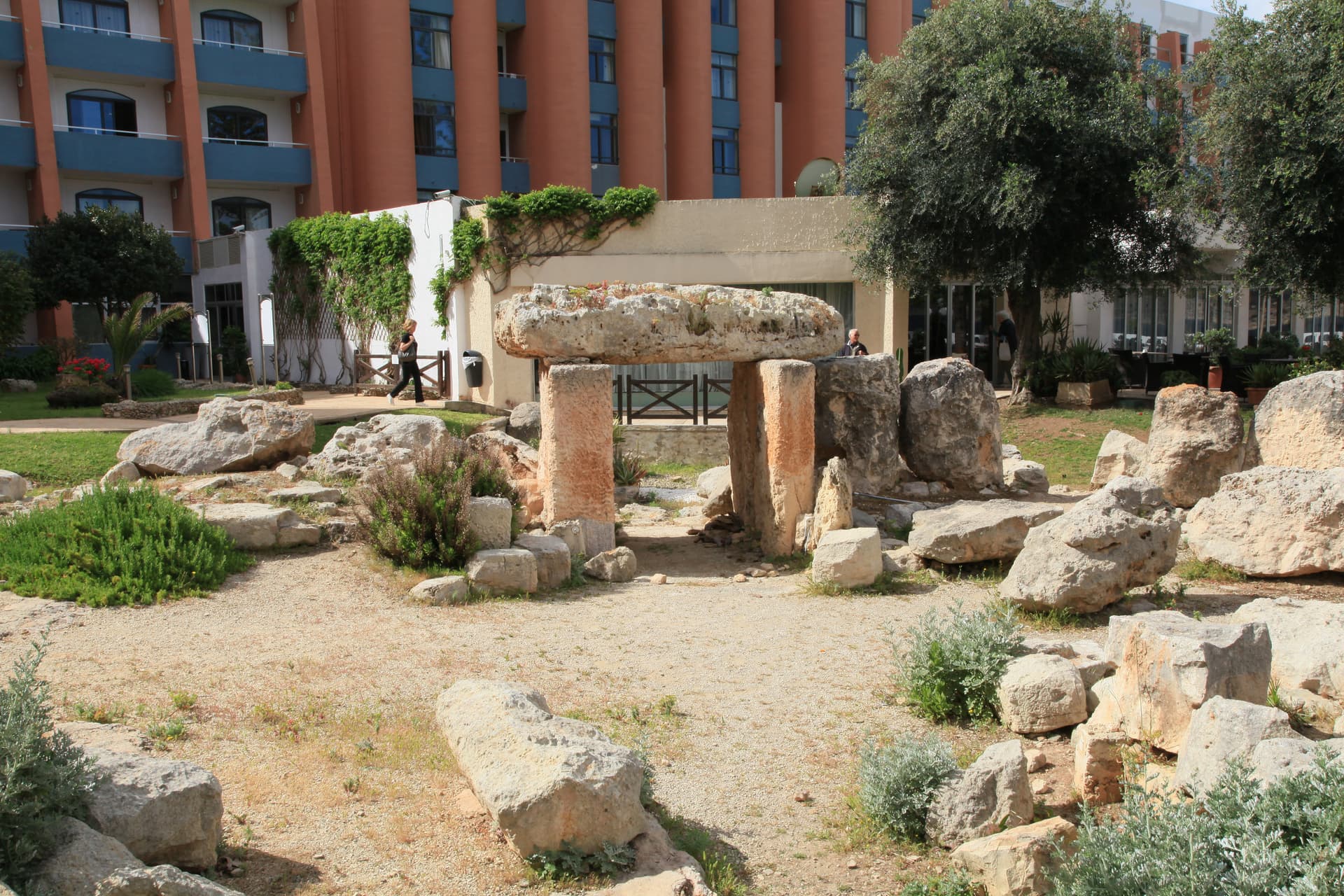
Explore other sacred places in the region. Proximity does not establish access or travel time; check each place’s guidance.


References
Sources consulted for this page. Source categories describe the publication, not a guarantee that every claim is verified. Traditional accounts and outside interpretations may differ.
- 01Skorba Prehistoric Site – Heritage Malta — Heritage MaltaofficialOfficial managing authority
- 02Megalithic Temples of Malta – UNESCO World Heritage Centre — UNESCOofficialOfficial UNESCO listing page
- 03Skorba Temples – Wikipedia — Wikipedia contributorsencyclopediaDetailed overview citing Trump's excavation report
- 04The Skorba temples and their story about prehistoric life in Malta — Malta UncoveredguideGood historical and interpretive context
- 05Uncovering and understanding prehistory — Skorba Temples — Google Arts & Culture / Heritage MaltaSource contextDigital exhibition from Heritage Malta
- 06Megalithic Temples of Malta – Wikipedia — Wikipedia contributorsencyclopediaBroader context for the UNESCO listing
- 07Skorba Temples – The Brain Chamber — The Brain ChamberSource contextSummary of archaeological findings
- 08Skorba – MyMalta — MyMalta GuideguideVisitor-oriented overview
Share a photo
Help visitors recognize Skorba Prehistoric Site. Every submission is reviewed before publication.