Oluz Höyük
Where goddess worship and Zoroastrian fire converged — six millennia of sacred life in a northern Anatolian valley
Understand sacred places, explore living traditions, and learn how to engage respectfully with Pilgrim Map.
Access has not been verified. Check current local guidance before planning a visit.
Amasya, Turkey
Read the sources
Visit essentials
A quick read before you go
- Duration
- 1.5 to 2 hours for a thorough visit; longer if the excavation team is present and willing to…
- Access
- Located near the village of Gözlek in the Çekerek River valley, approximately 25 km southwest of…
Overview
In the Çekerek River valley southwest of Amasya, Oluz Höyük holds more than six thousand years of continuous habitation and two exceptional religious discoveries. Excavations since 2007 have revealed a Phrygian sanctuary to Kubaba, the Anatolian mother goddess and predecessor of Cybele, and an Achaemenid fire temple that may be Anatolia's earliest known evidence of Zoroastrian ritual practice.
The fire temple—an atashkadeh in Persian—dates to the fifth or fourth century BCE under the Achaemenid Persian Empire. Its pillared hall, absence of idol figures, and ritual burning align with archaic Persian religion's aniconic, fire-centered character; a nearby ritual pit may have held sacred fire. Researchers interpret this as intentional Zoroastrian infrastructure.
Below it, the Phrygian sanctuary's altars, cult stone, and sacred chamber form Cappadocia's first identified Iron Age Kubaba temple complex. Worship of this ancient Anatolian great mother influenced the later Cybele cult that spread through the Greco-Roman world.
Other layers record Chalcolithic settlement, Hittite occupation, and a Hellenistic finale interrupted in 47 BCE, when Julius Caesar's forces met the Pontic army nearby at the Battle of Zela—the engagement followed by 'Veni, Vidi, Vici.' That upheaval closes the mound's stratigraphy. Oluz Höyük's distinction lies not in monumental scale but in Western and Iranian spiritual roots layered within one still-living excavation.
Why this place is sacred
The concept of a 'thin place' — a location where the membrane between the human and the sacred feels unusually permeable — applies here in a layered, historical sense. Oluz Höyük was not a single people's sacred site but a location that successive cultures recognized as worth consecrating anew.
The Phrygian goddess Kubaba was not a minor deity. She was the great mother of northern Anatolia, a figure whose worship reached back to pre-Phrygian Anatolian religion and whose iconographic legacy eventually flowed into the Roman cult of Cybele — one of the most widely observed mystery traditions in the ancient Mediterranean. The cult stone and sacred chamber found at Oluz Höyük represent the physical traces of goddess veneration in a form that predates the familiar Cybele by centuries.
The Achaemenid fire temple introduces a different but equally potent sacred logic: the fire that is lit and maintained as the presence of divine truth. In Zoroastrian understanding, fire does not symbolize Ahura Mazda — it is understood as a medium through which the divine reality is made present. The aniconic nature of the worship found at Oluz Höyük, in a region surrounded by idol-based religious cultures, marks it as a genuine experiment in a distinctive theology.
That both traditions — the embodied maternal goddess and the transcendent fire religion — found expression at the same site across consecutive centuries is the aspect that most rewards contemplative attention. Whatever drew people to this valley over millennia, it produced a space of genuine religious creativity.
The earliest layers at Oluz Höyük reflect Chalcolithic and Bronze Age settlement in a fertile river valley. The site's religious function crystallized in the Iron Age with the Phrygian Kubaba sanctuary, then transformed again under Achaemenid Persian administration into a fire temple complex.
Religious use of the site moved from goddess veneration (Phrygian period, 8th–6th century BCE) to sacred fire worship (Achaemenid period, 5th–4th century BCE). The Hellenistic period followed, until the site's occupation was disrupted by the military upheaval of 47 BCE. Today it is held in the tradition of archaeological scholarship, with the layers of earlier sacred use preserved rather than practiced.
Experience and orientation
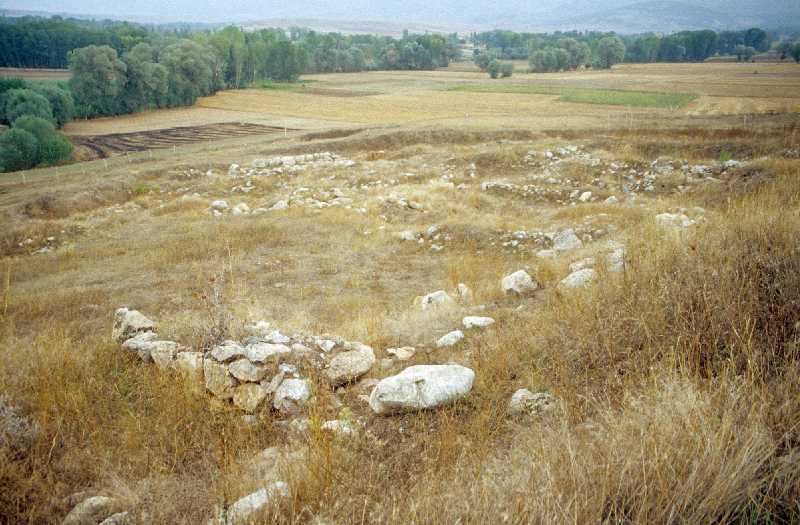
Oluz Höyük does not announce itself the way that more heavily visited sites do. The mound rises modestly from the Çekerek River valley, surrounded by agricultural land, with excavation trenches cut into its slopes during summer campaigns. What you see depends partly on when you visit — the active dig seasons from June to August expose new layers and may temporarily restrict access to certain areas, but they also make the site alive with scholarly activity.
The most visually striking aspect for unschooled visitors is the stratigraphic complexity: distinct horizontal bands in the earth corresponding to different civilizations, each building on and over what preceded it. Excavation produces this visible record. Where the Phrygian sanctuary and the fire temple have been identified, the architecture is modest — not the monumental temple facades of better-resourced sites, but the footprints of sacred rooms that were fully functional at scale in their time.
The setting rewards attention. The Çekerek River valley is fertile and quiet; the agricultural landscape gives the site a continuity with the ancient farming communities that first settled here. The green tuff stone used in one of the temples — a distinctive volcanic material — is visible where excavated sections have been preserved.
Visitors who come with knowledge of the Kubaba discovery and the fire temple find a more resonant experience than those arriving without context. The research available from the excavation team and from published reports (including the peer-reviewed study in the Höyük Journal on the fire temple) provides the interpretive scaffolding that transforms a mound in a valley into one of the most theologically layered sites in Turkey.
Approach via the D785 road southwest of Amasya toward the village of Gözlek. The mound is visible from the road. During active excavation seasons, the team is generally present and can provide orientation. Outside dig seasons, the site is accessible but quieter, and some excavated areas may be covered for protection.
Context and lineage
Settlement at Oluz Höyük began in the Chalcolithic period, around 4500 BCE, in a fertile valley of north-central Anatolia that would remain occupied almost without interruption for more than four millennia. Hittite occupation followed in the second millennium BCE. The site's religious significance intensified in the Iron Age, when Phrygian culture dominated the region and a sanctuary to Kubaba — the great mother goddess of Anatolia — was established here.
Discovered in recent excavations, the sanctuary contains altars, a cult stone, and a sacred chamber: the first identified Iron Age Kubaba temple complex in Cappadocia.
The Achaemenid Persian Empire absorbed the region in the sixth century BCE, and with Persian administration came Persian religion. The fire temple identified at Oluz Höyük — an atashkadeh featuring a pillared hall and probable ritual pit — dates to the fifth or fourth century BCE and has been interpreted by researchers as possibly the earliest archaeological evidence of Zoroastrian worship in Anatolia.
Its aniconic character, absence of divine images, and orientation toward fire-centered ritual distinguish it clearly from the surrounding polytheistic religious cultures.
The site's occupation ended abruptly. In 47 BCE, Julius Caesar defeated the Pontic army at the nearby Battle of Zela — the engagement recorded by the three-word dispatch 'Veni, Vidi, Vici.' The disruption appears to have ended continuous occupation of the mound.
Chalcolithic (c. 4500 BCE) → Hittite Bronze Age → Phrygian Iron Age (Kubaba sanctuary) → Achaemenid Persian (fire temple) → Hellenistic period, ending c. 47 BCE
Prof. Şevket Dönmez
Excavation director, Istanbul University
Julius Caesar
Roman general
Kubaba
Anatolian mother goddess
Traditions and practice
The Phrygian-period Kubaba sanctuary involved cult stone veneration, altar use within a sacred chamber, and ritual offerings to the goddess. Kubaba was understood as the embodied power of earth and fertility, and her veneration involved material presence — the cult stone, the altar, the sacred room — rather than purely cerebral theology.
The Achaemenid fire temple centered on the maintenance of sacred fire in a pillared hall. In Zoroastrian practice, fire was not merely symbolic but understood as the medium through which Ahura Mazda — the supreme principle of truth and righteousness — became present. The aniconic character of the worship (no idols, no figurative representation) and the probable use of a ritual pit for fire-related purposes distinguish this practice sharply from the goddess cult that preceded it at the same location.
No active religious practices are associated with the site. The traditions of both the Kubaba sanctuary and the fire temple are historically extinct. The site is managed by the Turkish Ministry of Culture as an active excavation site. Annual summer excavation campaigns by Istanbul University continue to uncover new evidence.
For the contemplative visitor, the most productive approach is to move through the site slowly, following the excavation trenches from the surface down into the layered earth. Notice where distinct earth colors and textures mark the boundary between one civilization's floor and another's. The Çekerek River valley visible from the mound provides the same geographical context that drew people here for millennia — water, fertility, shelter.
If visiting during an active excavation season, watch how the archaeologists work: the careful trowel work, the systematic recording of position before any object is moved. This process is itself a form of reverence — the recovery of meaning from matter. Outside excavation season, the uncovered areas allow close observation of the architectural remains.
Identify where the fire temple's pillared hall would have stood, and consider what it meant to maintain a sacred fire in an age before electric light — the fire as the only constant illumination in a darkness otherwise absolute.
Bring adequate water and sun protection; the valley offers little shade during summer months. The site's modest scale means a thorough visit takes 90 minutes to two hours.
Phrygian / Anatolian (Kubaba worship)
HistoricalA sanctuary dedicated to Kubaba — the Anatolian mother goddess who later influenced the image of Cybele — was discovered at the site, dating to the Phrygian period of the 8th to 6th centuries BCE. This represents the first identified Iron Age Kubaba temple complex in Cappadocia, providing direct evidence of goddess veneration in a region whose religious traditions shaped the later mystery cults of the Greco-Roman world.
Ritual offerings, cult stone veneration, altar use within a sacred chamber.
Achaemenid Persian / Zoroastrian
HistoricalA fire temple (atashkadeh) and pillared hall dating to the 5th–4th centuries BCE may represent the earliest known archaeological evidence of Zoroastrian ritual practice in Anatolia. The aniconic character of the architecture — no divine images, a pillared hall oriented toward fire maintenance, a probable ritual pit — distinguishes this phase clearly from surrounding polytheistic cultures and connects it to Achaemenid Persian imperial religion.
Sacred fire maintenance in a pillared hall; aniconic worship directed toward fire as divine presence; possible use of a ritual pit associated with fire ritual.
Archaeological / Scholarly
ActiveOngoing excavation since 2007 by Istanbul University under Prof. Şevket Dönmez has yielded more than 2,000 artifacts across six civilizational layers. The site is regarded as one of the most important multi-period tell sites in northern Anatolia.
Annual summer excavation campaigns, systematic artifact analysis, peer-reviewed publication.
Perspectives and open questions
Oluz Höyük presents interpretive challenges that are productive rather than merely puzzling. The site documents two distinct sacred traditions — goddess veneration and fire worship — that operated at the same location across consecutive centuries, raising questions about what made this valley so persistently worth consecrating.
Scholarly perspective
Academic consensus recognizes Oluz Höyük as one of the most significant multi-period tell sites in northern Anatolia. The identification of the Kubaba sanctuary as the first Iron Age Kubaba temple complex in Cappadocia, and the fire temple as possibly the earliest Zoroastrian ritual structure in Anatolia, are both considered genuine contributions to understanding Iron Age religious practice in the region.
The peer-reviewed publication of the fire temple findings in the Höyük Journal (2023) marks the maturation of the site's scholarly profile. Prof. Dönmez's ongoing excavations have yielded more than 2,000 artifacts across six civilizational strata.
Living and traditional perspectives
No living religious tradition is directly connected to Oluz Höyük. Modern Zoroastrian communities (primarily Parsi and Iranian) may find the site of historical interest as a possible early trace of their tradition in Anatolia, but no formal connection or pilgrimage practice exists. Turkish cultural heritage management oversees the site as an asset of national archaeological significance.
Alternative interpretations
The convergence of two distinct sacred traditions — the material, embodied goddess cult of Kubaba and the aniconic, fire-centered Zoroastrian practice — at a single site has attracted interest from those tracing the genealogy of Western spiritual traditions. Researchers interested in pre-monotheistic religion see in Oluz Höyük a location where the deep roots of both Iranian and Anatolian spirituality can be encountered simultaneously.
The goddess-to-fire transition across the site's layers is read by some as a microcosm of broader shifts in Near Eastern religious consciousness.
Open questions
The exact nature and extent of Zoroastrian practice at the site remains debated; the evidence is suggestive rather than conclusive, and the site cannot yet be definitively identified as a formal atashkadeh in the full later sense of the term. The full spatial extent of the Kubaba sanctuary — how many structures it comprised, whether it served a wider regional pilgrimage function — has not yet been established.
The relationship between Oluz Höyük and other known Kubaba cult sites in Anatolia is a question the ongoing excavation is positioned to address.
Plan your visit
Access and arrival
Located near the village of Gözlek in the Çekerek River valley, approximately 25 km southwest of Amasya city center. Access via the D785 highway heading toward the river valley; the mound is visible from the road. No direct public transport; taxi from Amasya is the recommended option (approximately 30–40 minutes). No published formal opening hours; daytime access. Mobile signal may be limited in the valley — carry a downloaded map. No formal café or facilities on-site.
Amasya city offers a range of hotels and guesthouses suitable as a base. The city's historic center along the Yeşilırmak River is itself worth a dedicated visit.
Respectful visit
No religious dress requirements. Practical clothing for an outdoor archaeological site: sun protection, sturdy footwear for uneven terrain, layers for variable weather.
Generally permitted across the site. During active excavation seasons (typically June–August), check with the excavation team before photographing any exposed finds or ongoing trench work. Photography of the general mound and landscape is unrestricted.
Not applicable. The site has no active religious tradition.
Stay on designated paths and do not enter cordoned excavation areas. Do not touch, move, or collect any stone, pottery, or material from the site. No food or drink in proximity to excavated structures. During active dig seasons, follow all guidance from the excavation team without question.
Active excavation areas are off-limits during dig seasons; do not enter cordoned sections. Do not touch exposed architectural features or stonework. The terrain is uneven; appropriate footwear is necessary. No formal visitor facilities on-site.
Location
Map loads as you approach this section.
Pilgrim reflections
A portrait of encounter, not a score
Pilgrims describe what they felt, how present they could become, and whether the place would shape a journey. There are no stars and no ranking of traditions.
No reviewed reflections yet
The first pilgrims can help describe the character of being here.
Share a reflection
Available after an account-backed “Been there.” Every reflection is reviewed before publication.
Nearby sacred places
Explore other sacred places in the region. Proximity does not establish access or travel time; check each place’s guidance.


References
Sources consulted for this page. Source categories describe the publication, not a guarantee that every claim is verified. Traditional accounts and outside interpretations may differ.
- 01First in Anatolian Archaeology, a 2,600-year-old Sacred Room and Stone Symbolizing the Goddess Kubaba Discovered at Oluz Höyük — ArkeonewsacademicReports on Kubaba temple discovery at the site
- 022,600-Year-Old Lost Temple Built of Green Tuff Stone Unearthed at Oluz Höyük, Northern Türkiye — ArkeonewsacademicDetails on the green tuff temple structure
- 03Ancient Ritual Pit at Oluz Höyük May Represent Anatolia's Earliest Evidence of Zoroastrian Worship — Anatolian ArchaeologyacademicZoroastrian fire worship evidence at the site
- 04Excavations continue in Oluz Höyük, where life ended with the Battle of Zela — Anatolian ArchaeologyacademicOngoing excavation updates and historical context
- 05The First Temple In Iron Age Cappadocia: Oluz Höyük Worship Hall and Atashkadeh — Höyük Journal, 2023, Issue 12academicPeer-reviewed article on the Achaemenid fire temple
- 06Oluz Höyük - Wikipedia — Wikipedia contributorsencyclopediaGeneral overview of the site and its excavation history
- 07Lost Temple of Hittite Goddess Kubaba Discovered in Turkey Sheds Light on Ancient Anatolian Worship — Greek ReporterSource contextPopular coverage of the Kubaba temple discovery
- 082,500-year-old Persian post office found in Turkey's Amasya — Daily SabahSource contextReports on Persian administrative infrastructure found at site
- 09Oluz Mound [Oluz Höyük] Ancient Village or Settlement — The Megalithic PortalguideLocation and coordinate data
Share a photo
Help visitors recognize Oluz Höyük. Every submission is reviewed before publication.