Sanctuary of the Virgin of Candelaria in Tlacotalpan
Where sailors brought a Virgin to a river town, and 247 years later she still blesses the waterways with son jarocho and boats draped in flowers
Understand sacred places, explore living traditions, and learn how to engage respectfully with Pilgrim Map.
Access has not been verified. Check current local guidance before planning a visit.
Tlacotalpan, Veracruz, Mexico
Read the sources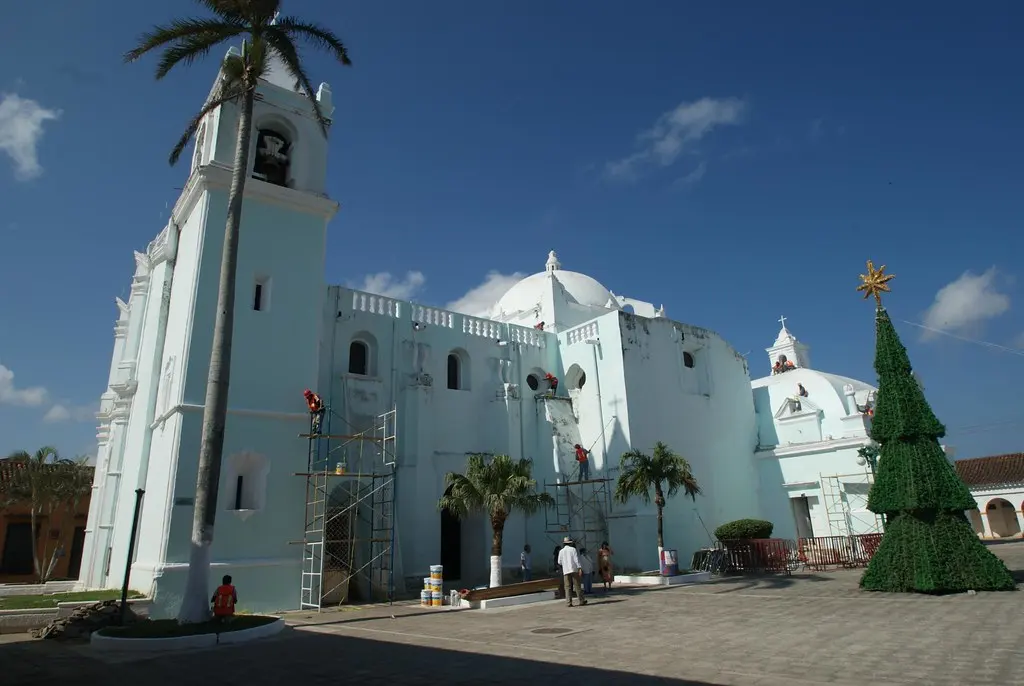
Image of Sanctuary of the Virgin of Candelaria in Tlacotalpan. Image source
Visit essentials
A quick read before you go
- Duration
- Half day for town and sanctuary.
- Etiquette
- Approach as visitors approach: with appreciation for the unique cultural fusion, respect for the…
Overview
Tlacotalpan, an island town established in 1550 where the Papaloapan River meets the Gulf Coast plain, became one of Latin America's few interior river ports. Trade, connection, and periodic floods all came by water. In 1776 sailors brought a Catalan Virgin of Candelaria statue as protector of waterways and patroness of river-and-sea communities.
Her sanctuary, built between 1770 and the early 19th century, uses coral stone from Gulf of Mexico reefs. Spanish and Caribbean elements meet in Moorish-style domes and vaults, a neoclassical altarpiece, barrel vault, and central dome forming a tropical Baroque space.
For over 200 years, February's Fiesta de la Candelaria has joined Spanish colonial, Afro-Caribbean, and indigenous traditions. Homage to the Virgin meets son jarocho, born from African, Spanish, and indigenous music. On February 2, her flower-draped image blesses the waterways from a decorated Papaloapan flotilla. On land, 600 horsemen parade through narrow colonial streets beneath pastel colonnaded houses recognized by UNESCO. Residents wear red; fandango and son jarocho accompany a Running of the Bulls.
A fishermen's patroness honored by horsemen, the Catalan image presides over music joining three continents. She is believed to protect city and river port from floods and grant abundant fishing, blessing the water that sustains Tlacotalpan's livelihood and identity.
Why this place is sacred
The threshold at Tlacotalpan opens where water and faith intersect. This town exists because of the Papaloapan River; the Virgin who protects it is the Virgin of Candelaria, patroness of waterways. The relationship is not metaphorical but practical: without her blessing, the floods might destroy; without the river, the town would have no reason to exist.
The February festival embodies this intersection in ways that theology alone cannot capture. When the flotilla of decorated boats carries the Virgin down the river, when flower-draped vessels process across water that provides livelihood and threatens destruction, the blessing becomes visible. The Virgin touches what she protects; her protection touches what sustains the community.
The son jarocho that accompanies the celebration adds its own layer of thinness. This music emerged from the meeting of African, Spanish, and indigenous musical traditions on the Gulf Coast—three continents fused into something none alone could have created. When fandango dancers move to son jarocho rhythms during the Virgin's festival, they embody cultural syncretism that mirrors religious syncretism: Catholic devotion expressed through forms that carry African and indigenous memory.
The colonial architecture of Tlacotalpan—the pastel houses, the colonnaded streets, the sanctuary built from coral stone—creates container for what it holds. UNESCO recognized this built environment as World Heritage; the recognition acknowledges that what Tlacotalpan preserved deserves protection. The Virgin's sanctuary sits within this protected context, the sacred heart of a town that exists as living heritage.
The Running of the Bulls during the festival seems incongruous until you understand that Tlacotalpan has always been place of meeting—Spanish colonial traditions, African rhythms, indigenous practices, the river that connected them to the wider world. Bulls run through streets where horsemen parade before a Virgin who blesses the river that defines the town. The incongruity is the point: Tlacotalpan contains what cannot be contained together anywhere else.
The Virgin of Candelaria blesses fishermen and protects against floods. These practical functions explain why sailors brought her, why the town embraced her, why 247 years later the February festival still draws thousands. The membrane is thin because need makes it thin—because a river town requires blessing, and blessing requires a patroness who understands water.
Sailors brought the Virgin to protect their river port and its waterways. The sanctuary was built (1770s-early 19th century) to house her and provide focus for the town's devotion.
From 1776 arrival through 247 years of continuous celebration, with the February festival becoming defining event that helped earn Tlacotalpan UNESCO World Heritage status in 1998.
Experience and orientation
Arriving in Tlacotalpan outside festival season offers intimate encounter with a town that time has preserved and UNESCO has protected. The colonial layout with its wide streets, colonnaded houses, and pastel colors—blue, yellow, pink, green—creates atmosphere that few Mexican towns have maintained. Walk the streets understanding that this built environment earned World Heritage status.
Find the Sanctuary of the Virgin of Candelaria on Plaza Zaragoza, the town's main landmark. Enter a building constructed from coral stone brought from Gulf of Mexico reefs, its architecture fusing what cannot normally fuse: Moorish-style domes and vaults, neoclassical altarpiece, Baroque barrel vault and central dome, Renaissance notes in the sacred art finishes. The Catalan statue of the Virgin presides over this fusion—a European figure in a sanctuary built from tropical sea materials, protected by Caribbean-inflected architecture.
Outside, arrange a boat ride on the Papaloapan River. This is what the Virgin blesses; this is why sailors brought her; this is what the February flotilla celebrates. See Tlacotalpan from the water that defines it. Understand why a river town needs a water-blessing patroness.
If your visit coincides with the Fiesta de la Candelaria—January 31 through February 9, with February 2 as the climax—you will experience what 247 years of tradition have created. The inhabitants dress in red and take to streets decorated for their patroness. Son jarocho fills the air; fandango dancers move to rhythms born from three continents' meeting. Six hundred horsemen parade through streets too narrow for such display.
The flotilla of decorated boats carries the Virgin down the river, blessing the waterways that sustain everything.
On February 1, the community sings las mananitas to the Virgin—morning songs that mark her special day's approach. On February 2, Candlemas Day, the celebration reaches its climax: river procession, street celebration, music that belongs nowhere else on earth.
The Running of the Bulls may surprise visitors seeking purely religious experience. But Tlacotalpan has always been place of unexpected combination—Catholic devotion and Afro-Caribbean music, colonial architecture and tropical color, river blessing and running bulls. Accept the incongruity as the point.
Leave Tlacotalpan by road rather than river, watching the pastel town recede. What you witnessed—whether festival intensity or quiet off-season charm—exists because a river needed blessing and sailors knew where to find it.
The sanctuary is in Tlacotalpan's center, on Plaza Zaragoza next to Hidalgo Park. The town itself is UNESCO World Heritage Site (1998). Boat rides available on the Papaloapan River.
Context and lineage
Tlacotalpan was established in 1550 on what was originally an island in the Papaloapan River. From the colonial era through the twentieth century, it served as one of the few interior river ports in Latin America, its existence depending on water that carried trade and threatened floods.
In 1776, sailors brought what such a town needed: the Virgin of Candelaria, patroness of waterways, protector of those who depended on rivers and seas. The following year, the townspeople began to celebrate her. The tradition has continued for 247 years.
The sanctuary built for her rose from coral stone brought from Gulf of Mexico reefs. Construction began around 1770 under Juan de Medina and continued into the early nineteenth century, financed by Pedro de Ovando. The architecture emerged as fusion reflecting the port's character: Spanish colonial forms, Moorish-style domes, Caribbean influences, materials drawn from the sea the Virgin would bless.
The Fiesta de la Candelaria evolved over two centuries into something that belongs only to Tlacotalpan. Son jarocho—the Gulf Coast music born from African, Spanish, and indigenous traditions—became integral to the celebration. Fandango dancing accompanied religious devotion. The river procession developed, flower-draped boats carrying the Virgin to bless the waters that sustained everything.
In 1998, UNESCO inscribed Tlacotalpan as World Heritage Site, recognizing the colonial layout and architecture that two centuries of annual celebration had not destroyed. The Virgin's festival had, if anything, helped preserve what made the town worth protecting: the insistence that tradition continued, that February required celebration, that the river still deserved blessing.
Catholic devotion with son jarocho and Afro-Caribbean cultural influences. The February celebration has continued unbroken since 1777.
Pedro de Ovando
Sanctuary financier
Traditions and practice
River blessing procession. Veneration of the Catalan Virgin statue. Protection of fishermen and against floods.
Fiesta de la Candelaria: January 31 - February 9. February 1: singing las mananitas. February 2: river procession (Paseo de la Virgen), decorated boat flotilla, cavalcade (Cabalgata) with 600 horsemen, son jarocho music, fandango dancing, Running of the Bulls. Year-round: boat rides on the Papaloapan, sanctuary visits.
If possible, attend the February festival—nothing else replicates this fusion of Catholic devotion and Afro-Caribbean tradition. Outside festival season, visit the sanctuary, take a river boat ride, and explore the UNESCO World Heritage town.
Roman Catholicism / Afro-Caribbean-Influenced Marian Devotion
ActiveThe Virgin of Candelaria protects Tlacotalpan's waterways and receives celebration that fuses Catholic devotion with son jarocho music and Afro-Caribbean cultural elements in 247 years of continuous tradition.
River procession, boat flotilla, cavalcade, son jarocho music, fandango dancing, singing las mananitas, Running of the Bulls.
Perspectives and open questions
The Virgin of Candelaria in Tlacotalpan can be understood as Spanish colonial devotion, as protector of a river-dependent community, as focus for unique cultural fusion of Catholic, African, and indigenous elements, or as heart of a UNESCO-recognized heritage town.
Scholarly perspective
Ethnomusicologists study son jarocho as product of cultural encounter unique to the Gulf Coast. Historians document Tlacotalpan's role as interior river port. UNESCO recognition validates the town's architectural and cultural significance.
Living and traditional perspectives
For the community, the Virgin blesses what makes life possible—the river, the fishing, the protection from floods. The festival expresses gratitude for 247 years of relationship.
Alternative interpretations
Some note that son jarocho's African roots and the festival's non-European elements represent indigenous and African traditions claiming space within Catholic celebration.
Open questions
The precise origins of specific festival elements—when the cavalcade began, when son jarocho became integral—are not fully documented.
Plan your visit
Access and arrival
Accommodations in Tlacotalpan fill quickly during the festival—book well in advance. More options in Veracruz city.
Respectful visit
During the festival, many inhabitants dress in red. Modest dress appropriate for visiting the sanctuary.
Photography welcomed. The pastel architecture and festival celebration are highly photogenic. Respect those in prayer within the sanctuary.
Participation in the festival honors the tradition. Donations support the sanctuary.
Respect the sanctuary as sacred space. Do not interfere with festival processions.
The February festival draws large crowds. The Running of the Bulls requires caution for those unfamiliar with such events.
Current practical details
Address
Centro, 95460 Tlacotalpan, Ver., Mexico
Hours, fees, and access can change — verify on the official source before you travel. Practical details last checked Jun 2026.
Location
Map loads as you approach this section.
Pilgrim reflections
A portrait of encounter, not a score
Pilgrims describe what they felt, how present they could become, and whether the place would shape a journey. There are no stars and no ranking of traditions.
No reviewed reflections yet
The first pilgrims can help describe the character of being here.
Share a reflection
Available after an account-backed “Been there.” Every reflection is reviewed before publication.
Nearby sacred places
Explore other sacred places in the region. Proximity does not establish access or travel time; check each place’s guidance.

References
Sources consulted for this page. Source categories describe the publication, not a guarantee that every claim is verified. Traditional accounts and outside interpretations may differ.
- 01Tlacotalpan - WikipediaSource context
- 02Tlacotalpan's Candelaria: A Blend of Music and Adoration - Perceptive TravelSource context
- 03Historic Monuments Zone of Tlacotalpan - UNESCOSource context
- 04La Candelaria in Tlacotalpan - MexConnectSource context
- 05Tlacotalpan's Lively Candelaria Fest - Mexico News DailySource context
- 06Candelaria Temple - Zona TuristicaSource context
Share a photo
Help visitors recognize Sanctuary of the Virgin of Candelaria in Tlacotalpan. Every submission is reviewed before publication.