Mitla Archaeological Zone
The Place of the Dead, where Zapotec nobility became cloud people through tombs decorated with stone puzzles
Understand sacred places, explore living traditions, and learn how to engage respectfully with Pilgrim Map.
Access has not been verified. Check current local guidance before planning a visit.
San Pablo Villa de Mitla, Oaxaca, Mexico
Read the sources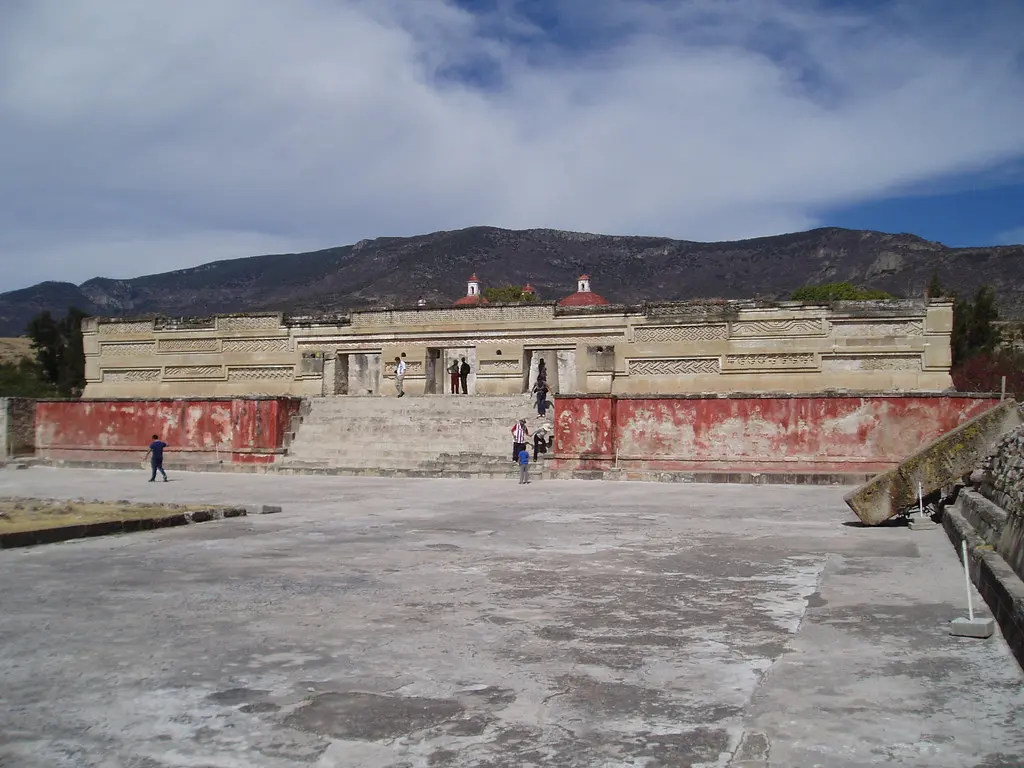
Image of Mitla Archaeological Zone. Image source
Visit essentials
A quick read before you go
- Duration
- 1-2 hours for thorough exploration.
- Etiquette
- Approach Mitla as a site of profound religious significance where Zapotec civilization…
Overview
At the upper end of the Tlacolula Valley, 44 kilometers from Oaxaca City, Mitla—the Place of the Dead, called Lyobaa, 'place of rest,' by the Zapotec—served purposes beyond Monte Alban's political grandeur. Zapotec religious authority concentrated here: the paramount priest resided here, and high-ranking nobles were buried expecting death to transform them into 'cloud people' who could intercede for the living.
Mitla's geometric mosaics are unique in Mesoamerica and unmatched at any other Mexican site. Small, finely cut and polished stones fit without mortar into precise patterns across tombs, panels, friezes, and facades. Their immense labor served cosmology: the step-fret greca represented the feathered serpent, the deity connecting earth and sky; sky bands marked cosmic boundaries; and abstractions encoded underworld, heaven, and death's passages between them. For their Zapotec makers, these were cosmic maps around spaces of transformation, not decoration.
Inhabited by at least the Classic Period (100-650 CE), perhaps earlier, Mitla reached greatest significance between 750 and 1521 CE as Monte Alban declined. Zapotec and Mixtec influences shaped later architecture during their complex interaction. Seventeenth-century Spanish accounts describe a paramount priest receiving dignitaries and maintaining religious continuity through political change.
Five groups—Columns, Churches, Arroyo, Adobe, and Southern—spread across the valley floor. Southern and Adobe served as ceremonial centers; the mosaic-rich Columns group had elite residential and ritual purposes. The Spanish built a church within the Churches group, layering conquest over power they could not or would not erase.
Mitla's tombs marked the passage where humans became cloud people and mortals entered an ancestral realm able to influence the living. Burial positioned the dead for transformation, while the mosaics functioned as maps of their journey.
Why this place is sacred
Some thin places acquire their quality through accumulated devotion or spontaneous encounter. Mitla was built to be thin. Its purpose was passage—the transition of nobles from human to cloud people, from mortal to ancestor, from earthly concerns to cosmic intercession. The architecture, the tombs, the extraordinary mosaics all served this single function: facilitating the journey of the dead.
The geometric patterns that cover every significant surface are not decoration but cosmology made visible. Each step-fret contains the feathered serpent; each sky band marks the boundary between realms; each abstract pattern encodes understanding of how the universe organizes itself and how the dead might navigate within it. The Zapotec masons who cut and fitted these thousands of small stones without mortar worked with purpose beyond aesthetics: they were creating maps for souls.
The tombs themselves open directly into this mapped cosmos. To enter the burial chambers beneath Mitla is to enter the space where transformation occurred. The darkness, the closeness, the surrounding geometric patterns—all created conditions for passage. The noble placed here was not simply stored but positioned at the threshold between worlds.
The paramount priest who resided at Mitla in the later periods served as guardian of this passage. While Monte Alban's rulers wielded political power, Mitla's priest maintained the religious authority that governed death's meaning. Dignitaries who came to Mitla came to consult with power that transcended politics: the power to interpret what awaited on the other side.
The cloud people—ancestors transformed through proper burial—remained active in Zapotec cosmology. They interceded for their descendants, influencing weather, agriculture, and fortune. The tombs at Mitla were not endpoints but transition points; the dead who entered did not rest but began new work. This understanding makes the elaborate decoration sensible: if the dead continued as cloud people, their passage point deserved every effort.
Modern visitors cannot experience Mitla as Zapotec nobles experienced it—no contemporary funeral will use these tombs—but the patterns remain, the geometry persists, the designed thinness of the place continues to affect those who attend. The stone puzzles that surround us at Mitla still map a cosmos, even if we no longer navigate it.
Mitla served as the primary religious center of Zapotec civilization, housing high-status burials and the paramount priest. Nobles buried here were believed to become 'cloud people' who interceded between earth and sky.
Occupied from the Classic Period (possibly earlier), Mitla reached greatest significance 750-1521 CE as Monte Alban declined. Both Zapotec and Mixtec cultures used the site. Protected since 1993; UNESCO World Heritage Site as part of the Prehistoric Caves of Yagul and Mitla.
Experience and orientation
Arrive from Oaxaca City with understanding of what you will see: the Place of the Dead, where geometric precision served cosmic purpose. The 44-kilometer drive through the Tlacolula Valley passes landscape the Zapotec knew, arriving at a site that served their most important religious functions.
Begin at the Grupo de las Columnas, where Mitla's famous mosaics achieve their fullest expression. Stand before walls covered entirely in geometric patterns—step-frets, sky bands, abstract designs fitted together from thousands of small stones without mortar. Let the scale of effort become real: each pattern required cutting, shaping, and fitting pieces with precision that few modern builders could match.
Let the meaning accumulate: these are not random designs but encoded cosmology, maps of the universe wrapped around spaces where death transformed into new existence.
Enter the palace structures and explore the tombs beneath. The transition from sunlit courtyard to underground chamber replicates the transition the dead would make: from visible world to hidden realm, from earthly light to cosmic darkness. The geometric patterns surround you, orienting the soul that would travel through this space toward its destination among the cloud people.
Walk to the Churches Group, where Spanish conquest literally layered itself upon Zapotec achievement. A colonial church rises within the pre-Hispanic precinct, its walls incorporating stones that once served different gods. This layering speaks to power that neither Zapotec nor Spanish fully controlled: the site remained significant under both regimes, its authority transcending political change.
The smaller groups—Arroyo, Adobe, Southern—extend the site's footprint across the valley floor. These ceremonial centers and residential structures create context for the Columns Group's concentrated power. Mitla was not merely a tomb complex but a functioning religious community, its population serving purposes that the tombs fulfilled.
Time your visit to allow contemplation. The mosaics reward slow attention; patterns reveal themselves through extended looking. Sit in the courtyards where Zapotec priests once received dignitaries. Let the silence of the Place of the Dead speak through the geometric language its builders created.
The nearby town of San Pablo Villa de Mitla offers artisan crafts that continue Zapotec textile traditions. The continuity matters: the culture that created these extraordinary mosaics did not vanish but transformed, its people still present in the valley, their descendants selling weavings in the shadow of cloud-people tombs.
Located 44 km from Oaxaca City in the Tlacolula Valley. Five main structural groups, with the Grupo de las Columnas containing the famous mosaics. Hours: Monday-Sunday 08:00-17:00, last access 16:30.
Context and lineage
Mitla may have been inhabited as early as 900 BCE, but it began as a fortified village on the valley's edge. During the Classic Period (100-650 CE), it developed into something more significant, though Monte Alban still dominated Zapotec politics. The transformation came with Monte Alban's decline.
Between 750 and 1521 CE, Mitla became the primary religious center of Zapotec civilization. While political authority fragmented, religious authority concentrated here. A paramount priest resided at Mitla, maintaining traditions that political change could not interrupt. Visiting dignitaries came to consult with power that transcended temporal government.
The Mixtec who entered the region during this period did not replace Zapotec religious practice but joined it. Both cultures used Mitla; both contributed to its architecture. The site's significance transcended ethnic identity, serving whoever needed what it offered: passage between worlds, burial that transformed noble into ancestor, consultation with the priest who guarded these mysteries.
Seventeenth-century Spanish accounts describe what the conquerors found: a functioning religious center, a paramount priest, practices that looked demonic through Christian eyes but served coherent cosmological purpose. The Spanish built their church within the Churches Group, claiming the space for their god without fully understanding what their predecessors had built.
The geometric mosaics that make Mitla unique required skill and labor that speak to the site's importance. No other Mesoamerican site has this decorative tradition; no other community invested such effort in patterns that served burial purposes. The step-frets, sky bands, and abstract designs encoded understanding that the Zapotec deemed worth extraordinary effort to express.
UNESCO recognized Mitla's significance in the Prehistoric Caves of Yagul and Mitla cultural landscape. Protected since 1993, the site now serves those who seek to understand what Zapotec civilization achieved at its religious height—the Place of the Dead where cloud people were made.
Zapotec religious tradition from Classic Period through Spanish contact. Mixtec influence during the Postclassic. No continuous lineage of practitioners, but the site served Zapotec culture for over two millennia.
Paramount Zapotec Priest
Religious authority
Traditions and practice
High-status burial within the geometric-decorated tombs. Priestly residence and consultation. Ceremonies facilitating the transformation of deceased nobles into cloud people. Offerings to ancestors who had successfully completed the passage.
As a protected archaeological zone, Mitla does not host active religious practice. Visitors can explore the architectural contexts where ancient practices occurred and contemplate the cosmological meaning encoded in the geometric mosaics.
Approach Mitla as the Place of the Dead it was designed to be. Study the geometric patterns carefully, understanding them as cosmological maps rather than mere decoration. Enter the tombs with awareness of the transformation they were built to facilitate. Allow the site's designed thinness to affect your experience.
Zapotec Civilization / Death and Ancestor Veneration
HistoricalMitla served as the primary religious center of Zapotec civilization, where nobles were buried to become cloud people who would intercede for the living from their position between earth and sky.
Elite burial in geometric-decorated tombs, priestly residence and consultation, ceremonies facilitating transformation of deceased into ancestors, offerings to cloud people.
Perspectives and open questions
Mitla can be understood as the religious counterpart to Monte Alban's political authority, as unique expression of geometric mosaic art, as passage point for Zapotec cosmology, or as evidence of sophisticated understanding of death's meaning.
Scholarly perspective
Art historians recognize Mitla's mosaics as unique in Mesoamerica, their technique and complexity unmatched elsewhere. Archaeologists study the site's relationship to Monte Alban and its role in Zapotec religious organization. Iconographers interpret the geometric patterns as cosmological encoding.
Living and traditional perspectives
For contemporary Zapotec communities, Mitla represents ancestral achievement and continuing cultural identity. The cloud people concept persists in regional understanding of death and ancestry.
Alternative interpretations
Some visitors sense energetic qualities in the geometric patterns, experiencing the mosaics as active rather than merely historical. While not subject to archaeological verification, such responses suggest the designs continue functioning in ways their makers may have intended.
Open questions
The full meaning of specific geometric patterns remains debated. The precise ceremonies performed at Mitla are not fully documented. The identity and practices of the pre-Zapotec inhabitants are not established.
Plan your visit
Access and arrival
Limited facilities near site. Restaurants and artisan shops in San Pablo Villa de Mitla. Full services in Oaxaca City.
Respectful visit
Comfortable walking shoes for uneven terrain. Sun protection for open areas.
Photography permitted throughout. Tripods and professional equipment may require additional fees.
Contemporary offerings are not part of the site's practice. Entrance fees support preservation.
Do not touch mosaic surfaces or carved elements. Stay on designated paths.
Respect all barriers and protected areas. Do not touch the mosaic surfaces. Photography permitted but tripods may require fees.
Current practical details
Address
Vila de, Cam. Nacional, San Pablo, Centro, 70438 San Pablo Villa de Mitla, Oax., Mexico
Phone
Hours
Hours, fees, and access can change — verify on the official source before you travel. Practical details last checked Jun 2026.
Location
Map loads as you approach this section.
Pilgrim reflections
A portrait of encounter, not a score
Pilgrims describe what they felt, how present they could become, and whether the place would shape a journey. There are no stars and no ranking of traditions.
No reviewed reflections yet
The first pilgrims can help describe the character of being here.
Share a reflection
Available after an account-backed “Been there.” Every reflection is reviewed before publication.
Nearby sacred places
Explore other sacred places in the region. Proximity does not establish access or travel time; check each place’s guidance.

Monte Alban Archaeological Zone
Santa Cruz Xoxocotlán, Oaxaca, Mexico
45.7 km away
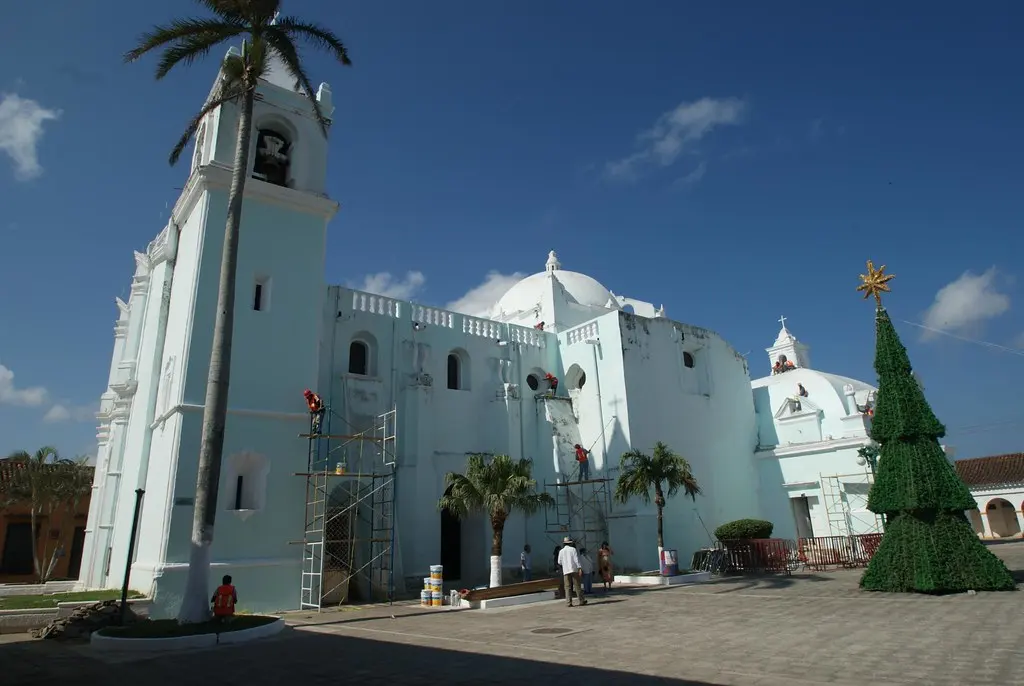
Sanctuary of the Virgin of Candelaria in Tlacotalpan
Tlacotalpan, Veracruz, Mexico
201.9 km away
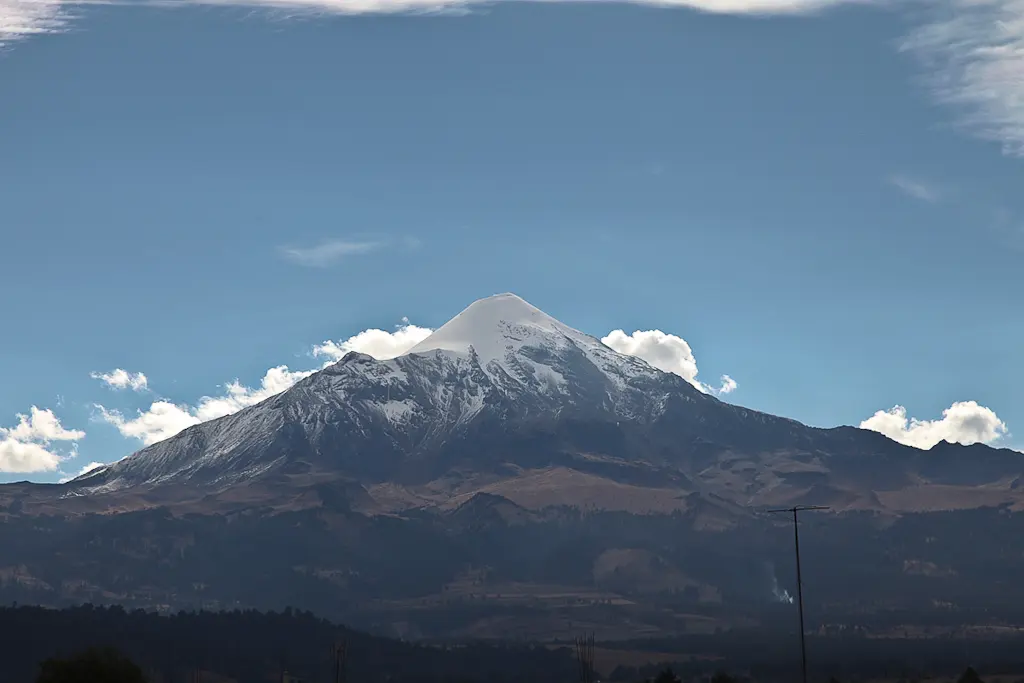
Mt. Citlatepetl Orizaba
Tlachichuca, Puebla, Mexico
253.1 km away
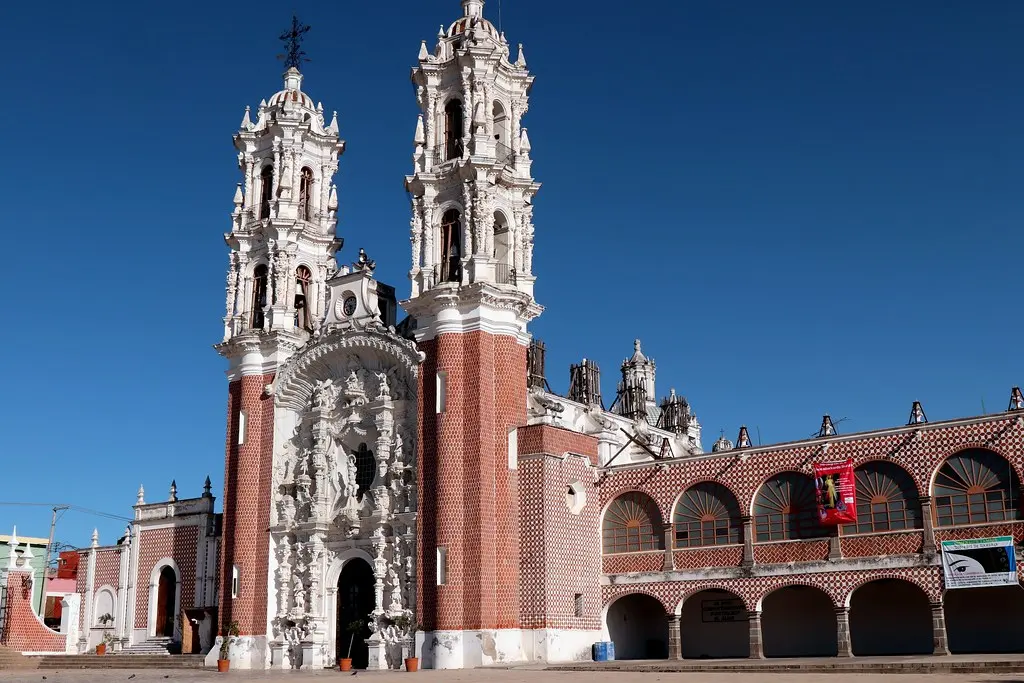
Basilica of Our Lady of Ocotlan
Otatitlán, Tlaxcala, Mexico
331.5 km away
References
Sources consulted for this page. Source categories describe the publication, not a guarantee that every claim is verified. Traditional accounts and outside interpretations may differ.
- 01Mitla - WikipediaSource context
- 02Mitla - INAHSource context
- 03Mitla - The Zapotec Place of the Dead - Heritage DailySource context
- 04Mitla - BritannicaSource context
- 05Mitla - World Pilgrimage GuideSource context
- 06Mitla and its Cultures - HistoricalMXSource context
Photo gallery
3 curated photos
Share a photo
Help visitors recognize Mitla Archaeological Zone. Every submission is reviewed before publication.