Monte Alban Archaeological Zone
Where the Zapotec carved their capital from a mountaintop, playing ball games that moved the cosmos
Understand sacred places, explore living traditions, and learn how to engage respectfully with Pilgrim Map.
Access has not been verified. Check current local guidance before planning a visit.
Santa Cruz Xoxocotlán, Oaxaca, Mexico
Read the sources
Visit essentials
A quick read before you go
- Duration
- 2-3 hours for thorough exploration including museum.
- Etiquette
- Approach Monte Alban as testimony to human conviction that earthly action influences cosmic…
Overview
In 500 BCE, somebody looked at a mountain ridge 400 meters above the Valley of Oaxaca and decided to make it flat. The undertaking required carving, filling, terracing—the transformation of natural geography into what would become one of Mesoamerica's earliest and most significant cities. Monte Alban was not discovered but created, its existence an act of collective will that shaped the valley's history for nearly a millennium and a half.
The Zapotec who built here understood what they were doing as more than construction. The mountain they reshaped became axis mundi, the point where earth and sky and underworld connected. The great plazas that spread across the artificially leveled summit hosted ceremonies that kept this connection functional. The ball games played in the tlachtli court were not mere sport but cosmic regulation, human action influencing celestial movement through ritual competition.
From approximately 500 BCE to 850 CE, Monte Alban dominated the Oaxacan highlands. At its height, perhaps 25,000 people lived on and around this mountain. The construction visible today—the great plazas, the truncated pyramids, the ballcourt, the elaborately decorated tombs—represents achievement maintained across forty generations. The Danzantes gallery preserves carved figures from the site's earliest period; the arrow-shaped Building J served astronomical purposes still debated by scholars.
The tombs speak to what Monte Alban meant to those who built it. Over 170 burial sites have been discovered, the most elaborate yet uncovered in the Americas. These were not merely repositories for corpses but transition points where the dead began their next existence. The offerings that accompanied them—jade, gold, ceramics, painted murals—testify to the importance of proper passage.
By 850 CE, Monte Alban fell quiet. The reasons remain debated: drought, political fragmentation, ecological stress, shifting trade routes. The Mixtec who later inhabited the region reused Zapotec tombs, adding their own offerings to spaces that retained power regardless of who claimed them. When the Spanish arrived, the mountaintop had been silent for centuries, its pyramids overgrown, its meaning preserved only in the traditions of those who still lived in its shadow.
What remains is extraordinary. The UNESCO World Heritage Site encompasses not just ruins but testimony to what humans can achieve when convinced that their actions influence cosmic order. The mountain that was made flat still rises above the valley, its temples still oriented toward the sky they were built to honor.
Why this place is sacred
Monte Alban is thin because it was made to be thin. The mountain itself was reshaped to create proper space for ceremonies that kept the cosmos functioning. Every structure served purposes beyond the visible: the ballcourt regulated celestial movement; the tombs facilitated passage between realms; the temples maintained connection between earthly and divine orders.
The decision to level a mountaintop speaks to conviction. The labor required—carving, filling, terracing over decades—could only have been sustained by belief that the result mattered cosmically. The Zapotec who built here understood themselves as participating in universal maintenance; their city was not merely habitation but instrument.
The tlachtli court demonstrates this understanding most clearly. The ball game played here was not recreation but ritual. Through regulated competition, players enacted cosmic struggle; the ball's movement mirrored celestial bodies; the game's outcome influenced forces beyond the court's walls. To play tlachtli at Monte Alban was to participate in keeping the cosmos ordered.
The Danzantes—carved figures on slabs from the site's earliest period—show human bodies in contorted positions once interpreted as dancers, now understood as sacrificed captives or depicted rulers. Whatever their identity, they represent the human cost of cosmic maintenance. Monte Alban's power required offerings; the carved figures document what was given.
The 170 tombs create passages throughout the site. These are not simple graves but engineered transition points, their walls painted with deities, their chambers filled with offerings that would accompany the deceased into their next existence. The jade, gold, and ceramics found in these tombs were not buried wealth but necessary equipment for the journey the dead would make.
Building J, the arrow-shaped structure that defies the site's general orientation, served astronomical purposes. Its alignment captures celestial events that the Zapotec deemed significant enough to memorialize in stone. The building demonstrates that Monte Alban's architecture responded to the sky as much as to human need.
Walking the great plazas today, the thin quality persists. The mountain is still flat; the structures still orient toward celestial markers; the tombs still open into darkness where passage once occurred. Whatever the Zapotec understood, whatever ceremonies they performed, the place they made retains something of the intention that shaped it.
Monte Alban served as political, ceremonial, and residential capital of Zapotec civilization, its mountaintop location establishing connection between earthly and cosmic realms.
Founded approximately 500 BCE, reached greatest extent 200-500 CE, declined and was abandoned by 850 CE. Mixtec reused the site after abandonment. UNESCO World Heritage Site since 1987.
Experience and orientation
The approach to Monte Alban takes you 400 meters above the valley floor, climbing the mountain that the Zapotec made flat. Let the ascent prepare you: whatever effort you expend reaches nothing compared to what the builders invested. They carved this summit into existence across generations because they believed it mattered.
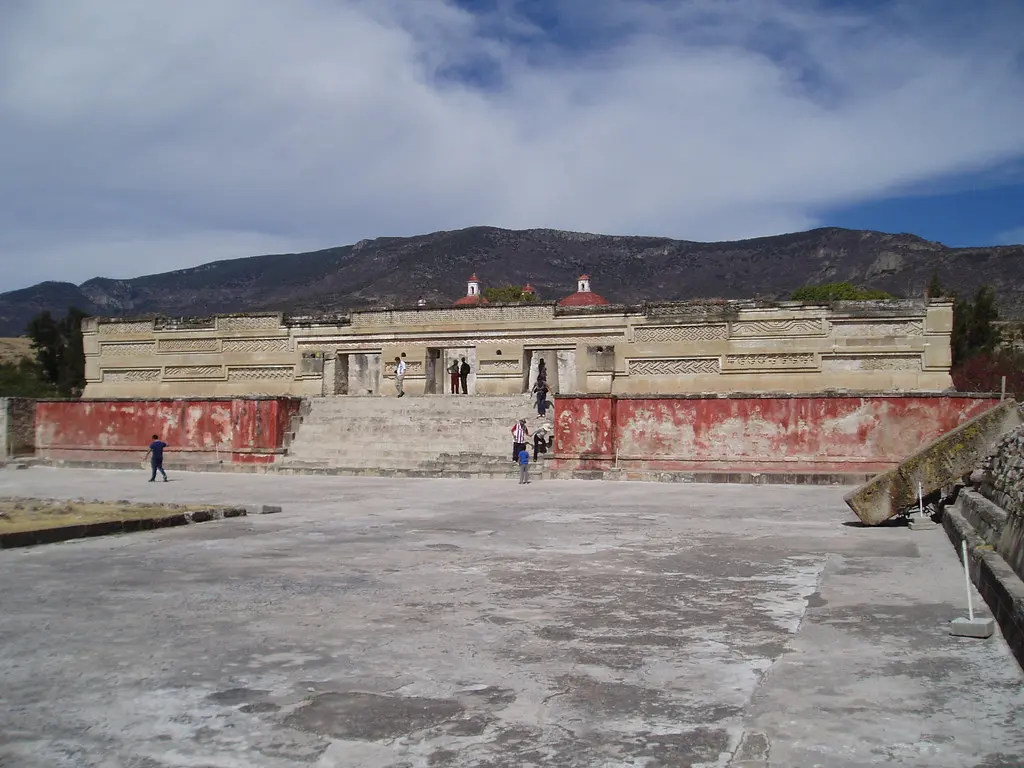
Arrive at the site entrance and proceed to the great plaza. The scale becomes immediately apparent: this is not a collection of ruins but an engineered landscape, the natural mountaintop transformed into ceremonial stage. Truncated pyramids rise on all sides; platforms and temples create the enclosed sacred space that Mesoamerican cities required.
The North Platform demands climbing. Ascend its stairs and survey the entire archaeological zone from its height. This is what rulers saw: their created world spread below, the valley beyond, the mountains that ring the horizon. The position of power is also position of responsibility—the ceremonies performed at Monte Alban maintained order that benefited everyone in the valley below.
Descend and find the ballcourt. The tlachtli played here was not sport but cosmic regulation. Stand in the court and imagine the ball in play—each bounce, each capture, each score influencing forces the players believed they were affecting. The architecture channels attention toward the game; the sloped walls define the stage for ritual competition.
The Danzantes gallery preserves Monte Alban's earliest art. These carved figures—once thought to be dancers, now understood as sacrificed captives or depicted rulers—show the human cost of maintaining cosmic order. Study their contorted bodies, their closed eyes, their positions that speak to what the site required.
Building J, the arrow-shaped structure, defies interpretation while demanding attention. Its astronomical alignments captured celestial events; its unusual orientation within the site's general plan suggests specific purposes. Whatever the Zapotec intended, the building demonstrates that Monte Alban's architecture responded to the sky.
The tombs scattered throughout the site open into spaces where passage occurred. Some remain accessible; others are preserved closed. The elaborately painted Tomb 105 shows the funerary art that accompanied the dead into their next existence. Enter where permitted and let the darkness of the burial chambers create appropriate contemplation.
The on-site museum houses artifacts that could not remain in situ: carved stones, ceramic offerings, jade treasures. The collection contextualizes what the architecture cannot contain—the portable objects that accompanied rituals and burials across thirteen centuries.
Descend from Monte Alban as the day ends if possible. The valley spreads below; the sun sets beyond the mountains; the artificially leveled summit recedes above. The Zapotec who built here saw similar sunsets across forty generations, their created world hosting whatever ceremonies the dying light required.
Located on a mountaintop 10 km from Oaxaca city center. The site spreads across the artificially leveled summit. North and South Platforms offer elevation; the ballcourt, Danzantes, and Building J occupy the main plaza.
Context and lineage
Around 500 BCE, in the Valley of Oaxaca, a decision was made that would shape the region's history for millennia: a mountain ridge would be leveled to create a ceremonial center. The undertaking required labor that only collective conviction could sustain—carving, filling, terracing across decades, transforming natural geography into sacred architecture.
The builders were Zapotec, though Olmec influence shaped their earliest work. The Danzantes carved during the site's first period show stylistic connections to the Gulf Coast culture that preceded Mesoamerican civilization's full flowering. But what the Zapotec created was distinctively their own: a mountaintop capital that would dominate the Oaxacan highlands for thirteen centuries.
By the Terminal Formative period (100 BCE - 200 CE), Monte Alban had become a major power. Its influence extended across the highlands; its interactions with Teotihuacan to the north shaped regional politics. The great plaza, the ballcourt, the pyramid temples—all took their classic form during this period of expansion.
The site reached its greatest extent during the Classic period (200-500 CE). Perhaps 25,000 people lived on and around the mountain. The tombs built during this period—elaborately decorated, filled with jade and gold and ceramic offerings—represent the most sophisticated burial practices yet discovered in the Americas. The dead who occupied these tombs were positioned for passage, their offerings equipment for the journey.
Decline came gradually after 500 CE. By 850 CE, Monte Alban had been abandoned. The causes remain debated: drought cycles, political fragmentation, ecological degradation, shifting trade routes. The mountain that had been made flat returned to silence.
The Mixtec who later inhabited the region reused Zapotec tombs, adding their offerings to spaces that retained power regardless of who claimed them. The two cultures became fused in their religious practices, Monte Alban serving both peoples across the centuries before Spanish arrival.
In 1902, Leopoldo Batres conducted the first intensive exploration. In 1931, Alfonso Caso began the large-scale scientific excavations that revealed Monte Alban's extent and significance. In 1987, UNESCO designated the site a World Heritage Site, official recognition of what the Zapotec had created from a mountaintop beginning twenty-five centuries ago.
Zapotec civilization from approximately 500 BCE; Mixtec reuse after abandonment; no continuous lineage of practitioners but site served regional cultures for over two millennia.
Zapotec rulers (unnamed)
Political and religious leaders
Alfonso Caso
Archaeologist
Traditions and practice
Tlachtli (ritual ball game) regulating cosmic forces. Temple ceremonies maintaining earthly-divine connection. Sacrificial offerings (possibly including human sacrifice as depicted in Danzantes). Elite burial with jade, gold, ceramics, and painted murals.
As a protected archaeological site, Monte Alban does not host active religious practice. Visitors can explore the architectural contexts where ancient practices occurred.
Climb the North Platform for overview of the created landscape. Stand in the ballcourt imagining cosmic regulation through play. Study the Danzantes to understand what the site required. Enter accessible tombs to experience the passage points they were designed to be.
Zapotec Civilization / Cosmic Maintenance
HistoricalMonte Alban served as the center of Zapotec cosmic maintenance for nearly 1,500 years, its ceremonies keeping order between earthly and divine realms through ball games, sacrifices, and ritual.
Tlachtli ball games regulating cosmic forces, temple ceremonies, sacrificial offerings, elite burial with elaborate grave goods.
Perspectives and open questions
Monte Alban can be understood as political capital, as cosmic instrument, as architectural achievement, or as testimony to the human capacity to reshape geography in service of religious conviction.
Scholarly perspective
Archaeologists study Monte Alban as one of Mesoamerica's earliest cities and its relationship to contemporary powers. Art historians analyze the Danzantes and tomb paintings. Astronomers investigate Building J's celestial alignments.
Living and traditional perspectives
For contemporary Zapotec communities, Monte Alban represents ancestral achievement and continuing cultural identity. The site participates in regional pride.
Alternative interpretations
Some visitors experience Monte Alban's energy as palpable—the accumulated power of thirteen centuries of ceremony persisting in the stones. While not subject to archaeological verification, such experiences suggest the site continues affecting those who attend.
Open questions
The specific causes of Monte Alban's abandonment remain debated. The full meaning of Building J's orientation is not established. The identity of the Danzantes figures continues to be interpreted.
Plan your visit
Access and arrival
Full services in Oaxaca city. Guides available at entrance (800-1000 pesos per group, Spanish and English).
Respectful visit
Comfortable walking shoes for extensive terrain. Sun protection essential—the site is exposed at 1,940 meters elevation.
Photography permitted. Video cameras and tripods may require additional fees.
Contemporary offerings are not part of the site's practice. Entrance fees support preservation.
Do not climb on structures marked as restricted. Stay on designated paths. Do not remove any materials from the site.
Some structures are closed for preservation. Respect all barriers. The site's elevation and exposure require sun protection and water.
Current practical details
Address
Ignacio Bernal S/N, 71233 San Pedro Ixtlahuaca, Oax., Mexico
Phone
Hours
Hours, fees, and access can change — verify on the official source before you travel. Practical details last checked Jun 2026.
Location
Map loads as you approach this section.
Pilgrim reflections
A portrait of encounter, not a score
Pilgrims describe what they felt, how present they could become, and whether the place would shape a journey. There are no stars and no ranking of traditions.
No reviewed reflections yet
The first pilgrims can help describe the character of being here.
Share a reflection
Available after an account-backed “Been there.” Every reflection is reviewed before publication.
Nearby sacred places
Explore other sacred places in the region. Proximity does not establish access or travel time; check each place’s guidance.
References
Sources consulted for this page. Source categories describe the publication, not a guarantee that every claim is verified. Traditional accounts and outside interpretations may differ.
- 01Monte Alban - WikipediaSource context
- 02Monte Alban - UNESCO World Heritage CentreSource context
- 03Monte Alban - BritannicaSource context
- 04Monte Alban - INAHSource context
- 05Monte Alban Heritage CenterSource context
- 06How to Visit Monte Alban - Away Go WeSource context
Photo gallery
4 curated photos
Share a photo
Help visitors recognize Monte Alban Archaeological Zone. Every submission is reviewed before publication.