Sanctuary of Our Lady of Kibeho
Africa's first Church-approved Marian apparition site, layered with prophecy and genocide
Understand sacred places, explore living traditions, and learn how to engage respectfully with Pilgrim Map.
Access has not been verified. Check current local guidance before planning a visit.
Kibeho, Southern, Rwanda
Read the sources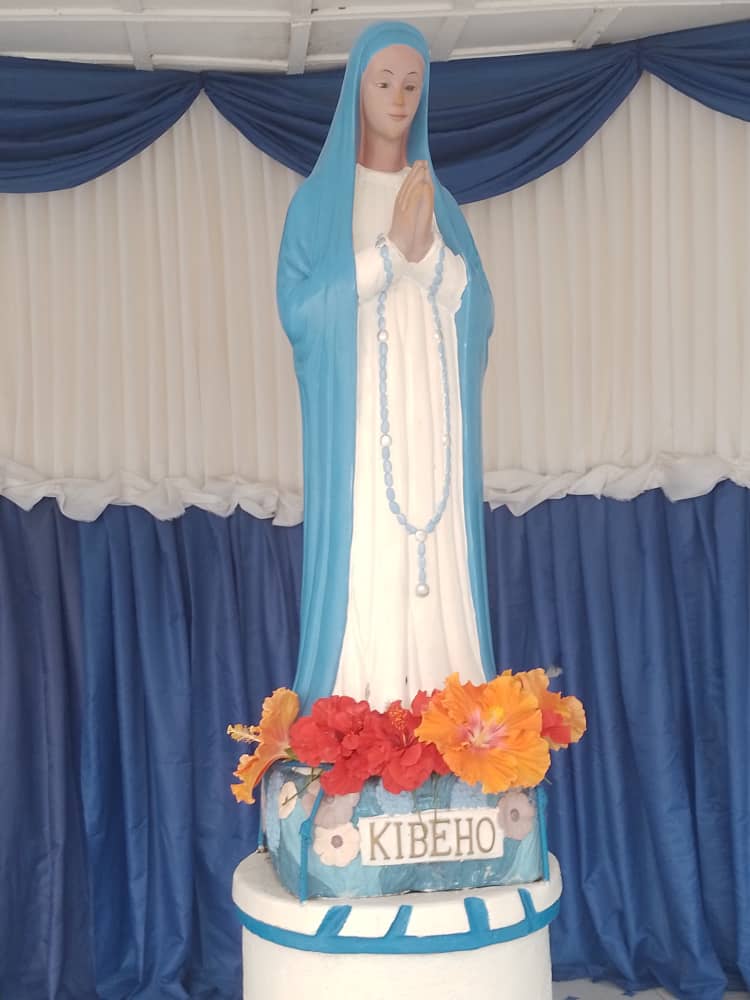
Image of Sanctuary of Our Lady of Kibeho. Image source · CC-BY-SA-4.0
Visit essentials
A quick read before you go
- Duration
- Full day for shrine, apparition meadow, museum, and memorial.
- Access
- Kibeho is in Mushubi Sector, Nyaruguru District, Southern Province, Rwanda — about 200 km…
Overview
Among the rolling green hills of southern Rwanda's Nyaruguru District, the Sanctuary of Our Lady of Kibeho marks Africa's first Church-approved Marian apparitions. On 28 November 1981, sixteen-year-old Alphonsine Mumureke, a student at Kibeho College, a Catholic girls' school run by the Bethany Sisters, reported a beautiful Lady identifying herself in Kinyarwanda as Nyina wa Jambo, 'Mother of the Word.' Nathalie Mukamazimpaka followed in January 1982; Marie Claire Mukangango, initially Alphonsine's mocker, followed in March 1982.
Mary called for prayer, especially the Seven Sorrows rosary, and warned of catastrophe unless Rwanda turned from hatred. On 15 August 1982, the Feast of the Assumption, all three received simultaneous visions of rivers of blood, decapitated bodies, an open abyss, and a tree set ablaze.
Twelve years later, the 1994 genocide against the Tutsi killed an estimated 800,000 people in 100 days; violence reached Kibeho, and a 1995 massacre of internally displaced people in a UN-protected camp near the shrine killed thousands more. On 29 June 2001, Bishop Augustin Misago of Gikongoro declared the three visionaries' apparitions authentic, Africa's first Vatican-recognized Marian apparition. The shrine remains both a Marian pilgrimage site and a memorial of survival, reconciliation, and mourning.
Why this place is sacred
Kibeho holds an unusual density of layered witness. The first layer is the apparitions themselves, sustained over eight years to three young Rwandan women in a Catholic girls' school. The second is the 15 August 1982 simultaneous vision of catastrophe — rivers of blood, decapitated bodies, an abyss of fire — interpreted retrospectively (but not retroactively imposed) as foretelling the 1994 genocide.
The third is the genocide and the 1995 Kibeho massacre of internally displaced people in a UN-protected camp near the shrine, in which thousands died. The fourth is the living tradition: Nathalie Mukamazimpaka, one of the three approved visionaries, continues a consecrated life on the shrine grounds. The Seven Sorrows rosary, requested specifically by Mary at Kibeho, has spread far beyond Rwanda. The principal sanctuary church is dedicated to Our Lady of Sorrows.
Pilgrims often describe Kibeho as the most emotionally demanding Marian shrine they have visited — the combination of vision, prophecy, genocide, and massacre creates a place that holds both warning and consolation in unusual proximity.
The apparition meadow at Kibeho College, a Catholic girls' school run by the Bethany Sisters in southern Rwanda. The college itself was a 20th-century mission foundation; the meadow had no specific religious significance before November 1981.
From the 1981 apparitions through the 1994 genocide and the 1995 massacre, Kibeho's identity has been continuously shaped by trauma and reconciliation. Bishop Misago's 2001 declaration of authenticity established its devotional status. The Shrine of Our Lady of Sorrows, built directly at the apparition site, was consecrated on 31 May 2003. The shrine has integrated a memorial dimension alongside its devotional life.
Experience and orientation
Most pilgrims reach Kibeho by road from Kigali, a four- to five-hour drive through Rwanda's mountainous southern province. The sanctuary occupies an elevated site amid the rolling green hills characteristic of Rwanda's interior. The apparition meadow is the heart of the site, with the Shrine of Our Lady of Sorrows built directly on it. Pilgrim movement is deliberately slow: walking on the meadow, vigil prayer, liturgies in Kinyarwanda with French and occasional English.
The Seven Sorrows rosary — devotion requested specifically by Mary at Kibeho — anchors the pilgrim's day. Major feasts draw very large crowds; the November 28 anniversary of the first apparition is the peak, while the 15 August Assumption — observed at Kibeho as the Day of the Apparitions — gathers pilgrims from across East Africa. Outside major feasts, the site is quiet and contemplative; the dry season from June through mid-September offers the most comfortable travel.
The apparition meadow, the Shrine of Our Lady of Sorrows built directly on it, and the hospitality center are within the sanctuary precinct. The nearby memorials to the 1994 genocide and 1995 Kibeho massacre are integrated into the sacred landscape.
Context and lineage
On 28 November 1981, Alphonsine Mumureke, a sixteen-year-old student at Kibeho College — a Catholic girls' school run by the Bethany Sisters in southern Rwanda — was serving meals in the school refectory when a beautiful Lady appeared, asking her to be a 'witness.' The Lady identified herself in Kinyarwanda as Nyina wa Jambo, 'Mother of the Word,' synonymous with Mother of God.
Her classmates initially mocked her; Marie Claire Mukangango was among the harshest critics until she too began to receive visions in March 1982. Nathalie Mukamazimpaka also began receiving apparitions in January 1982. The Lady's messages called for prayer — especially the Seven Sorrows rosary — and warned of catastrophe if Rwanda did not turn from hatred.
On 15 August 1982, the Feast of the Assumption, all three visionaries simultaneously experienced visions described as 'an abyss of fire' and 'rivers of blood,' with decapitated bodies and a tree set ablaze. Alphonsine received her last apparition on 28 November 1989, exactly eight years after the first. Twelve years later, in April 1994, the genocide against the Tutsi began; an estimated 800,000 people were killed in 100 days.
Marie Claire Mukangango was herself killed in the genocide along with her husband. Nathalie Mukamazimpaka continues a consecrated life on the shrine grounds; Alphonsine entered a contemplative community in Italy. In 1995 a massacre of internally displaced people in a UN-protected camp near the shrine killed thousands more.
Bishop Augustin Misago of Gikongoro investigated the apparitions over many years and declared the apparitions of the three approved visionaries authentic on 29 June 2001; the Holy See acknowledged the declaration on 2 July 2001. The Shrine of Our Lady of Sorrows, built directly at the apparition site, was consecrated on 31 May 2003.
Roman Catholicism (Latin Rite) in Rwanda, administered by the Diocese of Gikongoro (now Diocese of Nyamirambo). The Bethany Sisters ran the original Kibeho College where the apparitions occurred. The Seven Sorrows rosary devotion was specifically requested by Mary at Kibeho and has spread internationally from this site.
Alphonsine Mumureke
First of the three approved visionaries; received the initial apparition on 28 November 1981 and her last on 28 November 1989. Entered a contemplative community in Italy.
Nathalie Mukamazimpaka
Second of the three approved visionaries; began receiving apparitions in January 1982. Continues a consecrated life on the shrine grounds.
Marie Claire Mukangango
Third of the three approved visionaries; initially a critic of Alphonsine, she began receiving apparitions in March 1982. Killed in the 1994 genocide along with her husband.
Bishop Augustin Misago of Gikongoro
Issued the decree of authenticity on 29 June 2001 — Africa's first Vatican-recognized Marian apparition.
Traditions and practice
The annual feast on 28 November (the anniversary of the first apparition) is the peak pilgrimage, with Masses, processions, and vigil prayer. The 15 August Assumption is observed at Kibeho as the Day of the Apparitions of Kibeho, linked to the 1982 simultaneous visions. The Feast of Our Lady of Sorrows (15 September) honors the dedication of the principal sanctuary church.
The Seven Sorrows rosary, requested specifically by Mary at Kibeho, is recited daily and has become the distinctive devotional act of the site.
The Diocese of Nyamirambo administers daily Mass at 6:30 AM and 11 AM, with vigil Masses at 4:30 PM for solemnities. The sacrament of reconciliation is available. The Seven Sorrows rosary is recited daily. Pilgrim accommodation is arranged through the sanctuary's hospitality center; annual international pilgrimages from Rwanda and beyond have grown steadily since the 2001 approval.
For a contemplative visit, the long dry season from June through mid-September offers the most comfortable travel. The 28 November feast or the 15 August Day of the Apparitions provides the fullest encounter with Rwandan Marian devotion. Most pilgrims allow time for the integrated memorial sites — the nearby 1995 Kibeho massacre memorial in particular — as part of the pilgrimage rather than as a separate visit.
Roman Catholicism (Rwandan)
ActiveAfrica's first Vatican-recognized Marian apparition site. Mary, identifying herself in Kinyarwanda as Nyina wa Jambo (Mother of the Word), appeared to three Rwandan schoolgirls at Kibeho College between 1981 and 1989. Bishop Augustin Misago of Gikongoro declared the apparitions of the three approved visionaries authentic on 29 June 2001; the Holy See acknowledged the declaration on 2 July 2001.
Annual feast on 28 November, 15 August Day of the Apparitions, the Seven Sorrows rosary as signature devotion, daily Mass at 6:30 AM and 11 AM, vigil Masses for solemnities, and pilgrim processions on the apparition meadow.
Perspectives and open questions
Kibeho is held in different ways by different communities — as Africa's first Vatican-recognized Marian apparition, as a uniquely Rwandan call to repentance whose 1982 visions of horror have been read against the 1994 genocide, and as a layered memorial of survival, reconciliation, and mourning.
Scholarly perspective
Scholars of African Catholicism and of the Rwandan genocide (including Philip Gourevitch and Timothy Longman) treat Kibeho as a profoundly important site for African Marian devotion and for the post-genocide religious landscape. Bishop Misago's 2001 approval is one of only a small number of post-Vatican II episcopal approvals of Marian apparitions. The retrospective reading of the August 1982 visions as prophecy of the 1994 genocide is widely cited but theologically interpreted, not historically falsifiable in either direction.
Living and traditional perspectives
Within Catholic devotion, Kibeho centers on Mary as Nyina wa Jambo — Mother of the Word — addressing the Rwandan people in Kinyarwanda and asking them to turn from hatred through prayer, particularly the Seven Sorrows rosary. The principal sanctuary is dedicated to Our Lady of Sorrows.
Alternative interpretations
Some popular accounts emphasize Kibeho as a 'warning' apparition for the world at large, paralleling Fatima. The official Church reading focuses on Rwanda's particular call to conversion rather than a generalized apocalyptic interpretation.
Open questions
The relationship between the 1982 visions and the 1994 genocide remains a matter of theological interpretation. The Church's approval does not bind Catholics to any specific reading of the prophetic content. The status of the additional reported visionaries during 1981–1989 — beyond the three formally approved — remains unresolved.
Plan your visit
Access and arrival
Kibeho is in Mushubi Sector, Nyaruguru District, Southern Province, Rwanda — about 200 km southwest of Kigali (4–5 hour drive). Most international pilgrims fly into Kigali International Airport (KGL) and arrange road transport via diocesan or tour operators. Pilgrim accommodation is available at the sanctuary's hospitality center; advance booking is essential for major feasts.
Pilgrim accommodation at the sanctuary's hospitality center; advance booking essential for major feasts. Limited hotel options in the surrounding region.
Respectful visit
Modest dress (covered shoulders and knees). Comfortable shoes for walking on the apparition meadow and around the shrine complex.
Permitted of the buildings and grounds outside liturgies. Photographs of individual pilgrims, especially during prayer or emotional devotion, require permission. Respect for memorial sites is expected.
Candles, flowers, and rosaries are commonly offered. Donations support the sanctuary's pastoral and memorial work.
Silence on the apparition meadow during prayer. Respectful conduct at the nearby genocide and massacre memorials. The sanctuary discourages 'apparition tourism' divorced from prayer.
Kibeho is layered with profound trauma; the sanctuary itself discourages 'apparition tourism' divorced from prayer. The 1995 Kibeho massacre memorial requires the same reverence as the genocide memorials elsewhere in Rwanda. Major feast days draw very large crowds; photography of locals at prayer requires consent.
Current practical details
Address
9H23+582, Kibeho, Rwanda
Phone
Hours
Hours, fees, and access can change — verify on the official source before you travel. Practical details last checked Jun 2026.
Location
Map loads as you approach this section.
Pilgrim reflections
A portrait of encounter, not a score
Pilgrims describe what they felt, how present they could become, and whether the place would shape a journey. There are no stars and no ranking of traditions.
No reviewed reflections yet
The first pilgrims can help describe the character of being here.
Share a reflection
Available after an account-backed “Been there.” Every reflection is reviewed before publication.
Nearby sacred places
Explore other sacred places in the region. Proximity does not establish access or travel time; check each place’s guidance.

References
Sources consulted for this page. Source categories describe the publication, not a guarantee that every claim is verified. Traditional accounts and outside interpretations may differ.
- 01Our Lady of Kibeho — Wikipedia — Wikipedia contributorsencyclopediaCore narrative: 28 November 1981 first apparition, three approved visionaries, Nyina wa Jambo title, 29 June 2001 approval by Bishop Misago, first approved Marian apparition on the African continent.
- 02Sanctuary Our Lady of Kibeho — Programme — Sanctuary Our Lady of KibehoofficialOfficial shrine liturgical schedule and feast-day program.
- 03Sanctuary Our Lady of Kibeho — Brief Overview — Sanctuary Our Lady of KibehoofficialOfficial narrative of the apparitions and approval.
- 04A Brief History of the Apparitions of Our Lady of Kibeho — CANA — CANA (Catholic Association for North Africa)officialDetailed historical account of all three approved visionaries.
- 05Judgement on the Apparitions of Kibeho — EWTN — Bishop Augustin Misago of Gikongoro / EWTNofficialFull text of Bishop Misago's 29 June 2001 declaration of authenticity.
- 06Our Lady of Kibeho: 'An Urgent Appeal to the Repentance and Conversion of Hearts' — National Catholic RegisternewsTheological treatment of Kibeho messages and the 1994 genocide context.
- 07Short History About the Apparition in Kibeho — St. Mbaaga Major SeminaryacademicAfrican Catholic seminary's detailed account of the apparitions.
- 08Kibeho, Rwanda (1981-1989) — Miracle Hunter — Michael O'NeillencyclopediaComprehensive timeline and approval status reference.
Share a photo
Help visitors recognize Sanctuary of Our Lady of Kibeho. Every submission is reviewed before publication.