Axum
Where Ethiopia claims to guard the Ark of the Covenant while a single monk prays before it for life
Understand sacred places, explore living traditions, and learn how to engage respectfully with Pilgrim Map.
Access has not been verified. Check current local guidance before planning a visit.
Axum, Tigray, Ethiopia
Read the sources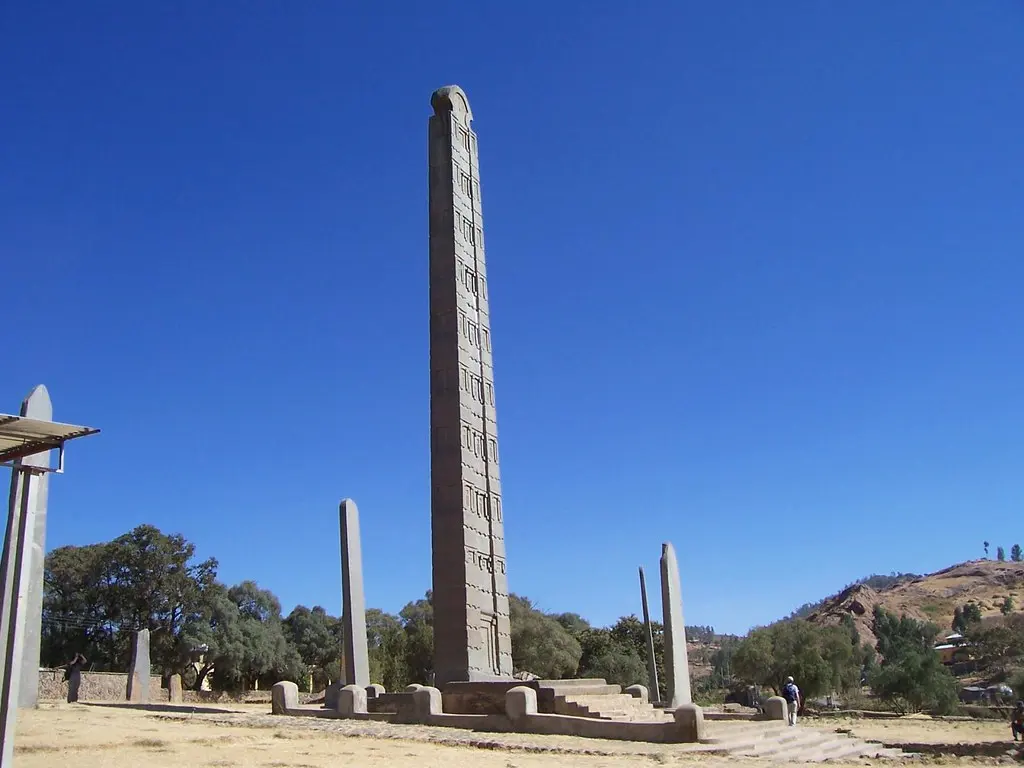
Visit essentials
A quick read before you go
- Duration
- Half day minimum for main sites.
- Etiquette
- Modest dress, shoes removed, women covered.
Overview
In Axum, northern Ethiopia, no one may enter a small chapel except one monk appointed for life. The Guardian of the Ark prays perpetually before what Ethiopian Orthodox tradition holds to be the Ark of the Covenant: the golden chest that held the Ten Commandments tablets and was brought from Jerusalem three thousand years ago by Menelik I, son of King Solomon and the Queen of Sheba. This is living faith, drawing hundreds of thousands of pilgrims annually.
Ethiopia's national epic, the Kebra Nagast, declares that God made Ethiopia a second Zion by transferring the covenant when the Ark left Jerusalem. Stelae in the ancient royal cemetery predate this Christian claim, suggesting sacred layers reaching to sun and moon worship. Rebuilt across centuries, the Church of Our Lady Mary of Zion crowned Ethiopian emperors.
Whether the Ark is here as historical fact remains secondary to seventeen centuries of faith embodied in the guardian's lifetime of prayer and the pilgrims' journeys.
Why this place is sacred
What makes Axum thin is the convergence of claim and devotion. Ethiopian tradition holds that the Ark of the Covenant is literally present in the Chapel of the Tablet—not symbolically, not spiritually, but physically. The Ark is the object through which, in biblical tradition, God's presence manifested among the Israelites. If it rests here, then Axum is a place where the divine is present in the most direct way Judeo-Christian tradition can conceive.
But whether or not the object is present, the faith is. The Guardian of the Ark enters his role knowing he will never leave—his entire remaining life will be spent in prayer before what he believes is the Holy of Holies. The pilgrims who flood Axum for the Festival of Zion Mariam come believing they are approaching the Ark's dwelling. The Ethiopian emperors were crowned here because coronation required proximity to the Ark.
The thinness is in this accumulation: claimed presence of the most sacred object, faith that acts as if the claim is true, and centuries of devotion that have made the site sacred regardless of what the chapel contains. The stelae add another dimension—these pre-Christian monuments suggest that sacredness was recognized here before the Ark arrived, before Christianity came, before the Kebra Nagast was written.
Royal burial ground and religious center of the Aksumite Kingdom. After conversion to Christianity in the 4th century, the holiest site of Ethiopian Orthodoxy and claimed resting place of the Ark of the Covenant.
Pre-Christian Aksumite religion with stelae and royal burials. Christianity adopted in the 4th century under King Ezana. Original church built over pagan shrine. Centuries of rebuilding and renewal. New church and Ark chapel constructed in 1950s-60s by Haile Selassie. UNESCO inscription 1980. Continued pilgrimage and devotion.
Experience and orientation
Begin at the stelae field, where stone obelisks rise from the ancient royal cemetery. The tallest standing stela is twenty-four meters high and weighs 160 tonnes. These carved monuments, designed to resemble multi-story buildings with false windows and doors, marked the tombs of Aksumite kings. Their precise religious meaning is lost, but altars at their bases show evidence of animal sacrifice. The stelae predate Christianity here, connecting to an older layer of sacredness. Walk to the compound of St.
Mary of Zion. The Old Church, rebuilt multiple times since the fourth century, admits only men; it houses the treasury of crowns and vestments. The New Church, built by Haile Selassie in the 1950s, admits all visitors; its interior gleams with paintings and stained glass. Between them stands the Chapel of the Tablet—small, unassuming, and absolutely forbidden. A low fence marks its perimeter. The Guardian lives within, seen only briefly if at all.
This is as close as any visitor will come to the claimed Ark. The experience is strange: a sacred object of immense power, if tradition is true, and around it a chapel no one may enter, a guardian who cannot leave, and pilgrims who come knowing they will never see what they seek. The museum offers context: ancient manuscripts, crosses, crowns of emperors. But the power of Axum is not in what can be seen.
The stelae field is central and walkable. The church compound contains the Old Church (men only), New Church (all visitors), Chapel of the Tablet (no access), and museum. The Queen of Sheba's Pool is nearby. The ruins of the Queen of Sheba's Palace (Dungur) are 2 km west. Monasteries on surrounding hills can be visited. Allow a full day for major sites.
Context and lineage
The Kingdom of Axum rose in the first century CE to become one of the great powers of the ancient world—a trading empire connecting Africa, Arabia, and the Mediterranean. In the fourth century, the court converted to Christianity through Frumentius, a Syrian shipwreck survivor who became the first bishop. King Ezana made Christianity official and built the first Church of St. Mary of Zion.
But Ethiopian tradition reaches further back: according to the Kebra Nagast, the Queen of Sheba traveled from Ethiopia to meet King Solomon, was impressed by his wisdom, and conceived his son Menelik. When Menelik visited his father in Jerusalem, his companions took the Ark of the Covenant. God revealed to Solomon in a dream that he should not pursue it—the Ark's departure was divine will. Ethiopia had become the new Zion.
This tradition, compiled in the fourteenth century but drawing on older sources, legitimized the Solomonic dynasty that ruled Ethiopia until Haile Selassie's fall in 1974. Whether historical fact or theological claim, the narrative shapes Ethiopian identity.
Pre-Christian Aksumite kingdom and religion. Fourth-century conversion to Christianity. Continuous Christian tradition since then. The Kebra Nagast compiled in the fourteenth century established the Solomonic dynasty's legitimacy. Imperial coronations until 1930. Pilgrimage tradition continues.
Menelik I
Legendary founder of the Solomonic dynasty
The Guardian of the Ark
Sole custodian of the Ark of the Covenant
Emperor Haile Selassie
Last Ethiopian emperor, builder of the new church complex
Traditions and practice
Divine Liturgy in Ge'ez. Coronation of emperors at St. Mary of Zion—if an emperor was not crowned here, he could not use the title 'Atse.' Perpetual vigil before the Ark. Procession of tabots during Timkat (Epiphany) and other festivals. Pre-Christian animal sacrifice at stelae altars.
Daily services at the churches. The Guardian maintains perpetual prayer. The Festival of Zion Mariam (November 30 / 21 Hidar) draws hundreds of thousands of pilgrims in white robes. Timkat (January) features processions. Pilgrimage continues throughout the year. Every Ethiopian Orthodox church keeps a tabot—a replica of the tablets in the Ark—as its holiest object, processed on major festivals.
Visit the stelae field early, before the heat and crowds, to experience the pre-Christian layer of Axum's sacredness. Approach the church compound with reverence—this is a living holy site. View the Chapel of the Tablet from as close as permitted, understanding that the restriction itself is part of the sacred experience. If timing permits, attend a liturgy to witness the Ge'ez rite that has continued for seventeen centuries.
During festivals, the processions of white-robed pilgrims and the singing of ancient hymns create an atmosphere of living tradition rarely encountered.
Ethiopian Orthodox Tewahedo Christianity
ActiveEthiopian Orthodoxy is one of the world's oldest Christian traditions, established in the fourth century. Axum is its holiest city, claimed resting place of the Ark of the Covenant. The Kebra Nagast establishes Ethiopia as a second Zion, chosen by God. The tradition shapes religious and national identity for millions. The liturgy in Ge'ez, the oldest Christian liturgical language in continuous use, connects present worship to ancient practice.
Divine Liturgy in Ge'ez. Perpetual prayer by the Guardian of the Ark. Major festivals including Maryam Tsion and Timkat. Pilgrimage to Axum. Coronation of emperors (historical). Every Ethiopian Orthodox church holds a tabot, processed during festivals.
Pre-Christian Aksumite Religion
HistoricalBefore Christianity, the Aksumite kingdom practiced a religion that included worship of celestial bodies. The stelae from this period served as royal tomb markers and may have had religious functions. Evidence of animal sacrifice at stela bases suggests ritual practice. Christianity absorbed and transformed this tradition—coins from the transition period show both crosses and sun/moon symbols.
Construction of stelae as tomb markers. Animal sacrifice. Possible sun/moon worship. The details remain unclear due to lack of written records.
Solomonic Dynasty Tradition
HistoricalThe Kebra Nagast established that Ethiopian emperors descended from King Solomon and the Queen of Sheba through Menelik I. This legitimized the dynasty that ruled from 1270 to 1974. While the dynasty has ended with Haile Selassie's fall, the tradition remains central to Ethiopian identity and to the Orthodox understanding of Ethiopia as a chosen nation.
Imperial coronation at St. Mary of Zion. Observance of Old Testament practices alongside Christianity. The emperor as defender of the Ark and the faith.
Perspectives and open questions
Axum invites engagement with a tradition that claims literal possession of the Ark of the Covenant and with the living faith that surrounds this claim.
Scholarly perspective
Archaeologists and historians confirm Axum as the capital of a major ancient African civilization and one of the earliest officially Christian kingdoms. The stelae are recognized as remarkable achievements of ancient engineering and funerary architecture. UNESCO inscription acknowledges outstanding universal value. Regarding the Ark of the Covenant, scholars note that there is no verifiable evidence for its presence—the Chapel of the Tablet has never been opened to investigation.
The Kebra Nagast is understood as a medieval compilation that served to legitimize the Solomonic dynasty rather than historical record. The historical probability of the Ark's journey from Jerusalem is considered very low. None of this diminishes the site's significance as a center of living faith and ancient tradition.
Living and traditional perspectives
Ethiopian Orthodox tradition holds that the Ark of the Covenant is literally, physically present in Axum. The Kebra Nagast is sacred history, not legend. Menelik I brought the Ark with God's approval, making Ethiopia the new Zion. The Guardian's perpetual prayer, the pilgrims' devotion, and the entire structure of Ethiopian Orthodox life affirm this reality. The tabots in every Ethiopian church are replicas of the tablets in the Ark, connecting all Ethiopian Orthodox worship to Axum.
This is not historical claim but faith that shapes daily life for millions.
Alternative interpretations
Some alternative researchers speculate about the Ark's nature or power, attempt to explain the strict prohibition on viewing it, or connect Axum to broader theories about hidden sacred knowledge. Graham Hancock's 'The Sign and the Seal' popularized Axum's Ark claim in the West. These interpretations are generally not supported by academic scholarship or endorsed by Ethiopian Orthodox tradition.
Open questions
What is actually housed in the Chapel of the Tablet? What was the precise nature of pre-Christian Aksumite religion? How did religious authority pass from pre-Christian priests to Christian clergy? What is the history of the guardianship tradition? Without access to the chapel, the central question—what is the object of the Guardian's devotion?—remains unanswered.
Plan your visit
Access and arrival
Axum has limited accommodation ranging from simple guesthouses to a few hotels. Book ahead during festivals. Facilities are modest; expect basic conditions.
Respectful visit
Modest dress. Women cover hair in churches. Remove shoes in sacred spaces. White clothing traditional but not required for visitors.
Ask permission. Never photograph the Chapel of the Tablet. Restrictions apply in churches and during ceremonies.
Donations support the church. Candles can be purchased and lit as offerings.
Chapel of the Tablet: no access whatsoever. Old Church: men only. Respect all barriers and posted guidelines. During festivals, follow instructions from church officials.
The Chapel of the Tablet is absolutely forbidden—never attempt to approach or enter. The Old Church admits only men. Photography is restricted in sacred areas. During major festivals, crowds are immense. Political instability in the region may affect travel; verify current conditions.
Current practical details
Address
Aksum, Ethiopia
Hours, fees, and access can change — verify on the official source before you travel. Practical details last checked Jun 2026.
Location
Map loads as you approach this section.
Pilgrim reflections
A portrait of encounter, not a score
Pilgrims describe what they felt, how present they could become, and whether the place would shape a journey. There are no stars and no ranking of traditions.
No reviewed reflections yet
The first pilgrims can help describe the character of being here.
Share a reflection
Available after an account-backed “Been there.” Every reflection is reviewed before publication.
Nearby sacred places
Explore other sacred places in the region. Proximity does not establish access or travel time; check each place’s guidance.

References
Sources consulted for this page. Source categories describe the publication, not a guarantee that every claim is verified. Traditional accounts and outside interpretations may differ.
- 01Church of Our Lady Mary of Zion — Wikipedia contributorsencyclopediaComprehensive overview
- 02Kebra Nagast — Wikipedia contributorsencyclopediaPrimary source for Ethiopian tradition
- 03Obelisk of Axum — Wikipedia contributorsencyclopediaArchaeological information
- 04New Church of St. Mary of Zion - Axum, Ethiopia — Sacred DestinationsSource contextVisitor-oriented overview
- 05Ark of the Covenant in Ethiopia — AdeyspiritualEthiopian perspective on the tradition
Photo gallery
3 curated photos
Share a photo
Help visitors recognize Axum. Every submission is reviewed before publication.